Malaysia Coconut Products Market Size Growth Rate
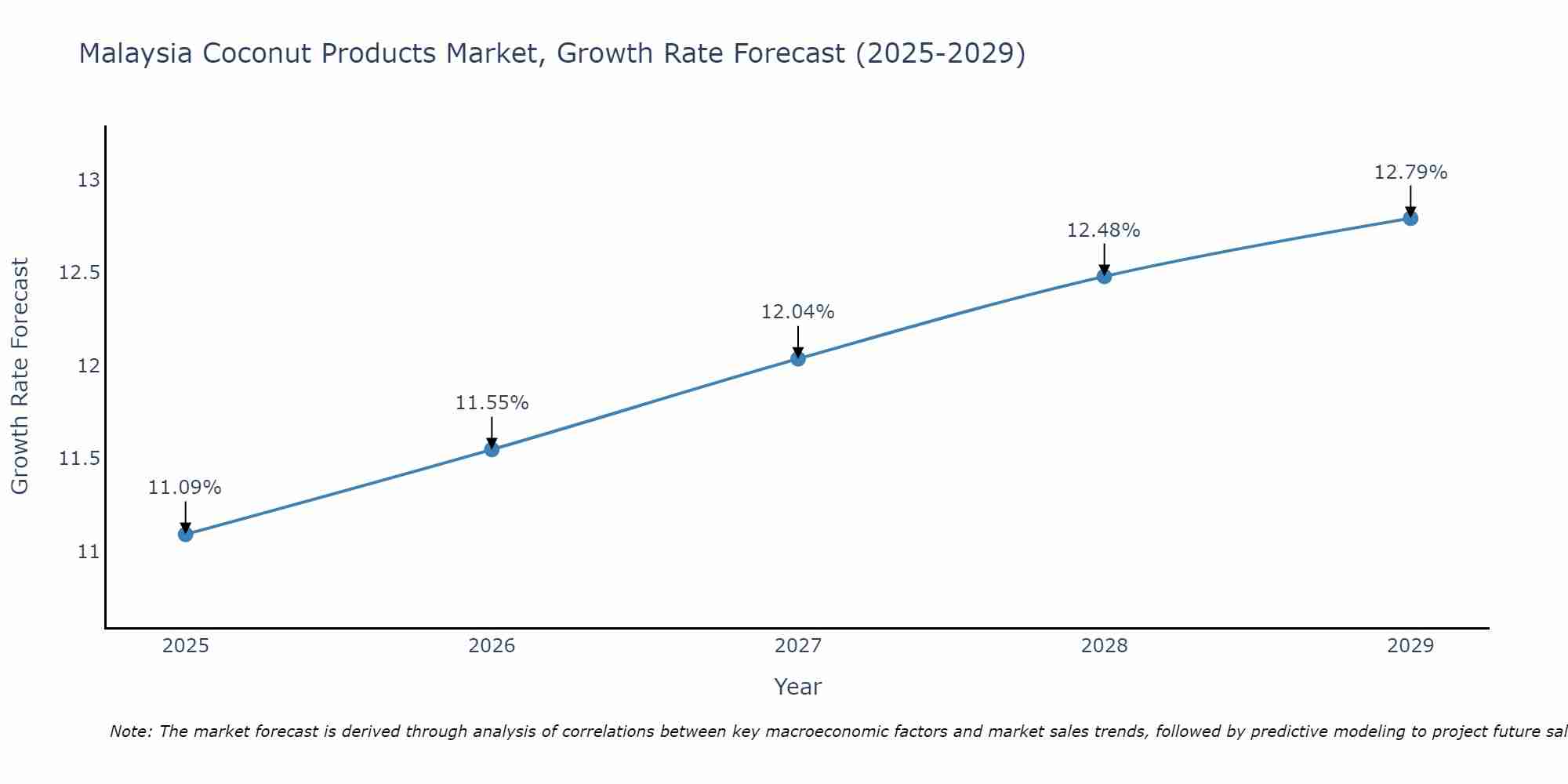
The Malaysia Coconut Products Market is poised for steady growth rate improvements from 2025 to 2029. From 11.09% in 2025, the growth rate steadily ascends to 12.79% in 2029.
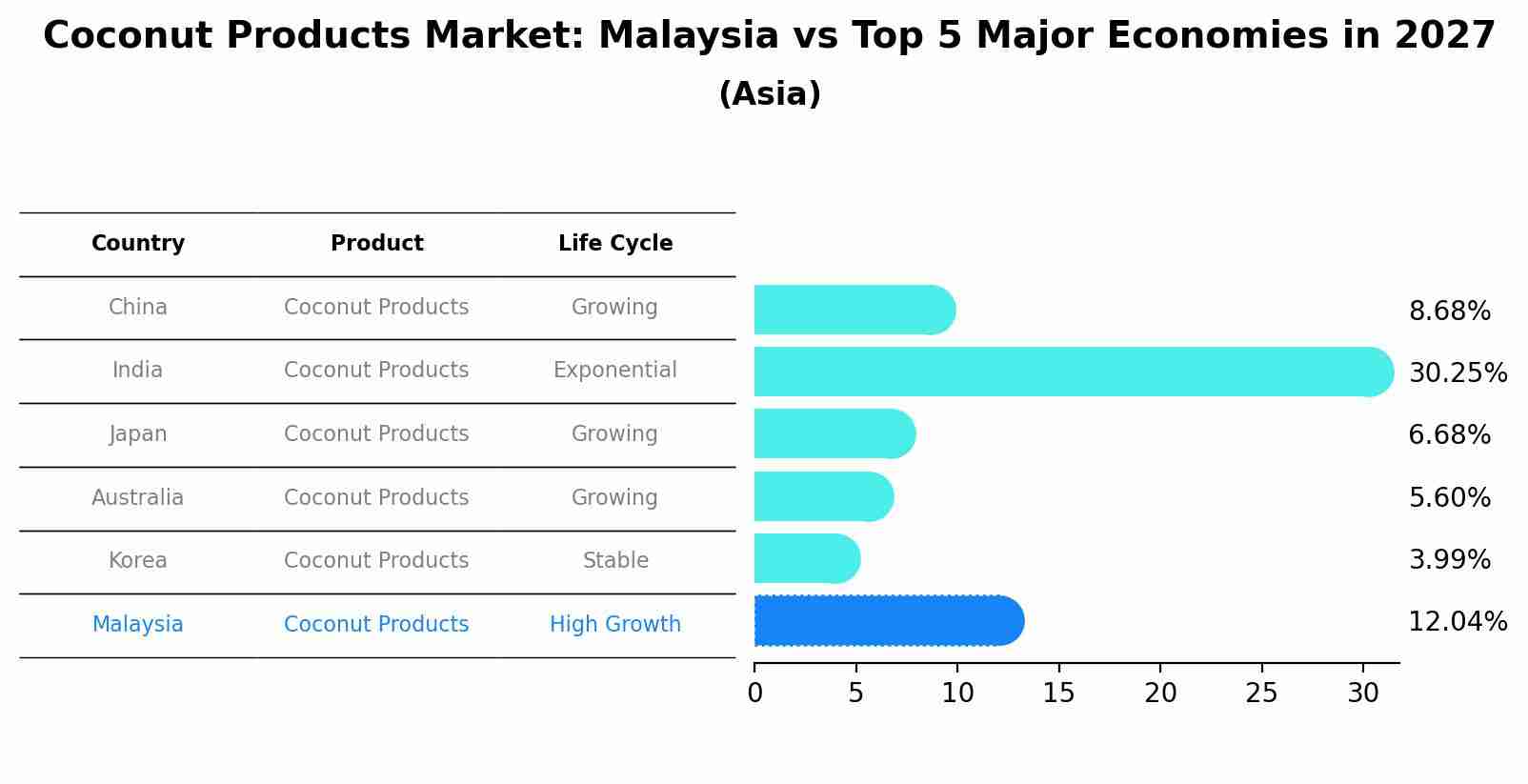
Coconut Products Market: Malaysia vs Top 5 Major Economies in 2027 (Asia)
In the Asia region, the Coconut Products market in Malaysia is projected to expand at a high growth rate of 12.04% by 2027. The largest economy is China, followed by India, Japan, Australia and South Korea.
Malaysia Coconut Products Market Synopsis
The Malaysia coconut products market continues to exhibit steady growth, driven by increasing consumer awareness of the health benefits associated with coconut-based products. Coconut oil, coconut milk, and coconut water remain popular choices among consumers seeking natural and organic alternatives. The country`s tropical climate supports coconut cultivation, ensuring a steady supply of raw materials. Export opportunities are also expanding, with Malaysia gaining recognition as a reliable supplier of high-quality coconut products on the global stage.
Drivers of the Market
Coconut products, such as coconut oil, coconut milk, and coconut-based snacks, have traditionally been significant in Malaysia agricultural sector. The market outlook for these products has been favorable due to increasing consumer awareness of the health benefits associated with coconut-based products. Additionally, the global trend toward natural and organic food products has boosted the demand for Malaysia coconut products.
Challenges of the Market
Coconut products have a strong presence in Malaysia, but challenges include fluctuating coconut prices, climate change affecting production, and the need for value-added processing.
COVID-19 Impact on the Market
The Malaysia coconut products market has shown resilience in the face of the COVID-19 pandemic. While there were initial disruptions in the supply chain due to lockdowns and restrictions, the market rebounded as consumers turned towards healthier and natural food alternatives. Coconut-based products, such as coconut oil, milk, and water, gained popularity for their perceived health benefits. Additionally, the global trend towards plant-based diets and the demand for sustainable, organic products have further boosted the coconut product market in Malaysia. The outlook remains positive as the country continues to invest in coconut farming and processing infrastructure to meet the increasing demand both domestically and internationally.
Key Players in the Market
The Malaysia coconut products market has witnessed significant growth over recent years, driven by increasing consumer demand for natural and organic alternatives in various industries. Key players in this market include established companies such as Maju Dua Benua, KARA Holdings, and Federal Land Development Authority (FELDA). These industry giants have been pivotal in shaping the landscape of coconut product production and distribution in Malaysia. Their extensive networks, state-of-the-art processing facilities, and commitment to quality have solidified their positions as genuine leaders in the coconut products sector.
Key Highlights of the Report:
- Malaysia Coconut Products Market Outlook
- Market Size of Malaysia Coconut Products Market, 2024
- Forecast of Malaysia Coconut Products Market, 2031
- Historical Data and Forecast of Malaysia Coconut Products Revenues & Volume for the Period 2021-2031
- Malaysia Coconut Products Market Trend Evolution
- Malaysia Coconut Products Market Drivers and Challenges
- Malaysia Coconut Products Price Trends
- Malaysia Coconut Products Porter's Five Forces
- Malaysia Coconut Products Industry Life Cycle
- Historical Data and Forecast of Malaysia Coconut Products Market Revenues & Volume By Type for the Period 2021-2031
- Historical Data and Forecast of Malaysia Coconut Products Market Revenues & Volume By Coconut Water for the Period 2021-2031
- Historical Data and Forecast of Malaysia Coconut Products Market Revenues & Volume By Coconut Oil for the Period 2021-2031
- Historical Data and Forecast of Malaysia Coconut Products Market Revenues & Volume By Coconut Milk for the Period 2021-2031
- Historical Data and Forecast of Malaysia Coconut Products Market Revenues & Volume By Dried Coconut Products for the Period 2021-2031
- Historical Data and Forecast of Malaysia Coconut Products Market Revenues & Volume By Others for the Period 2021-2031
- Historical Data and Forecast of Malaysia Coconut Products Market Revenues & Volume By Application for the Period 2021-2031
- Historical Data and Forecast of Malaysia Coconut Products Market Revenues & Volume By Food for the Period 2021-2031
- Historical Data and Forecast of Malaysia Coconut Products Market Revenues & Volume By Beverage for the Period 2021-2031
- Historical Data and Forecast of Malaysia Coconut Products Market Revenues & Volume By Cosmetics for the Period 2021-2031
- Historical Data and Forecast of Malaysia Coconut Products Market Revenues & Volume By Others for the Period 2021-2031
- Historical Data and Forecast of Malaysia Coconut Products Market Revenues & Volume By Form for the Period 2021-2031
- Historical Data and Forecast of Malaysia Coconut Products Market Revenues & Volume By Solid for the Period 2021-2031
- Historical Data and Forecast of Malaysia Coconut Products Market Revenues & Volume By Liquid for the Period 2021-2031
- Malaysia Coconut Products Import Export Trade Statistics
- Market Opportunity Assessment By Type
- Market Opportunity Assessment By Application
- Market Opportunity Assessment By Form
- Malaysia Coconut Products Top Companies Market Share
- Malaysia Coconut Products Competitive Benchmarking By Technical and Operational Parameters
- Malaysia Coconut Products Company Profiles
- Malaysia Coconut Products Key Strategic Recommendations






































