Malaysia Deli Meat Market Size, Share & Growth Rate
The Malaysia Deli Meat Market was estimated at USD 388 Million in 2025 and is projected to reach USD 509 Million by 2032, growing at a CAGR of 4.0% from 2026 to 2032. This steady growth trajectory reflects the shift towards convenience foods among Malaysian consumers, particularly as urban lifestyles become more fast-paced. Furthermore, the expanding foodservice sector, including cafes and restaurants, is increasingly incorporating deli meats into their offerings, further boosting market demand.
Malaysia Deli Meat Market Year-wise Growth Rate and Key Drivers
This graph highlights how the Malaysia Deli Meat Market has steadily grown over the years, supported by major growth factors.
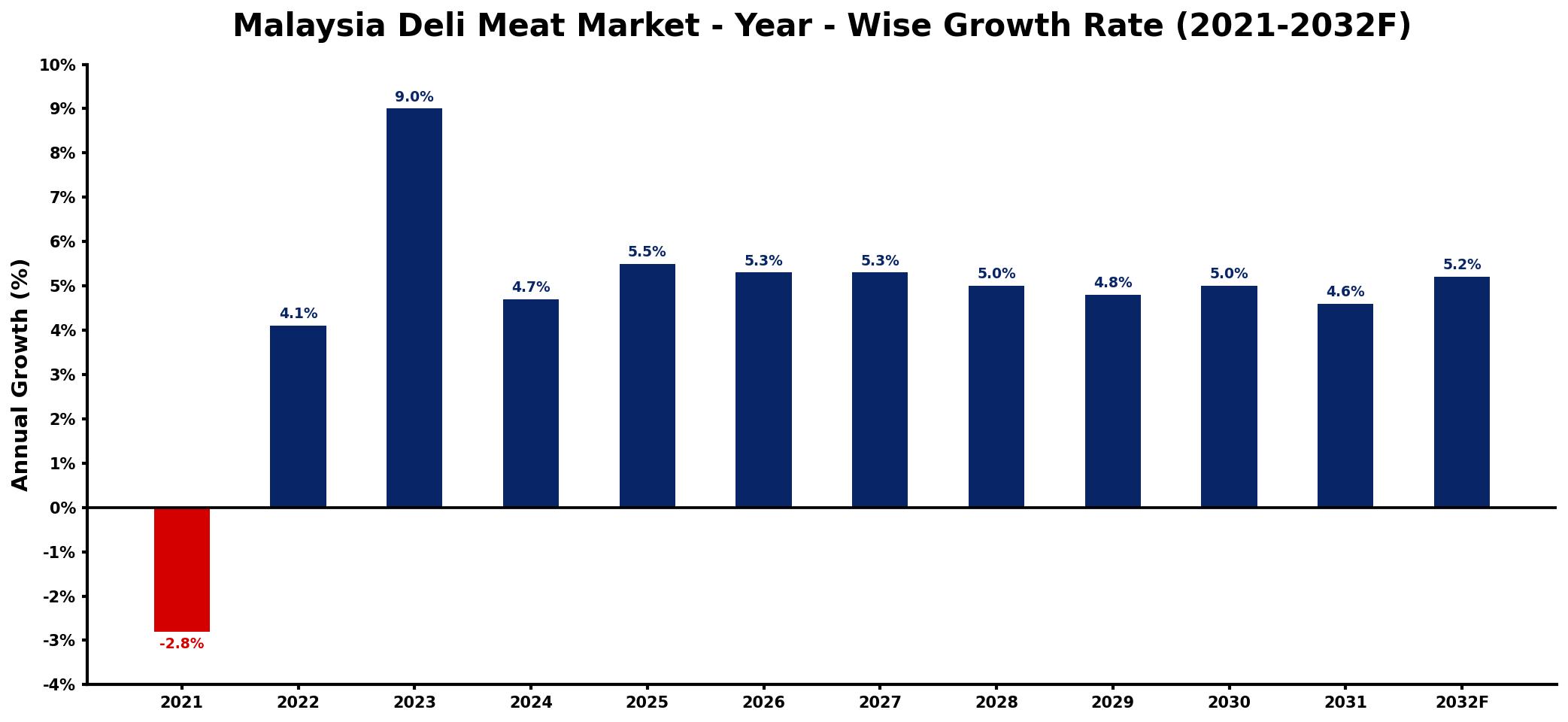
The table below presents the year‑wise growth rates along with the key drivers influencing the market
| Year | Growth Rate | Major Drivers |
| 2021 | -2.8% | decreased consumer spending trends |
| 2022 | 4.1% | rising health consciousness among consumers |
| 2023 | 9.0% | increased demand for convenience foods |
| 2024 | 4.7% | growing popularity of ready meals |
| 2025 | 5.5% | expansion of retail distribution channels |
| 2026 | 5.3% | emergence of new flavor profiles |
| 2027 | 5.3% | increased focus on sustainable sourcing |
| 2028 | 5.0% | growth in online shopping platforms |
| 2029 | 4.8% | rising interest in gourmet products |
| 2030 | 5.0% | growing regional consumption patterns |
| 2031 | 4.6% | increased investment in R&D |
| 2032 | 5.2% | growing awareness of protein alternatives |
Note: Market size estimations and growth projections presented in this report are based on 6Wresearch's proprietary forecasting methodology, utilizing the latest available industry data, government publications, and primary research inputs.
Malaysia Deli Meat Market Synopsis
The Malaysian deli meat market has shown promising growth, driven by changing consumer preferences towards easy meal solutions. However, looking ahead, the market is poised for even greater expansion as consumers continue to prioritize convenience while also becoming more discerning regarding health and quality.
This evolving landscape offers opportunities for innovation, particularly in producing healthier deli meat options. Market players are urged to adapt and cater to the health-conscious segment, ensuring their products meet the demands of a more informed consumer base.
Malaysia Deli Meat Market Key Takeaways
- The market is on a positive trajectory with an expected CAGR of 4.0% from 2026 to 2032.
- Consumer demand is shifting towards convenient and ready-to-eat deli meat options.
- Health consciousness is driving the introduction of leaner and lower sodium deli meats.
- The foodservice industry plays a crucial role in expanding deli meat consumption.
- Product innovation is essential to meet the evolving preferences of Malaysian consumers.
Evaluation of Restraints in Malaysia Deli Meat Market
Several factors pose challenges to the Malaysian deli meat market. Increasing awareness of health issues related to processed foods has resulted in a cautious approach among consumers. Concerns about sodium content and preservatives may deter some buyers, compelling market players to enhance transparency in labeling and offer healthier alternatives. Moreover, competition from alternative protein sources, such as plant-based meats, adds pressure to traditional deli meat products, necessitating strategic innovations to maintain market share.
Malaysia Deli Meat Market Trends
In recent years, there has been a notable trend towards incorporating natural and organic ingredients in deli meats, reflecting consumers' desire for wholesome products. Additionally, sustainability practices are becoming important; producers are increasingly adopting eco-friendly packaging and sourcing methods. The rise of online grocery shopping has also transformed how consumers access deli meats, further enhancing convenience and variety in purchasing options.
Malaysia Deli Meat Market Opportunities
The landscape of the Malaysian deli meat market is ripe for opportunity, particularly for brands willing to invest in healthier product lines. As consumers lean towards health-oriented diets, there is a significant demand for low-sodium, preservative-free options. Additionally, expanding into niche markets, such as halal deli meats and organic choices, can attract diverse consumer segments. Collaboration with the growing foodservice sector also presents an avenue for increased market penetration.
Government Initiatives in the Malaysia Deli Meat Market
The Malaysian government has been proactive in promoting food safety and quality standards across the food industry, which includes deli meats. Initiatives aimed at educating consumers about nutrition and food safety are increasingly important, as is the push for local sourcing to support domestic producers. Efforts to boost the halal certification process can also enhance market appeal within the Muslim community, further enriching the deli meat sector.
Future Insights of the Malaysia Deli Meat Market
Looking towards 2026 and beyond, the Malaysian deli meat market is anticipated to continue its growth trajectory, with an increasing focus on health and convenience. As urban lifestyles evolve, the demand for quick meal solutions is likely to intensify. Furthermore, innovation in product formulations that align with health trends will play a pivotal role in shaping the market landscape. Engaging with consumers and understanding their preferences will be crucial for success in this dynamic environment.
Malaysia Deli Meat Market Latest Developments (2025 - 2026)
Recent developments in the Malaysian deli meat market indicate a surge in product innovation, particularly in the realm of health-focused offerings. Manufacturers are actively reformulating products to reduce sodium and preservatives while enhancing flavor profiles. Additionally, the push for sustainable practices has led to initiatives aimed at reducing packaging waste. The foodservice sector is also adapting by integrating more deli meat options into their menus, reflecting consumer trends for convenience.
Malaysia Deli Meat Market - Key Attractiveness of the Report
- 10 Years of Market Numbers
- Historical Data Starting from 2022 to 2025
- Base Year: 2025
- Forecast Data until 2032
- Key Performance Indicators Impacting the Market
- Major Upcoming Developments and Projects
Key Highlights of the Report:
- Malaysia Deli Meat Market Outlook
- Market Size of Malaysia Deli Meat Market, 2025
- Forecast of Malaysia Deli Meat Market, 2032
- Historical Data and Forecast of Malaysia Deli Meat Revenues & Volume for the Period 2022-2032F
- Malaysia Deli Meat Market Trend Evolution
- Malaysia Deli Meat Market Drivers and Challenges
- Malaysia Deli Meat Price Trends
- Malaysia Deli Meat Porter's Five Forces
- Malaysia Deli Meat Industry Life Cycle
- Historical Data and Forecast of Malaysia Deli Meat Market Revenues & Volume By Source for the Period 2022-2032F
- Historical Data and Forecast of Malaysia Deli Meat Market Revenues & Volume By Beef for the Period 2022-2032F
- Historical Data and Forecast of Malaysia Deli Meat Market Revenues & Volume By Pork for the Period 2022-2032F
- Historical Data and Forecast of Malaysia Deli Meat Market Revenues & Volume By Chicken for the Period 2022-2032F
- Historical Data and Forecast of Malaysia Deli Meat Market Revenues & Volume By Others for the Period 2022-2032F
- Historical Data and Forecast of Malaysia Deli Meat Market Revenues & Volume By Product Type for the Period 2022-2032F
- Historical Data and Forecast of Malaysia Deli Meat Market Revenues & Volume By Cured Meat for the Period 2022-2032F
- Historical Data and Forecast of Malaysia Deli Meat Market Revenues & Volume By Uncured Meat for the Period 2022-2032F
- Historical Data and Forecast of Malaysia Deli Meat Market Revenues & Volume By Sales Channel for the Period 2022-2032F
- Historical Data and Forecast of Malaysia Deli Meat Market Revenues & Volume By Hypermarkets/Supermarkets for the Period 2022-2032F
- Historical Data and Forecast of Malaysia Deli Meat Market Revenues & Volume By Specialty Stores for the Period 2022-2032F
- Historical Data and Forecast of Malaysia Deli Meat Market Revenues & Volume By Convenience Stores for the Period 2022-2032F
- Historical Data and Forecast of Malaysia Deli Meat Market Revenues & Volume By Online Channels for the Period 2022-2032F
- Historical Data and Forecast of Malaysia Deli Meat Market Revenues & Volume By Others for the Period 2022-2032F
- Malaysia Deli Meat Import Export Trade Statistics
- Market Opportunity Assessment By Source
- Market Opportunity Assessment By Product Type
- Market Opportunity Assessment By Sales Channel
- Malaysia Deli Meat Top Companies Market Share
- Malaysia Deli Meat Competitive Benchmarking By Technical and Operational Parameters
- Malaysia Deli Meat Company Profiles
- Malaysia Deli Meat Key Strategic Recommendations






































