Malaysia Dermatology Drugs Market Size, Share & Growth Rate
The Malaysia Dermatology Drugs Market was estimated at USD 204 Million in 2025 and is projected to reach USD 269 Million by 2032, growing at a CAGR of 4.0% from 2026 to 2032. This trajectory reflects a confluence of factors, notably the aging Malaysian population, which is increasingly susceptible to skin ailments. Alongside this demographic shift, there is a heightened public awareness surrounding skin health, driving the demand for effective dermatological treatments.
Malaysia Dermatology Drugs Market Year-wise Growth Rate and Key Drivers
This graph highlights how the Malaysia Dermatology Drugs Market has steadily grown over the years, supported by major growth factors.
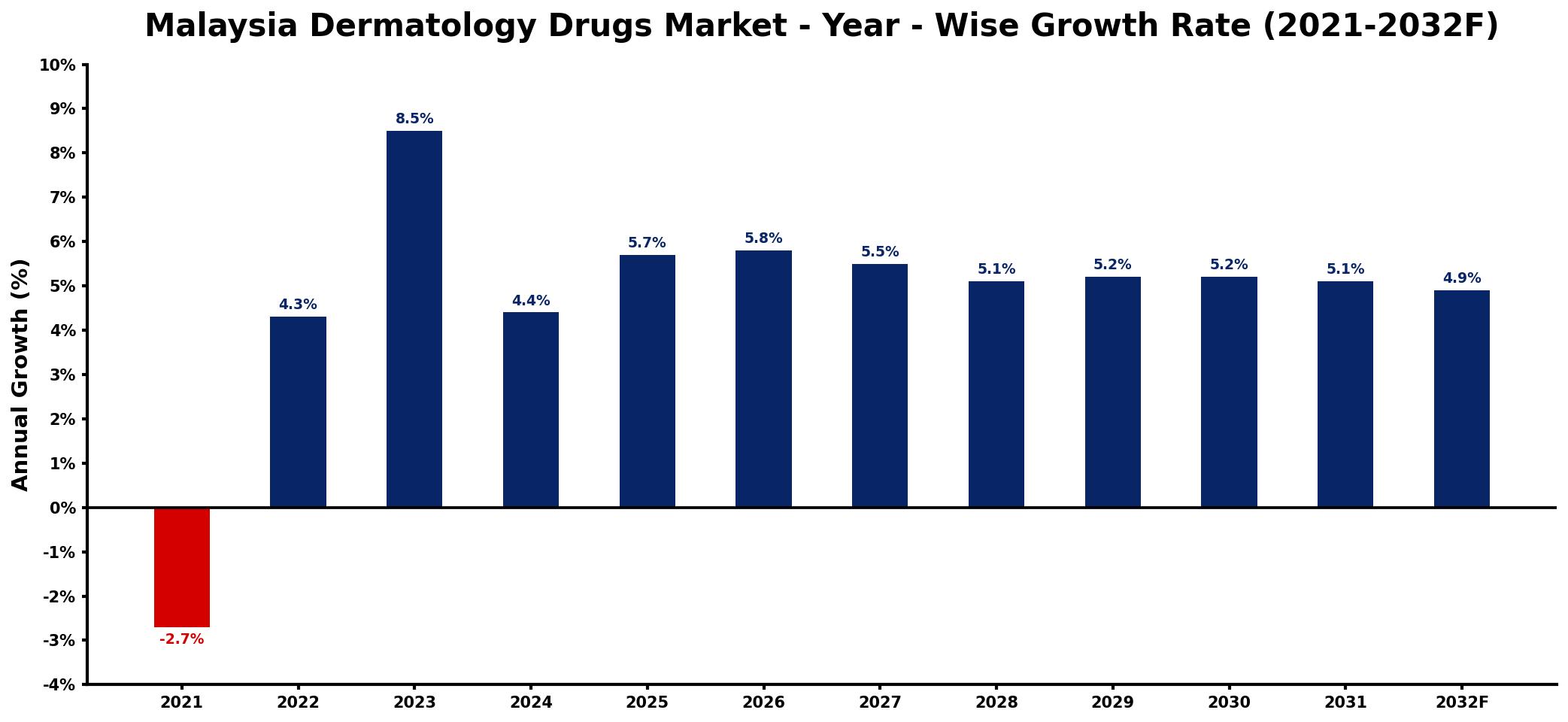
The table below presents the year‑wise growth rates along with the key drivers influencing the market
| Year | Growth Rate | Major Drivers |
| 2021 | -2.7% | decrease in healthcare investments |
| 2022 | 4.3% | rise in skin health awareness |
| 2023 | 8.5% | increased demand for treatments |
| 2024 | 4.4% | growing population with skin issues |
| 2025 | 5.7% | expansion of healthcare facilities |
| 2026 | 5.8% | advancements in treatment technologies |
| 2027 | 5.5% | increased funding for research |
| 2028 | 5.1% | enhanced distribution networks established |
| 2029 | 5.2% | growing partnership opportunities available |
| 2030 | 5.2% | rising consumer spending on wellness |
| 2031 | 5.1% | increased focus on preventive care |
| 2032 | 4.9% | growing influence of telemedicine |
Note: Market size estimations and growth projections presented in this report are based on 6Wresearch's proprietary forecasting methodology, utilizing the latest available industry data, government publications, and primary research inputs.
Malaysia Dermatology Drugs Market Synopsis
The Malaysian dermatology drugs market is at a pivotal juncture, characterized by increasing awareness of dermatological health among consumers. As the population grapples with various skin disorders, the demand for specialized treatments, including topical creams and biologics, is on the rise. This shift in consumer perception is setting the stage for robust market growth.
In tandem with growing awareness, advancements in dermatological research are enhancing the efficacy of treatments available. Coupled with an expansion in healthcare facilities and specialized clinics, the market is well-positioned for continued development. Its clear that the landscape of dermatology in Malaysia is evolving, reflecting broader healthcare trends.
Malaysia Dermatology Drugs Market Key Takeaways
- Steady growth driven by demographic changes and increased skin health awareness.
- Rising prevalence of skin disorders, prompting higher demand for dermatological products.
- Advancements in treatment options are expanding the range of available therapies.
- Infrastructure improvements in healthcare facilities support market expansion.
- Collaboration with healthcare providers is crucial for broadening access to dermatology treatments.
Evaluation of Restraints in Malaysia Dermatology Drugs Market
While the Malaysian dermatology drugs market presents numerous growth opportunities, it is not without its challenges. Healthcare regulations can complicate market entry for new dermatological products, posing hurdles for manufacturers. Additionally, pricing pressures may limit the availability of specialized treatments, particularly in rural areas where access to healthcare services is less developed. Ensuring affordability and improving distribution networks will be key to overcoming these limitations and achieving sustainable growth.
Malaysia Dermatology Drugs Market Trends
Several trends are currently shaping the Malaysian dermatology drugs market. The increasing popularity of aesthetic treatments, such as anti-aging solutions and skin rejuvenation therapies, is driving a shift toward more advanced dermatological drugs. Additionally, the rise of telemedicine is making consultations and follow-up treatments more accessible, encouraging consumers to seek help for skin issues. Moreover, a growing focus on holistic health and wellness is influencing the development of natural and organic dermatological products.
Malaysia Dermatology Drugs Market Opportunities
There are significant opportunities for growth in the Malaysian dermatology drugs market. As the healthcare sector expands, investment in research and development could lead to innovative treatment options tailored to the local population's needs. Furthermore, public-private partnerships can enhance access to dermatological care, especially in underserved regions. The rising consumer demand for personalized skincare solutions also opens avenues for the introduction of niche products that cater to specific skin types and conditions.
Government Initiatives in the Malaysia Dermatology Drugs Market
The Malaysian government has recognized the importance of skin health and is actively promoting initiatives aimed at enhancing public awareness and access to dermatological care. Policies encouraging research and innovation in healthcare, as well as funding for dermatology clinics, are being implemented. These efforts reflect a broader commitment to improving health outcomes for citizens, which is likely to foster a more supportive environment for the dermatology drugs market.
Future Insights of the Malaysia Dermatology Drugs Market
Looking ahead to 2026-2032, the Malaysian dermatology drugs market is expected to experience notable developments driven by evolving consumer preferences and ongoing advancements in medical science. The integration of technology in treatment protocols, including the use of artificial intelligence in diagnostics, will likely play a significant role in shaping the future landscape. As healthcare services normalize post-pandemic, the renewed focus on skincare and aesthetics is anticipated to further fuel market growth, presenting a bright outlook for stakeholders.
Malaysia Dermatology Drugs Market Latest Developments (2025 - 2026)
In recent months, the Malaysian dermatology drugs market has seen a surge in the introduction of innovative products aimed at treating a wider array of skin conditions. Research institutions are increasingly collaborating with pharmaceutical companies to develop cutting-edge therapies, enhancing treatment options for consumers. Additionally, awareness campaigns led by health authorities have resulted in greater public engagement in skincare practices, significantly impacting market dynamics.
Malaysia Dermatology Drugs Market - Key Attractiveness of the Report
- 10 Years of Market Numbers
- Historical Data Starting from 2022 to 2025
- Base Year: 2025
- Forecast Data until 2032
- Key Performance Indicators Impacting the Market
- Major Upcoming Developments and Projects
Key Highlights of the Report:
- Malaysia Dermatology Drugs Market Outlook
- Market Size of Malaysia Dermatology Drugs Market, 2025
- Forecast of Malaysia Dermatology Drugs Market, 2032
- Historical Data and Forecast of Malaysia Dermatology Drugs Revenues & Volume for the Period 2022-2032F
- Malaysia Dermatology Drugs Market Trend Evolution
- Malaysia Dermatology Drugs Market Drivers and Challenges
- Malaysia Dermatology Drugs Price Trends
- Malaysia Dermatology Drugs Porter's Five Forces
- Malaysia Dermatology Drugs Industry Life Cycle
- Historical Data and Forecast of Malaysia Dermatology Drugs Market Revenues & Volume By Application for the Period 2022-2032F
- Historical Data and Forecast of Malaysia Dermatology Drugs Market Revenues & Volume By Acne for the Period 2022-2032F
- Historical Data and Forecast of Malaysia Dermatology Drugs Market Revenues & Volume By Atopic Dermatitis for the Period 2022-2032F
- Historical Data and Forecast of Malaysia Dermatology Drugs Market Revenues & Volume By Psoriasis for the Period 2022-2032F
- Historical Data and Forecast of Malaysia Dermatology Drugs Market Revenues & Volume By Others for the Period 2022-2032F
- Historical Data and Forecast of Malaysia Dermatology Drugs Market Revenues & Volume By Route of Administration for the Period 2022-2032F
- Historical Data and Forecast of Malaysia Dermatology Drugs Market Revenues & Volume By Oral for the Period 2022-2032F
- Historical Data and Forecast of Malaysia Dermatology Drugs Market Revenues & Volume By Parenteral for the Period 2022-2032F
- Historical Data and Forecast of Malaysia Dermatology Drugs Market Revenues & Volume By Topical for the Period 2022-2032F
- Historical Data and Forecast of Malaysia Dermatology Drugs Market Revenues & Volume By Distribution Channel for the Period 2022-2032F
- Historical Data and Forecast of Malaysia Dermatology Drugs Market Revenues & Volume By Hospital Pharmacy for the Period 2022-2032F
- Historical Data and Forecast of Malaysia Dermatology Drugs Market Revenues & Volume By Retail Pharmacy for the Period 2022-2032F
- Historical Data and Forecast of Malaysia Dermatology Drugs Market Revenues & Volume By Online Pharmacy for the Period 2022-2032F
- Malaysia Dermatology Drugs Import Export Trade Statistics
- Market Opportunity Assessment By Application
- Market Opportunity Assessment By Route of Administration
- Market Opportunity Assessment By Distribution Channel
- Malaysia Dermatology Drugs Top Companies Market Share
- Malaysia Dermatology Drugs Competitive Benchmarking By Technical and Operational Parameters
- Malaysia Dermatology Drugs Company Profiles
- Malaysia Dermatology Drugs Key Strategic Recommendations






































