Malaysia Double Glazing Glass Market Size, Share & Growth Rate
The Malaysia Double Glazing Glass Market was estimated at USD 319 Million in 2025 and is projected to reach USD 414 Million by 2032, growing at a CAGR of 3.8% from 2026 to 2032. This upward trajectory is primarily driven by increasing consumer demand for energy-efficient solutions, as well as a robust focus on sustainability within the construction sector. The rising awareness around energy conservation and its associated benefits positions double glazing as an attractive investment for both residential and commercial properties.
Malaysia Double Glazing Glass Market Year-wise Growth Rate and Key Drivers
This graph highlights how the Malaysia Double Glazing Glass Market has steadily grown over the years, supported by major growth factors.
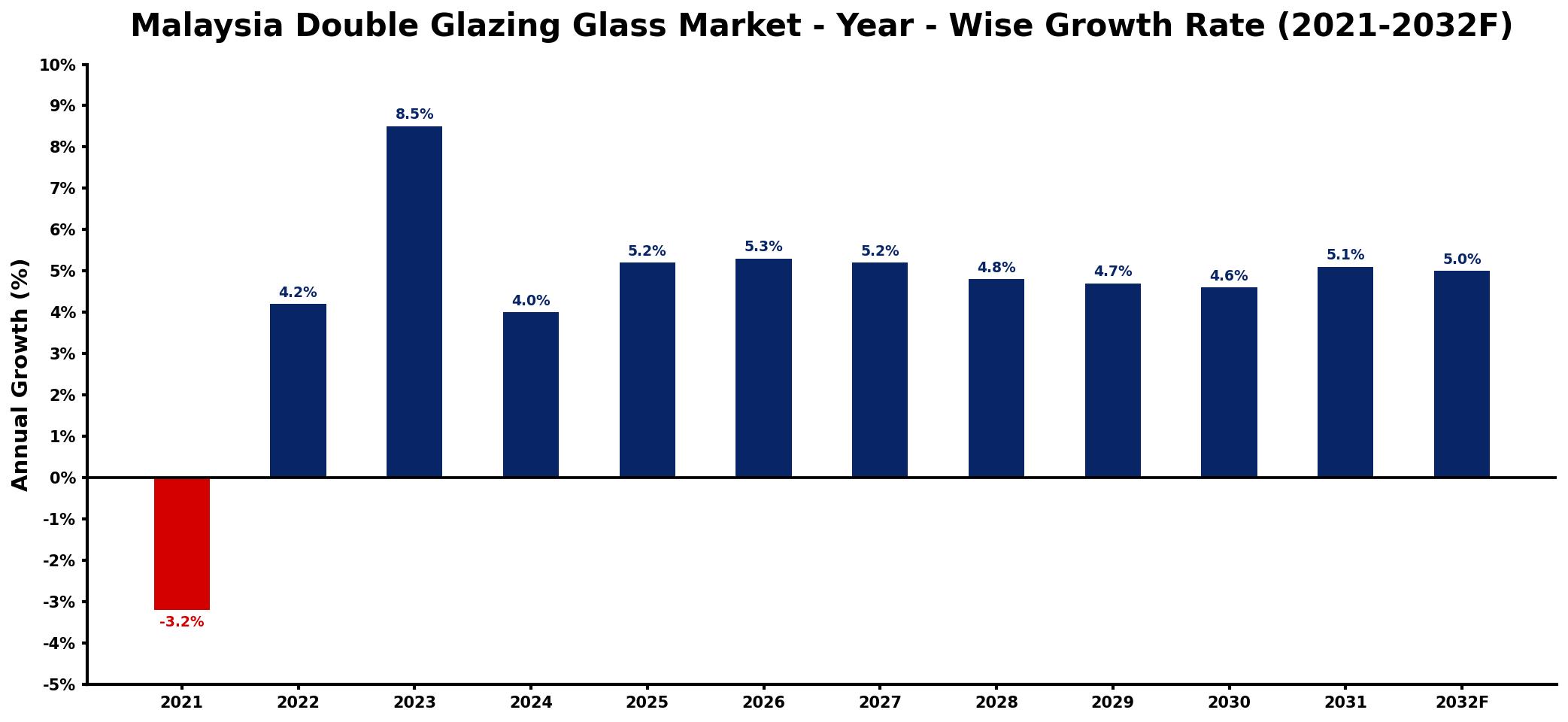
The table below presents the year‑wise growth rates along with the key drivers influencing the market
| Year | Growth Rate | Major Drivers |
| 2021 | -3.2% | construction sector activity decreased |
| 2022 | 4.2% | increased residential construction projects |
| 2023 | 8.5% | growing focus on energy efficiency |
| 2024 | 4.0% | expansion of commercial buildings sector |
| 2025 | 5.2% | rising demand for sustainable solutions |
| 2026 | 5.3% | increased investments in infrastructure |
| 2027 | 5.2% | growing awareness of noise reduction |
| 2028 | 4.8% | boost in renovation and remodeling |
| 2029 | 4.7% | increased urbanization driving demand |
| 2030 | 4.6% | growing emphasis on safety standards |
| 2031 | 5.1% | rising consumer preference for aesthetics |
| 2032 | 5.0% | expanding market for energy savings |
Note: Market size estimations and growth projections presented in this report are based on 6Wresearch's proprietary forecasting methodology, utilizing the latest available industry data, government publications, and primary research inputs.
Malaysia Double Glazing Glass Market Synopsis
A pivotal force shaping the Malaysia Double Glazing Glass Market is the growing emphasis on energy-efficient building solutions. As sustainability becomes a core consideration in construction practices, double glazing glass stands out for its insulation properties, which significantly reduce energy consumption and promote indoor comfort. This shift towards green buildings is accelerating the market's growth, making it increasingly appealing for new developments.
Another crucial element in the market's evolution is the rising trend of urbanization in Malaysia. As cities expand and residential areas develop, the demand for effective insulation to combat heat and noise becomes paramount. Consequently, the adoption of double glazing glass in both urban and suburban settings is witnessing a notable uptick, further stimulating market growth.
Malaysia Double Glazing Glass Market Key Takeaways
- The double glazing glass market is increasingly recognized for its contribution to energy savings and indoor comfort.
- Urbanization in Malaysia is driving demand for efficient building materials, including double glazing glass.
- Government initiatives supporting sustainable construction practices bolster market growth.
- Challenges related to consumer awareness and perceived costs are pivotal for market strategy development.
- Collaboration with architects and builders is essential for effective market penetration and education.
Evaluation of Restraints in Malaysia Double Glazing Glass Market
Despite the promising outlook, the Malaysia Double Glazing Glass Market faces notable restraints that could hinder growth. One significant limitation is the prevalent perception among consumers that double glazing is a costly investment, which may deter adoption, especially in price-sensitive segments. Additionally, there exists competition from alternative insulation solutions and technologies that could divert attention away from double glazing. Furthermore, the complexity involved in the installation process necessitates skilled professionals, contributing to higher project costs that could further limit market penetration.
Malaysia Double Glazing Glass Market Trends
Current trends in the Malaysia Double Glazing Glass Market are largely influenced by an increased focus on energy efficiency and sustainability. Emerging technology is enhancing the functionality of double glazing glass, such as improved thermal performance and noise reduction capabilities. Furthermore, there is a growing trend among builders and architects to integrate smart technologies into building materials, making double glazing an appealing choice for modern developments. Consumer preferences are shifting towards sustainable materials, which could further drive demand in the coming years.
Malaysia Double Glazing Glass Market Opportunities
The market presents ample opportunities for growth, especially in the context of the Malaysian government's commitment to promoting green building practices. Investment in eco-friendly construction solutions is expected to create openings for innovative double glazing products that offer enhanced performance metrics. Moreover, educational campaigns aimed at informing consumers about the long-term benefits of energy-efficient glazing solutions could significantly expand the customer base. Additionally, collaborations with builders and architects will be crucial for positioning double glazing as a preferred choice in new construction projects.
Government Initiatives in the Malaysia Double Glazing Glass Market
The Malaysian government is actively pursuing policies that encourage sustainability in construction, which directly benefits the double glazing glass market. Various initiatives aim to promote energy-efficient building practices through incentives and regulatory frameworks. The establishment of green building certifications, alongside financial support for energy-efficient renovations and new builds, further underscores the government's commitment to fostering an environment conducive to the growth of the double glazing sector. Public spending in infrastructure development is also set to play a vital role in expanding the market landscape.
Future Insights of the Malaysia Double Glazing Glass Market
As we look towards 2026-2032, the Malaysia Double Glazing Glass Market is poised for steady growth, driven by an increasing focus on sustainability and energy efficiency in construction. The anticipated recovery of the construction sector post-COVID-19 will play a significant role in market acceleration. With advancements in technology enhancing product offerings, double glazing glass will increasingly be viewed as an indispensable component of modern building design. The evolving consumer landscape, prioritizing comfort and cost-efficiency, will further reinforce the market's positive trajectory.
Malaysia Double Glazing Glass Market Latest Developments (2025 - 2026)
Recent developments in the Malaysia Double Glazing Glass Market indicate a growing trend toward the adoption of advanced glazing solutions that enhance energy performance. Industry players are increasingly focusing on product innovation and establishing partnerships to drive market penetration. Moreover, there is a noticeable uptick in collaborations between manufacturers and construction firms, aimed at integrating double glazing solutions into new building designs effectively. This alignment with sustainable practices suggests a proactive approach to meeting the evolving needs of the market.
Malaysia Double Glazing Glass Market - Key Attractiveness of the Report
- 10 Years of Market Numbers
- Historical Data Starting from 2022 to 2025
- Base Year: 2025
- Forecast Data until 2032
- Key Performance Indicators Impacting the Market
- Major Upcoming Developments and Projects
Key Highlights of the Report:
- Malaysia Double Glazing Glass Market Outlook
- Market Size of Malaysia Double Glazing Glass Market, 2025
- Forecast of Malaysia Double Glazing Glass Market, 2032
- Historical Data and Forecast of Malaysia Double Glazing Glass Revenues & Volume for the Period 2022-2032F
- Malaysia Double Glazing Glass Market Trend Evolution
- Malaysia Double Glazing Glass Market Drivers and Challenges
- Malaysia Double Glazing Glass Price Trends
- Malaysia Double Glazing Glass Porter's Five Forces
- Malaysia Double Glazing Glass Industry Life Cycle
- Historical Data and Forecast of Malaysia Double Glazing Glass Market Revenues & Volume By Material for the Period 2022-2032F
- Historical Data and Forecast of Malaysia Double Glazing Glass Market Revenues & Volume By Glass for the Period 2022-2032F
- Historical Data and Forecast of Malaysia Double Glazing Glass Market Revenues & Volume By Frame and Spacer for the Period 2022-2032F
- Historical Data and Forecast of Malaysia Double Glazing Glass Market Revenues & Volume By Sealant for the Period 2022-2032F
- Historical Data and Forecast of Malaysia Double Glazing Glass Market Revenues & Volume By Others for the Period 2022-2032F
- Historical Data and Forecast of Malaysia Double Glazing Glass Market Revenues & Volume By Thickness for the Period 2022-2032F
- Historical Data and Forecast of Malaysia Double Glazing Glass Market Revenues & Volume By Less than 10mm for the Period 2022-2032F
- Historical Data and Forecast of Malaysia Double Glazing Glass Market Revenues & Volume By 10mm to 12mm for the Period 2022-2032F
- Historical Data and Forecast of Malaysia Double Glazing Glass Market Revenues & Volume By More than 12mm for the Period 2022-2032F
- Historical Data and Forecast of Malaysia Double Glazing Glass Market Revenues & Volume By Application for the Period 2022-2032F
- Historical Data and Forecast of Malaysia Double Glazing Glass Market Revenues & Volume By Window and Door for the Period 2022-2032F
- Historical Data and Forecast of Malaysia Double Glazing Glass Market Revenues & Volume By Faade for the Period 2022-2032F
- Historical Data and Forecast of Malaysia Double Glazing Glass Market Revenues & Volume By Applications for the Period 2022-2032F
- Malaysia Double Glazing Glass Import Export Trade Statistics
- Market Opportunity Assessment By Material
- Market Opportunity Assessment By Thickness
- Market Opportunity Assessment By Application
- Malaysia Double Glazing Glass Top Companies Market Share
- Malaysia Double Glazing Glass Competitive Benchmarking By Technical and Operational Parameters
- Malaysia Double Glazing Glass Company Profiles
- Malaysia Double Glazing Glass Key Strategic Recommendations






































