Malaysia Electric Housewares and Fans Market Summary
The malaysia electric housewares and fans market was estimated at USD 409 Million in 2025 and is projected to reach USD 533 Million by 2032, growing at a CAGR of 5.7% from 2026 to 2032.
Malaysia Electric Housewares and Fans Market Year-wise Growth Rate and Key Drivers
This graph highlights how the Malaysia Electric Housewares and Fans Market has steadily grown over the past five years, supported by major growth factors.
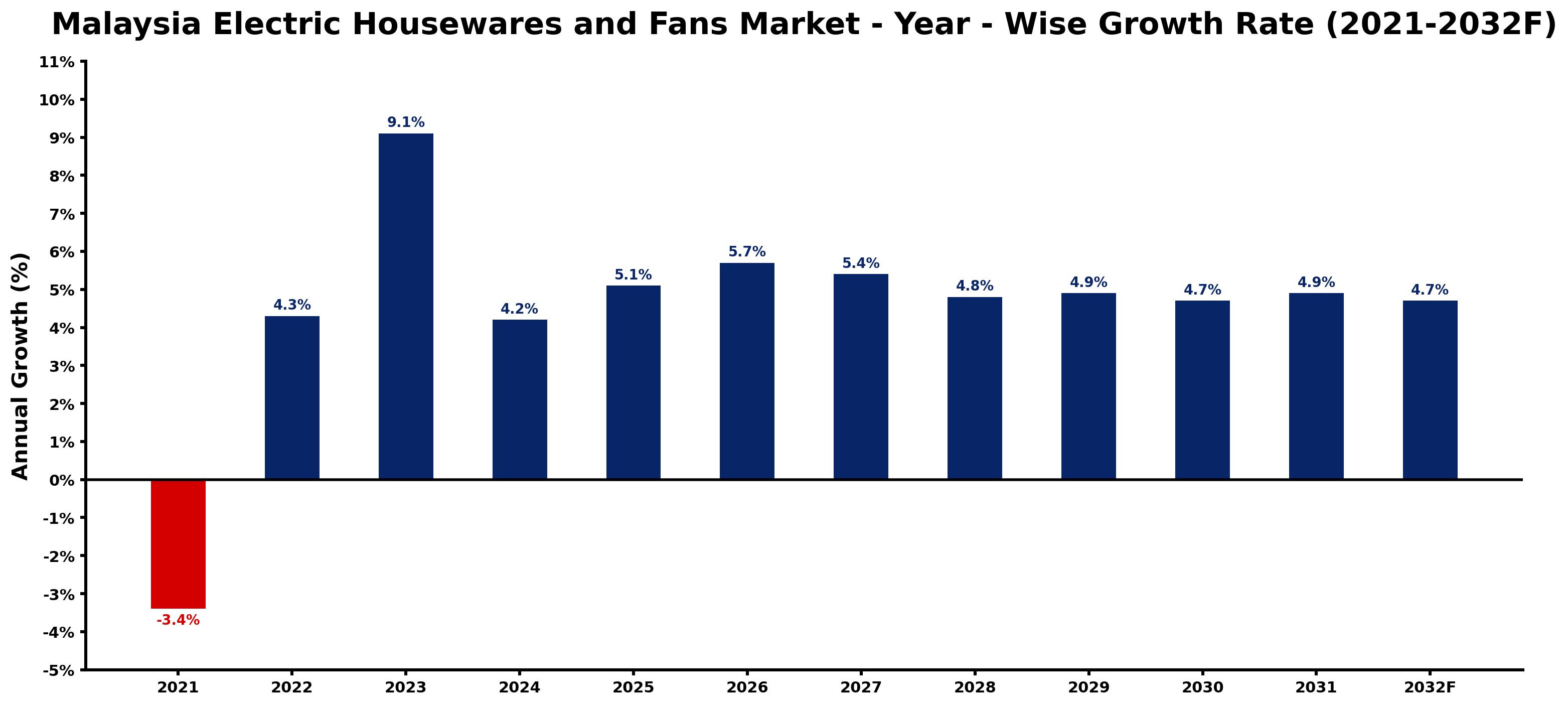
The table below presents the year wise growth rates along with the key drivers influencing the market
| Year | Growth Rate | Major Drivers |
| 2021 | -3.4% | Supply chain disruptions and heightened shipping costs hindered availability of electric housewares, dampening market performance. |
| 2022 | 4.3% | Consumer preferences shifted towards smart home devices, enhancing user convenience and efficiency. |
| 2023 | 9.1% | Increased urbanization led to a rise in demand for compact electric housewares. |
| 2024 | 4.2% | E-commerce platforms expanded, allowing consumers easy access to diverse product selections. |
| 2025 | 5.1% | Sustainability trends prompted manufacturers to develop eco-friendly electric fan alternatives. |
| 2026 | 5.7% | Technological innovations fostered the introduction of IoT-enabled home appliances for monitoring. |
| 2027 | 5.4% | Rising disposable incomes encouraged households to invest in high-end electric housewares. |
| 2028 | 4.8% | Local manufacturing initiatives gained traction, reducing import dependency and enhancing cost competitiveness. |
| 2029 | 4.9% | Climate change awareness increased consumer focus on energy-efficient cooling solutions. |
| 2030 | 4.7% | The emergence of smart cities drove demand for integrated home automation systems. |
| 2031 | 4.9% | Corporate sustainability commitments influenced supply chains towards greener electric fan production. |
| 2032 | 4.7% | Changing lifestyles encouraged multi-functional appliances, creating new market segments in housewares. |
Note - Market size estimations and growth projections presented in this report are based on 6Wresearch's advanced forecasting approach, validated with industry datasets as of June 2026.
Malaysia Electric Housewares and Fans Market Synopsis
The Malaysia Electric Housewares and Fans Market is projected to reach 5.7% and witness significant growth during the forecast period (2026-2032). The market is anticipated to register a compound annual growth rate (CAGR) of 6.9%, fueled by various factors including the increasing consumer demand for energy-efficient appliances and the rise of smart home technologies. As households become more focused on energy efficiency, the adoption of electric housewares and fans is rising, paving the way for enhanced market dynamics. Furthermore, the gradual increase in disposable income among consumers is shifting preferences towards premium products, including advanced digital room air conditioners that provide superior performance, driving further market growth.
Malaysia Electric Housewares and Fans Market Growth Drivers
Several factors are propelling the growth of the Malaysia Electric Housewares and Fans Market:
- Increasing consumer awareness regarding energy efficiency is leading to a higher demand for electric housewares that consume less power while offering enhanced functionality.
- The trend towards smart home integration is making appliances that can connect with home automation systems more desirable among tech-savvy consumers.
- Growth in disposable income among the Malaysian population is facilitating a shift towards premium products, with consumers willing to invest in high-quality electric housewares and fans.
- The rising urbanization rate in Malaysia is contributing to an increase in housing developments, consequently driving demand for various electric appliances.
- Government regulations promoting energy-efficient appliances further bolster the market by providing incentives for manufacturers and consumers alike.
Malaysia Electric Housewares and Fans Market Trends and Opportunities
The market is witnessing a series of trends that present ample opportunities for growth:
- There is a growing inclination towards online retail platforms, which is changing the landscape of how consumers purchase electric housewares and fans.
- Sustainable and eco-friendly product offerings are gaining traction as consumers become increasingly concerned about environmental issues.
- Technological advancements are paving the way for innovative features in electric fans and housewares, making them more customized and appealing to consumers.
- Promotions and marketing campaigns focusing on the benefits of energy-efficient appliances are becoming more prevalent, further driving market interest.
- Partnerships between manufacturers and technology providers are becoming common, paving the way for advanced features and improved energy management systems in household appliances.
Malaysia Electric Housewares and Fans Market Challenges and Restraints
Despite the promising outlook, the market faces several challenges that may hinder growth:
- High costs associated with premium electric housewares and fans can limit access for budget-conscious consumers, impacting overall market penetration.
- Competition from low-cost alternatives may create pricing pressures, forcing premium products to rethink their market strategies.
- Lack of widespread knowledge regarding the long-term benefits of energy-efficient appliances can hinder consumer adoption rates.
- Fluctuating raw material prices can impact manufacturers' costs, leading to potential increases in product prices and reduced consumer interest.
- Regulatory challenges, if not managed, could complicate the manufacturing processes and delay market entry for new products.
Malaysia Electric Housewares and Fans Market Government Investment and Initiatives
The Malaysian government has been actively promoting energy efficiency as part of its broader commitment to sustainable development. Various initiatives and policies are in place to stimulate investment in the electric housewares and fans market:
- Incentives for manufacturers developing energy-efficient appliances have been introduced, which support innovation in the market.
- Government campaigns aimed at raising awareness about the benefits of energy-efficient products are being implemented to educate consumers.
- Investment in smart city projects is creating demand for advanced electric housewares that integrate with modern urban living standards.
- Public expenditures are being directed towards enhancing infrastructure that supports the distribution of energy-efficient appliances, benefiting both manufacturers and consumers.
- Regulatory frameworks are being strengthened to ensure compliance with energy efficiency standards, promoting the adoption of green technology.
Malaysia Electric Housewares and Fans Market Latest Developments (May 2025 - June 2026)
In the period between May 2025 and June 2026, notable developments have been observed in the Malaysia Electric Housewares and Fans Market. The market is aligning with global trends towards sustainability, with a marked increase in the introduction of energy-efficient models and smart appliances. Manufacturers are heavily investing in research and development to deliver products that not only meet energy standards but also cater to the growing consumer demand for innovative functionalities. Additionally, the focus on online sales channels has intensified, with more brands exploring digital marketing strategies to enhance their visibility and accessibility to consumers. As public interest in smart home technologies continues to grow, new partnerships and collaborations are forming within the industry, aimed at leveraging technology to meet modern consumer expectations.
Malaysia Electric Housewares and Fans Market - Key Attractiveness of the Report
- 10 Years of Market Numbers
- Historical Data Starting from 2022 to 2025
- Base Year: 2025
- Forecast Data until 2032
- Key Performance Indicators Impacting the Market
- Major Upcoming Developments and Projects
Key Highlights of the Report:
- Malaysia Electric Housewares and Fans Market Outlook
- Market Size of Malaysia Electric Housewares and Fans Market, 2025
- Forecast of Malaysia Electric Housewares and Fans Market, 2032F
- Historical Data and Forecast of Malaysia Electric Housewares and Fans Revenues & Volume for the Period 2022-2032F
- Malaysia Electric Housewares and Fans Market Trend Evolution
- Malaysia Electric Housewares and Fans Market Drivers and Challenges
- Malaysia Electric Housewares and Fans Price Trends
- Malaysia Electric Housewares and Fans Porter's Five Forces
- Malaysia Electric Housewares and Fans Industry Life Cycle
- Historical Data and Forecast of Malaysia Electric Housewares and Fans Market Revenues & Volume By Types for the Period 2022-2032F
- Historical Data and Forecast of Malaysia Electric Housewares and Fans Market Revenues & Volume By Housewares for the Period 2022-2032F
- Historical Data and Forecast of Malaysia Electric Housewares and Fans Market Revenues & Volume By Fans for the Period 2022-2032F
- Historical Data and Forecast of Malaysia Electric Housewares and Fans Market Revenues & Volume By Electric Fans Types for the Period 2022-2032F
- Historical Data and Forecast of Malaysia Electric Housewares and Fans Market Revenues & Volume By Ceiling Fans for the Period 2022-2032F
- Historical Data and Forecast of Malaysia Electric Housewares and Fans Market Revenues & Volume By Floor Fans for the Period 2022-2032F
- Historical Data and Forecast of Malaysia Electric Housewares and Fans Market Revenues & Volume By Wall-mounted Fans for the Period 2022-2032F
- Historical Data and Forecast of Malaysia Electric Housewares and Fans Market Revenues & Volume By Electric Housewares Types for the Period 2022-2032F
- Historical Data and Forecast of Malaysia Electric Housewares and Fans Market Revenues & Volume By Air purifiers for the Period 2022-2032F
- Historical Data and Forecast of Malaysia Electric Housewares and Fans Market Revenues & Volume By Blenders for the Period 2022-2032F
- Historical Data and Forecast of Malaysia Electric Housewares and Fans Market Revenues & Volume By Broilers for the Period 2022-2032F
- Historical Data and Forecast of Malaysia Electric Housewares and Fans Market Revenues & Volume By Hair curlers for the Period 2022-2032F
- Historical Data and Forecast of Malaysia Electric Housewares and Fans Market Revenues & Volume By Heaters for the Period 2022-2032F
- Historical Data and Forecast of Malaysia Electric Housewares and Fans Market Revenues & Volume By Toothbrushes for the Period 2022-2032F
- Historical Data and Forecast of Malaysia Electric Housewares and Fans Market Revenues & Volume By Others for the Period 2022-2032F
- Malaysia Electric Housewares and Fans Import Export Trade Statistics
- Market Opportunity Assessment By Types
- Market Opportunity Assessment By Electric Fans Types
- Market Opportunity Assessment By Electric Housewares Types
- Malaysia Electric Housewares and Fans Top Companies Market Share
- Malaysia Electric Housewares and Fans Competitive Benchmarking By Technical and Operational Parameters
- Malaysia Electric Housewares and Fans Company Profiles
- Malaysia Electric Housewares and Fans Key Strategic Recommendations






































