Malaysia Energy Security Market Size & Growth Rate (2026-2032)
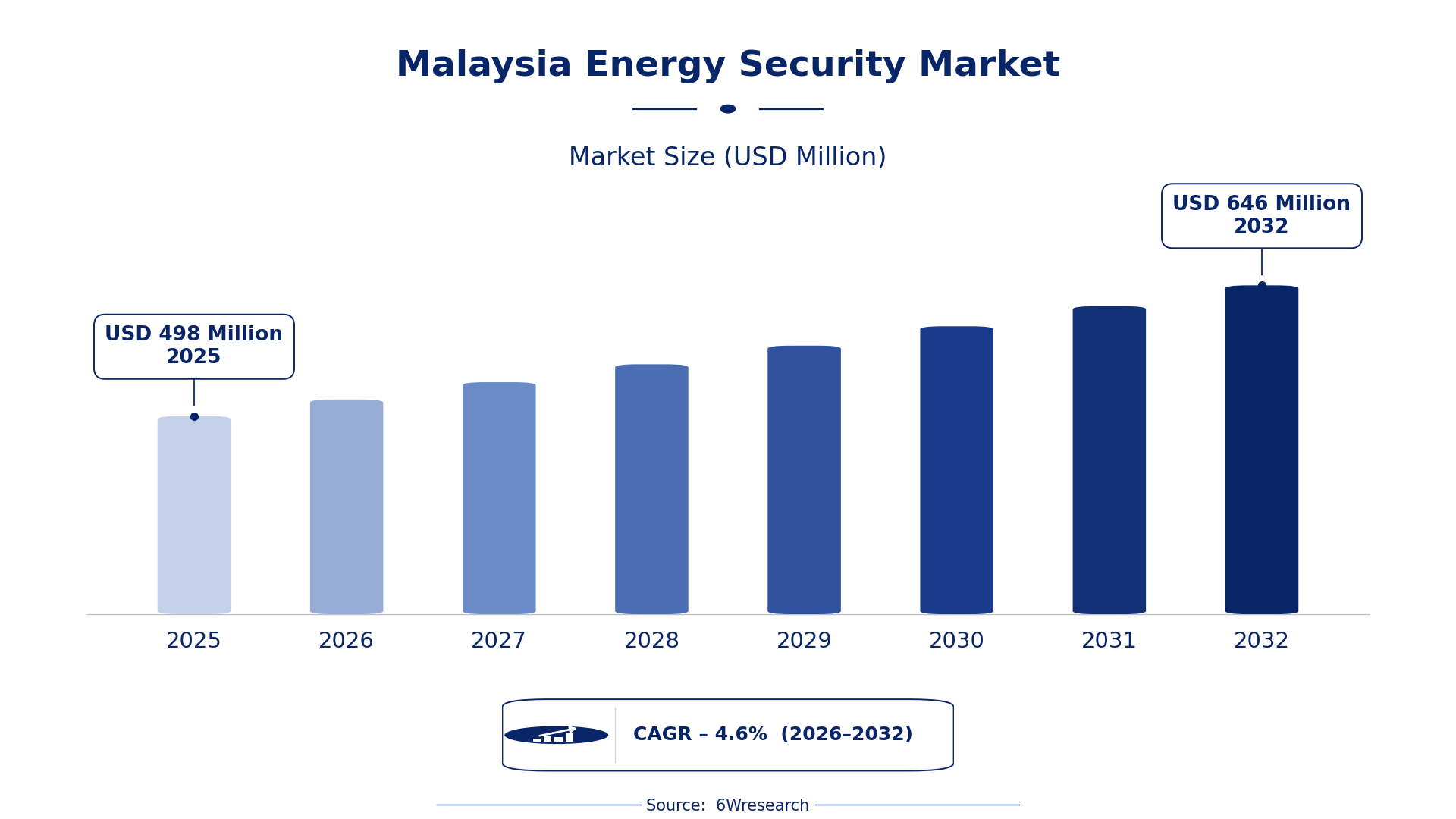
The Malaysia Energy Security Market was estimated at USD 498 Million in 2025 and is projected to reach USD 646 Million by 2032, growing at a CAGR of 4.6% from 2026 to 2032.
Malaysia Energy Security Market Synopsis
As Malaysia’s economy continues to expand, the demand for reliable energy sources has surged. Energy security now hinges on the protection of infrastructure and the integration of advanced technologies to ensure uninterrupted service.
The need to secure critical energy assets against both physical and cyber threats has never been more pressing. With a growing emphasis on renewable energy sources, Malaysia is at a crossroads where investment in energy security technologies is essential for future growth.
Malaysia Energy Security Market Year-wise Growth Rate and Key Drivers
This graph illustrates the annual growth rates of the Malaysia Energy Security Market from 2021 to 2032, highlighting a steady upward trajectory and projected expansion over the forecast period.
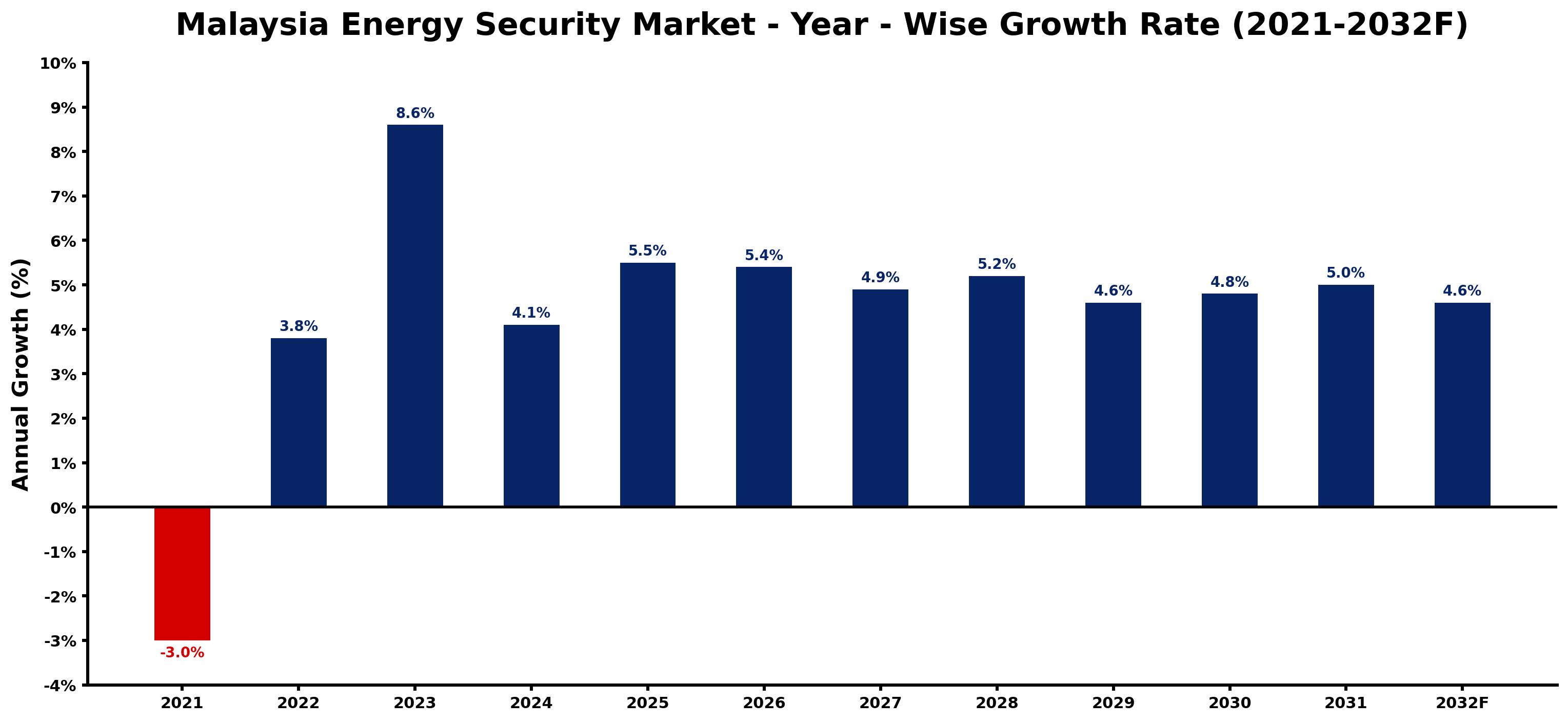
The table below presents the year‑wise growth rates along with the key drivers influencing the market
| Year | Growth Rate | Major Drivers |
| 2021 | -3.0% | Delayed renewable energy projects due to Malaysian government policies. |
| 2022 | 3.8% | Implementation of Malaysia's Energy Efficiency Strategy 2022. |
| 2023 | 8.6% | Increased investments in renewable energy by TNB. |
| 2024 | 4.1% | Launch of the National Energy Transition Roadmap. |
| 2025 | 5.5% | Growing adoption of solar energy in residential sectors. |
| 2026 | 5.4% | Expanded energy resilience initiatives by Energy Commission. |
| 2027 | 4.9% | Rising gas supply from new offshore developments. |
| 2028 | 5.2% | Government incentives for energy-efficient technologies. |
| 2029 | 4.6% | Strengthened grid infrastructure following Malaysia's digitalization push. |
| 2030 | 4.8% | Implementation of new energy efficiency regulations. |
| 2031 | 5.0% | Increased foreign direct investment in energy projects. |
| 2032 | 4.6% | Public-private partnerships fostering energy innovation. |
Note: Market size estimations and growth projections presented in this report are based on 6Wresearch's proprietary forecasting methodology, utilizing the latest available industry data, government publications, and primary research inputs.
Malaysia Energy Security Market Key Takeaways
Below are some of the specific key takeaways from the market, including:
- The increasing energy demand is driving the growth of advanced energy security solutions.
- Cybersecurity and infrastructure protection are key focuses for ensuring energy reliability.
- Renewable energy transition is introducing complexities in energy security management.
- Malaysia's reliance on imported fossil fuels poses a significant risk to energy stability.
- Investment in grid enhancements and energy storage technologies is crucial for future resilience.
Evaluation of Restraints in Malaysia Energy Security Market
The Malaysia Energy Security Market is hampered by several constraints that affect its growth potential. A major concern is the country's heavy reliance on imported fossil fuels, which exposes the market to global price volatility and geopolitical risks. This dependence creates a precarious balance in energy supply. Additionally, the aging energy infrastructure is often ill-equipped to handle the integration of renewable sources, complicating efforts to enhance energy security. Issues with energy efficiency and grid reliability are further barriers that must be addressed to create a more secure energy future.
Malaysia Energy Security Market Trends
Several trends are shaping the Malaysia Energy Security Market. Firstly, there’s a pronounced shift towards digitization within the energy sector, as companies adopt smart technologies for better monitoring and control. This is coupled with a rising focus on cybersecurity to protect critical energy infrastructure from increasing cyber threats. on top of that, the government’s push for renewable energy sources is prompting investments in related security solutions, as stakeholders recognize that a secure grid is essential for a successful energy transition.
Malaysia Energy Security Market Opportunities
The landscape presents promising avenues for growth and investment. Opportunities exist in enhancing energy storage capabilities, which are vital for integrating intermittent renewable sources into the grid. Additionally, modernizing existing infrastructure and investing in grid security systems can open doors for advanced technologies. Public-private partnerships may also emerge, focusing on infrastructure upgrades and cybersecurity solutions, fostering a more resilient energy sector.
Government Initiatives in the Malaysia Energy Security Market
The Malaysian government is actively shaping the Energy Security Market through a series of initiatives designed to enhance stability and resilience in energy supply. Regulatory policies are increasingly focused on bolstering energy infrastructure, promoting renewable energy integration, and safeguarding critical assets against potential threats. These policies are crucial in ensuring that the energy sector adapts to the challenges posed by a rapidly changing environment.
- A national renewable energy policy launched in early 2025 aims to increase the share of renewables in the energy mix.
- Ongoing initiatives focus on upgrading grid infrastructure to improve reliability and incorporate smart technologies.
- Recently completed cybersecurity frameworks provide guidelines for protecting energy infrastructure against digital threats.
- Planned public-private partnerships are expected to enhance energy storage solutions by 2027, supporting renewable energy integration.
Future Insights of the Malaysia Energy Security Market
Looking ahead to 2026-2032, the Malaysia Energy Security Market is set to evolve significantly. As the demand for energy continues to climb, the focus will increasingly shift towards diversifying the energy mix and enhancing the resilience of energy infrastructure. Policymakers will likely prioritize investments in advanced technologies, while the integration of renewable energy sources will remain central to future strategies. This will require a concerted effort from both government and private sectors to secure a sustainable energy future.
Malaysia Energy Security Market Latest Developments
In the past year, the Malaysia Energy Security Market has seen several impactful developments, indicating a push towards greater energy resilience. The government and industry stakeholders are actively seeking ways to mitigate risks associated with energy supply and security, reflecting a proactive approach to evolving market demands.
- In Q3 2025, a major energy provider commenced a cybersecurity upgrade project aimed at fortifying critical infrastructure.
- A new energy storage system, currently underway, promises to enhance grid stability by early 2026.
- A recent initiative focused on public awareness campaigns about energy efficiency has gained traction, demonstrating increased community involvement.
- Upcoming plans for expanding renewable energy adoption are set to be detailed in late 2026, as the government seeks to attract investments in green technologies.
Malaysia Energy Security Market - Key Attractiveness of the Report
- 10 Years of Market Numbers
- Historical Data Starting from 2022 to 2025
- Base Year: 2025
- Forecast Data until 2032
- Key Performance Indicators Impacting the Market
- Major Upcoming Developments and Projects
The growth is primarily driven by the increasing energy demand, the need for advanced cybersecurity solutions, and the government’s focus on integrating renewable energy into the national grid.
Key Highlights of the Report:
- Malaysia Energy Security Market Outlook
- Market Size of Malaysia Energy Security Market, 2025
- Forecast of Malaysia Energy Security Market, 2032
- Historical Data and Forecast of Malaysia Energy Security Revenues & Volume for the Period 2022-2032F
- Malaysia Energy Security Market Trend Evolution
- Malaysia Energy Security Market Drivers and Challenges
- Malaysia Energy Security Price Trends
- Malaysia Energy Security Porter's Five Forces
- Malaysia Energy Security Industry Life Cycle
- Historical Data and Forecast of Malaysia Energy Security Market Revenues & Volume By Power Plants for the Period 2022-2032F
- Historical Data and Forecast of Malaysia Energy Security Market Revenues & Volume By Nuclear for the Period 2022-2032F
- Historical Data and Forecast of Malaysia Energy Security Market Revenues & Volume By Thermal for the Period 2022-2032F
- Historical Data and Forecast of Malaysia Energy Security Market Revenues & Volume By Hydro for the Period 2022-2032F
- Historical Data and Forecast of Malaysia Energy Security Market Revenues & Volume By Oil for the Period 2022-2032F
- Historical Data and Forecast of Malaysia Energy Security Market Revenues & Volume By Gas for the Period 2022-2032F
- Historical Data and Forecast of Malaysia Energy Security Market Revenues & Volume By Renewable Energy for the Period 2022-2032F
- Historical Data and Forecast of Malaysia Energy Security Market Revenues & Volume By Technologies for the Period 2022-2032F
- Historical Data and Forecast of Malaysia Energy Security Market Revenues & Volume By Physical for the Period 2022-2032F
- Historical Data and Forecast of Malaysia Energy Security Market Revenues & Volume By Network Security for the Period 2022-2032F
- Malaysia Energy Security Import Export Trade Statistics
- Market Opportunity Assessment By Power Plants
- Market Opportunity Assessment By Technologies
- Malaysia Energy Security Top Companies Market Share
- Malaysia Energy Security Competitive Benchmarking By Technical and Operational Parameters
- Malaysia Energy Security Company Profiles
- Malaysia Energy Security Key Strategic Recommendations






































