Malaysia Flower and Ornamental Plants Market Summary
The malaysia flower and ornamental plants market was estimated at USD 338 Million in 2025 and is projected to reach USD 437 Million by 2032, growing at a CAGR of 5.1% from 2026 to 2032.
Malaysia Flower and Ornamental Plants Market Year-wise Growth Rate and Key Drivers
This graph highlights how the Malaysia Flower and Ornamental Plants Market has steadily grown over the past five years, supported by major growth factors.
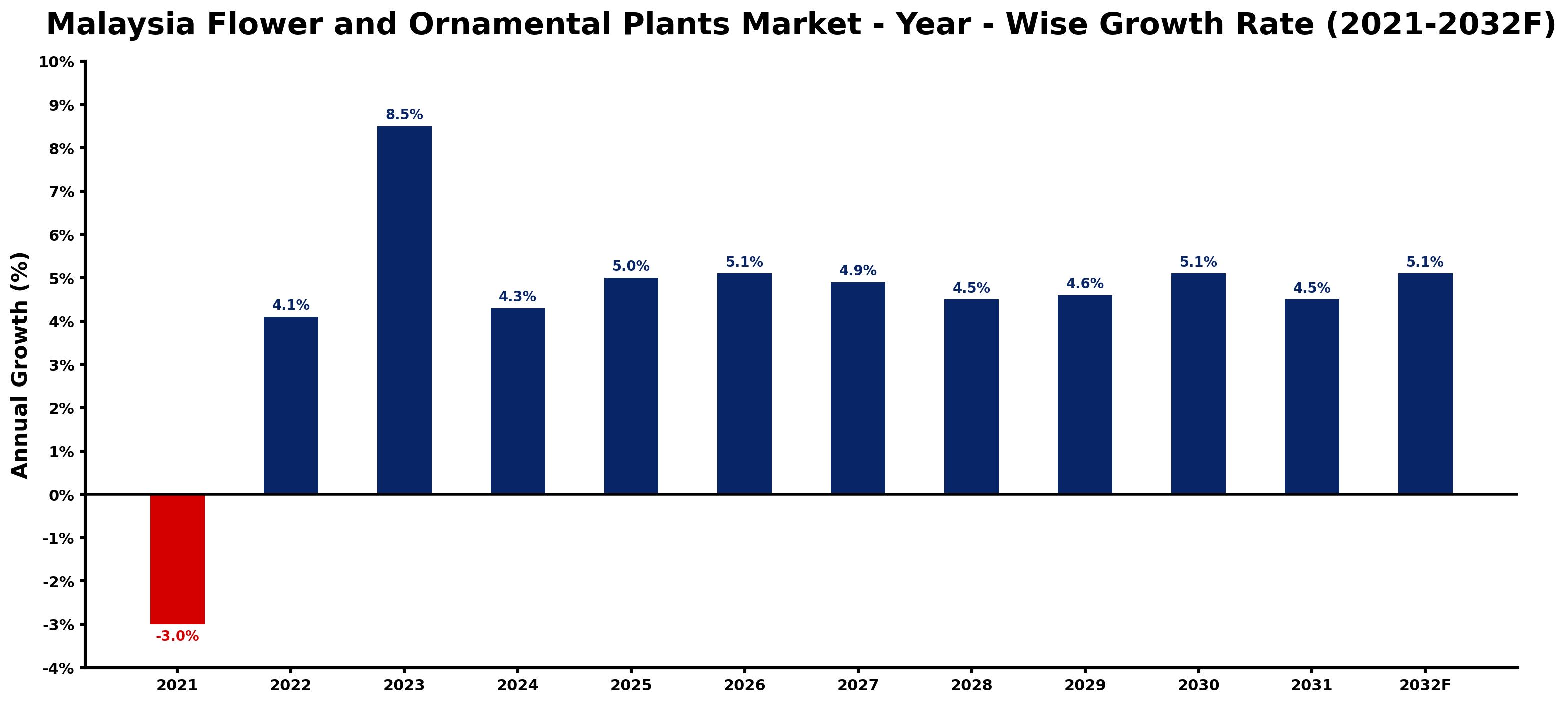
The table below presents the year wise growth rates along with the key drivers influencing the market
| Year | Growth Rate | Major Drivers |
| 2021 | -3.0% | Pandemicrelated restrictions significantly reduced event floral demand, severely impacting industry sales and growth. |
| 2022 | 4.1% | Urban gardening trends emerged, fueled by increasing apartment living across Malaysia. |
| 2023 | 8.5% | Sustainability became a focus, with consumers favoring eco-friendly plant options. |
| 2024 | 4.3% | E-commerce platforms expanded, providing direct access to ornamental plant varieties. |
| 2025 | 5.0% | Education initiatives on plant care boosted consumer confidence in gardening skills. |
| 2026 | 5.1% | Local nurseries adapted quickly to online sales, increasing their market reach significantly. |
| 2027 | 4.9% | Collaborations with interior designers showcased ornamental plants in urban spaces effectively. |
| 2028 | 4.5% | A surge in landscaping projects reflected growing real estate sector activity. |
| 2029 | 4.6% | Cultural festivals increasingly featured flowers, enhancing public appreciation for horticulture. |
| 2030 | 5.1% | Technological advancements in propagation techniques improved plant availability and quality. |
| 2031 | 4.5% | The health and wellness trend encouraged indoor plants for their air-purifying benefits. |
| 2032 | 5.1% | Agricultural policies shifted towards ornamental plants, supporting local nurseries and growers. |
Note - Market size estimations and growth projections presented in this report are based on 6Wresearch's advanced forecasting approach, validated with industry datasets as of June 2026.
Malaysia Flower and Ornamental Plants Market Synopsis
The Malaysia Flower and Ornamental Plants Market is projected to reach 5.1% and witness significant growth during the forecast period (2026-2032). As a prominent producer and exporter, Malaysia's market dynamics are influenced by various factors, including urbanization, aesthetic values associated with floral arrangements, and a rising interest in horticulture. This report delves into the key drivers fueling market expansion, the challenges faced, and the opportunities that may arise within this vibrant sector.
Malaysia Flower and Ornamental Plants Market Growth Drivers
The growth trajectory of the Malaysia Flower and Ornamental Plants Market is substantiated by several vital elements that harmonize to cultivate a fertile environment for industry expansion. These growth drivers include:
- Urban Greenery Demand: The increasing urbanization in Malaysia has spurred a substantial demand for greenery in metropolitan areas, prompting investments in the flower and ornamental plants market to enhance city aesthetics and promote environmental sustainability.
- Focus on Floral Decor: There is a growing emphasis on floral decorations in both residential and commercial spaces. This trend underscores the evolving consumer preference for enhanced interior aesthetics and the role of flowers in cultural and celebratory occasions.
- Participation in Trade Fairs: Malaysia's increased involvement in international trade fairs and exhibitions has not only elevated the visibility of its floral and ornamental sector but has also facilitated networking opportunities and market access for domestic producers.
- Expansion of Horticulture Farms: The growth in horticulture farms across Malaysia indicates a proactive approach towards meeting both local and international demands, which augments the supply side of the market.
- Government Initiatives and Support: Encouraging policies and incentives put forth by the government are pivotal in fostering innovation and growth in the flower and ornamental plant sector, ensuring market viability.
Malaysia Flower and Ornamental Plants Market Challenges and Restraints
Despite the promising outlook, the Malaysia Flower and Ornamental Plants Market faces several challenges that may hinder its growth potential. Key restraints include:
- High Production Costs: The costs associated with production and processing activities remain a significant barrier to market entry and expansion, impacting profit margins for growers.
- Quality of Products: The availability of low-quality products in the market can lead to consumer dissatisfaction, jeopardizing brand reputation and market growth.
- Regulatory Challenges: Stringent regulations on the exportation of fresh cut flowers pose compliance challenges for exporters, potentially restricting market opportunities.
- Environmental Concerns: Growing environmental concerns regarding sustainable practices in farming and the environmental impact of certain horticultural practices may provoke resistance from eco-conscious consumers.
- Technological Adaptation: While technology has the potential to improve efficiency, the initial investment in advanced farming techniques, such as hydroponics, may deter smaller growers from adoption.
Malaysia Flower and Ornamental Plants Market Trends and Opportunities
The evolving landscape of the Malaysia Flower and Ornamental Plants Market presents numerous trends and growth opportunities for stakeholders. These include:
- Adoption of Advanced Technologies: Embracing cutting-edge technologies, such as smart farming and hydroponic systems, can significantly enhance productivity and reduce operational costs.
- Sustainable Practices: There is a notable shift towards sustainable and organic horticultural practices, aligning with global consumer trends that favor environmentally friendly products.
- E-commerce Growth: The rise of e-commerce platforms revolutionizes how floral products are marketed and sold, providing an excellent opportunity for reaching broader consumer bases.
- Cultural Integration: Incorporating local flora into traditional and cultural festivities can enhance market appeal and foster a stronger connection with consumers.
- Educational Initiatives: Promoting educational programs on horticulture can foster greater interest and participation in the flower and ornamental plant sector.
Malaysia Flower and Ornamental Plants Market Government Investment and Initiatives
The Malaysian government is actively promoting the flower and ornamental plants industry through a variety of initiatives aimed at bolstering production and export capabilities. Investments in research and development, along with public spending directed towards improving horticultural practices, are central to these efforts. Incentives to local farmers, including financial grants and subsidies, encourage sustainable practices and innovative breeding techniques. Furthermore, strategic development plans are in place to align the industry with local and global market demands, ensuring economic viability and growth.
Malaysia Flower and Ornamental Plants Market Latest Developments (May 2025 - June 2026)
Recent developments in the Malaysia Flower and Ornamental Plants Market highlight a period of adaptation and innovation. During this timeframe, there has been a surge in participation in international exhibitions. This has not only elevated Malaysia's profile on the global stage but has also facilitated knowledge exchange among stakeholders. Additionally, increased investment in research into sustainable farming practices has emerged as a focal point, aligning with global sustainability trends. The adaptation of e-commerce solutions has significantly transformed the consumer purchasing experience, making it easier for consumers to access a diverse range of ornamental products. Overall, this period has set the groundwork for future growth and enhanced competitiveness in both local and international markets.
Malaysia Flower and Ornamental Plants Market - Key Attractiveness of the Report
- 10 Years of Market Numbers
- Historical Data Starting from 2022 to 2025
- Base Year: 2025
- Forecast Data until 2032
- Key Performance Indicators Impacting the Market
- Major Upcoming Developments and Projects
Key Highlights of the Report:
- Malaysia Flower and Ornamental Plants Market Outlook
- Market Size of Malaysia Flower and Ornamental Plants Market, 2025
- Forecast of Malaysia Flower and Ornamental Plants Market, 2032F
- Historical Data and Forecast of Malaysia Flower and Ornamental Plants Revenues & Volume for the Period 2022-2032F
- Malaysia Flower and Ornamental Plants Market Trend Evolution
- Malaysia Flower and Ornamental Plants Market Drivers and Challenges
- Malaysia Flower and Ornamental Plants Price Trends
- Malaysia Flower and Ornamental Plants Porter's Five Forces
- Malaysia Flower and Ornamental Plants Industry Life Cycle
- Historical Data and Forecast of Malaysia Flower and Ornamental Plants Market Revenues & Volume By Product Type for the Period 2022-2032F
- Historical Data and Forecast of Malaysia Flower and Ornamental Plants Market Revenues & Volume By Potted Plants for the Period 2022-2032F
- Historical Data and Forecast of Malaysia Flower and Ornamental Plants Market Revenues & Volume By Cut Flowers for the Period 2022-2032F
- Historical Data and Forecast of Malaysia Flower and Ornamental Plants Market Revenues & Volume By Application for the Period 2022-2032F
- Historical Data and Forecast of Malaysia Flower and Ornamental Plants Market Revenues & Volume By Home for the Period 2022-2032F
- Historical Data and Forecast of Malaysia Flower and Ornamental Plants Market Revenues & Volume By Commercial for the Period 2022-2032F
- Malaysia Flower and Ornamental Plants Import Export Trade Statistics
- Market Opportunity Assessment By Product Type
- Market Opportunity Assessment By Application
- Malaysia Flower and Ornamental Plants Top Companies Market Share
- Malaysia Flower and Ornamental Plants Competitive Benchmarking By Technical and Operational Parameters
- Malaysia Flower and Ornamental Plants Company Profiles
- Malaysia Flower and Ornamental Plants Key Strategic Recommendations






































