Malaysia Grape Wine Market Summary
The malaysia grape wine market was estimated at USD 325 Million in 2025 and is projected to reach USD 424 Million by 2032, growing at a CAGR of 5.8% from 2026 to 2032.
Malaysia Grape Wine Market Year-wise Growth Rate and Key Drivers
This graph highlights how the Malaysia Grape Wine Market has steadily grown over the past five years, supported by major growth factors.
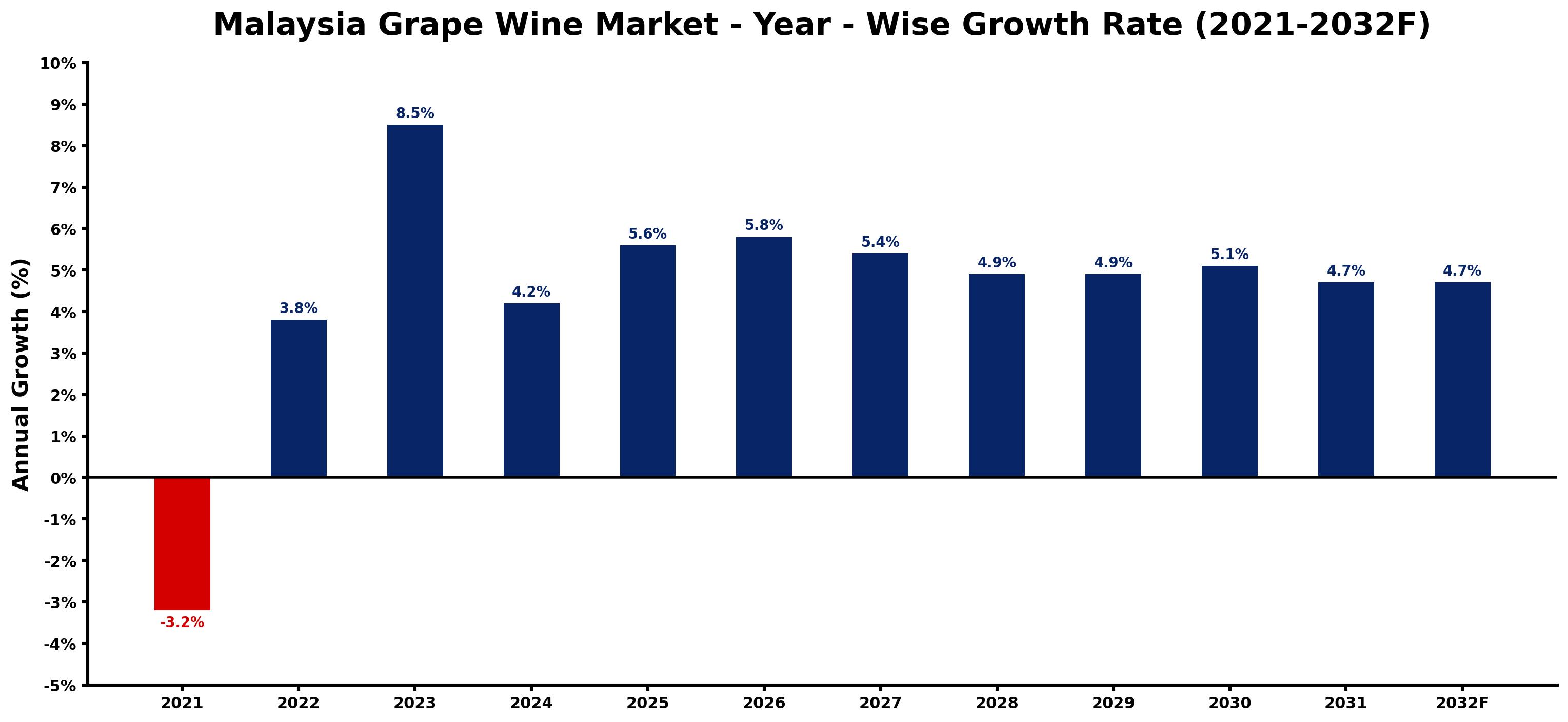
The table below presents the year wise growth rates along with the key drivers influencing the market
| Year | Growth Rate | Major Drivers |
| 2021 | -3.2% | Intensified competition from affordable imported wines diminished local brands' market share and sales. |
| 2022 | 3.8% | Cultural shifts towards wine appreciation enhanced social gatherings and dining experiences. |
| 2023 | 8.5% | Young consumers increasingly experiment with diverse wine options and pairings. |
| 2024 | 4.2% | Local vineyards gain popularity, promoting sustainability and unique regional flavors. |
| 2025 | 5.6% | Online wine sales platforms become essential, catering to younger tech-savvy buyers. |
| 2026 | 5.8% | Increased exposure through wine festivals boosts consumer awareness and interest. |
| 2027 | 5.4% | Global wine trends influence local preferences towards premium and organic selections. |
| 2028 | 4.9% | Educational initiatives on wine tasting create a sophisticated consumer base. |
| 2029 | 4.9% | Collaborations with local cuisine elevate wine's status in culinary experiences. |
| 2030 | 5.1% | Expanding middle class drives the demand for luxury and imported wine brands. |
| 2031 | 4.7% | E-commerce advancements facilitate access to international wine markets for consumers. |
| 2032 | 4.7% | Consumer health consciousness shifts focus towards organic and low-sulfite wines. |
Note - Market size estimations and growth projections presented in this report are based on 6Wresearch's advanced forecasting approach, validated with industry datasets as of June 2026.
Malaysia Grape Wine Market Synopsis
The Malaysia Grape Wine Market is projected to reach 5.8% and witness significant growth during the forecast period (2026-2032). The market is anticipated to expand at a compound annual growth rate (CAGR) of 4.9%, reflecting a robust shift in consumer preferences towards higher quality wines. Factors such as increasing disposable incomes, a burgeoning health and wellness consciousness, and dynamic promotional activities by wineries are pivotal in driving market demand. In addition, the diverse offerings of grape wine varieties, including reds and whites, enhance market attractiveness. However, challenges such as stringent regulations surrounding alcohol consumption remain crucial considerations for the industry.
Malaysia Grape Wine Market Growth Drivers
Several key drivers are bolstering the expansion of the Malaysia grape wine market. The increasing preference for premium quality wines among consumers is a significant factor, attributed to a growing interest in diverse flavor profiles and higher production standards. Furthermore, rising disposable incomes facilitate greater spending on luxury items like fine wines, creating a promising market landscape. Additionally, health and wellness trends have led to a heightened appreciation for moderate wine consumption, perceived as part of a balanced lifestyle. Promotional initiatives by wineries, including tastings and educational events, also play a role in engaging consumers and fostering brand loyalty. Lastly, the availability of various grape wine types caters to a wide range of consumer tastes, which further propels market growth.
Malaysia Grape Wine Market Challenges and Restraints
Despite its growth potential, the Malaysia grape wine market faces specific challenges that could impede progress. Stringent regulations governing alcohol sales and consumption in Malaysia can restrict market expansion, with laws varying significantly across states. These regulations may deter potential investors and complicate market entry for new brands. Additionally, cultural perceptions about alcohol consumption can limit the target audience, as certain demographic segments may eschew wine in favor of traditional beverages. Fluctuations in raw material costs, particularly grapes and production inputs, also pose financial challenges for winemakers. Lastly, competition from other alcoholic beverage segments, such as beer and spirits, can divert consumer attention away from grape wine, affecting its market share.
Malaysia Grape Wine Market Trends and Opportunities
Emerging trends and opportunities within the Malaysia grape wine market present a favorable outlook for future growth. The rise of online retail platforms is transforming the consumer purchasing experience, providing greater accessibility to a broader range of grape wines. This digital shift is particularly valuable for reaching younger consumers who prefer purchasing products online. Additionally, the trend towards wine tourism is gaining traction, with increasing numbers of wineries offering tours, tastings, and events, which enhance brand visibility and consumer engagement. Collaborations with local chefs for wine pairing events are also fostering a deeper appreciation for grape wine among consumers. Furthermore, sustainability practices in wine production, such as organic farming and eco-friendly packaging, are becoming increasingly important, aligning with growing consumer demands for environmentally responsible products.
Malaysia Grape Wine Market Government Investment and Initiatives
Government policies and initiatives play a pivotal role in shaping the Malaysia grape wine market. Recent efforts to promote foreign investment within the winery sector aim to enhance local production capabilities and introduce international expertise to Malaysian winemaking. The government is also focusing on culinary tourism, which includes wine tourism as a key aspect of its strategy, hoping to attract international tourists to local vineyards. Initiatives promoting local grape cultivation are being encouraged to reduce dependence on imports and support the domestic economy. Additionally, educational programs aimed at boosting consumer awareness and knowledge about grape wines are being implemented, further stimulating demand. Regulatory efforts to streamline licensing processes for new wineries are expected to facilitate easier market entry, thereby fostering a more dynamic industry environment.
Malaysia Grape Wine Market Latest Developments (May 2025 - June 2026)
Recent developments in the Malaysia grape wine market highlight a shift towards more innovative and consumer-oriented practices. Initiatives targeting younger consumers through digital marketing campaigns have gained momentum, reflecting an adaptation to changing consumer behaviors. Moreover, various wine festivals and local events have been organized to celebrate grape wine culture, which has successfully enhanced brand engagement and consumer participation. The introduction of new grape wine varieties, including those produced from locally sourced grapes, also marks a significant trend, appealing to both domestic and international markets. Enhanced focus on premium wine offerings and organic production methods is anticipated to attract more health-conscious consumers, reinforcing the market's growth trajectory. Regulatory revisions aimed at improving the operational environment for wineries are in the pipeline, potentially easing some previous restrictions and promoting industry expansion.
Malaysia Grape Wine Market - Key Attractiveness of the Report
- 10 Years of Market Numbers
- Historical Data Starting from 2022 to 2025
- Base Year: 2025
- Forecast Data until 2032
- Key Performance Indicators Impacting the Market
- Major Upcoming Developments and Projects
Key Highlights of the Report:
- Malaysia Grape Wine Market Outlook
- Market Size of Malaysia Grape Wine Market, 2025
- Forecast of Malaysia Grape Wine Market, 2032F
- Historical Data and Forecast of Malaysia Grape Wine Revenues & Volume for the Period 2022-2032F
- Malaysia Grape Wine Market Trend Evolution
- Malaysia Grape Wine Market Drivers and Challenges
- Malaysia Grape Wine Price Trends
- Malaysia Grape Wine Porter's Five Forces
- Malaysia Grape Wine Industry Life Cycle
- Historical Data and Forecast of Malaysia Grape Wine Market Revenues & Volume By Type for the Period 2022-2032F
- Historical Data and Forecast of Malaysia Grape Wine Market Revenues & Volume By Red Wine for the Period 2022-2032F
- Historical Data and Forecast of Malaysia Grape Wine Market Revenues & Volume By White Wine for the Period 2022-2032F
- Historical Data and Forecast of Malaysia Grape Wine Market Revenues & Volume By Rose Wine for the Period 2022-2032F
- Historical Data and Forecast of Malaysia Grape Wine Market Revenues & Volume By Other for the Period 2022-2032F
- Historical Data and Forecast of Malaysia Grape Wine Market Revenues & Volume By Applications for the Period 2022-2032F
- Historical Data and Forecast of Malaysia Grape Wine Market Revenues & Volume By Commercial Consumption for the Period 2022-2032F
- Historical Data and Forecast of Malaysia Grape Wine Market Revenues & Volume By Household Consumption for the Period 2022-2032F
- Historical Data and Forecast of Malaysia Grape Wine Market Revenues & Volume By Other for the Period 2022-2032F
- Malaysia Grape Wine Import Export Trade Statistics
- Market Opportunity Assessment By Type
- Market Opportunity Assessment By Applications
- Malaysia Grape Wine Top Companies Market Share
- Malaysia Grape Wine Competitive Benchmarking By Technical and Operational Parameters
- Malaysia Grape Wine Company Profiles
- Malaysia Grape Wine Key Strategic Recommendations






































