Malaysia Hormone Market Size, Share & Growth Rate
The Malaysia Hormone Market was estimated at USD 313 Million in 2025 and is projected to reach USD 406 Million by 2032, growing at a CAGR of 3.8% from 2026 to 2032. This growth is significantly influenced by an aging population that increasingly requires hormone therapies, coupled with a heightened awareness of hormonal disorders and their treatments. Furthermore, ongoing advancements in hormone replacement therapies and personalized medical approaches are anticipated to bolster market expansion throughout the forecast period.
Malaysia Hormone Market Year-wise Growth Rate and Key Drivers
This graph highlights how the Malaysia Hormone Market has steadily grown over the years, supported by major growth factors.
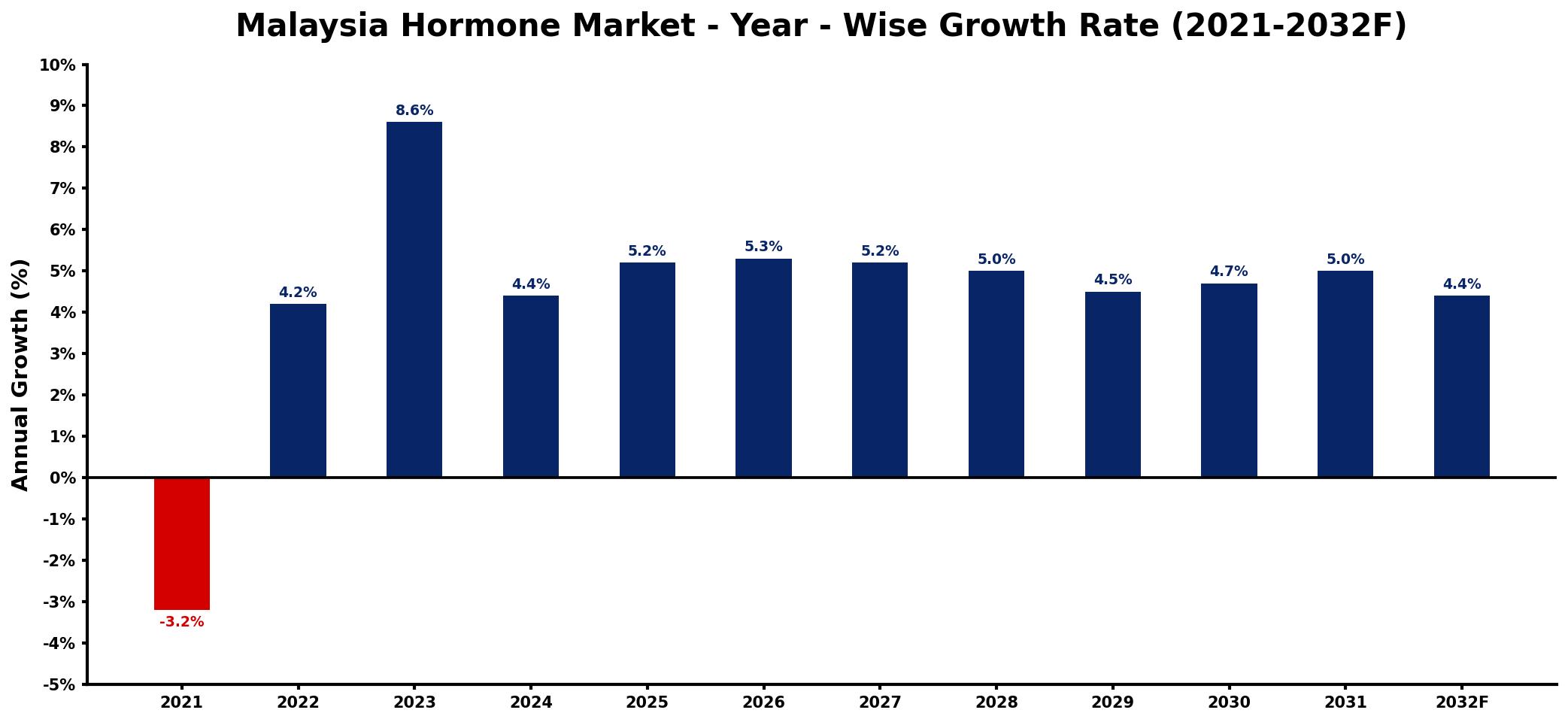
The table below presents the year‑wise growth rates along with the key drivers influencing the market
| Year | Growth Rate | Major Drivers |
| 2021 | -3.2% | decreased consumer healthcare expenditures |
| 2022 | 4.2% | rise in preventive health measures |
| 2023 | 8.6% | expansion of healthcare facilities |
| 2024 | 4.4% | increased investment in biotechnology |
| 2025 | 5.2% | growing public health awareness |
| 2026 | 5.3% | advancements in medical technologies |
| 2027 | 5.2% | rising end-use demand growth |
| 2028 | 5.0% | enhanced patient education initiatives |
| 2029 | 4.5% | broader access to healthcare services |
| 2030 | 4.7% | development of personalized medicine |
| 2031 | 5.0% | increased focus on wellness programs |
| 2032 | 4.4% | growing demand for alternative therapies |
Note: Market size estimations and growth projections presented in this report are based on 6Wresearch's proprietary forecasting methodology, utilizing the latest available industry data, government publications, and primary research inputs.
Malaysia Hormone Market Synopsis
In Malaysia, the demand for hormone therapies is gaining momentum, particularly due to the rising incidence of hormonal imbalances linked to aging. Conditions such as thyroid disorders, diabetes, and hormonal deficiencies necessitate effective treatment options, fueling the market's growth. These trends are complemented by the healthcare sector's focus on innovative solutions aimed at improving patient outcomes.
Moreover, the Malaysian government and healthcare institutions are increasingly prioritizing research and development in hormone therapies, leading to the emergence of new products and treatment methodologies. As awareness grows about the significance of hormonal health, the acceptance of hormone replacement therapies is likely to broaden, further shaping the dynamics of this market.
Malaysia Hormone Market Key Takeaways
- The market is driven by an aging demographic, rising awareness of hormonal disorders, and advancements in therapies.
- Key hormones in demand include thyroid hormones, insulin, and sex hormones, each addressing critical health concerns.
- Companies are investing in R&D to enhance treatment options and cater to the growing demand for personalized healthcare.
- Regulatory and ethical considerations will continue to influence market development and product acceptance.
- COVID-19 has emphasized the importance of healthcare accessibility, possibly increasing the demand for hormone-related treatments.
Evaluation of Restraints in Malaysia Hormone Market
While the Malaysia Hormone Market is poised for growth, several restraints are evident. Ethical considerations surrounding hormone therapies pose significant challenges, particularly regarding patient safety and informed consent. Regulatory scrutiny is also expected to tighten, necessitating compliance with evolving standards. Market players will need to adopt proactive strategies to address these complexities, ensuring that they align with ethical guidelines while still advancing treatment options.
Malaysia Hormone Market Trends
Several trends are currently shaping the Malaysia Hormone Market. First, there is a noticeable shift towards personalized medicine, where treatments are tailored to individual patient needs, enhancing efficacy and safety. Additionally, advancements in telemedicine are facilitating better access to hormonal health care, particularly in remote areas. Furthermore, ongoing education initiatives around hormonal health are empowering patients, leading to earlier diagnosis and treatment of hormonal disorders.
Malaysia Hormone Market Opportunities
The evolving landscape of the Malaysia Hormone Market presents numerous growth opportunities. Companies that invest in innovative hormone therapies and leverage technology for remote patient monitoring are likely to capture significant market share. Additionally, partnerships with healthcare providers can facilitate better patient outreach and education, driving demand for hormone treatments. Lastly, the increasing prevalence of lifestyle-related conditions opens avenues for preventive hormone therapies, enhancing market prospects.
Government Initiatives in the Malaysia Hormone Market
The Malaysian government is keen on improving healthcare accessibility, including hormone therapy services. Initiatives aimed at bolstering research and development in pharmaceuticals, along with public health campaigns focused on hormonal health, are in place to increase awareness and facilitate better patient care. These initiatives aim to enhance the overall healthcare infrastructure, fostering a favorable environment for the hormone market's growth.
Future Insights of the Malaysia Hormone Market
Looking ahead to 2026-2032, the Malaysia Hormone Market is expected to witness continued growth. As healthcare systems evolve and more individuals recognize the importance of hormonal balance, the demand for hormone therapies is anticipated to rise. Additionally, ongoing advancements in treatment technologies and patient management will likely enhance the overall efficacy and safety of hormone-related interventions, solidifying the market's trajectory.
Malaysia Hormone Market Latest Developments (2025 - 2026)
In recent months, the Malaysia Hormone Market has seen a surge in interest towards innovative hormone treatments, with several healthcare providers adopting advanced technologies for patient management. There is also a notable increase in partnerships between pharmaceutical companies and healthcare institutions aimed at expanding access to hormone therapies. Ongoing public awareness campaigns are fostering a better understanding of hormonal health, thus encouraging more individuals to seek treatment.
Malaysia Hormone Market - Key Attractiveness of the Report
- 10 Years of Market Numbers
- Historical Data Starting from 2022 to 2025
- Base Year: 2025
- Forecast Data until 2032
- Key Performance Indicators Impacting the Market
- Major Upcoming Developments and Projects
Key Highlights of the Report:
- Malaysia Hormone Market Outlook
- Market Size of Malaysia Hormone Market, 2025
- Forecast of Malaysia Hormone Market, 2032
- Historical Data and Forecast of Malaysia Hormone Revenues & Volume for the Period 2022-2032F
- Malaysia Hormone Market Trend Evolution
- Malaysia Hormone Market Drivers and Challenges
- Malaysia Hormone Price Trends
- Malaysia Hormone Porter's Five Forces
- Malaysia Hormone Industry Life Cycle
- Historical Data and Forecast of Malaysia Hormone Market Revenues & Volume By Product Type for the Period 2022-2032F
- Historical Data and Forecast of Malaysia Hormone Market Revenues & Volume By Powder for the Period 2022-2032F
- Historical Data and Forecast of Malaysia Hormone Market Revenues & Volume By Solvent for the Period 2022-2032F
- Historical Data and Forecast of Malaysia Hormone Market Revenues & Volume By Application for the Period 2022-2032F
- Historical Data and Forecast of Malaysia Hormone Market Revenues & Volume By Growth Hormone Deficiency for the Period 2022-2032F
- Historical Data and Forecast of Malaysia Hormone Market Revenues & Volume By Idiopathic Short Stature for the Period 2022-2032F
- Historical Data and Forecast of Malaysia Hormone Market Revenues & Volume By Turner Syndrome for the Period 2022-2032F
- Historical Data and Forecast of Malaysia Hormone Market Revenues & Volume By Small For Gestational Age for the Period 2022-2032F
- Historical Data and Forecast of Malaysia Hormone Market Revenues & Volume By Prader-Willi Syndrome for the Period 2022-2032F
- Historical Data and Forecast of Malaysia Hormone Market Revenues & Volume By Others for the Period 2022-2032F
- Historical Data and Forecast of Malaysia Hormone Market Revenues & Volume By Distribution Channel for the Period 2022-2032F
- Historical Data and Forecast of Malaysia Hormone Market Revenues & Volume By Hospital Pharmacy for the Period 2022-2032F
- Historical Data and Forecast of Malaysia Hormone Market Revenues & Volume By Retail Pharmacy for the Period 2022-2032F
- Historical Data and Forecast of Malaysia Hormone Market Revenues & Volume By Online Medstores for the Period 2022-2032F
- Malaysia Hormone Import Export Trade Statistics
- Market Opportunity Assessment By Product Type
- Market Opportunity Assessment By Application
- Market Opportunity Assessment By Distribution Channel
- Malaysia Hormone Top Companies Market Share
- Malaysia Hormone Competitive Benchmarking By Technical and Operational Parameters
- Malaysia Hormone Company Profiles
- Malaysia Hormone Key Strategic Recommendations






































