Malaysia Household Appliances Market Growth Rate
According to 6Wresearch internal database and industry insights, the Malaysia Household Appliances Market is growing at a compound annual growth rate (CAGR) of 5.2% during the forecast period (2026-2032).
Malaysia Household Appliances Market Year-wise Growth Rate and Key Drivers
This graph highlights how the Malaysia Household Appliances Market has steadily grown over the past five years, supported by major growth factors.
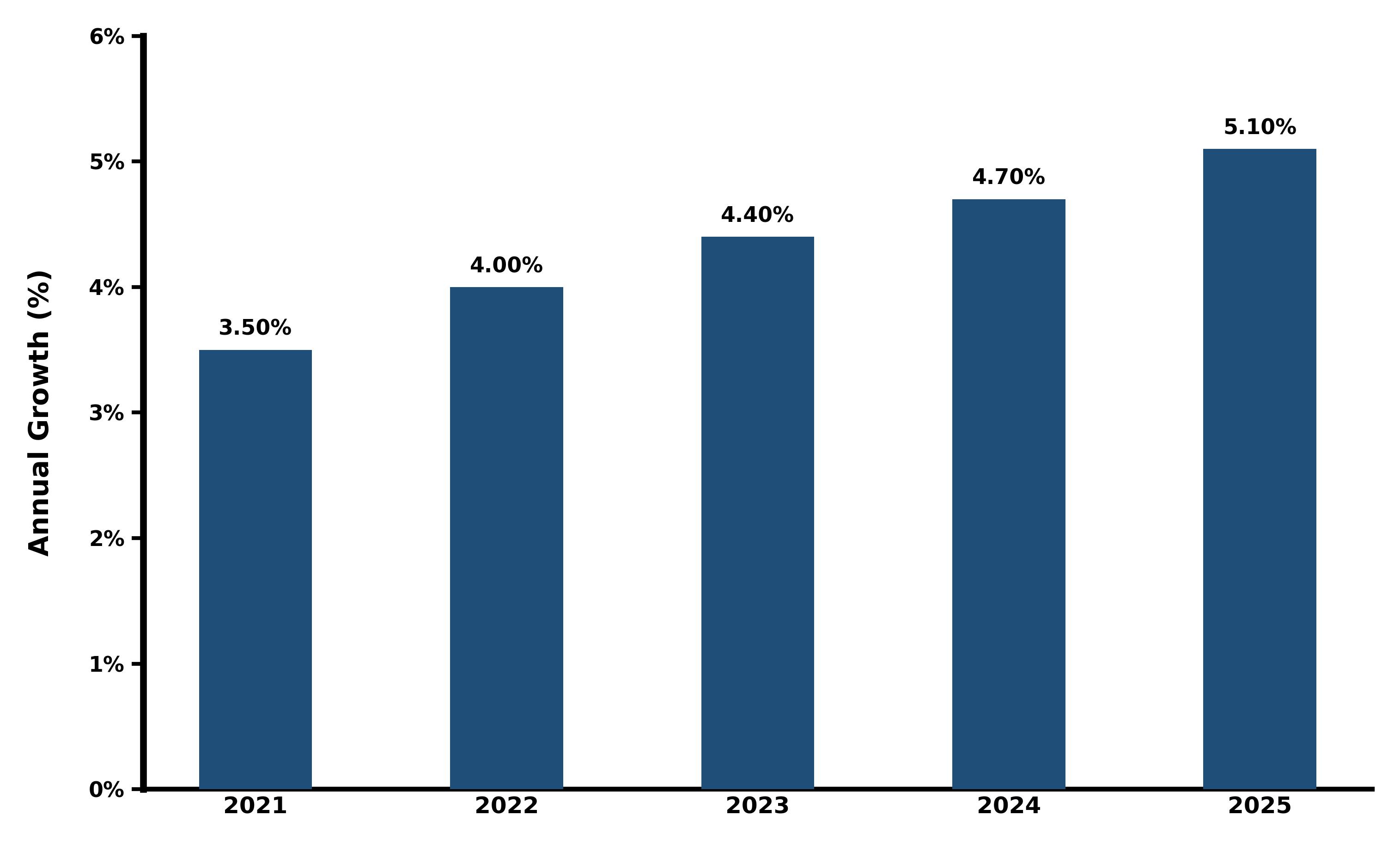 The table below presents the year‑wise growth rates along with the key drivers influencing the market
| Years | Est. Annual Growth in % | Growth Drivers |
| 2021 | 3.5% | Rising demand for energy-efficient and smart household appliances. |
| 2022 | 4% | Growth in middle-class income and urbanization driving appliance purchases. |
| 2023 | 4.4% | Increasing consumer preference for convenience and automation in home appliances. |
| 2024 | 4.7% | Surge in e-commerce adoption, enabling easier access to a wide range of household appliances. |
| 2025 | 5.1% | Government initiatives promoting energy-saving technologies and appliances. |
Topics Covered in the Malaysia Household Appliances Market Report
Malaysia Household Appliances Market report thoroughly covers the market by products and distribution channels. The market report provides an unbiased and detailed analysis of ongoing market trends, opportunities, high growth areas, and market drivers, which would help stakeholders devise and align their market strategies according to the current and future market dynamics.
Malaysia Household Appliances Market Highlights
| Report Name | Malaysia Household Appliances Market |
| Forecast Period | 2026–2032 |
| CAGR | 5.2% |
| Growing Sector |
Retail |
Malaysia Household Appliances Market Synopsis
The Malaysia Household Appliances Market is expected to experience substantial growth as more people in the country will enter the middle class segment and urban areas will continue to expand. The market is expanding as governments support initiatives that promote energy-efficient appliances and smart appliances. Consumers now prefer products which provide them both operational ease and automated functions and energy-efficient performance. The expansion of e-commerce has created new possibilities for customers to access various household appliances which contributes to the market's expansion. The market shows excellent future potential as of technological progress and the growing use of smart home systems.
Evaluation of Growth Drivers in the Malaysia Household Appliances Market
Below mentioned are some growth drivers and their impact on market dynamics:
| Drivers | Primary Segments Affected | Why It Matters |
| Energy Efficiency & Smart Technologies | Refrigerators, Washing Machines, Air Conditioners | Rising demand for energy-efficient, smart appliances drives sustainability. |
| Rising Disposable Income | All Household Appliances | Increased spending power of consumers are increasing demand for home appliances. |
| Technological Advancements | Air Conditioners, Entertainment Appliances, Ovens | Consumer interest in advanced, smart appliances with automation capabilities fuels demand. |
| E-commerce Expansion | All Distribution Channels | Online retail platforms are increasing the demand for household appliance. |
| Government Incentives for Sustainability | Refrigerators, Cooking Ranges | Increasing government initiative for sustainability is driving demand for smart appliances. |
The Malaysia Household Appliances Market is experiencing significant growth with an expected CAGR of 5.2% during the forecast period (2026-2032). The Malaysia Household Appliances Market operates as multiple important factors drive its business activities. The growing consumer demand for energy-efficient products which also protect the environment exists as of current sustainability trends and strict government regulations. Also, the demand for IoT-enabled appliances providing users with both convenience and energy-saving features has grown as of the increasing popularity of smart home systems. The demand for advanced sanitizing equipment and food preservation appliances has grown as people now pay more attention to maintaining their health and hygienic practices. The combination of rising disposable income levels with increasing urbanization rates drives more people to buy home appliances which helps the market to expand.
Evaluation of Restraints in the Malaysia Household Appliances Market
Below mentioned are some major restraints and their influence on market dynamics:
| Restraints | Primary Segments Affected | What This Means |
| High Product Costs | All Household Appliances | Increases upfront costs, limiting affordability for lower-income households. |
| Dependency on Imports | All Product Types | Dependency on imports creates supply chain risks and price fluctuations. |
| Consumer Hesitancy towards Smart Products | Smart Appliances, Air Conditioners, Refrigerators | Reluctance to adopt newer technologies affects the growth of smart appliances. |
| Price Volatility of Raw Materials | All Household Appliances | Creates price volatility and creates raw material cost high. |
| Regulatory Compliance | Energy-Efficient Products, Smart Appliances | Compliance with government standards makes costs for manufacturers high. |
Malaysia Household Appliances Market Challenges
The Malaysia Household Appliances Market faces challenges through two main factors which restrict consumer access to products. The production process depends on imported components which create supply chain difficulties and price fluctuations. Advanced smart appliances face adoption challenges from consumers who fear their high cost and complex operation. Manufacturers encounter additional expenses through regulatory compliance requirements which restrict their ability to expand into specific product markets.
Malaysia Household Appliances Market Trends
Some major trends contributing to the Malaysia Household Appliances Market Growth are:
- Energy-Efficient Appliances: There is a growing demand among consumers for eco-friendly household appliances due to increased awareness about environmental concerns.
- Smart Home Integration: The consumers are opting more of appliances that are convenient to use and are controlled by remote and have energy saving features.
- Health and Hygiene Focus: The consumers are increasingly opting for appliances having sanitizing capabilities and advanced food preservation technologies due to demand for hygiene.
Investment Opportunities in the Malaysia Household Appliances Market
Here are some investment opportunities in the Malaysia Household Appliances Industry:
- Energy-Efficient Product Development: The investors can invest more in the making of sustainable and energy-efficient products due to increased consumer preference for sustainability.
- Smart Appliances and IoT Integration: The integration of smart technologies such as remote control system and automation in home appliances will increase the market expansion.
- E-Commerce Platforms: The investors can invest more in partnerships with online e-commerce platforms due to increasing trend of online shopping.
Top 5 Leading Players in the Malaysia Household Appliances Market
Here are some top companies contributing to the Malaysia Household Appliances Market Share:
1. Panasonic
| Company Name | Panasonic |
|---|---|
| Established Year | 1977 |
| Headquarters | Kuala Lumpur, Malaysia |
| Official Website | Click Here |
Panasonic Malaysia is a leader in the household appliances market, offering energy-efficient products including refrigerators, washing machines, and air conditioners. The company is known for its innovative solutions, focusing on sustainability and customer satisfaction.
2. Samsung Electronics
| Company Name | Samsung Electronics |
|---|---|
| Established Year | 1995 |
| Headquarters | Petaling Jaya, Malaysia |
| Official Website | Click Here |
Samsung Electronics Malaysia is a key player in the smart appliance market, offering a wide range of innovative products such as smart refrigerators, washing machines, and air conditioners. Their focus on advanced technology and energy efficiency has gained strong consumer demand.
3. LG Electronics
| Company Name | LG Electronics |
|---|---|
| Established Year | 1998 |
| Headquarters | Shah Alam, Malaysia |
| Official Website | Click Here |
LG Electronics Malaysia is known for its high-performance home appliances, including refrigerators, washing machines, and air conditioners. The brand is recognized for its emphasis on energy efficiency, smart technologies, and sleek design.
4. Sharp Electronics
| Company Name | Sharp Electronics |
|---|---|
| Established Year | 1973 |
| Headquarters | Petaling Jaya, Malaysia |
| Official Website | - |
Sharp Electronics Malaysia offers a broad range of household appliances such as refrigerators, air purifiers, and washing machines. Known for their reliability and efficiency, Sharp appliances cater to both residential and commercial markets.
5. Bosch
| Company Name | Bosch |
|---|---|
| Established Year | 1994 |
| Headquarters | Kuala Lumpur, Malaysia |
| Official Website | Click Here |
Bosch is a well-regarded brand in the household appliances market, offering premium quality products, including washing machines, dishwashers, and cooktops. The brand is known for its durable, energy-efficient products, and cutting-edge technology.
Government Regulations Introduced in the Malaysia Household Appliances Market
According to Malaysian government data, the development of the Malaysia Household Appliances Market is significantly influenced by government regulations. The government has implemented standards and policies which promote the use of energy-efficient appliances and sustainable manufacturing methods. The Energy Efficiency and Conservation Act together with multiple tax incentives drive manufacturers to develop sustainable products while pursuing technological advancement. The regulations help protect the environment while creating conditions for market expansion and sustainable competitive advantage.
Future Insights of the Malaysia Household Appliances Market
The Malaysia Household Appliances Market will keep growing as urban areas will expand and people will earn more money and smart energy-efficient products will become more popular. The market will experience increased growth as technological advancements and government financial support and e-commerce platforms are expanding their presence. Consumers will continue to search for appliances which provide them with greater convenience through automated features and sustainable design. The market in Malaysia will experience strong growth as the country is adopting more smart home technologies and sustainability projects.
Market Segmentation Analysis
The report offers a comprehensive study of the subsequent market segments and their leading categories.
Refrigerator to Dominate the Market - By Product
According to Guneet Kaur, Senior Research Analyst at 6Wresearch, refrigerators dominate the Malaysia Household Appliances Market due to their essential role in modern households and their increasing demand for energy-efficient and smart features. With growing consumer awareness of environmental impact, energy-efficient refrigerators are becoming increasingly popular, particularly in urban areas.
Supermarket & Hypermarket to Dominate the Market – By Distribution Channel
Supermarkets and hypermarkets are leading the market. These outlets provide a wide variety of household appliances. Also, they do have strong brand presence and competitive pricing, making them a significant choice for consumers seeking convenience and a one-stop shopping experience.
Key attractiveness of the report
- 10 Years Market Numbers
- Historical Data Starting from 2022 to 2025
- Base Year: 2025
- Forecast Data until 2032
- Key Performance Indicators Impacting the Market
- Major Upcoming Developments and Projects
Key Highlights of the Report:
- Malaysia Household Appliances Market Outlook
- Market Size of Malaysia Household Appliances Market, 2025
- Forecast of Malaysia Household Appliances Market, 2032
- Historical Data and Forecast of Malaysia Household Appliances Revenues & Volume for the Period 2022-2032
- Malaysia Household Appliances Market Trend Evolution
- Malaysia Household Appliances Market Drivers and Challenges
- Malaysia Household Appliances Price Trends
- Malaysia Household Appliances Porter's Five Forces
- Malaysia Household Appliances Industry Life Cycle
- Historical Data and Forecast of Malaysia Household Appliances Market Revenues & Volume By Product for the Period 2022-2032
- Historical Data and Forecast of Malaysia Household Appliances Market Revenues & Volume By Refrigerator for the Period 2022-2032
- Historical Data and Forecast of Malaysia Household Appliances Market Revenues & Volume By Air Conditioner & Heater for the Period 2022-2032
- Historical Data and Forecast of Malaysia Household Appliances Market Revenues & Volume By Entertainment & Information Appliances for the Period 2022-2032
- Historical Data and Forecast of Malaysia Household Appliances Market Revenues & Volume By Washing Machine for the Period 2022-2032
- Historical Data and Forecast of Malaysia Household Appliances Market Revenues & Volume By Cleaning Appliance for the Period 2022-2032
- Historical Data and Forecast of Malaysia Household Appliances Market Revenues & Volume By Cooktop, Cooking Range, Microwave & Oven for the Period 2022-2032
- Historical Data and Forecast of Malaysia Household Appliances Market Revenues & Volume By Others for the Period 2022-2032
- Historical Data and Forecast of Malaysia Household Appliances Market Revenues & Volume By Distribution Channel for the Period 2022-2032
- Historical Data and Forecast of Malaysia Household Appliances Market Revenues & Volume By Supermarket & Hypermarket for the Period 2022-2032
- Historical Data and Forecast of Malaysia Household Appliances Market Revenues & Volume By Specialty Stores for the Period 2022-2032
- Historical Data and Forecast of Malaysia Household Appliances Market Revenues & Volume By e-Commerce for the Period 2022-2032
- Historical Data and Forecast of Malaysia Household Appliances Market Revenues & Volume By Others for the Period 2022-2032
- Malaysia Household Appliances Import Export Trade Statistics
- Market Opportunity Assessment By Product
- Market Opportunity Assessment By Distribution Channel
- Malaysia Household Appliances Top Companies Market Share
- Malaysia Household Appliances Competitive Benchmarking By Technical and Operational Parameters
- Malaysia Household Appliances Company Profiles
- Malaysia Household Appliances Key Strategic Recommendations
Market Covered
The report subsequently covers the market by following segments and subsegments.
By Product:
- Refrigerator
- Air Conditioner & Heater
- Entertainment & Information Appliances
- Washing Machine
- Cleaning Appliance
- Cooktop
- Cooking Range
- Microwave & Oven
- Others
By Distribution Channel:
- Supermarket & Hypermarket
- Specialty Stores
- e-Commerce
- Others






































