Malaysia IT in Real Estate Market Size & Growth Rate (2026-2032)
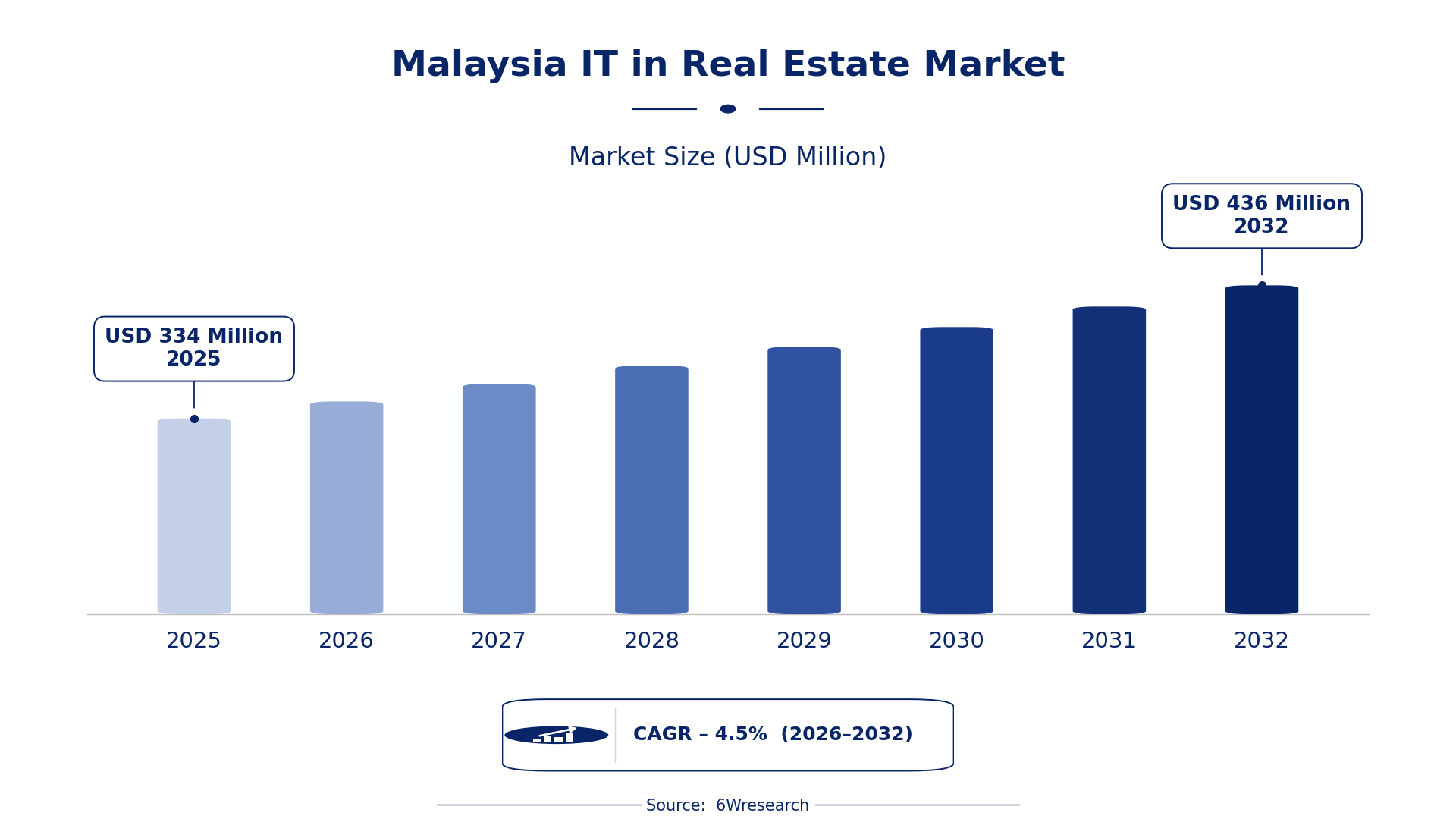
The Malaysia IT in Real Estate Market was estimated at USD 334 Million in 2025 and is projected to reach USD 436 Million by 2032, growing at a CAGR of 4.5% from 2026 to 2032.
Malaysia IT in Real Estate Market Synopsis
The IT in Real Estate market in Malaysia is currently undergoing a transformation, fueled by a pressing demand for enhanced operational efficiencies and improved tenant interactions. As digital technologies gain traction, real estate companies are investing in IT solutions to streamline processes and engage potential clients effectively.
The integration of cutting-edge technologies such as IoT, AI, and blockchain is no longer optional; it’s becoming essential for survival. Property developers and management firms are increasingly adopting these technologies to create smart environments, which are reshaping how real estate operates in Malaysia.
Malaysia IT in Real Estate Market Year-wise Growth Rate and Key Drivers
This graph illustrates the annual growth rates of the Malaysia IT in Real Estate Market from 2021 to 2032, highlighting a steady upward trajectory and projected expansion over the forecast period.
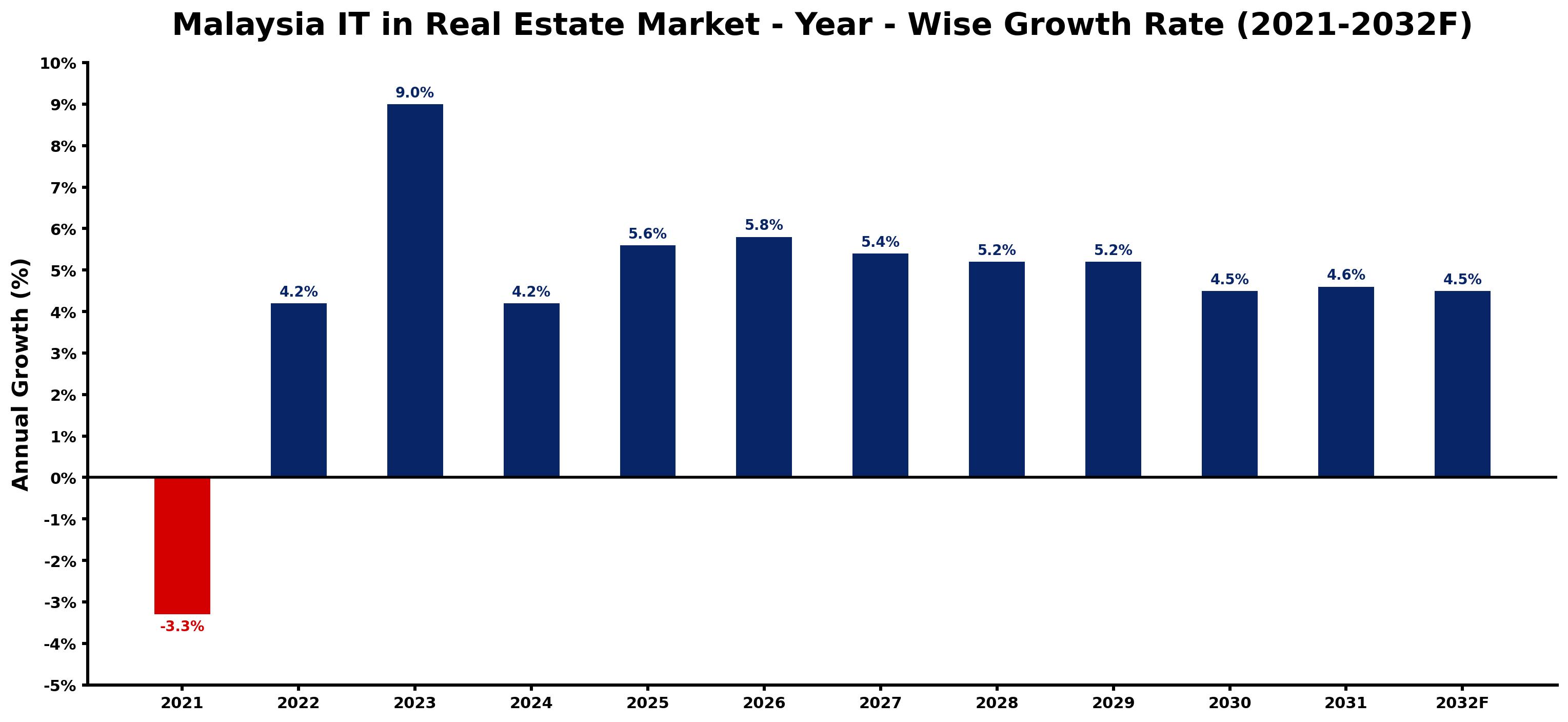
The table below presents the year‑wise growth rates along with the key drivers influencing the market
| Year | Growth Rate | Major Drivers |
| 2021 | -3.3% | Delayed adoption of digital tools by Malaysian realtors. |
| 2022 | 4.2% | Government initiatives promoting smart home technology adoption. |
| 2023 | 9.0% | Increased integration of AI in property management solutions. |
| 2024 | 4.2% | Growing urban population drives demand for digital real estate tools. |
| 2025 | 5.6% | Focus on digital marketing strategies by real estate firms. |
| 2026 | 5.8% | Government tax incentives for digital property development projects. |
| 2027 | 5.4% | Rise in online property portals enhancing purchasing accessibility. |
| 2028 | 5.2% | Increased participation of tech startups in real estate solutions. |
| 2029 | 5.2% | Enhanced mobile applications for property investment insights. |
| 2030 | 4.5% | Digital transformation programs initiated by Malaysian property regulators. |
| 2031 | 4.6% | Demand for virtual reality tools in real estate marketing. |
| 2032 | 4.5% | Sustainability initiatives driving tech adoption in green buildings. |
Note: Market size estimations and growth projections presented in this report are based on 6Wresearch's proprietary forecasting methodology, utilizing the latest available industry data, government publications, and primary research inputs.
Malaysia IT in Real Estate Market Key Takeaways
Below are some of the specific key takeaways from the market, including:
- The rapid adoption of property management software is enhancing operational efficiency for real estate firms.
- Integration of IoT devices is pivotal in creating smart buildings that improve tenant experiences.
- The shift towards digital marketing strategies is transforming how properties are marketed and sold.
- Challenges remain, particularly regarding data security and employee training in new technologies.
- COVID-19 has accelerated the need for virtual tours and digital transaction platforms.
Evaluation of Restraints in Malaysia IT in Real Estate Market
Despite the promising growth, the market faces significant hurdles. A substantial portion of the real estate sector is still steeped in traditional practices, making the transition to digital platforms difficult. Many firms are hesitant to embrace IT solutions, primarily due to concerns about costs and the learning curve associated with new technologies. Additionally, data privacy and security are critical issues, as real estate transactions often involve sensitive information. These factors could stymie progress if not addressed adequately.
Malaysia IT in Real Estate Market Trends
Key trends are shaping the IT in Real Estate market in Malaysia. Increasing reliance on data analytics is enabling firms to make informed decisions based on consumer behavior and market demands. The shift towards sustainability is also influencing technology adoption, as companies look for energy-efficient solutions to reduce operational costs.
on top of that, the rise of remote work is driving demand for flexible leasing arrangements and virtual solutions. As a result, we see a growing emphasis on virtual tours and augmented reality applications that enhance property viewing experiences.
Malaysia IT in Real Estate Market Opportunities
Significant opportunities lie in enhancing customer experience through digital platforms. The growing interest in smart building technologies presents avenues for investment, particularly in IoT and AI-driven solutions. Additionally, partnerships between tech firms and real estate companies can facilitate the development of tailored IT solutions, addressing specific industry needs.
on top of that, as government initiatives promote digital transformation, companies that align with these objectives will be well-positioned to capitalize on favorable conditions.
Government Initiatives in the Malaysia IT in Real Estate Market
The Malaysian government is actively fostering the growth of the IT in Real Estate market through various initiatives aimed at digital transformation and smart city development. This proactive regulatory environment is crucial, as it encourages investment and innovation within the sector, aligning with broader economic goals.
- A recently completed initiative focused on upgrading digital infrastructure to support smart building technologies.
- Currently ongoing projects aim to enhance cybersecurity measures across the real estate sector.
- A planned public-private partnership is expected to drive innovation in property management solutions by 2026.
- New regulations introduced in 2024 mandate the integration of energy-efficient technologies in new developments.
- Government-backed funding programs are being rolled out to incentivize the adoption of advanced IT solutions in real estate.
Future Insights of the Malaysia IT in Real Estate Market
Looking ahead to 2026-2032, the Malaysia IT in Real Estate market is set for steady growth driven by ongoing digital transformation. Companies that effectively harness emerging technologies will likely dominate the landscape. The demand for smart, connected spaces will continue to rise, and firms that can integrate IT solutions into their operations will benefit immensely.
As the market evolves, adaptability will be key. Firms that prioritize training and cybersecurity while investing in innovative technologies will emerge as leaders in this competitive environment.
Malaysia IT in Real Estate Market Latest Developments
Recent developments in the Malaysia IT in Real Estate market indicate a strong push towards digital innovation and smart technology adoption. The pace of change has accelerated, with companies seeking to enhance operational efficiency and improve customer interactions.
- A major technology vendor launched a new property management software suite in early 2025, aimed at streamlining operations for real estate firms.
- Currently ongoing initiatives focus on training programs for employees to facilitate the transition to digital platforms.
- In Q2 2025, a collaboration between leading tech companies will introduce advanced IoT solutions for energy management in commercial properties.
- A rollout expected to begin in late 2026 aims to implement augmented reality tools for virtual property tours.
Malaysia IT in Real Estate Market - Key Attractiveness of the Report
- 10 Years of Market Numbers
- Historical Data Starting from 2022 to 2025
- Base Year: 2025
- Forecast Data until 2032
- Key Performance Indicators Impacting the Market
- Major Upcoming Developments and Projects
Key Highlights of the Report:
- Malaysia IT in Real Estate Market Outlook
- Market Size of Malaysia IT in Real Estate Market, 2025
- Forecast of Malaysia IT in Real Estate Market, 2032
- Historical Data and Forecast of Malaysia IT in Real Estate Revenues & Volume for the Period 2022-2032F
- Malaysia IT in Real Estate Market Trend Evolution
- Malaysia IT in Real Estate Market Drivers and Challenges
- Malaysia IT in Real Estate Price Trends
- Malaysia IT in Real Estate Porter's Five Forces
- Malaysia IT in Real Estate Industry Life Cycle
- Historical Data and Forecast of Malaysia IT in Real Estate Market Revenues & Volume By Enterprise Application for the Period 2022-2032F
- Historical Data and Forecast of Malaysia IT in Real Estate Market Revenues & Volume By Customer Relationship Management (CRM) for the Period 2022-2032F
- Historical Data and Forecast of Malaysia IT in Real Estate Market Revenues & Volume By Enterprise Resource Planning (ERP) for the Period 2022-2032F
- Historical Data and Forecast of Malaysia IT in Real Estate Market Revenues & Volume By Enterprise Content Management (ECM) for the Period 2022-2032F
- Historical Data and Forecast of Malaysia IT in Real Estate Market Revenues & Volume By Business Intelligence (BI) for the Period 2022-2032F
- Historical Data and Forecast of Malaysia IT in Real Estate Market Revenues & Volume By Business Process Management (BPM) for the Period 2022-2032F
- Historical Data and Forecast of Malaysia IT in Real Estate Market Revenues & Volume By Security Solution for the Period 2022-2032F
- Historical Data and Forecast of Malaysia IT in Real Estate Market Revenues & Volume By Access Control for the Period 2022-2032F
- Historical Data and Forecast of Malaysia IT in Real Estate Market Revenues & Volume By Deployment Type for the Period 2022-2032F
- Historical Data and Forecast of Malaysia IT in Real Estate Market Revenues & Volume By On-Premises for the Period 2022-2032F
- Historical Data and Forecast of Malaysia IT in Real Estate Market Revenues & Volume By Cloud for the Period 2022-2032F
- Historical Data and Forecast of Malaysia IT in Real Estate Market Revenues & Volume By Service for the Period 2022-2032F
- Historical Data and Forecast of Malaysia IT in Real Estate Market Revenues & Volume By Integration & Deployment for the Period 2022-2032F
- Historical Data and Forecast of Malaysia IT in Real Estate Market Revenues & Volume By Consulting for the Period 2022-2032F
- Historical Data and Forecast of Malaysia IT in Real Estate Market Revenues & Volume By Maintenance & Support for the Period 2022-2032F
- Historical Data and Forecast of Malaysia IT in Real Estate Market Revenues & Volume By Others for the Period 2022-2032F
- Malaysia IT in Real Estate Import Export Trade Statistics
- Market Opportunity Assessment By Enterprise Application
- Market Opportunity Assessment By Security Solution
- Market Opportunity Assessment By Deployment Type
- Market Opportunity Assessment By Service
- Malaysia IT in Real Estate Top Companies Market Share
- Malaysia IT in Real Estate Competitive Benchmarking By Technical and Operational Parameters
- Malaysia IT in Real Estate Company Profiles
- Malaysia IT in Real Estate Key Strategic Recommendations






































