Malaysia Leather Belts Market Summary
The malaysia leather belts market was estimated at USD 468 Million in 2025 and is projected to reach USD 610 Million by 2032, growing at a CAGR of 5.8% from 2026 to 2032.
Malaysia Leather Belts Market Year-wise Growth Rate and Key Drivers
This graph highlights how the Malaysia Leather Belts Market has steadily grown over the past five years, supported by major growth factors.
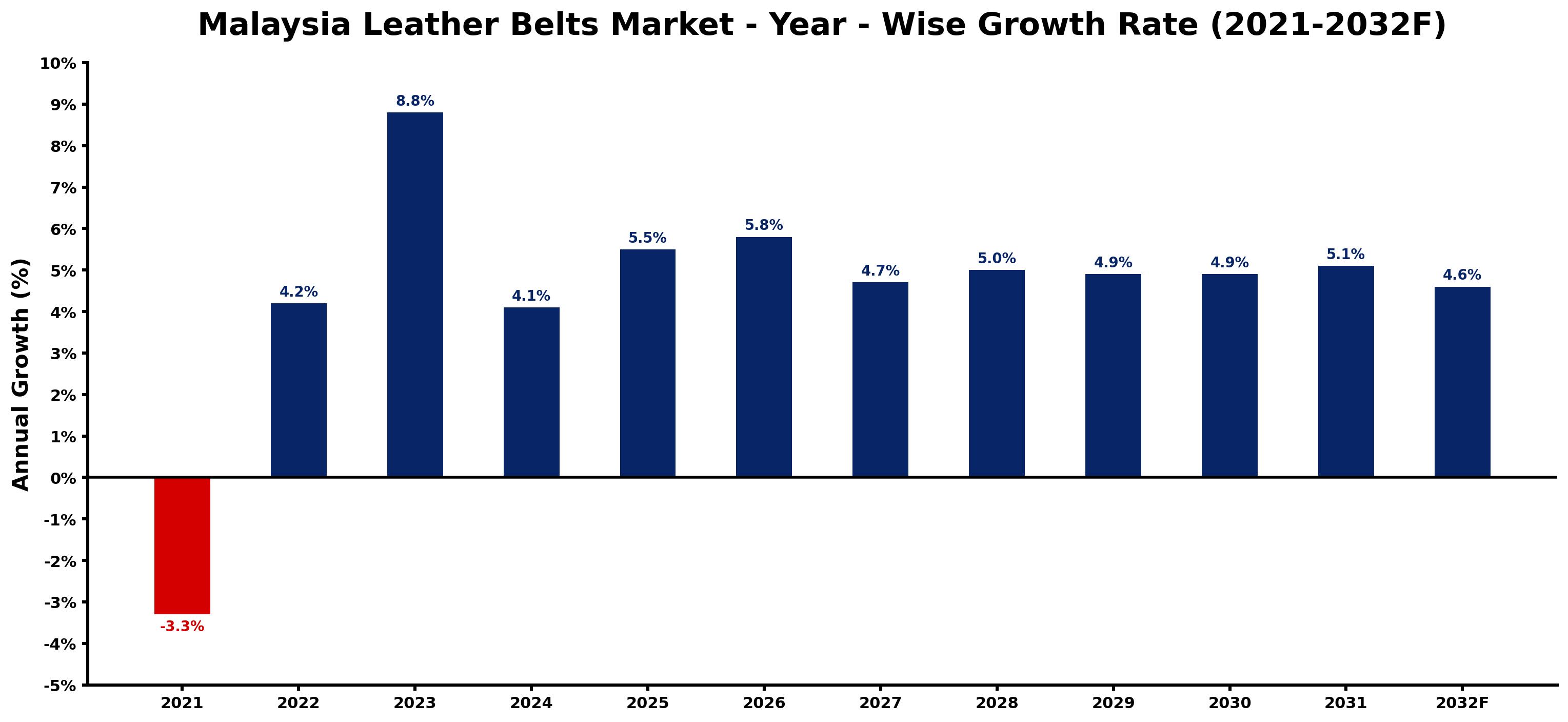
The table below presents the year wise growth rates along with the key drivers influencing the market
| Year | Growth Rate | Major Drivers |
| 2021 | -3.3% | Decreased disposable income due to pandemicrelated economic challenges led to reduced leather accessory purchases. |
| 2022 | 4.2% | E-commerce platforms expand, facilitating easier access to diverse leather belt styles. |
| 2023 | 8.8% | Local artisans gain recognition, emphasizing craftsmanship and bespoke leather goods. |
| 2024 | 4.1% | Urbanization trends influence fashion preferences, boosting demand for lifestyle accessories. |
| 2025 | 5.5% | Increased disposable income allows consumers to invest in premium leather products. |
| 2026 | 5.8% | Social media influences purchasing decisions, popularizing trendy leather belt designs. |
| 2027 | 4.7% | Young professionals showcase leather belts as essential fashion statements in workplaces. |
| 2028 | 5.0% | Collaboration between fashion brands and traditional craftsmen revitalizes local economies. |
| 2029 | 4.9% | Sustainability concerns prompt brands to prioritize ethical sourcing of leather materials. |
| 2030 | 4.9% | Retailers adopt omnichannel strategies to enhance customer experience and brand loyalty. |
| 2031 | 5.1% | Tech innovations streamline production processes, improving efficiency in leather belt manufacturing. |
| 2032 | 4.6% | Global fashion trends integrate Malaysian designs, elevating local brands on international platforms. |
Note - Market size estimations and growth projections presented in this report are based on 6Wresearch's advanced forecasting approach, validated with industry datasets as of June 2026.
Malaysia Leather Belts Market Synopsis
The Malaysia Leather Belts Market is projected to reach 5.8% and witness significant growth during the forecast period (2026-2032). This market growth is primarily driven by an increasing demand for stylish and fashionable accessories. Factors such as rising consumer preference for branded products, alongside a surge in urbanization, contribute significantly to this positive trajectory. Additionally, promotional strategies employed by e-commerce platforms, including discounts on leather belts, are expected to further stimulate market expansion. The rising disposable incomes of consumers will also play a crucial role in this growth phase over the upcoming years.
Malaysia Leather Belts Market Growth Drivers
The growth of the Malaysia Leather Belts Market is attributed to several pivotal drivers that reflect changing consumer behaviors and market dynamics. Firstly, the fashion trend driving consumers towards stylish accessories enhances the attractiveness of leather belts as essential components of personal style. Secondly, the increasing inclination towards branded products aligns with consumer desires for quality and prestige, which leather belts can satisfy. Thirdly, rapid urbanization is fostering modern lifestyles, leading to greater demand for accessories to complement daily attire.
- The surge in disposable incomes across Malaysia allows consumers to invest in quality leather accessories, reinforcing their fashion choices.
- Promotional campaigns targeting online consumers effectively boost sales, making leather belts more accessible than ever.
- Changing fashion trends, particularly among younger demographics, foster innovation in belt designs and materials, appealing to diverse consumer preferences.
- Heightened awareness of environmental issues has led to an increased interest in eco-friendly materials, enhancing the sustainability aspect of the market.
- The psychological shift towards self-expression through fashion accelerates demand for unique and designer leather belts, contributing to market growth.
Malaysia Leather Belts Market Trends and Opportunities
The Malaysia Leather Belts Market is experiencing notable trends that shape its future landscape. A significant trend is the transition from traditional metal buckles to more innovative and fashionable alternatives, such as plastic or printed designs. Furthermore, manufacturers are increasingly investing in the development of creative styles, catering to the evolving tastes of consumers. Additionally, a growing focus on sustainability has propelled the use of eco-friendly materials in leather belt production.
- Innovative design trends are driving collaborations between fashion designers and manufacturers, leading to unique product offerings.
- Online retail platforms are becoming key sales channels for leather belts, increasing the market's reach across various consumer segments.
- The rise in demand for high-quality designer belts among consumers aged 25-34 indicates a lucrative market segment for premium products.
- Brand loyalty is fostering repeat purchases, particularly in urban areas where consumers are more exposed to fashion trends.
- Cross-promotional efforts with other fashion accessories provide opportunities for market players to diversify their product lines.
Malaysia Leather Belts Market Challenges and Restraints
Despite the promising growth prospects, the Malaysia Leather Belts Market faces several challenges. One of the primary obstacles is the rising competition from alternative materials, such as synthetic belts, which often come at a lower price point. Additionally, fluctuations in raw material prices can adversely impact production costs, challenging manufacturers' profitability. There is also a need for continuous innovation to keep up with rapidly changing consumer preferences in fashion.
- Counterfeit products pose a threat to brand integrity and consumer trust, impacting the overall market environment.
- The economic fluctuations impacting disposable incomes can result in reduced consumer spending on luxury accessories like leather belts.
- Supply chain disruptions can affect the availability of quality raw materials, posing challenges for manufacturers.
- The awareness of sustainability has led to increased scrutiny on manufacturing processes, requiring companies to adapt to new regulations.
- Shifts in consumer purchasing behaviors, particularly post-COVID, necessitate continuous adaptation in marketing strategies.
Malaysia Leather Belts Market Government Investment and Initiatives
The Malaysian government plays an influential role in the development of the leather accessories market, including leather belts. Initiatives aimed at promoting local manufacturing and enhancing exports of leather goods reflect a commitment to boosting this sector. Public spending in infrastructure improvements is expected to facilitate better distribution channels for leather belt manufacturers. Furthermore, government support for small and medium enterprises (SMEs) in the leather industry encourages innovation and competitiveness.
- Policies supporting sustainable practices in manufacturing promote a greener approach to production in the leather industry.
- Investment in skill development programs for artisans enhances the quality and design innovation of leather belts.
- Incentives for e-commerce platforms help expand market reach, enabling local manufacturers to tap into the online consumer base.
- Government partnerships with trade bodies for participation in international expos facilitate networking and brand exposure.
- Support for R&D in innovative materials and designs positions Malaysian manufacturers at the forefront of the market.
Malaysia Leather Belts Market Latest Developments (May 2025 - June 2026)
Recent developments in the Malaysia Leather Belts Market indicate a continuing shift towards more innovative and trendy offerings. Manufacturers have begun focusing on unique designs that resonate with younger consumers, incorporating vibrant colors and novel materials. The move towards e-commerce has accelerated, with various online platforms enhancing user experience through personalized recommendations and promotional offers. Moreover, sustainability has become a focal point, with several manufacturers adopting eco-friendly practices in production.
- Market players have increased collaboration with online influencers to enhance brand visibility and reach younger audiences.
- Promotional campaigns that showcase the quality and style of leather belts have gained traction, elevating consumer engagement.
- Emerging trends in personalization are being integrated, allowing consumers to customize their leather belts based on personal preferences.
- Investment in digital marketing strategies has proven effective in attracting a broader customer base.
- Innovative packaging solutions have also attracted consumer attention, making products more appealing at the point of sale.
Malaysia Leather Belts Market - Key Attractiveness of the Report
- 10 Years of Market Numbers
- Historical Data Starting from 2022 to 2025
- Base Year: 2025
- Forecast Data until 2032
- Key Performance Indicators Impacting the Market
- Major Upcoming Developments and Projects
Key Highlights of the Report:
- Malaysia Leather Belts Market Outlook
- Market Size of Malaysia Leather Belts Market, 2025
- Forecast of Malaysia Leather Belts Market, 2032F
- Historical Data and Forecast of Malaysia Leather Belts Revenues & Volume for the Period 2022-2032F
- Malaysia Leather Belts Market Trend Evolution
- Malaysia Leather Belts Market Drivers and Challenges
- Malaysia Leather Belts Price Trends
- Malaysia Leather Belts Porter's Five Forces
- Malaysia Leather Belts Industry Life Cycle
- Historical Data and Forecast of Malaysia Leather Belts Market Revenues & Volume By Type for the Period 2022-2032F
- Historical Data and Forecast of Malaysia Leather Belts Market Revenues & Volume By Man for the Period 2022-2032F
- Historical Data and Forecast of Malaysia Leather Belts Market Revenues & Volume By Woman for the Period 2022-2032F
- Historical Data and Forecast of Malaysia Leather Belts Market Revenues & Volume By Application for the Period 2022-2032F
- Historical Data and Forecast of Malaysia Leather Belts Market Revenues & Volume By Business for the Period 2022-2032F
- Historical Data and Forecast of Malaysia Leather Belts Market Revenues & Volume By Leisure for the Period 2022-2032F
- Historical Data and Forecast of Malaysia Leather Belts Market Revenues & Volume By Other for the Period 2022-2032F
- Malaysia Leather Belts Import Export Trade Statistics
- Market Opportunity Assessment By Type
- Market Opportunity Assessment By Application
- Malaysia Leather Belts Top Companies Market Share
- Malaysia Leather Belts Competitive Benchmarking By Technical and Operational Parameters
- Malaysia Leather Belts Company Profiles
- Malaysia Leather Belts Key Strategic Recommendations






































