Malaysia Organic Cotton Market Size, Share & Growth Rate
The Malaysia Organic Cotton Market was estimated at USD 430 Million in 2025 and is projected to reach USD 558 Million by 2032, growing at a CAGR of 3.8% from 2026 to 2032. This growth trajectory is primarily fueled by increasing consumer awareness surrounding sustainable textiles and a strong preference for eco-friendly products. As environmental consciousness rises among Malaysians, the demand for organic cotton products is expected to expand significantly, positioning this market as a key player in the broader textile industry.
Malaysia Organic Cotton Market Year-wise Growth Rate and Key Drivers
This graph highlights how the Malaysia Organic Cotton Market has steadily grown over the years, supported by major growth factors.
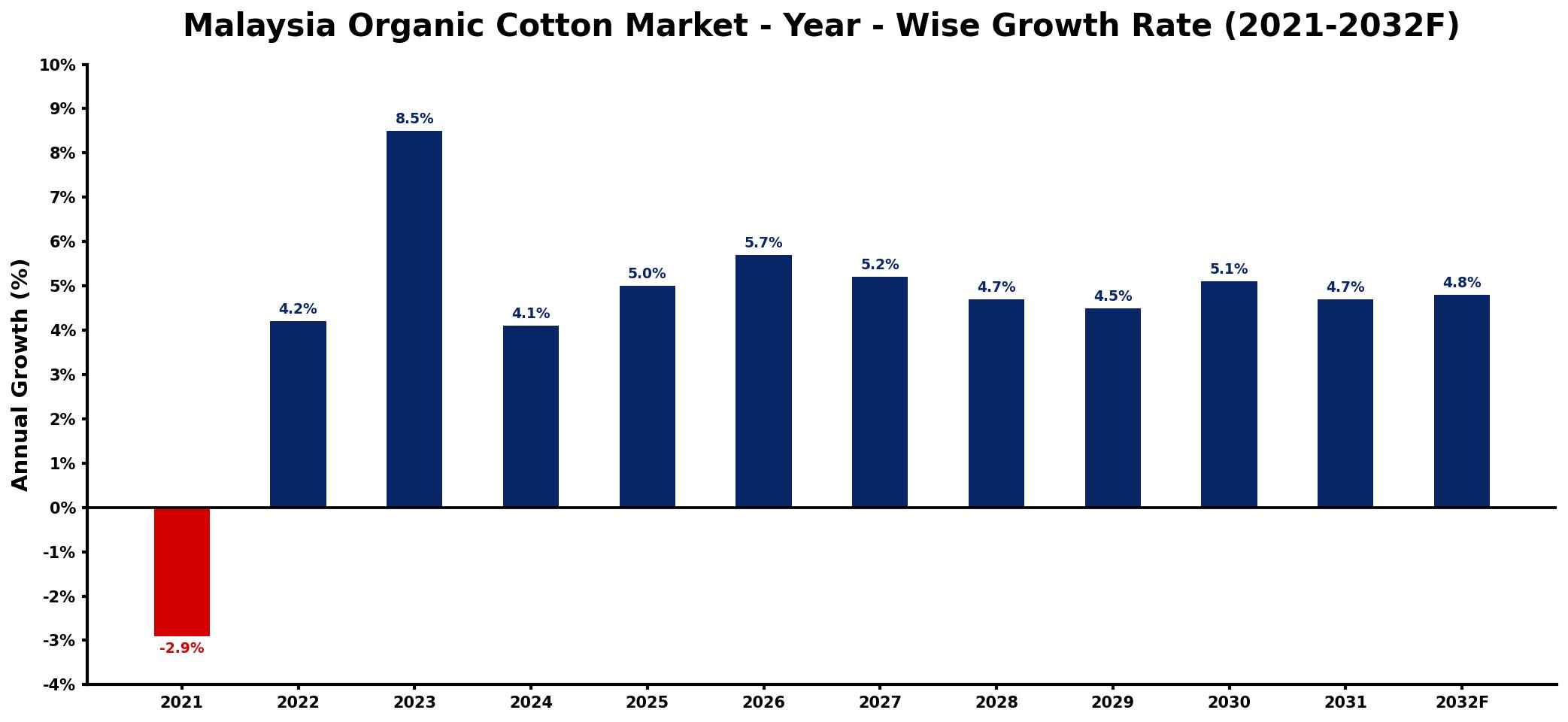
The table below presents the year‑wise growth rates along with the key drivers influencing the market
| Year | Growth Rate | Major Drivers |
| 2021 | -2.9% | demand for sustainable textiles declines |
| 2022 | 4.2% | growing awareness of sustainable practices |
| 2023 | 8.5% | increased consumer preference for eco-friendly |
| 2024 | 4.1% | rise in sustainable fashion initiatives |
| 2025 | 5.0% | expansion of ethical manufacturing facilities |
| 2026 | 5.7% | investments in green supply chains |
| 2027 | 5.2% | enhanced certifications for sustainability standards |
| 2028 | 4.7% | growing popularity of eco-conscious brands |
| 2029 | 4.5% | increased collaboration among industry players |
| 2030 | 5.1% | higher demand for sustainable alternatives |
| 2031 | 4.7% | strengthened regulations on textile sourcing |
| 2032 | 4.8% | growing market for recycled materials |
Note: Market size estimations and growth projections presented in this report are based on 6Wresearch's proprietary forecasting methodology, utilizing the latest available industry data, government publications, and primary research inputs.
Malaysia Organic Cotton Market Synopsis
The Malaysian landscape for organic cotton is evolving rapidly, driven by consumers who are increasingly mindful of sustainability. The market's appeal lies in its commitment to environmental preservation, as organic cotton is cultivated without harmful pesticides or synthetic fertilizers. This focus on eco-friendliness aligns perfectly with the growing trend of conscious consumerism in Malaysia.
Despite the rising demand, local organic cotton production remains limited, leading to a reliance on imports which can elevate costs. However, the combination of heightened awareness and a shift in consumer preferences towards organic and sustainable textiles indicates a promising future for the Malaysia Organic Cotton Market. Collaborative efforts between stakeholders can address existing challenges and drive further growth.
Malaysia Organic Cotton Market Key Takeaways
- Growing consumer awareness is propelling demand for organic cotton products.
- Organic cotton's eco-friendly attributes resonate with sustainability-focused consumers.
- Local production remains limited, necessitating imports that increase costs.
- Collaboration between industry and government is vital for market expansion.
- Transparency and certification of organic products are critical to consumer trust.
Evaluation of Restraints in Malaysia Organic Cotton Market
While the Malaysia Organic Cotton Market shows promise, it encounters significant restraints. Limited local cultivation means a heavy reliance on imported organic cotton, resulting in heightened production costs due to shipping expenses and import duties. Additionally, the market faces hurdles regarding the authenticity and certification of organic products. As consumers increasingly demand transparency, ensuring the traceability of organic cotton becomes paramount. The higher price point of organic cotton compared to conventionally grown alternatives further poses challenges to widespread adoption, particularly among price-sensitive consumers.
Malaysia Organic Cotton Market Trends
Several trends are shaping the Malaysia Organic Cotton Market. First, the integration of technology in textile manufacturing is gaining traction, facilitating better quality control and production efficiency. Secondly, brands are increasingly emphasizing sustainability in their marketing strategies, further aligning with consumer values. Thirdly, the rise of eco-conscious fashion brands that prioritize organic materials is contributing to an enriched product offering in the market. Lastly, educational campaigns aimed at informing consumers about the benefits of organic textiles are expected to further drive demand.
Malaysia Organic Cotton Market Opportunities
The Malaysia Organic Cotton Market presents several growth and investment opportunities. Entrepreneurs and investors can focus on establishing local organic cotton farms, potentially reducing reliance on imports and lowering production costs. Additionally, opportunities exist in creating eco-friendly textile products that cater to the burgeoning market for sustainable goods. Collaborations with governmental and non-governmental organizations can also pave the way for innovations in organic farming practices and improve market access for local producers.
Government Initiatives in the Malaysia Organic Cotton Market
The Malaysian government has recognized the importance of promoting sustainable agricultural practices, including organic cotton cultivation. Various initiatives are in place to support organic farming through subsidies, training programs, and public awareness campaigns. These efforts aim to enhance local production capacity and promote the benefits of organic textiles to consumers. By fostering an environment conducive to organic farming, the government aims to stimulate growth within the organic cotton sector.
Future Insights of the Malaysia Organic Cotton Market
Looking forward to the period from 2026 to 2032, the Malaysia Organic Cotton Market is expected to continue its upward trajectory. With consumers becoming increasingly aware of the environmental impact of their purchasing choices, the demand for organic cotton is likely to rise. Innovations in farming practices and technology could also enhance local production capabilities, while consumer education will bolster transparency in the supply chain. Overall, strategic collaborations among stakeholders will play a crucial role in sustaining this market's growth momentum.
Malaysia Organic Cotton Market Latest Developments (2025 - 2026)
In recent months, the Malaysia Organic Cotton Market has witnessed notable developments geared towards enhancing production and sustainability. Initiatives promoting local organic cotton farming have gained traction, with government and private sector collaborations focusing on educating farmers about sustainable practices. Additionally, several brands have begun launching new product lines made from organic cotton, reflecting the increasing consumer demand for eco-friendly textiles. As the market adapts post-pandemic, these developments indicate a positive direction towards a more sustainable textile industry in Malaysia.
Malaysia Organic Cotton Market - Key Attractiveness of the Report
- 10 Years of Market Numbers
- Historical Data Starting from 2022 to 2025
- Base Year: 2025
- Forecast Data until 2032
- Key Performance Indicators Impacting the Market
- Major Upcoming Developments and Projects
Key Highlights of the Report:
- Malaysia Organic Cotton Market Outlook
- Market Size of Malaysia Organic Cotton Market, 2025
- Forecast of Malaysia Organic Cotton Market, 2032
- Historical Data and Forecast of Malaysia Organic Cotton Revenues & Volume for the Period 2022-2032F
- Malaysia Organic Cotton Market Trend Evolution
- Malaysia Organic Cotton Market Drivers and Challenges
- Malaysia Organic Cotton Price Trends
- Malaysia Organic Cotton Porter's Five Forces
- Malaysia Organic Cotton Industry Life Cycle
- Historical Data and Forecast of Malaysia Organic Cotton Market Revenues & Volume By Type for the Period 2022-2032F
- Historical Data and Forecast of Malaysia Organic Cotton Market Revenues & Volume By Long-Staple Cotton for the Period 2022-2032F
- Historical Data and Forecast of Malaysia Organic Cotton Market Revenues & Volume By Short-Staple Cotton for the Period 2022-2032F
- Historical Data and Forecast of Malaysia Organic Cotton Market Revenues & Volume By Middle Staple Cotton for the Period 2022-2032F
- Historical Data and Forecast of Malaysia Organic Cotton Market Revenues & Volume By Extra-long Staple Cotton for the Period 2022-2032F
- Historical Data and Forecast of Malaysia Organic Cotton Market Revenues & Volume By Others for the Period 2022-2032F
- Historical Data and Forecast of Malaysia Organic Cotton Market Revenues & Volume By Quality Type for the Period 2022-2032F
- Historical Data and Forecast of Malaysia Organic Cotton Market Revenues & Volume By Supima/Pima for the Period 2022-2032F
- Historical Data and Forecast of Malaysia Organic Cotton Market Revenues & Volume By Upland for the Period 2022-2032F
- Historical Data and Forecast of Malaysia Organic Cotton Market Revenues & Volume By Giza for the Period 2022-2032F
- Historical Data and Forecast of Malaysia Organic Cotton Market Revenues & Volume By Others for the Period 2022-2032F
- Historical Data and Forecast of Malaysia Organic Cotton Market Revenues & Volume By Application for the Period 2022-2032F
- Historical Data and Forecast of Malaysia Organic Cotton Market Revenues & Volume By Apparel for the Period 2022-2032F
- Historical Data and Forecast of Malaysia Organic Cotton Market Revenues & Volume By Packaging for the Period 2022-2032F
- Historical Data and Forecast of Malaysia Organic Cotton Market Revenues & Volume By Others for the Period 2022-2032F
- Malaysia Organic Cotton Import Export Trade Statistics
- Market Opportunity Assessment By Type
- Market Opportunity Assessment By Quality Type
- Market Opportunity Assessment By Application
- Malaysia Organic Cotton Top Companies Market Share
- Malaysia Organic Cotton Competitive Benchmarking By Technical and Operational Parameters
- Malaysia Organic Cotton Company Profiles
- Malaysia Organic Cotton Key Strategic Recommendations






































