Malaysia Ornamental Fish Market Size, Share & Growth Rate
The Malaysia Ornamental Fish Market was estimated at USD 369 Million in 2025 and is projected to reach USD 482 Million by 2032, growing at a CAGR of 3.9% from 2026 to 2032. This steady growth is driven by the increasing popularity of home aquariums among hobbyists and the countrys established reputation for exporting high-quality ornamental fish species. Additionally, advancements in breeding techniques and a supportive infrastructure for both breeding and distribution further stimulate market expansion.
Malaysia Ornamental Fish Market Year-wise Growth Rate and Key Drivers
This graph highlights how the Malaysia Ornamental Fish Market has steadily grown over the years, supported by major growth factors.
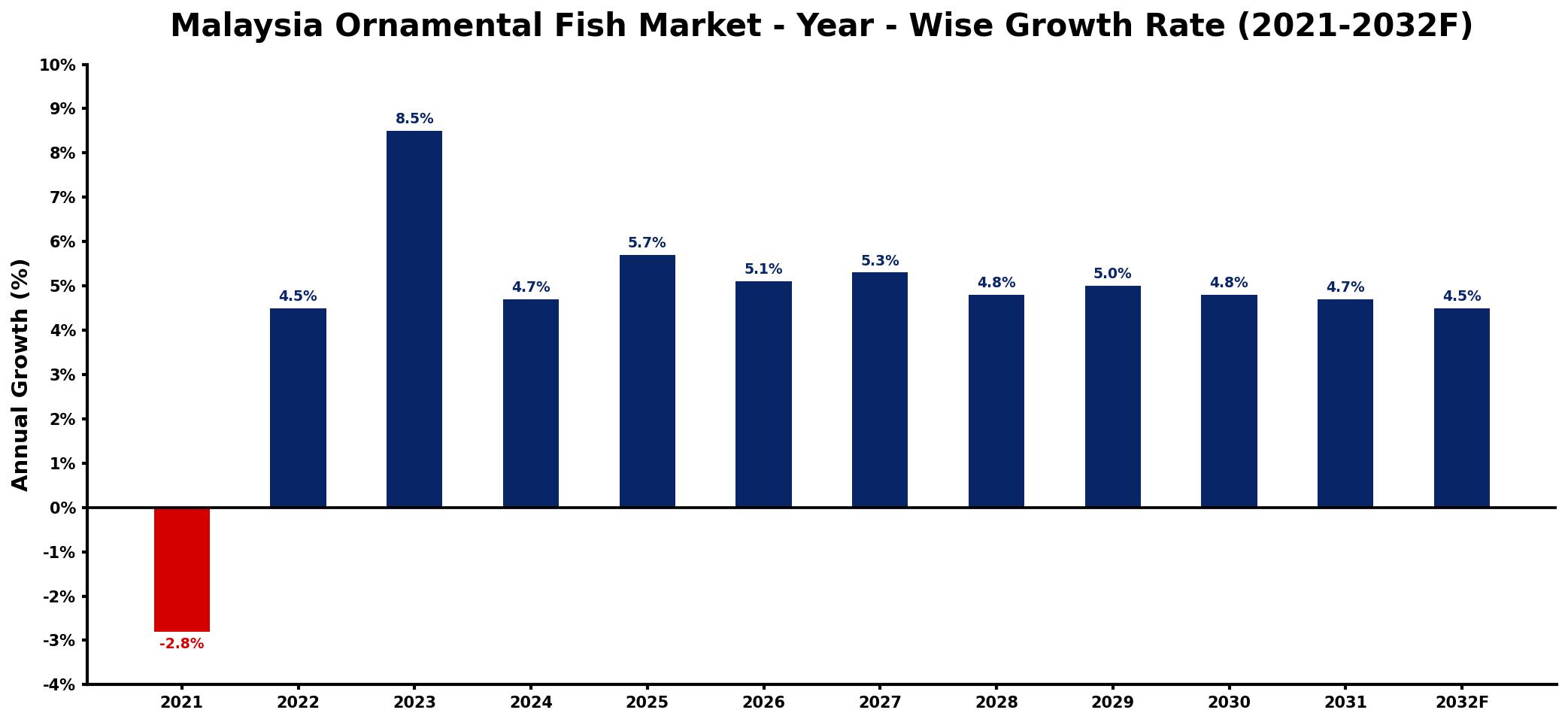
The table below presents the year‑wise growth rates along with the key drivers influencing the market
| Year | Growth Rate | Major Drivers |
| 2021 | -2.8% | decrease in consumer spending |
| 2022 | 4.5% | rise in local aquaculture investments |
| 2023 | 8.5% | increased demand for home decor |
| 2024 | 4.7% | growth in online retail platforms |
| 2025 | 5.7% | expansion of export markets |
| 2026 | 5.1% | surge in eco-tourism initiatives |
| 2027 | 5.3% | development of new breeding techniques |
| 2028 | 4.8% | enhanced awareness of sustainability |
| 2029 | 5.0% | growing regional consumption patterns |
| 2030 | 4.8% | increased production capacity utilization |
| 2031 | 4.7% | increased participation in exhibitions |
| 2032 | 4.5% | increased pharmaceutical industry usage |
Note: Market size estimations and growth projections presented in this report are based on 6Wresearch's proprietary forecasting methodology, utilizing the latest available industry data, government publications, and primary research inputs.
Malaysia Ornamental Fish Market Synopsis
The Malaysian ornamental fish market is experiencing a vibrant resurgence, as the allure of vibrant aquariums continues to captivate both seasoned enthusiasts and newcomers alike. With a diverse range of species available, Malaysia is recognized globally for its commitment to quality and sustainable practices in fish breeding.
The industry has benefitted from technological advancements that enhance breeding processes and species variety, making it easier for consumers to access exotic options. As a result, both domestic demand and export opportunities are projected to grow, solidifying Malaysia's position in the global ornamental fish market.
Malaysia Ornamental Fish Market Key Takeaways
- Malaysia is recognized as a key player in the global ornamental fish market due to its quality production.
- The hobbyist segment significantly contributes to domestic demand, highlighting a growing interest in aquaristics.
- Technological advancements have improved breeding techniques, enhancing fish variety and availability.
- Infrastructure supporting breeding and export operations is well-developed, promoting efficient market dynamics.
- Online sales channels have gained traction, responding to shifts in consumer behavior post-COVID-19.
Evaluation of Restraints in Malaysia Ornamental Fish Market
Despite the growth potential, the Malaysia ornamental fish market faces several real restraints. Maintaining optimal water quality standards is critical, as poor conditions can impact fish health and quality. Furthermore, there is a pressing need to address wildlife conservation concerns, which could lead to stricter regulations for sourcing fish species. Compliance with international export standards also presents a challenge, as it requires ongoing investment and adaptation within the industry. These factors could potentially hinder market growth if not managed effectively.
Malaysia Ornamental Fish Market Trends
Emerging trends in the Malaysia ornamental fish market reflect the evolving preferences of consumers. There is a noticeable shift towards sustainable aquaculture practices, where breeders are increasingly focusing on eco-friendly methods. Additionally, the rise of digital platforms has facilitated online sales, allowing hobbyists to purchase fish and supplies with greater ease. Social media also plays a pivotal role in promoting the hobby and educating consumers about aquarium care, further driving interest and participation in the market.
Malaysia Ornamental Fish Market Opportunities
The Malaysia ornamental fish market presents genuine growth and investment opportunities, particularly in the realms of e-commerce and sustainable practices. Expanding online sales channels can significantly enhance market reach, tapping into the growing demographic of tech-savvy consumers. Moreover, investments in sustainable breeding programs not only address ecological concerns but can also attract a more environmentally conscious customer base. Developing educational programs around aquarium maintenance and fish care can also foster stronger consumer engagement and loyalty.
Government Initiatives in the Malaysia Ornamental Fish Market
The Malaysian government has recognized the importance of the ornamental fish market within the broader aquaculture industry and has taken initiatives to support its growth. Policies aimed at sustainable aquaculture practices are being implemented, along with programs that promote research and innovation in breeding techniques. Additionally, there are incentives for exporters, which enhance the competitiveness of Malaysian ornamental fish in international markets, reflecting a commitment to bolstering this vital sector.
Future Insights of the Malaysia Ornamental Fish Market
Looking ahead to 2026-2032, the Malaysia ornamental fish market is expected to continue on a positive trajectory, fueled by a combination of domestic passion for fishkeeping and increasing global demand. Advances in technology are likely to streamline breeding and distribution processes, contributing to a wider variety of species available for consumers. As sustainability becomes increasingly paramount, the industry must adapt to evolving consumer preferences and regulatory environments, ensuring that Malaysia remains a leader in the ornamental fish market.
Malaysia Ornamental Fish Market Latest Developments (2025 - 2026)
In recent months, the Malaysia ornamental fish market has seen a surge in innovations aimed at improving fish breeding techniques and overall health standards. Companies are beginning to adopt more eco-friendly practices, responding to consumer demand for sustainability. Furthermore, the expansion of online sales platforms has enabled businesses to reach a broader customer base, facilitating increased sales during the post-pandemic recovery phase. This period of adaptation highlights the resilience of the market amidst ongoing global challenges.
Malaysia Ornamental Fish Market - Key Attractiveness of the Report
- 10 Years of Market Numbers
- Historical Data Starting from 2022 to 2025
- Base Year: 2025
- Forecast Data until 2032
- Key Performance Indicators Impacting the Market
- Major Upcoming Developments and Projects
Key Highlights of the Report:
- Malaysia Ornamental Fish Market Outlook
- Market Size of Malaysia Ornamental Fish Market, 2025
- Forecast of Malaysia Ornamental Fish Market, 2032
- Historical Data and Forecast of Malaysia Ornamental Fish Revenues & Volume for the Period 2022-2032F
- Malaysia Ornamental Fish Market Trend Evolution
- Malaysia Ornamental Fish Market Drivers and Challenges
- Malaysia Ornamental Fish Price Trends
- Malaysia Ornamental Fish Porter's Five Forces
- Malaysia Ornamental Fish Industry Life Cycle
- Historical Data and Forecast of Malaysia Ornamental Fish Market Revenues & Volume By Product for the Period 2022-2032F
- Historical Data and Forecast of Malaysia Ornamental Fish Market Revenues & Volume By Tropical Freshwater for the Period 2022-2032F
- Historical Data and Forecast of Malaysia Ornamental Fish Market Revenues & Volume By Temperate for the Period 2022-2032F
- Historical Data and Forecast of Malaysia Ornamental Fish Market Revenues & Volume By Marine for the Period 2022-2032F
- Historical Data and Forecast of Malaysia Ornamental Fish Market Revenues & Volume By Application for the Period 2022-2032F
- Historical Data and Forecast of Malaysia Ornamental Fish Market Revenues & Volume By Commercial for the Period 2022-2032F
- Historical Data and Forecast of Malaysia Ornamental Fish Market Revenues & Volume By Household for the Period 2022-2032F
- Malaysia Ornamental Fish Import Export Trade Statistics
- Market Opportunity Assessment By Product
- Market Opportunity Assessment By Application
- Malaysia Ornamental Fish Top Companies Market Share
- Malaysia Ornamental Fish Competitive Benchmarking By Technical and Operational Parameters
- Malaysia Ornamental Fish Company Profiles
- Malaysia Ornamental Fish Key Strategic Recommendations






































