Malaysia Peas Market Size, Share & Growth Rate
The Malaysia Peas Market was estimated at USD 472 Million in 2025 and is projected to reach USD 616 Million by 2032, growing at a CAGR of 3.9% from 2026 to 2032. This growth trajectory is primarily driven by the rising consumer interest in plant-based diets and the increasing application of peas in various food products, from snacks to meat alternatives. As sustainability becomes a focal point for food production, Malaysia's agricultural sector stands poised to benefit from these trends.
Malaysia Peas Market Year-wise Growth Rate and Key Drivers
This graph highlights how the Malaysia Peas Market has steadily grown over the years, supported by major growth factors.
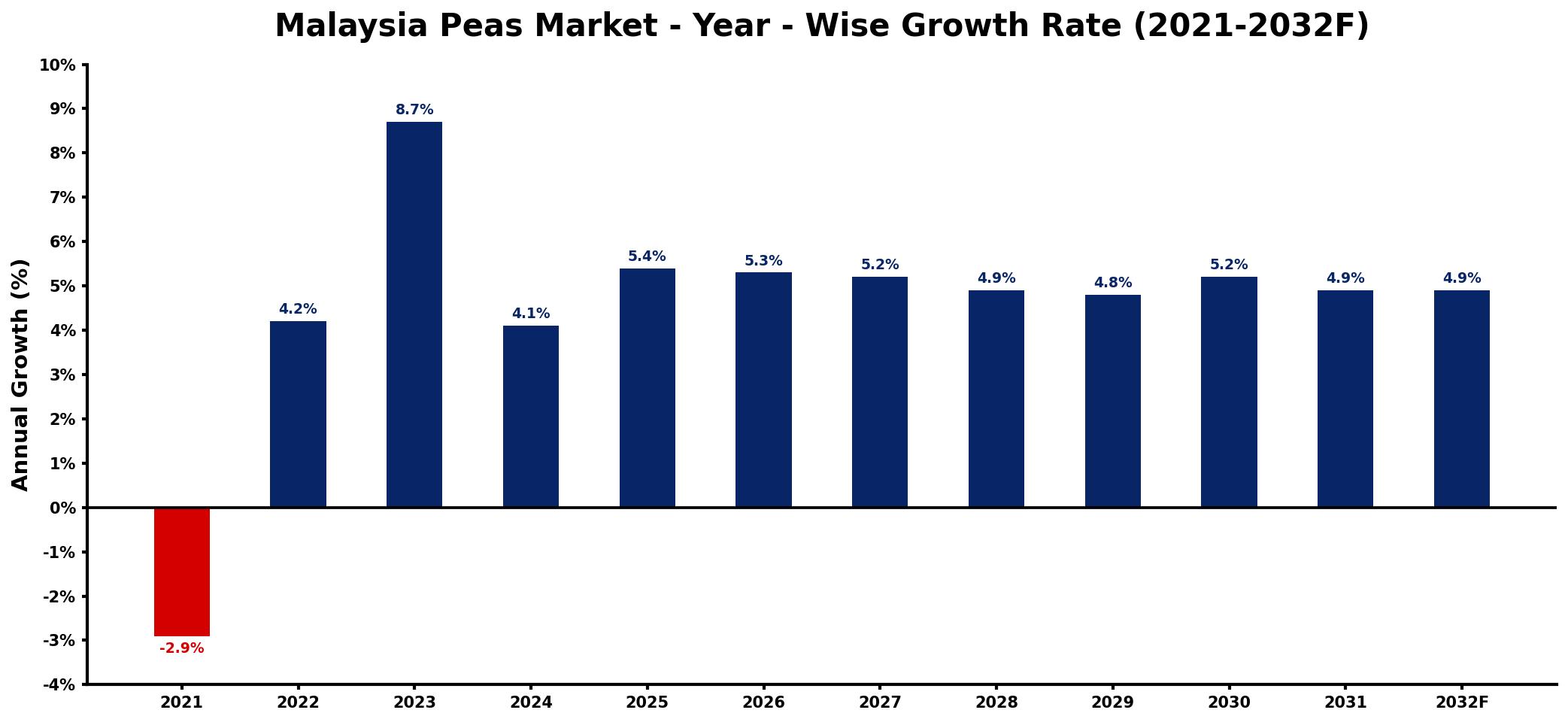
The table below presents the year‑wise growth rates along with the key drivers influencing the market
| Year | Growth Rate | Major Drivers |
| 2021 | -2.9% | Supply chain disruptions impact availability |
| 2022 | 4.2% | Rising health trends boost consumption |
| 2023 | 8.7% | Increased culinary diversity enhances demand |
| 2024 | 4.1% | Growing plant-based diet popularity rises |
| 2025 | 5.4% | Sustainable farming practices attract investment |
| 2026 | 5.3% | Technological advancements in agriculture thrive |
| 2027 | 5.2% | Export opportunities expand market reach |
| 2028 | 4.9% | Consumer awareness on nutrition increases |
| 2029 | 4.8% | Local sourcing initiatives gain traction |
| 2030 | 5.2% | Health benefits drive product innovation |
| 2031 | 4.9% | Foodservice sector recovery stimulates sales |
| 2032 | 4.9% | E-commerce platforms enhance distribution channels |
Note: Market size estimations and growth projections presented in this report are based on 6Wresearch's proprietary forecasting methodology, utilizing the latest available industry data, government publications, and primary research inputs.
Malaysia Peas Market Synopsis
The surging demand for plant-based protein sources is the strongest force shaping the Malaysia peas market today. As more consumers turn to healthier eating habits, the versatility of peas is gaining recognition, resulting in an uptick in various product offerings that include frozen, canned, and dried options.
With the country's agricultural capabilities and an increasing focus on sustainable practices, Malaysia is uniquely positioned to meet both domestic and export needs for peas. As a nutrient-rich crop, peas are not only beneficial for human consumption but also serve as an important feed source in agriculture, enhancing their market potential.
Malaysia Peas Market Key Takeaways
- Strong demand for plant-based protein is driving market growth.
- Peas are increasingly featured in a variety of food products, enhancing their market relevance.
- Sustainable farming practices are crucial for meeting evolving consumer preferences.
- Investments in processing technologies can improve product offerings.
- Market recovery from COVID-19 is anticipated as health-conscious trends continue to rise.
Evaluation of Restraints in Malaysia Peas Market
Despite the positive outlook, the Malaysia peas market does face challenges. A key restraint is the limited integration of peas into traditional local cuisine, which can hinder broader consumer acceptance and demand. To stimulate growth, it is essential for stakeholders to promote the versatility of peas and educate consumers about their health benefits. Crafting engaging recipes and cooking demonstrations can significantly enhance market penetration and awareness.
Malaysia Peas Market Trends
Current trends indicate a shift toward innovative food applications for peas, particularly in the realm of meat substitutes and dairy alternatives. This trend is supported by a growing number of startups focused on developing plant-based products that cater to health-conscious consumers. Furthermore, there is an increasing emphasis on sustainability, with many consumers seeking products that are not only nutritious but also environmentally friendly.
Malaysia Peas Market Opportunities
Opportunities for growth in the Malaysia peas market are significant, particularly for businesses willing to invest in R&D and sustainable practices. There is potential for expanding the export of Malaysian peas to international markets where demand for plant-based products is soaring. Additionally, collaborations between agribusinesses and technology firms can lead to innovative processing solutions, enhancing product quality and accessibility.
Government Initiatives in the Malaysia Peas Market
The Malaysian government has implemented several initiatives to promote sustainable agriculture, providing a conducive environment for the peas market. These initiatives include subsidies for sustainable farming practices, investment in agricultural technology, and programs aimed at increasing local production capacity. Furthermore, public awareness campaigns on the benefits of plant-based diets are gaining traction, aimed at boosting domestic consumption.
Future Insights of the Malaysia Peas Market
Looking ahead to 2026-2032, the Malaysia peas market is set to witness robust growth driven by sustained consumer demand for health-oriented food products. As more individuals adopt plant-based diets, the relevance of peas as a staple ingredient will only increase. Additionally, ongoing advancements in agricultural practices and processing technologies will enhance supply chain efficiencies, further solidifying Malaysias position as a key player in the global peas market.
Malaysia Peas Market Latest Developments (2025 - 2026)
Recent industry developments indicate a growing focus on the diversification of pea-based products, with companies exploring innovative uses of peas in snacks and meal kits. The trend of health-conscious eating continues to evolve, leading to collaborations between food manufacturers and agribusinesses to create sustainable, ready-to-eat meals. Additionally, there is an increasing emphasis on local sourcing, aligning with consumer preference for traceability in food production.
Malaysia Peas Market - Key Attractiveness of the Report
- 10 Years of Market Numbers
- Historical Data Starting from 2022 to 2025
- Base Year: 2025
- Forecast Data until 2032
- Key Performance Indicators Impacting the Market
- Major Upcoming Developments and Projects
Key Highlights of the Report:
- Malaysia Peas Market Outlook
- Market Size of Malaysia Peas Market, 2025
- Forecast of Malaysia Peas Market, 2032
- Historical Data and Forecast of Malaysia Peas Revenues & Volume for the Period 2022-2032F
- Malaysia Peas Market Trend Evolution
- Malaysia Peas Market Drivers and Challenges
- Malaysia Peas Price Trends
- Malaysia Peas Porter's Five Forces
- Malaysia Peas Industry Life Cycle
- Historical Data and Forecast of Malaysia Peas Market Revenues & Volume By Type for the Period 2022-2032F
- Historical Data and Forecast of Malaysia Peas Market Revenues & Volume By Field Peas for the Period 2022-2032F
- Historical Data and Forecast of Malaysia Peas Market Revenues & Volume By Garden Peas for the Period 2022-2032F
- Historical Data and Forecast of Malaysia Peas Market Revenues & Volume By Others for the Period 2022-2032F
- Historical Data and Forecast of Malaysia Peas Market Revenues & Volume By Application for the Period 2022-2032F
- Historical Data and Forecast of Malaysia Peas Market Revenues & Volume By Food for the Period 2022-2032F
- Historical Data and Forecast of Malaysia Peas Market Revenues & Volume By Others for the Period 2022-2032F
- Historical Data and Forecast of Malaysia Peas Market Revenues & Volume By Distribution Channel for the Period 2022-2032F
- Historical Data and Forecast of Malaysia Peas Market Revenues & Volume By Online for the Period 2022-2032F
- Historical Data and Forecast of Malaysia Peas Market Revenues & Volume By Offline for the Period 2022-2032F
- Historical Data and Forecast of Malaysia Peas Market Revenues & Volume By Others for the Period 2022-2032F
- Malaysia Peas Import Export Trade Statistics
- Market Opportunity Assessment By Type
- Market Opportunity Assessment By Application
- Market Opportunity Assessment By Distribution Channel
- Malaysia Peas Top Companies Market Share
- Malaysia Peas Competitive Benchmarking By Technical and Operational Parameters
- Malaysia Peas Company Profiles
- Malaysia Peas Key Strategic Recommendations






































