Malaysia Physical Security Market Size & Growth Rate (2026-2032)
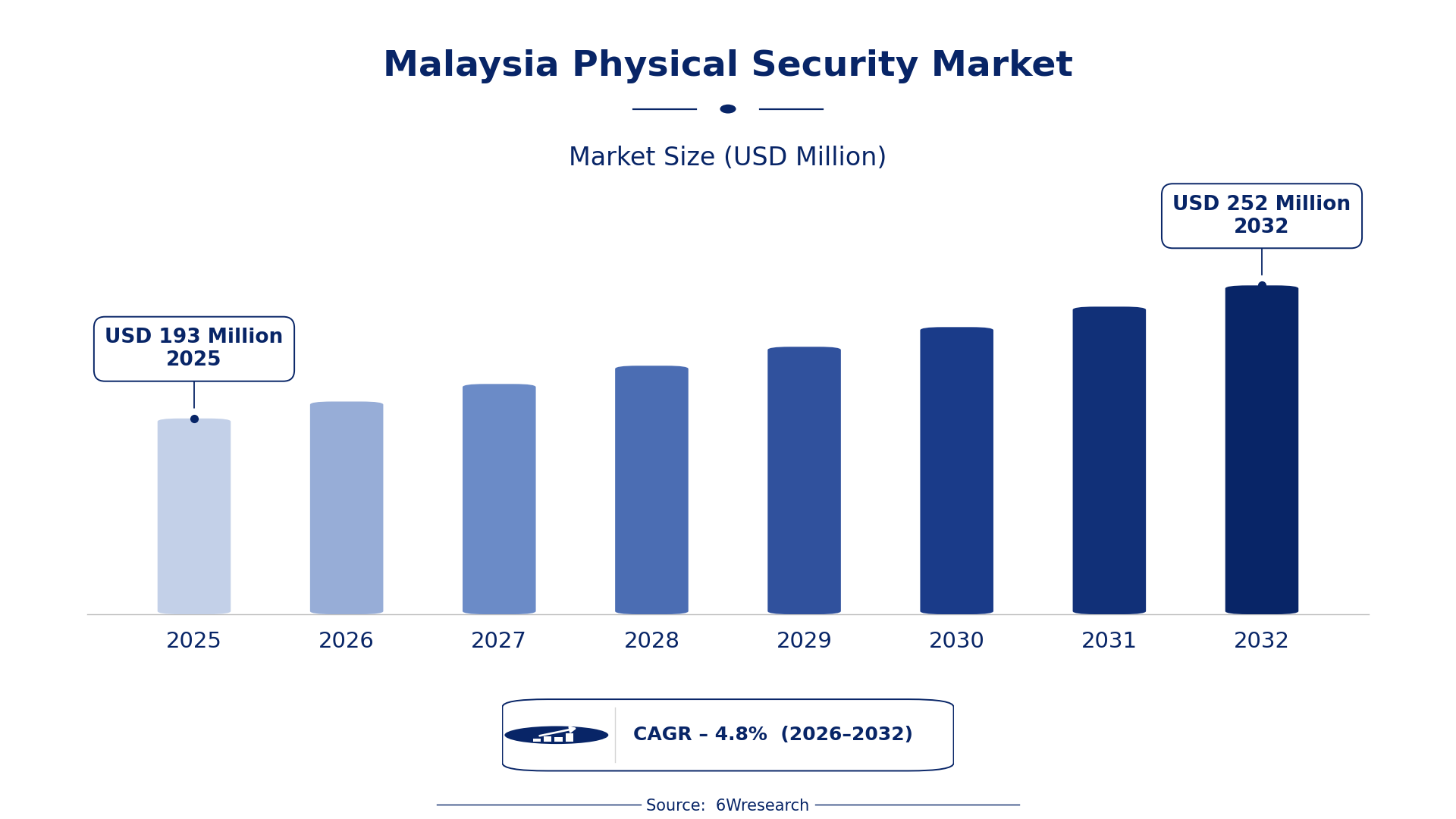
The Malaysia Physical Security Market was estimated at USD 193 Million in 2025 and is projected to reach USD 252 Million by 2032, growing at a CAGR of 4.8% from 2026 to 2032.
Malaysia Physical Security Market Synopsis
The urgency for enhanced security measures is propelling the Malaysia Physical Security Market forward. Growing urbanization and infrastructure development have amplified the demand for effective solutions, as stakeholders recognize the critical need to safeguard assets and individuals against escalating threats.
In recent years, advancements in surveillance technologies, access control systems, and biometric solutions have reshaped how organizations approach physical security. The rising crime rates and public safety concerns only solidify the necessity of robust security frameworks across various sectors in Malaysia.
Malaysia Physical Security Market Year-wise Growth Rate and Key Drivers
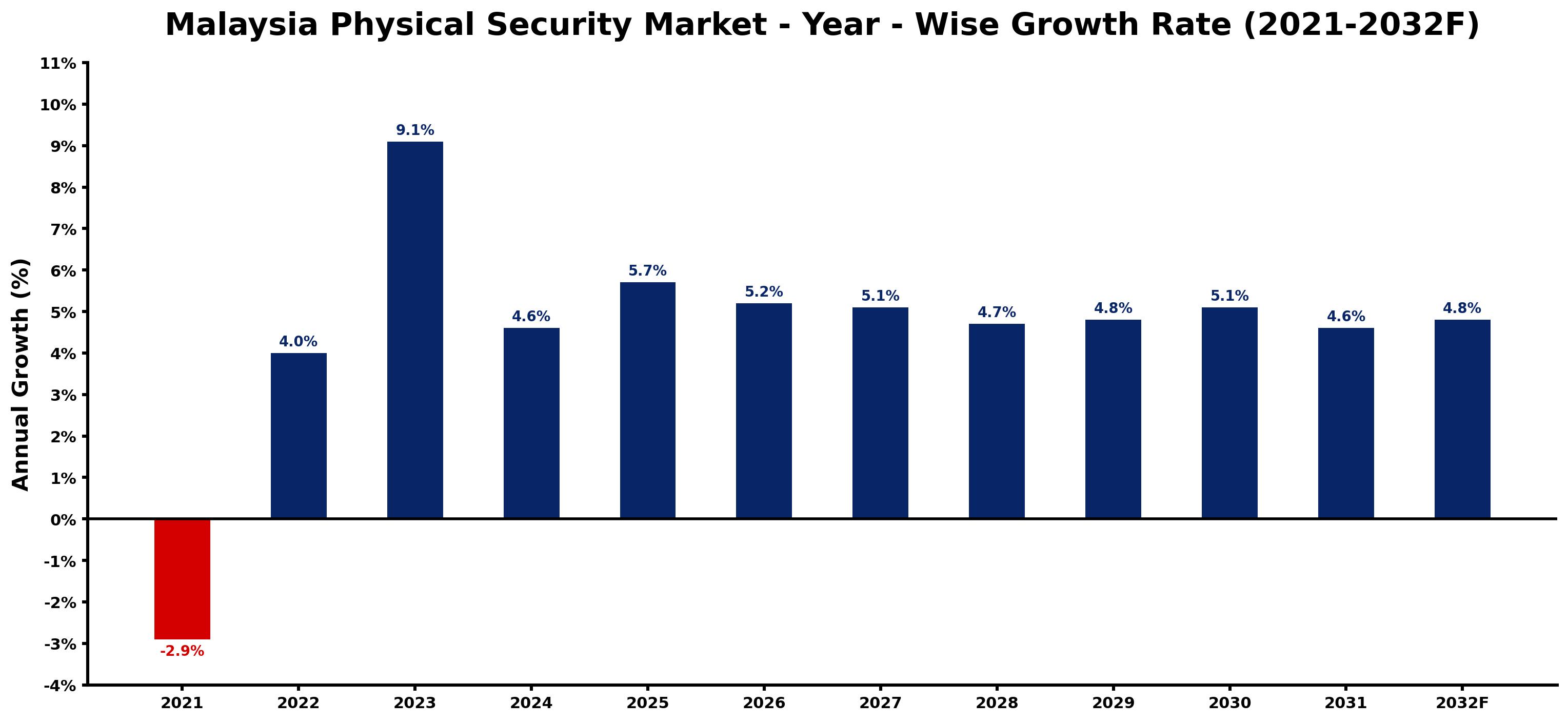
This graph illustrates the annual growth rates of the Malaysia Physical Security Market from 2021 to 2032, highlighting a steady upward trajectory and projected expansion over the forecast period.
The table below presents the year‑wise growth rates along with the key drivers influencing the market
| Year | Growth Rate | Major Drivers |
| 2021 | -2.9% | COVID-19 restrictions limited physical security installations. |
| 2022 | 4.0% | Increased investment in public safety by Malaysia's government. |
| 2023 | 9.1% | Launch of National Cyber Security Protection Plan boosting security. |
| 2024 | 4.6% | Growing awareness of urban crime rates in Kuala Lumpur. |
| 2025 | 5.7% | Rise in demand for biometric access control systems. |
| 2026 | 5.2% | Implementation of mandatory security audits for businesses. |
| 2027 | 5.1% | Boost in tourism necessitating enhanced hotel security measures. |
| 2028 | 4.7% | Introduction of smart city initiatives improving surveillance integration. |
| 2029 | 4.8% | Enhanced funding for security projects in educational institutions. |
| 2030 | 5.1% | Adoption of AI-driven surveillance technology by local firms. |
| 2031 | 4.6% | Increased regulatory focus on workplace safety standards. |
| 2032 | 4.8% | Growing interest in integrated physical security solutions. |
Note: Market size estimations and growth projections presented in this report are based on 6Wresearch's proprietary forecasting methodology, utilizing the latest available industry data, government publications, and primary research inputs.
Malaysia Physical Security Market Key Takeaways
Below are some of the specific key takeaways from the market, including:
- The market is experiencing consistent growth driven by increased urbanization and infrastructure projects.
- Technological advancements are pushing organizations toward more sophisticated security solutions.
- Challenges include integrating new technologies with existing systems and addressing privacy concerns.
- COVID-19 shifted focus towards contactless security measures, boosting demand for thermal screening solutions.
- Key industry players are focusing on enhancing their product offerings to meet evolving security needs.
Evaluation of Restraints in Malaysia Physical Security Market
Despite the growth, the Malaysia Physical Security Market faces notable challenges. One significant restraint is the difficulty in integrating modern security technologies with outdated infrastructure. Many organizations struggle with adapting newer solutions without incurring heavy costs or facing compatibility issues. on top of that, as surveillance becomes more comprehensive, the concern over privacy among the general public continues to be a hurdle. Striking the right balance between security and user privacy remains an ongoing issue in the industry.
Malaysia Physical Security Market Trends
One prominent trend is the increasing adoption of cloud-based security solutions. Organizations are shifting from traditional systems to cloud platforms for enhanced flexibility and real-time access to security data. Additionally, the focus on AI-driven analytics in surveillance systems is rising, enabling predictive security measures and reducing response times. Another trend is the integration of smart technologies into physical security, where IoT devices play a significant role in creating interconnected security ecosystems.
Malaysia Physical Security Market Opportunities
Investors and companies have ample opportunity in sectors like smart city developments, where the demand for integrated security systems will be paramount. The surge in e-commerce also necessitates advanced physical security solutions for warehouses and distribution centers. Additionally, government initiatives aimed at enhancing public safety can lead to partnerships and projects that benefit the physical security market. Emphasizing training and educational programs in cybersecurity alongside physical security can further bridge gaps in market offerings.
Government Initiatives in the Malaysia Physical Security Market
The Malaysian government recognizes the importance of a secure environment for its citizens and businesses. As such, it is actively shaping the physical security market through various policy initiatives and infrastructure development projects aimed at enhancing safety. Public-private partnerships are encouraged to boost investment in advanced security technologies, reflecting a strategic focus on protecting physical assets and individuals.
- A national digital infrastructure upgrade program that is currently underway aims to enhance connectivity and security in urban areas.
- A public sector initiative recently completed focused on installing smart surveillance systems across key government buildings to improve security oversight.
- The government has launched a current initiative promoting the adoption of contactless access control systems in public transport facilities.
- A planned framework expected to be introduced in 2027 seeks to regulate the use of biometric security systems across various industries.
Future Insights of the Malaysia Physical Security Market
Looking ahead to 2026-2032, the Malaysia Physical Security Market is set to witness considerable evolution. With technology evolving rapidly, we can expect increased automation and AI integration in security solutions. Demand for cybersecurity measures will likely increase, driven by the convergence of physical and digital security systems. The market will continue to respond to the complexities of urban environments, requiring tailored solutions that prioritize user privacy while enhancing protection. A proactive approach in policy and technology adoption will drive market growth during this period.
Malaysia Physical Security Market Latest Developments
Over the last year, the Malaysia Physical Security Market has seen various developments aimed at bolstering security measures across multiple sectors. Companies are pivoting towards innovative solutions to tackle emerging threats while ensuring compliance with regulatory standards. This shift is evident in the deployment of new technologies and strategic partnerships aimed at enhancing security protocols nationwide.
- A leading technology vendor launched an advanced AI-powered surveillance system in Q2 2025 to improve security in commercial premises.
- In early 2025, a major partnership was established between several firms to develop integrated security solutions tailored for smart city projects.
- Ongoing development of a national security training program commenced in late 2025, aiming to enhance the skills of personnel in both public and private sectors.
- An initiative that began in early 2026 focuses on deploying thermal screening solutions across public health facilities as part of health protocols.
Malaysia Physical Security Market - Key Attractiveness of the Report
- 10 Years of Market Numbers
- Historical Data Starting from 2022 to 2025
- Base Year: 2025
- Forecast Data until 2032
- Key Performance Indicators Impacting the Market
- Major Upcoming Developments and Projects
Key Highlights of the Report:
- Malaysia Physical Security Market Outlook
- Market Size of Malaysia Physical Security Market, 2025
- Forecast of Malaysia Physical Security Market, 2032
- Historical Data and Forecast of Malaysia Physical Security Revenues & Volume for the Period 2022-2032F
- Malaysia Physical Security Market Trend Evolution
- Malaysia Physical Security Market Drivers and Challenges
- Malaysia Physical Security Price Trends
- Malaysia Physical Security Porter's Five Forces
- Malaysia Physical Security Industry Life Cycle
- Historical Data and Forecast of Malaysia Physical Security Market Revenues & Volume By Component for the Period 2022-2032F
- Historical Data and Forecast of Malaysia Physical Security Market Revenues & Volume By Systems (PACS, PSIM, PIAM, Video Surveillance, Fire and Life Safety) for the Period 2022-2032F
- Historical Data and Forecast of Malaysia Physical Security Market Revenues & Volume By Services for the Period 2022-2032F
- Historical Data and Forecast of Malaysia Physical Security Market Revenues & Volume By Vertical for the Period 2022-2032F
- Historical Data and Forecast of Malaysia Physical Security Market Revenues & Volume By BFSI for the Period 2022-2032F
- Historical Data and Forecast of Malaysia Physical Security Market Revenues & Volume By Government for the Period 2022-2032F
- Historical Data and Forecast of Malaysia Physical Security Market Revenues & Volume By Retail for the Period 2022-2032F
- Historical Data and Forecast of Malaysia Physical Security Market Revenues & Volume By Transportation for the Period 2022-2032F
- Historical Data and Forecast of Malaysia Physical Security Market Revenues & Volume By Residential for the Period 2022-2032F
- Historical Data and Forecast of Malaysia Physical Security Market Revenues & Volume By Telecom and IT for the Period 2022-2032F
- Historical Data and Forecast of Malaysia Physical Security Market Revenues & Volume By Other Verticals (Healthcare, Manufacturing, Energy and Utilities, and Education). for the Period 2022-2032F
- Historical Data and Forecast of Malaysia Physical Security Market Revenues & Volume By Organization Size for the Period 2022-2032F
- Historical Data and Forecast of Malaysia Physical Security Market Revenues & Volume By SMEs for the Period 2022-2032F
- Historical Data and Forecast of Malaysia Physical Security Market Revenues & Volume By Large Enterprises for the Period 2022-2032F
- Malaysia Physical Security Import Export Trade Statistics
- Market Opportunity Assessment By Component
- Market Opportunity Assessment By Vertical
- Market Opportunity Assessment By Organization Size
- Malaysia Physical Security Top Companies Market Share
- Malaysia Physical Security Competitive Benchmarking By Technical and Operational Parameters
- Malaysia Physical Security Company Profiles
- Malaysia Physical Security Key Strategic Recommendations






































