Malaysia Plastic Building Materials Market Summary
The malaysia plastic building materials market was estimated at USD 485 Million in 2025 and is projected to reach USD 636 Million by 2032, growing at a CAGR of 5.7% from 2026 to 2032.
Malaysia Plastic Building Materials Market Year-wise Growth Rate and Key Drivers
This graph highlights how the Malaysia Plastic Building Materials Market has steadily grown over the past five years, supported by major growth factors.
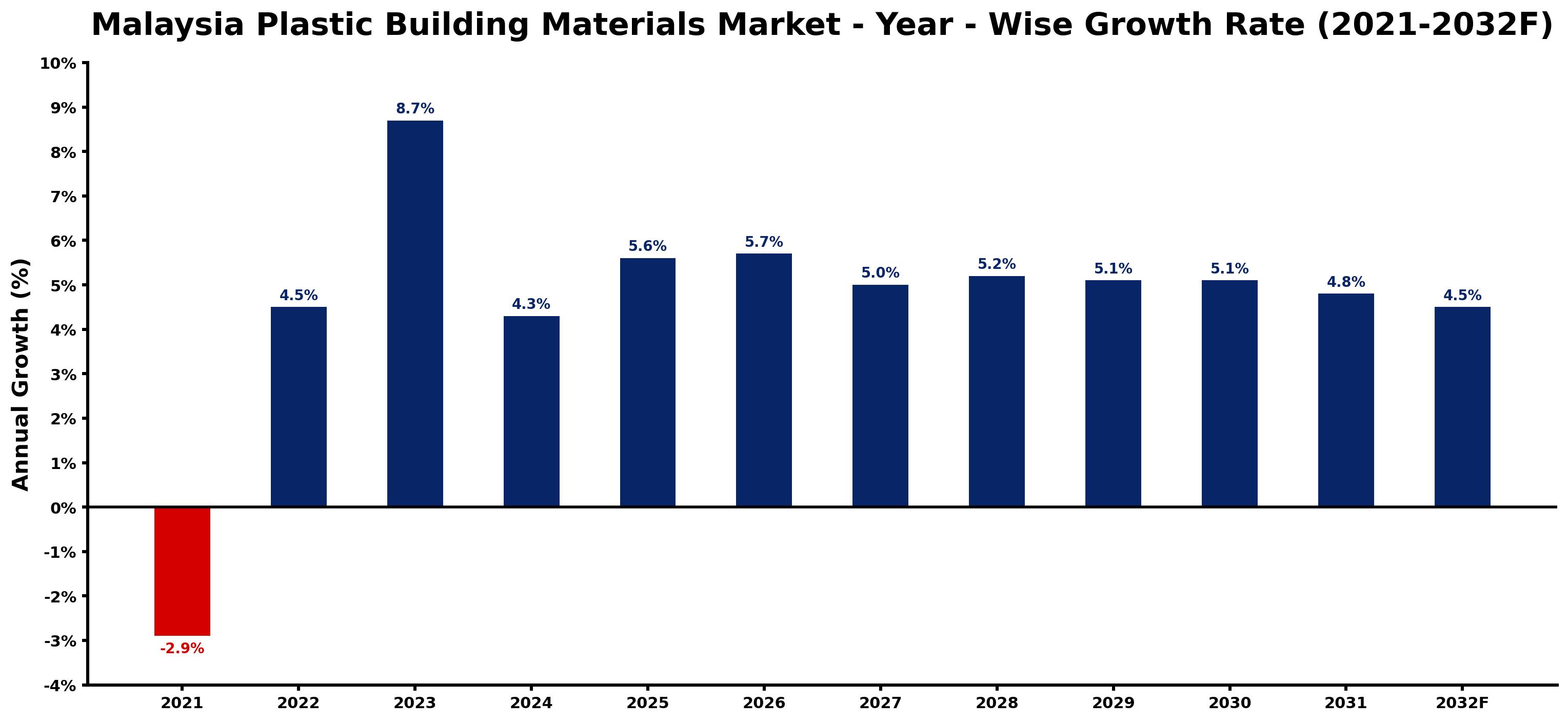
The table below presents the year wise growth rates along with the key drivers influencing the market
| Year | Growth Rate | Major Drivers |
| 2021 | -2.9% | Supply chain disruptions due to the pandemic limited the availability of essential construction materials, hindering market performance. |
| 2022 | 4.5% | Shifts towards sustainable building practices spurred innovation in plastic building materials. |
| 2023 | 8.7% | Urbanization trends prompted an increase in infrastructure development across major Malaysian cities. |
| 2024 | 4.3% | Emerging construction technologies fostered enhanced efficiency in using plastic materials. |
| 2025 | 5.6% | Consumer preferences for lightweight, durable materials influenced purchasing decisions in construction. |
| 2026 | 5.7% | Increased manufacturing capabilities attracted foreign investments into Malaysia's plastic industry. |
| 2027 | 5.0% | Collaboration between manufacturers and architects introduced new plastic material applications. |
| 2028 | 5.2% | Cost-effectiveness of plastic materials contributed to wider acceptance among contractors. |
| 2029 | 5.1% | Environmental concerns motivated companies to seek recyclable plastic building options. |
| 2030 | 5.1% | Market players began emphasizing product certifications, ensuring quality and sustainability benefits. |
| 2031 | 4.8% | Innovative designs in residential and commercial buildings further integrated plastic materials. |
| 2032 | 4.5% | Digital platforms streamlined the supply chain, enhancing accessibility to plastic building materials. |
Note - Market size estimations and growth projections presented in this report are based on 6Wresearch's advanced forecasting approach, validated with industry datasets as of June 2026.
Malaysia Plastic Building Materials Market Synopsis
The Malaysia Plastic Building Materials Market is projected to reach 5.7% and witness significant growth during the forecast period (2026-2032). This growth trajectory is largely influenced by the increasing demand for essential components such as PVC pipes in the plumbing sector, as well as the rising need for lightweight polycarbonate panels utilized in various construction applications.
Malaysia Plastic Building Materials Market Growth Drivers
Several key factors are propelling the growth of the Malaysia plastic building materials market. Firstly, increased government initiatives aimed at infrastructure development across various sectors have created a robust demand for plastic building materials. These initiatives are crucial for stimulating growth in the construction industry, which has seen a surge in new projects.
- The construction industry in Malaysia is rapidly evolving, with new technological advancements enabling manufacturers to produce plastic building products with enhanced durability and strength. This innovation has made plastic materials increasingly attractive to builders and contractors.
- Urbanization is another significant driver, as the demand for residential projects escalates. With growing urban populations, the need for reliable building materials is paramount, particularly for essential components such as PVC pipes and HDPE sheets used predominantly in roofing and cladding applications.
- The accessibility of raw materials, coupled with a relatively low labor cost in Malaysia, has empowered local manufacturers to produce cost-effective plastic building materials. This financial advantage is fostering greater market penetration and competitiveness.
- Additionally, changing consumer preferences towards lightweight, durable construction materials are influencing the growth of the plastic building materials market. The versatility and ease of installation of these materials further contribute to their appeal among construction professionals.
- Lastly, the increasing focus on sustainable construction practices opens new avenues for innovation and product development, encouraging manufacturers to create eco-friendly plastic building materials that align with global sustainability trends.
Malaysia Plastic Building Materials Market Challenges and Restraints
Despite the promising growth trajectory, the Malaysia plastic building materials market faces several challenges. One of the most pressing issues is the stringent environmental regulations concerning the usage of plastics. Policymakers are becoming increasingly vigilant regarding sustainability practices, which may hamper the production and usage of conventional plastic materials.
- The market faces pressure to comply with evolving environmental policies, which can lead to increased production costs and reduced margins for manufacturers. This regulatory landscape necessitates a proactive approach to product innovation and lifecycle management.
- Moreover, the public perception of plastic materials is shifting towards negativity due to environmental concerns, potentially impacting demand in certain segments of the market. Manufacturers need to address these concerns effectively to maintain market share.
- Competition from alternative building materials, such as metal and composite materials, poses a significant threat. These alternatives often offer comparable benefits without the sustainability drawbacks associated with traditional plastics.
- Supply chain disruptions, particularly in the wake of global events, have the potential to affect the availability of raw materials and increase costs. Manufacturers must adapt to these uncertainties to sustain their operations effectively.
- Finally, the need for continuous product innovation is essential to meet the evolving demands of the construction industry. Failing to invest in research and development may leave manufacturers behind in this competitive landscape.
Malaysia Plastic Building Materials Market Government Investment and Initiatives
The Malaysian government has recognized the importance of the construction sector in driving economic growth and has implemented various initiatives to support the Malaysia plastic building materials market. Investments in infrastructure development, such as roads, bridges, and public facilities, create substantial demand for plastic materials crucial to these projects.
- Government policies that encourage public-private partnerships in construction have led to enhanced collaboration between local authorities and private contractors, promoting the use of innovative building materials in projects.
- Programs aimed at promoting sustainable building practices are motivating manufacturers to develop eco-friendly plastic materials, thereby aligning market offerings with national sustainability goals.
- Fiscal incentives, such as tax breaks and grants for manufacturers adopting green production technologies, encourage investment in more sustainable practices within the plastic building materials market.
- Additionally, public spending on housing initiatives to accommodate urban population growth is generating robust demand for plastic building materials, especially in residential construction.
- The government's commitment to enhancing infrastructure through Vision 2020 and similar national development plans underlines the crucial role of plastic materials in future construction projects, signaling a positive outlook for market stakeholders.
Malaysia Plastic Building Materials Market Latest Developments (May 2025 - June 2026)
Between May 2025 and June 2026, the Malaysia plastic building materials market witnessed several noteworthy developments shaping its landscape. The ongoing efforts to integrate advanced technology in the manufacturing processes have led to enhanced product quality and reduced environmental footprints of plastic materials.
- Research initiatives focusing on the durability and lifecycle performance of plastic building materials have gained momentum, leading to improved understanding of their environmental impact and performance in diverse applications.
- Collaborations between manufacturers and research institutions have resulted in innovations in bioplastics, showcasing the potential for environmentally friendly alternatives within the plastic building materials market.
- The launch of educational campaigns by industry associations has raised awareness about the benefits of utilizing plastic materials in construction, reinforcing their viability as a sustainable building option.
- Furthermore, market stakeholders have reported increased participation in international trade shows and exhibitions, enabling them to showcase innovative products and network with potential partners.
- Lastly, regulatory discussions surrounding plastic usage in construction have prompted manufacturers to explore new avenues for compliance, ensuring that they remain competitive in a tightening regulatory framework.
Malaysia Plastic Building Materials Market - Key Attractiveness of the Report
- 10 Years of Market Numbers
- Historical Data Starting from 2022 to 2025
- Base Year: 2025
- Forecast Data until 2032
- Key Performance Indicators Impacting the Market
- Major Upcoming Developments and Projects
Key Highlights of the Report:
- Malaysia Plastic Building Materials Market Outlook
- Market Size of Malaysia Plastic Building Materials Market, 2025
- Forecast of Malaysia Plastic Building Materials Market, 2032
- Historical Data and Forecast of Malaysia Plastic Building Materials Revenues & Volume for the Period 2022-2032F
- Malaysia Plastic Building Materials Market Trend Evolution
- Malaysia Plastic Building Materials Market Drivers and Challenges
- Malaysia Plastic Building Materials Price Trends
- Malaysia Plastic Building Materials Porter's Five Forces
- Malaysia Plastic Building Materials Industry Life Cycle
- Historical Data and Forecast of Malaysia Plastic Building Materials Market Revenues & Volume By Product Type for the Period 2022-2032F
- Historical Data and Forecast of Malaysia Plastic Building Materials Market Revenues & Volume By Thermoplastic for the Period 2022-2032F
- Historical Data and Forecast of Malaysia Plastic Building Materials Market Revenues & Volume By Thermosetting Plastic for the Period 2022-2032F
- Historical Data and Forecast of Malaysia Plastic Building Materials Market Revenues & Volume By Applications for the Period 2022-2032F
- Historical Data and Forecast of Malaysia Plastic Building Materials Market Revenues & Volume By Flooring for the Period 2022-2032F
- Historical Data and Forecast of Malaysia Plastic Building Materials Market Revenues & Volume By Window and Door Panel for the Period 2022-2032F
- Historical Data and Forecast of Malaysia Plastic Building Materials Market Revenues & Volume By Siding for the Period 2022-2032F
- Historical Data and Forecast of Malaysia Plastic Building Materials Market Revenues & Volume By Piping for the Period 2022-2032F
- Historical Data and Forecast of Malaysia Plastic Building Materials Market Revenues & Volume By Roofing for the Period 2022-2032F
- Historical Data and Forecast of Malaysia Plastic Building Materials Market Revenues & Volume By Insulation for the Period 2022-2032F
- Historical Data and Forecast of Malaysia Plastic Building Materials Market Revenues & Volume By Others for the Period 2022-2032F
- Malaysia Plastic Building Materials Import Export Trade Statistics
- Market Opportunity Assessment By Product Type
- Market Opportunity Assessment By Applications
- Malaysia Plastic Building Materials Top Companies Market Share
- Malaysia Plastic Building Materials Competitive Benchmarking By Technical and Operational Parameters
- Malaysia Plastic Building Materials Company Profiles
- Malaysia Plastic Building Materials Key Strategic Recommendations






































