Malaysia Sanitary Paper Market Summary
The malaysia sanitary paper market was estimated at USD 188 Million in 2025 and is projected to reach USD 243 Million by 2032, growing at a CAGR of 5.7% from 2026 to 2032.
Malaysia Sanitary Paper Market Year-wise Growth Rate and Key Drivers
This graph highlights how the Malaysia Sanitary Paper Market has steadily grown over the past five years, supported by major growth factors.
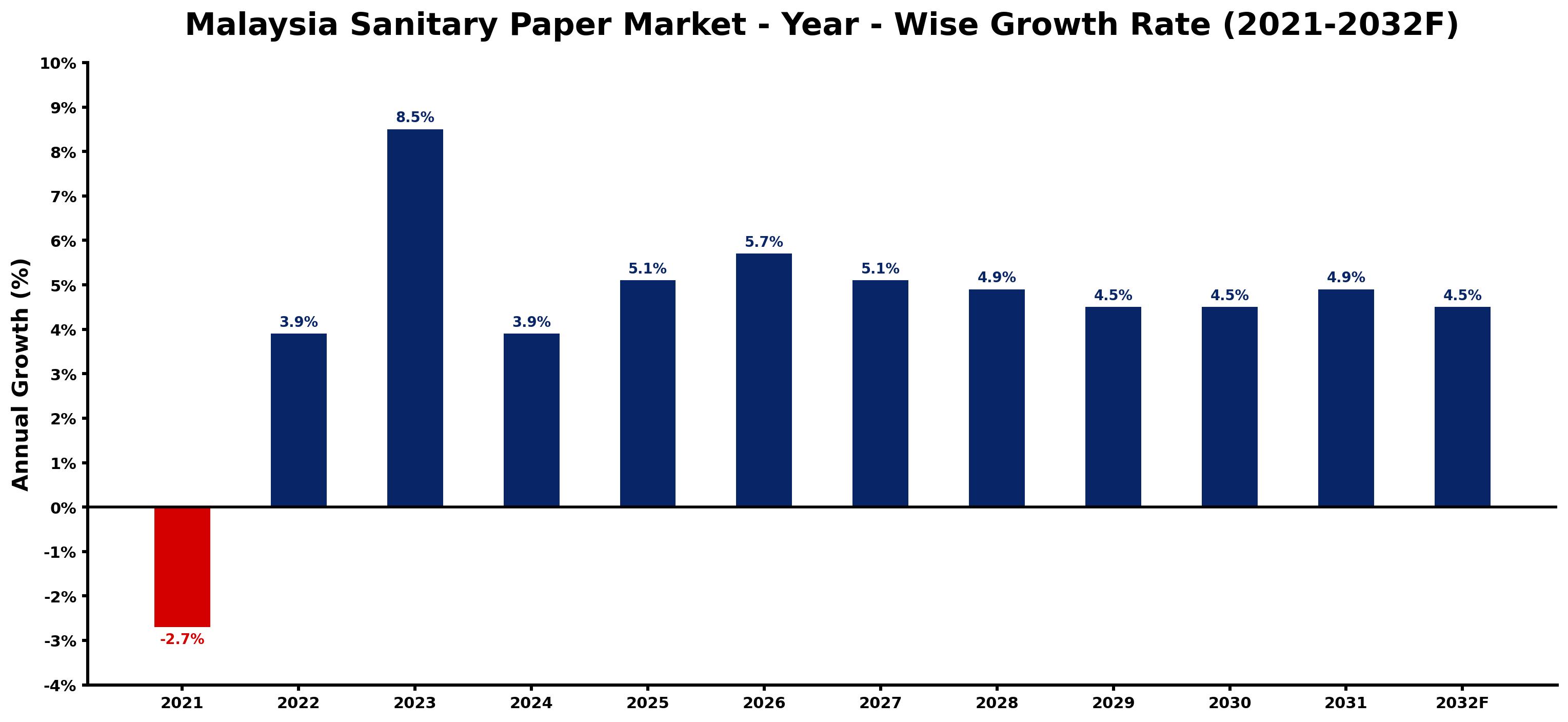
The table below presents the year wise growth rates along with the key drivers influencing the market
| Year | Growth Rate | Major Drivers |
| 2021 | -2.7% | Heightened environmental awareness led to decreased consumption of disposable sanitary paper products in Malaysia. |
| 2022 | 3.9% | Increased awareness around hygiene significantly boosts sanitary paper consumption rates. |
| 2023 | 8.5% | Retail sector expansion in urban areas enhances accessibility to sanitary paper goods. |
| 2024 | 3.9% | Local manufacturers improve production capabilities, reducing reliance on imports. |
| 2025 | 5.1% | Marketing campaigns focusing on sustainability resonate well with younger consumers. |
| 2026 | 5.7% | E-commerce growth facilitates wider distribution of sanitary paper products nationally. |
| 2027 | 5.1% | Rural population upgrades lead to heightened demand for personal hygiene products. |
| 2028 | 4.9% | Brand differentiation strategies emerge, catering to niche consumer preferences effectively. |
| 2029 | 4.5% | Sustainable sourcing practices attract environmentally conscious consumers in Malaysia. |
| 2030 | 4.5% | International collaborations enhance market expertise and technology transfer locally. |
| 2031 | 4.9% | Consumer education initiatives promote the benefits of using high-quality sanitary products. |
| 2032 | 4.5% | Investment in local infrastructure improves logistics for sanitary paper distribution channels. |
Note - Market size estimations and growth projections presented in this report are based on 6Wresearch's advanced forecasting approach, validated with industry datasets as of June 2026.
Malaysia Sanitary Paper Market Synopsis
The Malaysia Sanitary Paper Market is projected to reach 5.7% and witness significant growth during the forecast period (2026-2032). The market encompasses a broad spectrum of absorbent products designed primarily for personal hygiene, which includes facial tissues, toilet rolls, napkins, handkerchiefs, and wet wipes. This diverse range caters to the increased consumer demand fueled by rising disposable incomes and enhanced living standards. The ongoing advancements in product features, including improved softness and anti-bacterial properties, are essential drivers that are accelerating market growth in Malaysia.
Malaysia Sanitary Paper Market Growth Drivers
Several factors are contributing to the robust growth of the Malaysia Sanitary Paper Market during the forecast period. First, the increase in disposable income among the Malaysian population has led to a significant rise in the consumption of hygiene products. Second, awareness regarding personal hygiene and sanitation is growing, driven by health campaigns and educational initiatives. Third, the urbanization trend is enhancing accessibility to various sanitary paper products as modern retail channels expand. Fourth, the introduction of innovative products, which focus on user comfort and environmental sustainability, is also fostering consumer interest. Lastly, the rise of e-commerce platforms is making these products more accessible to a wider audience, thereby contributing to market growth.
Malaysia Sanitary Paper Market Trends and Opportunities
The Malaysia Sanitary Paper Market is witnessing several emerging trends that present lucrative opportunities for growth. One of the notable trends is the increasing shift towards sustainable and eco-friendly products. Manufacturers are exploring the use of recycled materials and biodegradable options to cater to environmentally conscious consumers. Additionally, there is a growing preference for premium products that offer superior quality and value, reflecting the rising standards in consumer expectations. The market is also seeing enhanced product diversification, with manufacturers introducing a variety of formats and specialty products aimed at specific consumer needs. The influence of social media and online marketing is changing how companies engage with consumers, creating opportunities for targeted advertising campaigns to amplify product visibility.
Malaysia Sanitary Paper Market Challenges and Restraints
Despite the positive outlook, the Malaysia Sanitary Paper Market faces certain challenges that could impede growth. One primary concern is the fluctuation in raw material prices, which directly impact production costs and profitability. Additionally, there is significant competition from alternative products, such as cloths and reusable items that may be perceived as more sustainable or cost-effective. The lack of awareness regarding the benefits of certain sanitary paper products, particularly among rural populations, can also restrict market potential. Regulatory challenges regarding product safety and environmental standards may further complicate market dynamics. Lastly, maintaining consistent product quality to satisfy discerning consumers requires continuous investment in research and development.
Malaysia Sanitary Paper Market Government Investment and Initiatives
The Malaysian government has recognized the importance of the hygiene products sector, particularly as it relates to public health. Various policy initiatives have been put in place to promote local manufacturing and innovation within the sanitary paper industry. This includes financial incentives for companies investing in sustainable practices and the development of new product lines. Additionally, health campaigns aimed at educating the public about hygiene practices have also been beneficial for market growth. Public sector spending on infrastructure and retail expansion is facilitating greater access to sanitary products, thereby supporting market accessibility across different demographics. Overall, government support in the form of funding and strategic initiatives is essential for fostering a robust environment for the sanitary paper market.
Malaysia Sanitary Paper Market Latest Developments (May 2025 - June 2026)
In the period between May 2025 and June 2026, the Malaysia Sanitary Paper Market has experienced several noteworthy developments. Manufacturers are increasingly focusing on sustainability, with many opting to redesign packaging and products to be more eco-friendly. Innovations, such as the integration of antimicrobial technologies in products, are also gaining traction. The e-commerce landscape has undergone significant expansion, with online sales for sanitary paper products surging as consumers gravitate towards the convenience of online shopping. Furthermore, collaborations among manufacturers and local retailers have emerged, aiming to leverage synergies for wider distribution channels. Another key development is the emphasis on product safety and compliance with international standards, further enhancing consumer trust in locally produced sanitary paper goods.
Malaysia Sanitary Paper Market - Key Attractiveness of the Report
- 10 Years of Market Numbers
- Historical Data Starting from 2022 to 2025
- Base Year: 2025
- Forecast Data until 2032
- Key Performance Indicators Impacting the Market
- Major Upcoming Developments and Projects
Key Highlights of the Report:
- Malaysia Sanitary Paper Market Outlook
- Market Size of Malaysia Sanitary Paper Market, 2025
- Forecast of Malaysia Sanitary Paper Market, 2032F
- Historical Data and Forecast of Malaysia Sanitary Paper Revenues & Volume for the Period 2022-2032F
- Malaysia Sanitary Paper Market Trend Evolution
- Malaysia Sanitary Paper Market Drivers and Challenges
- Malaysia Sanitary Paper Price Trends
- Malaysia Sanitary Paper Porter's Five Forces
- Malaysia Sanitary Paper Industry Life Cycle
- Historical Data and Forecast of Malaysia Sanitary Paper Market Revenues & Volume By Product Types for the Period 2022-2032F
- Historical Data and Forecast of Malaysia Sanitary Paper Market Revenues & Volume By Tissues And Handkerchiefs for the Period 2022-2032F
- Historical Data and Forecast of Malaysia Sanitary Paper Market Revenues & Volume By Table Napkins for the Period 2022-2032F
- Historical Data and Forecast of Malaysia Sanitary Paper Market Revenues & Volume By Toilet Paper for the Period 2022-2032F
- Historical Data and Forecast of Malaysia Sanitary Paper Market Revenues & Volume By Towels for the Period 2022-2032F
- Historical Data and Forecast of Malaysia Sanitary Paper Market Revenues & Volume By Sanitary Napkins And Tampons for the Period 2022-2032F
- Historical Data and Forecast of Malaysia Sanitary Paper Market Revenues & Volume By Disposable Diapers for the Period 2022-2032F
- Historical Data and Forecast of Malaysia Sanitary Paper Market Revenues & Volume By Application? for the Period 2022-2032F
- Historical Data and Forecast of Malaysia Sanitary Paper Market Revenues & Volume By Residential for the Period 2022-2032F
- Historical Data and Forecast of Malaysia Sanitary Paper Market Revenues & Volume By Commercial for the Period 2022-2032F
- Malaysia Sanitary Paper Import Export Trade Statistics
- Market Opportunity Assessment By Product Types
- Market Opportunity Assessment By Application?
- Malaysia Sanitary Paper Top Companies Market Share
- Malaysia Sanitary Paper Competitive Benchmarking By Technical and Operational Parameters
- Malaysia Sanitary Paper Company Profiles
- Malaysia Sanitary Paper Key Strategic Recommendations






































