Malaysia Sports Apparel Market Summary
The malaysia sports apparel market was estimated at USD 233 Million in 2025 and is projected to reach USD 304 Million by 2032, growing at a CAGR of 5.8% from 2026 to 2032.
Malaysia Sports Apparel Market Year-wise Growth Rate and Key Drivers
This graph highlights how the Malaysia Sports Apparel Market has steadily grown over the past five years, supported by major growth factors.
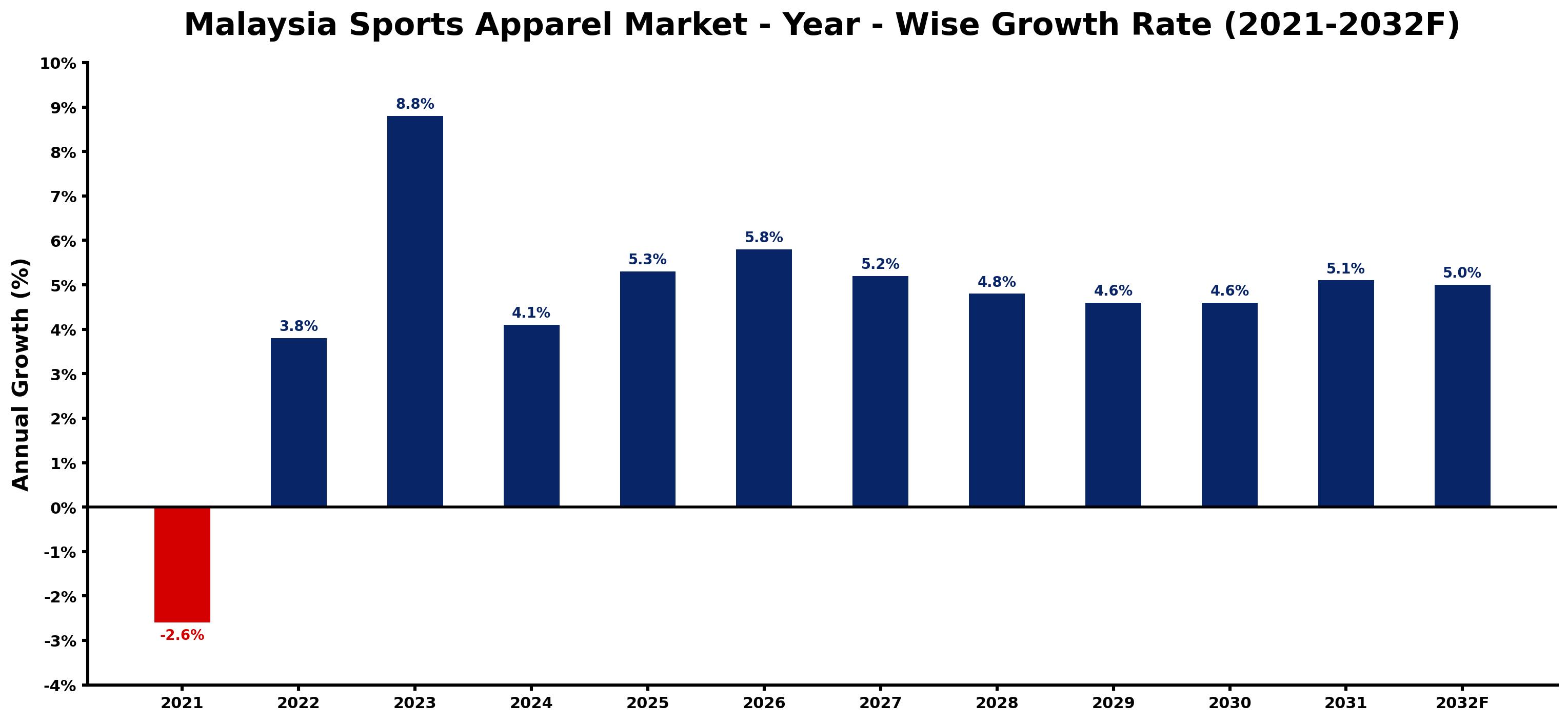
The table below presents the year wise growth rates along with the key drivers influencing the market
| Year | Growth Rate | Major Drivers |
| 2021 | -2.6% | The COVID19 pandemic significantly curtailed sports activities, leading to a sharp decline in apparel purchases. |
| 2022 | 3.8% | Increased health consciousness led Malaysians to invest more in quality activewear. |
| 2023 | 8.8% | The e-commerce boom transformed shopping habits toward online sports apparel purchasing. |
| 2024 | 4.1% | Collaboration between local brands and global influencers enhanced market visibility significantly. |
| 2025 | 5.3% | Technological advancements in fabric technology attracted environmentally-conscious consumers to new products. |
| 2026 | 5.8% | Regional sports events spurred enthusiasm, prompting local demand for performance apparel. |
| 2027 | 5.2% | Emerging fitness trends, like yoga and cycling, created diverse market opportunities for brands. |
| 2028 | 4.8% | Youth engagement in sports at schools led to higher sales of activewear collections. |
| 2029 | 4.6% | Sustainability narratives gained traction, prompting brands to adopt eco-friendly production methods. |
| 2030 | 4.6% | Lifestyle shifts toward wellness encouraged consumers to prioritize comfort in sports clothing. |
| 2031 | 5.1% | Growing disposable incomes positioned sports apparel as a lifestyle choice rather than necessity. |
| 2032 | 5.0% | Increased competition among brands fostered innovation and variety in product offerings. |
Note - Market size estimations and growth projections presented in this report are based on 6Wresearch's advanced forecasting approach, validated with industry datasets as of June 2026.
Malaysia Sports Apparel Market Synopsis
The Malaysia Sports Apparel Market is projected to reach 5.8% and witness significant growth during the forecast period (2026-2032). The market is anticipated to expand at a compound annual growth rate (CAGR) of 7.9%, driven by several dynamic factors including a heightened awareness of health and fitness, an increasing inclination towards outdoor activities such as jogging, cycling, and skiing, and the rising penetration of e-commerce platforms. In addition, the evolving preferences of consumers towards high-quality sportswear are fostering a favorable environment for market growth in this region.
Malaysia Sports Apparel Market Growth Drivers
Multiple factors are propelling the growth of the Malaysia Sports Apparel Market. Significant among these are:
- Increased Health Consciousness: As more Malaysians embrace health and fitness as part of their lifestyle, the demand for sports apparel that offers comfort and support has surged, subsequently driving market growth.
- Outdoor Activity Trends: The growing popularity of outdoor recreational activities has led to an increased requirement for specialized sportswear tailored for specific activities such as trekking, running, and cycling.
- E-commerce Boom: The rapid expansion of online shopping platforms in Malaysia has made sports apparel more accessible to a wider audience, leading to an increase in market sales.
- Rising Disposable Income: Improved economic conditions in Malaysia have resulted in higher disposable incomes, allowing consumers to invest more in quality sports apparel, thereby enhancing market prospects.
- Technological Innovations: Advances in fabric technology and materials used in sports apparel manufacture have improved functionality, comfort, and durability, further boosting consumer demand across various demographics.
Malaysia Sports Apparel Market Trends and Opportunities
There are several trends shaping the Malaysia Sports Apparel Market, each presenting unique opportunities:
- Sustainability Focus: Increasing consumer interest in environmentally friendly products is prompting manufacturers to develop sustainable apparel, creating opportunities for brands that focus on green practices.
- Customization Demand: A trend towards personalized sportswear allows consumers to have custom designs and fits, presenting a lucrative avenue for innovation among apparel brands.
- Integration of Technology: Wearable technology and smart clothing that enhance athletic performance are gaining traction, providing brands an opportunity to cater to tech-savvy consumers.
- Growth of Women's Segment: The increasing participation of women in sports and fitness activities is leading to a surge in demand for women-specific sports apparel, representing a key market opportunity.
- Collaborative Marketing: Partnerships with influencers and fitness trainers are becoming a popular strategy to promote sports apparel, thereby enhancing brand visibility and market reach.
Malaysia Sports Apparel Market Challenges and Restraints
Despite the positive outlook, the Malaysia Sports Apparel Market faces several challenges that could hinder its growth:
- Counterfeit Products: The prevalence of counterfeit sports apparel at competitive prices poses a significant challenge, potentially undermining sales for legitimate brands.
- Price Sensitivity: Amidst rising living costs, consumers may prioritize affordability over quality, leading to challenges for premium sports apparel brands attempting to maintain price points.
- Supply Chain Disruptions: Global supply chain challenges, exacerbated by geopolitical factors, can impact the availability of materials and logistics, affecting production timelines.
- Market Saturation: The influx of both global and local brands in the sports apparel market has resulted in saturation, making it increasingly competitive for businesses to differentiate themselves.
- Changing Consumer Behavior: Rapid shifts in consumer preferences, influenced by trends and fads, could present challenges for brands that fail to adapt swiftly to these changes.
Malaysia Sports Apparel Market Government Investment and Initiatives
The Malaysian government is actively promoting initiatives to foster the growth of the sports apparel sector. This includes the implementation of policies aimed at enhancing local manufacturing capabilities and supporting the sports industry through funding and incentives. The government is also investing in sports facilities and infrastructure, further propelling interest in fitness and outdoor activities. Additionally, public health campaigns aimed at promoting an active lifestyle are driving consumer engagement in sports, which indirectly stimulates the sports apparel market. There are also plans for collaborations between the public and private sectors to enhance research and development in sportswear technology.
Malaysia Sports Apparel Market Latest Developments (May 2025 - June 2026)
Recent developments in the Malaysia Sports Apparel Market from May 2025 to June 2026 indicate strategic shifts and innovations aimed at capturing consumer interest. There has been an uptick in local brands launching eco-friendly collections, aligning with the growing demand for sustainable products. Additionally, advancements in fabric technology have led to the introduction of performance-enhancing apparel, catering to professional athletes and fitness enthusiasts alike. E-commerce platforms have witnessed a surge in partnerships with logistics companies to expedite delivery times, improving customer satisfaction. Moreover, brands are increasingly harnessing the power of social media influencers to promote their products, thus broadening their market reach significantly.
Malaysia Sports Apparel Market - Key Attractiveness of the Report
- 10 Years of Market Numbers
- Historical Data Starting from 2022 to 2025
- Base Year: 2025
- Forecast Data until 2032
- Key Performance Indicators Impacting the Market
- Major Upcoming Developments and Projects
Key Highlights of the Report:
- Malaysia Sports Apparel Market Outlook
- Market Size of Malaysia Sports Apparel Market, 2025
- Forecast of Malaysia Sports Apparel Market, 2032
- Historical Data and Forecast of Malaysia Sports Apparel Revenues & Volume for the Period 2022-2032F
- Malaysia Sports Apparel Market Trend Evolution
- Malaysia Sports Apparel Market Drivers and Challenges
- Malaysia Sports Apparel Price Trends
- Malaysia Sports Apparel Porter's Five Forces
- Malaysia Sports Apparel Industry Life Cycle
- Historical Data and Forecast of Malaysia Sports Apparel Market Revenues & Volume By End-users for the Period 2022-2032F
- Historical Data and Forecast of Malaysia Sports Apparel Market Revenues & Volume By Children for the Period 2022-2032F
- Historical Data and Forecast of Malaysia Sports Apparel Market Revenues & Volume By Men for the Period 2022-2032F
- Historical Data and Forecast of Malaysia Sports Apparel Market Revenues & Volume By Women for the Period 2022-2032F
- Historical Data and Forecast of Malaysia Sports Apparel Market Revenues & Volume By Distribution Channel for the Period 2022-2032F
- Historical Data and Forecast of Malaysia Sports Apparel Market Revenues & Volume By E-commerce for the Period 2022-2032F
- Historical Data and Forecast of Malaysia Sports Apparel Market Revenues & Volume By Supermarket/Hypermarket for the Period 2022-2032F
- Historical Data and Forecast of Malaysia Sports Apparel Market Revenues & Volume By Brand Outlets for the Period 2022-2032F
- Historical Data and Forecast of Malaysia Sports Apparel Market Revenues & Volume By Discount Stores for the Period 2022-2032F
- Malaysia Sports Apparel Import Export Trade Statistics
- Market Opportunity Assessment By End-users
- Market Opportunity Assessment By Distribution Channel
- Malaysia Sports Apparel Top Companies Market Share
- Malaysia Sports Apparel Competitive Benchmarking By Technical and Operational Parameters
- Malaysia Sports Apparel Company Profiles
- Malaysia Sports Apparel Key Strategic Recommendations






































