Malaysia Sports Eyewear Market Summary
The malaysia sports eyewear market was estimated at USD 191 Million in 2025 and is projected to reach USD 249 Million by 2032, growing at a CAGR of 5.2% from 2026 to 2032.
Malaysia Sports Eyewear Market Year-wise Growth Rate and Key Drivers
This graph highlights how the Malaysia Sports Eyewear Market has steadily grown over the past five years, supported by major growth factors.
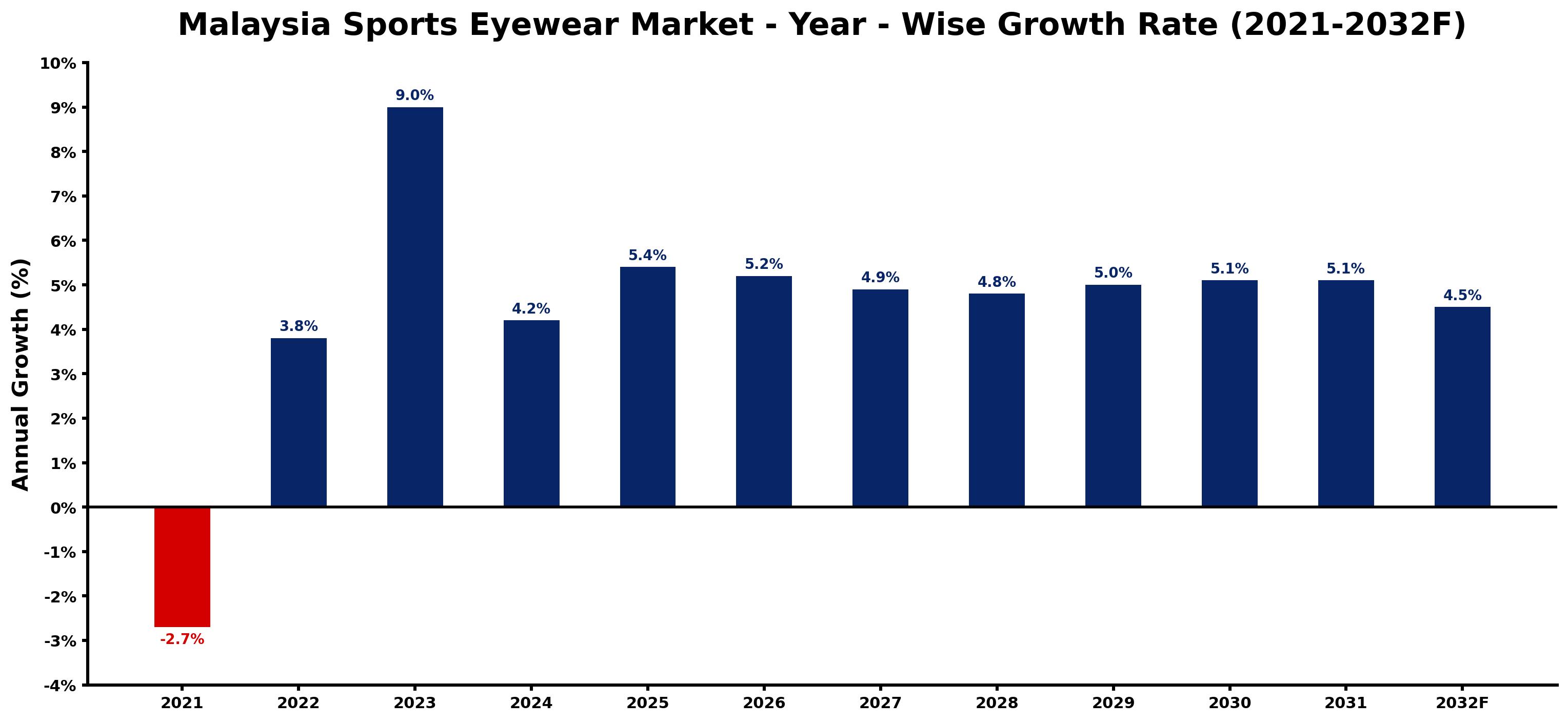
The table below presents the year wise growth rates along with the key drivers influencing the market
| Year | Growth Rate | Major Drivers |
| 2021 | -2.7% | Supply chain disruptions due to the pandemic hindered product availability, dampening consumer interest in sports eyewear. |
| 2022 | 3.8% | Increased focus on outdoor activities drove interest in high-performance sports eyewear. |
| 2023 | 9.0% | Local manufacturers began producing affordable eyewear, enhancing market accessibility for consumers. |
| 2024 | 4.2% | Collaborations between brands and local athletes boosted brand visibility and consumer trust. |
| 2025 | 5.4% | Environmental concerns prompted demand for sustainable materials in eyewear production. |
| 2026 | 5.2% | E-commerce platforms expanded, making sports eyewear more accessible to urban populations. |
| 2027 | 4.9% | Fitness trends highlighted the need for specialized eyewear among serious athletes. |
| 2028 | 4.8% | Youth interest in sports surged, contributing to heightened demand for stylish eyewear. |
| 2029 | 5.0% | Innovative lens technologies captured attention, shifting consumer preferences towards advanced features. |
| 2030 | 5.1% | Health awareness campaigns emphasized the importance of eye protection during outdoor activities. |
| 2031 | 5.1% | Broadening participation in sports at schools encouraged younger demographics to purchase eyewear. |
| 2032 | 4.5% | Regional sports events spurred competition among brands, driving quality improvements and diversity. |
Note - Market size estimations and growth projections presented in this report are based on 6Wresearch's advanced forecasting approach, validated with industry datasets as of June 2026.
Malaysia Sports Eyewear Market Synopsis
The Malaysia Sports Eyewear Market is projected to reach 5.2% and witness significant growth during the forecast period (2026-2032). This expansion is driven by several key factors, including an increasing emphasis on health and fitness activities, rising disposable incomes, and heightened awareness regarding eye protection during sports. As outdoor sports gain popularity, the demand for specialized eyewear that offers both style and functionality is expected to surge. Furthermore, the convergence of competitive pricing and aggressive promotional efforts by brands will play a pivotal role in stimulating market growth over the upcoming years.
Malaysia Sports Eyewear Market Growth Drivers
Several macroeconomic and sociocultural factors are driving the growth of the Malaysia Sports Eyewear Market. First, an increasing number of individuals are participating in health and fitness activities, leading to a demand for protective eyewear that meets the needs of athletes and fitness enthusiasts alike. Secondly, as disposable income rises, consumers are more willing to invest in quality sports eyewear, which is seen as essential for enhancing performance and ensuring safety.
- The rise in awareness about the importance of eye protection during physical activities is significantly influencing consumer purchasing behavior, leading to a greater demand for specialized eyewear.
- Government initiatives to promote outdoor sports activities further contribute to market expansion, as they create a supportive environment for sports engagement and encourage the adoption of appropriate gear.
- The competitive pricing of branded products allows consumers to access high-quality sports eyewear without compromising on style or innovation, thereby increasing market penetration.
- Promotional campaigns by leading brands play a crucial role in educating potential buyers about the benefits of sports eyewear, thereby driving sales and awareness.
- Technological advancements in the manufacturing of sports eyewear, including features such as anti-reflective coatings and night vision lenses, provide enhanced performance and safety, making them increasingly appealing to consumers.
Malaysia Sports Eyewear Market Trends and Opportunities
The Malaysia Sports Eyewear Market is witnessing several trends that present lucrative opportunities for growth. The integration of advanced technology has enabled manufacturers to create products that not only meet safety standards but also cater to consumer preferences for stylish designs. Athletes and active individuals are seeking eyewear that complements their lifestyle while providing optimal performance.
- Increased customization options are becoming available, allowing consumers to choose eyewear tailored to their specific needs and preferences, thereby fostering brand loyalty.
- The trend towards sustainability is influencing manufacturers to develop eco-friendly materials and production processes, appealing to environmentally conscious consumers.
- Collaboration with sports organizations and events is becoming common, providing brands with significant visibility and enhancing consumer trust through association with reputable entities.
- Online sales channels are expanding, allowing consumers to access a wider variety of products and brands, which in turn boosts market competition.
- The increasing urbanization of Malaysia is leading to a growing number of parks and recreational facilities, encouraging outdoor sports activities that necessitate appropriate eyewear.
Malaysia Sports Eyewear Market Challenges and Restraints
While the Malaysia Sports Eyewear Market is poised for growth, several challenges may impede its progress. Price sensitivity among consumers remains a significant concern, as economic fluctuations and rising living costs may affect spending on non-essential items like sports eyewear. Additionally, the market faces competition from alternative protective gear that may not require specialized eyewear, further complicating consumer choices.
- Consumer misinformation regarding the benefits of specialized eyewear can hinder purchasing decisions, underlining the importance of effective marketing and education.
- Rapid technological advancements may lead to challenges in keeping up with the latest trends and features, necessitating constant innovation and adaptation from manufacturers.
- The prevalence of counterfeit products in the market dilutes brand trust and poses significant risks to legitimate manufacturers, impacting overall market integrity.
- Regulatory hurdles regarding safety standards and certifications can present challenges for new entrants, making it difficult to navigate the market.
- Seasonality of sports participation can lead to fluctuations in demand, necessitating strategic planning and inventory management to mitigate risks.
Malaysia Sports Eyewear Market Government Investment and Initiatives
Recognizing the importance of sports and outdoor activities for public health, the Malaysian government has undertaken several initiatives aimed at boosting participation in sports and enhancing the corresponding support infrastructure. Investments in sports facilities and parks are designed to encourage an active lifestyle, which in turn drives demand for sports eyewear. Additionally, various government campaigns focusing on sports health and safety advocate the use of protective eyewear during sporting activities, thereby raising consumer awareness and market growth.
- Public funding is being allocated for the development of community sports programs that include education on the importance of protective gear, promoting a culture of safety.
- The government is actively supporting events and competitions that highlight the use of sports eyewear, thereby fostering a stronger connection between participants and appropriate protective gear.
- Policies aimed at enhancing public health through increased physical activity correlate with a rise in sports eyewear usage, driving market demand.
- Collaborations between government and private sectors are being fostered to promote sports-related events that focus on safety and quality equipment, including eyewear.
- National health campaigns emphasize the prevention of eye-related injuries in sports, which supports the market by informing consumers about the risks of inadequate eye protection.
Malaysia Sports Eyewear Market Latest Developments (May 2025 - June 2026)
During the period from May 2025 to June 2026, the Malaysia Sports Eyewear Market has observed several noteworthy developments that reflect the evolving landscape of the industry. There has been a marked increase in collaborations between local manufacturers and international brands, aimed at enhancing product offerings and expanding market reach. Furthermore, technology integration in product development has accelerated, with an emphasis on incorporating features such as smart eyewear that tracks performance metrics.
- Major emphasis has been placed on improving customer engagement through augmented reality (AR) experiences, allowing consumers to virtually try on eyewear before purchase.
- Promotional campaigns have increasingly leveraged social media platforms to educate and inform potential customers about the benefits of high-quality sports eyewear.
- The emergence of new retailers focused exclusively on sports eyewear has enhanced the availability of specialized products, catering to the unique needs of athletes.
- Consumer preferences have shifted towards customizable options, prompting companies to offer personalized eyewear solutions to meet specific requirements.
- Sustainability initiatives have gained traction, with companies committing to environmentally friendly materials and production techniques in response to consumer demand for eco-conscious products.
Malaysia Sports Eyewear Market - Key Attractiveness of the Report
- 10 Years of Market Numbers
- Historical Data Starting from 2022 to 2025
- Base Year: 2025
- Forecast Data until 2032
- Key Performance Indicators Impacting the Market
- Major Upcoming Developments and Projects
- What are the primary factors driving growth in the Malaysia Sports Eyewear Market?
- Key growth drivers include increasing health consciousness, rising disposable income, and the promotion of outdoor sports initiatives by the government.
- How is the government supporting the growth of the sports eyewear sector?
- The government is investing in sports infrastructure and health campaigns that emphasize the need for protective eyewear during sports activities.
- What challenges does the Malaysia Sports Eyewear Market face?
- Challenges include price sensitivity among
Key Highlights of the Report:
- Malaysia Sports Eyewear Market Outlook
- Market Size of Malaysia Sports Eyewear Market, 2025
- Forecast of Malaysia Sports Eyewear Market, 2032F
- Historical Data and Forecast of Malaysia Sports Eyewear Revenues & Volume for the Period 2022-2032F
- Malaysia Sports Eyewear Market Trend Evolution
- Malaysia Sports Eyewear Market Drivers and Challenges
- Malaysia Sports Eyewear Price Trends
- Malaysia Sports Eyewear Porter's Five Forces
- Malaysia Sports Eyewear Industry Life Cycle
- Historical Data and Forecast of Malaysia Sports Eyewear Market Revenues & Volume By Applications for the Period 2022-2032F
- Historical Data and Forecast of Malaysia Sports Eyewear Market Revenues & Volume By Outdoor Sporting & Traveling for the Period 2022-2032F
- Historical Data and Forecast of Malaysia Sports Eyewear Market Revenues & Volume By Water Sports for the Period 2022-2032F
- Historical Data and Forecast of Malaysia Sports Eyewear Market Revenues & Volume By Ski Sports for the Period 2022-2032F
- Historical Data and Forecast of Malaysia Sports Eyewear Market Revenues & Volume By Others for the Period 2022-2032F
- Historical Data and Forecast of Malaysia Sports Eyewear Market Revenues & Volume By Distribution Channel for the Period 2022-2032F
- Historical Data and Forecast of Malaysia Sports Eyewear Market Revenues & Volume By Online for the Period 2022-2032F
- Historical Data and Forecast of Malaysia Sports Eyewear Market Revenues & Volume By Offline for the Period 2022-2032F
- Historical Data and Forecast of Malaysia Sports Eyewear Market Revenues & Volume By End-Users for the Period 2022-2032F
- Historical Data and Forecast of Malaysia Sports Eyewear Market Revenues & Volume By Women for the Period 2022-2032F
- Historical Data and Forecast of Malaysia Sports Eyewear Market Revenues & Volume By Men for the Period 2022-2032F
- Historical Data and Forecast of Malaysia Sports Eyewear Market Revenues & Volume By Children for the Period 2022-2032F
- Malaysia Sports Eyewear Import Export Trade Statistics
- Market Opportunity Assessment By Applications
- Market Opportunity Assessment By Distribution Channel
- Market Opportunity Assessment By End-Users
- Malaysia Sports Eyewear Top Companies Market Share
- Malaysia Sports Eyewear Competitive Benchmarking By Technical and Operational Parameters
- Malaysia Sports Eyewear Company Profiles
- Malaysia Sports Eyewear Key Strategic Recommendations






































