Malaysia Textile Auxiliaries Market Size Growth Rate
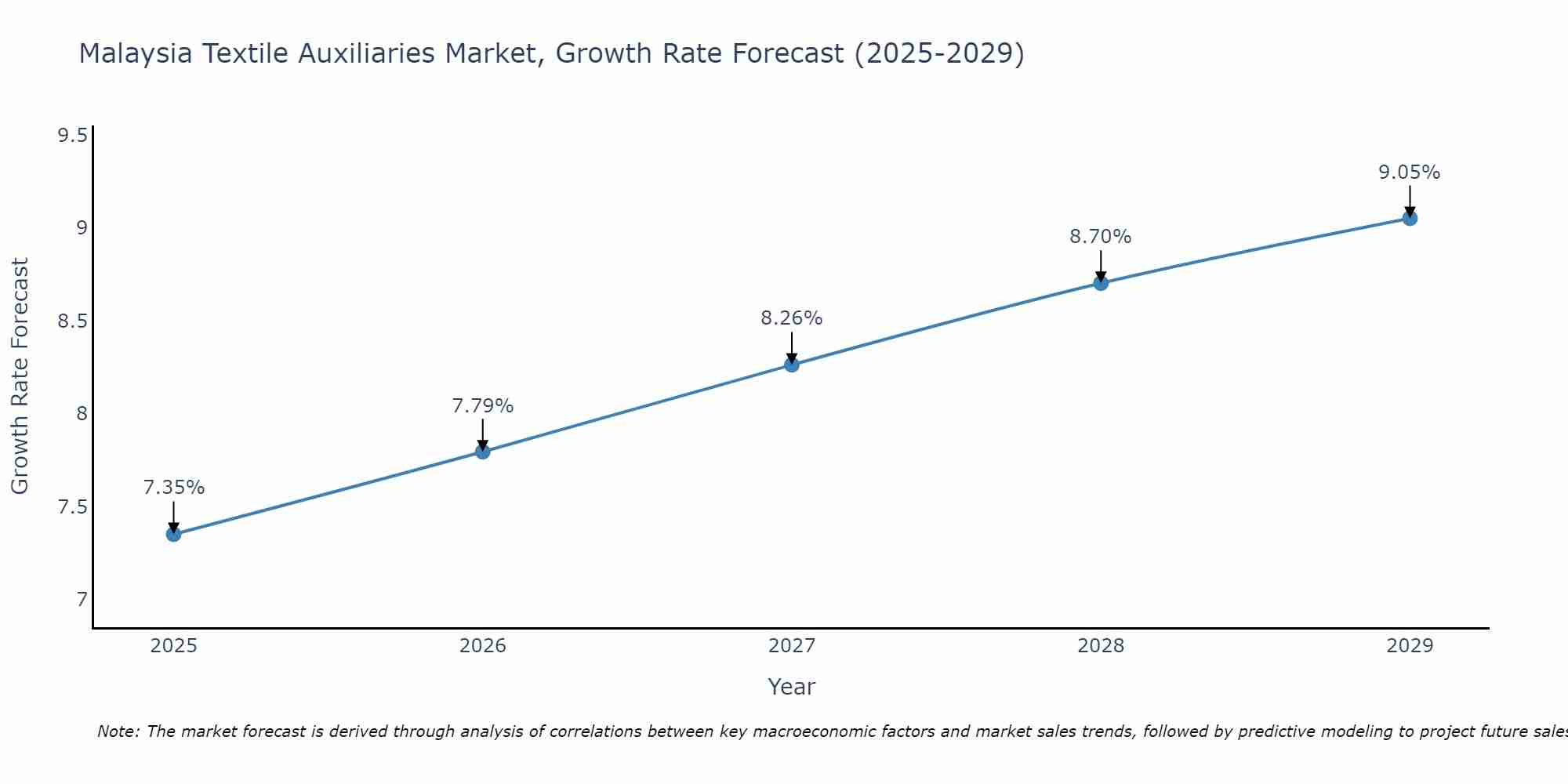
The Malaysia Textile Auxiliaries Market is poised for steady growth rate improvements from 2025 to 2029. Commencing at 7.35% in 2025, growth builds up to 9.05% by 2029.
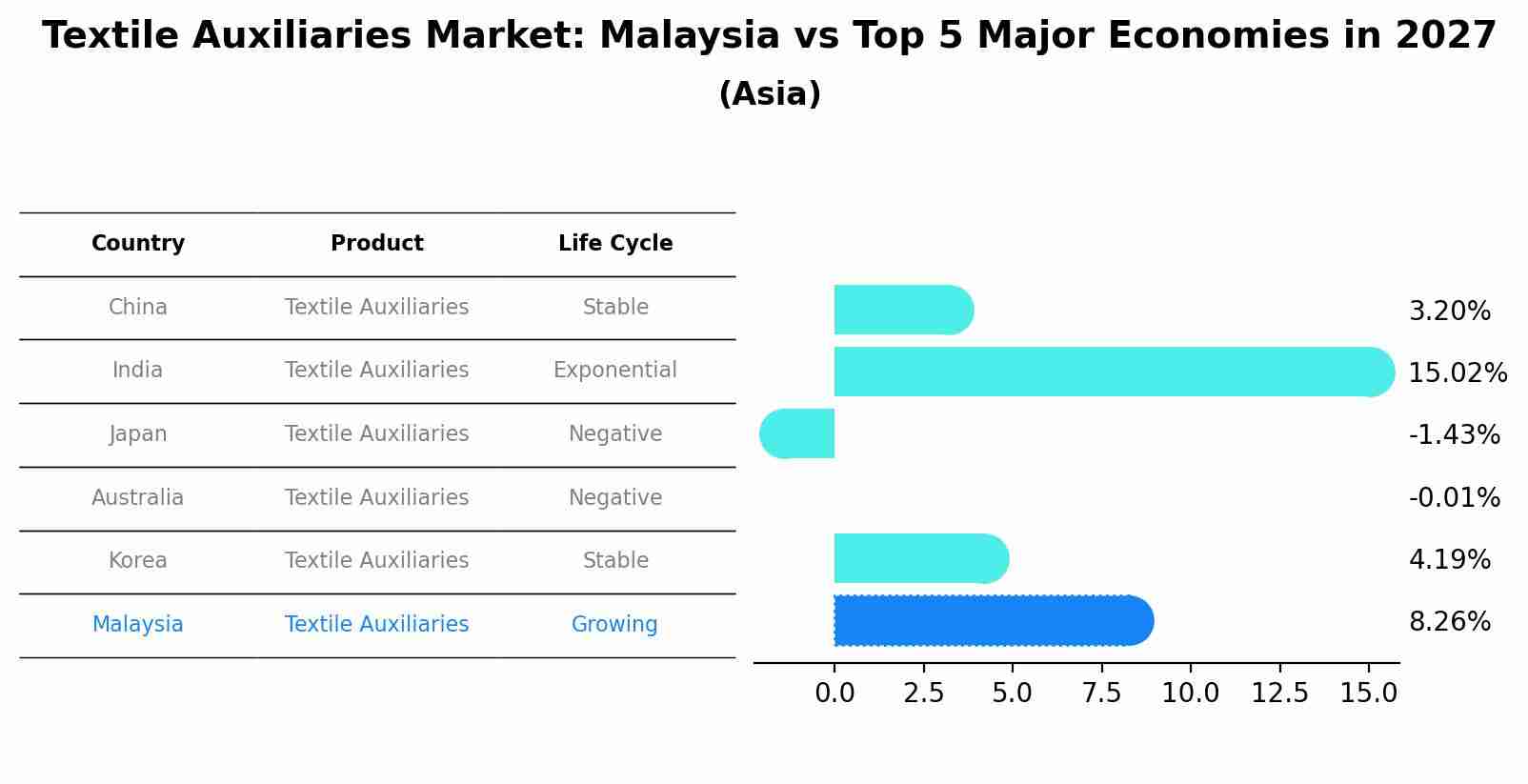
Textile Auxiliaries Market: Malaysia vs Top 5 Major Economies in 2027 (Asia)
By 2027, Malaysia's Textile Auxiliaries market is forecasted to achieve a growing growth rate of 8.26%, with China leading the Asia region, followed by India, Japan, Australia and South Korea.
Malaysia Textile Auxiliaries Market Synopsis
The textile auxiliaries market size in Malaysia was valued at US$ 217 million in 2025 and is expected to reach US$ 277 million by 2025 registering a CAGR of 4.7%, according to 6Wresearch product penetration throughout residential applications which favors Malaysiatextile auxiliaries industry outlook through 2025. In addition,rise on global fashion trends & innovations among athleisure wear clothing type coupled with surging popularity among millennials drives high revenue generation over coming years.
Market Drivers of the market
The Malaysia textile auxiliaries market is expected to witness significant growth in the coming years. One of the key drivers of this market is the flourishing textile and apparel industry in the country. Textile auxiliaries are chemicals used in various stages of textile processing, including dyeing, printing, and finishing, to enhance the overall quality and properties of textiles. The expanding fashion and garment sectors and the increasing demand for innovative and sustainable textile products are likely to drive the demand for textile auxiliaries.
Challenges of the market
Challenges in the Malaysia Textile Auxiliaries market could involve the need to comply with environmental regulations and sustainable practices. Reducing the environmental impact of textile processing chemicals and ensuring their safety for workers and consumers may be areas of concern.
Covid-19 Impact on the market
The textile industry faced significant disruptions during the pandemic due to supply chain interruptions, reduced consumer demand, and factory closures. Textile auxiliaries, which are chemicals used in textile processing, might have experienced fluctuations in demand and production. As the global economy recovers and consumer confidence returns, the textile industry and its auxiliaries are expected to see a gradual recovery.
Key Players of the market
The Malaysia Textile Auxiliaries market is poised for significant growth in the foreseeable future. Key players in this sector, including TextiChem and DyePro Solutions, are anticipated to introduce innovative auxiliaries catering to the textile industry`s evolving demands. The increasing focus on sustainable and eco-friendly textile chemicals is likely to shape market dynamics.
Key Highlights of the Report:
- Malaysia Textile Auxiliaries Market Outlook
- Market Size of Malaysia Textile Auxiliaries Market, 2024
- Forecast of Malaysia Textile Auxiliaries Market, 2031
- Historical Data and Forecast of Malaysia Textile Auxiliaries Revenues & Volume for the Period 2021-2031
- Malaysia Textile Auxiliaries Market Trend Evolution
- Malaysia Textile Auxiliaries Market Drivers and Challenges
- Malaysia Textile Auxiliaries Price Trends
- Malaysia Textile Auxiliaries Porter's Five Forces
- Malaysia Textile Auxiliaries Industry Life Cycle
- Historical Data and Forecast of Malaysia Textile Auxiliaries Market Revenues & Volume By Product for the Period 2021-2031
- Historical Data and Forecast of Malaysia Textile Auxiliaries Market Revenues & Volume By Finishing Agents for the Period 2021-2031
- Historical Data and Forecast of Malaysia Textile Auxiliaries Market Revenues & Volume By Dyeing and Printing Agents for the Period 2021-2031
- Historical Data and Forecast of Malaysia Textile Auxiliaries Market Revenues & Volume By Spin Finish for the Period 2021-2031
- Historical Data and Forecast of Malaysia Textile Auxiliaries Market Revenues & Volume By Knitting and Weaving for the Period 2021-2031
- Historical Data and Forecast of Malaysia Textile Auxiliaries Market Revenues & Volume By Other Auxiliaries for the Period 2021-2031
- Historical Data and Forecast of Malaysia Textile Auxiliaries Market Revenues & Volume By Applications for the Period 2021-2031
- Historical Data and Forecast of Malaysia Textile Auxiliaries Market Revenues & Volume By Automotive Textiles for the Period 2021-2031
- Historical Data and Forecast of Malaysia Textile Auxiliaries Market Revenues & Volume By Home Furnishing for the Period 2021-2031
- Historical Data and Forecast of Malaysia Textile Auxiliaries Market Revenues & Volume By Apparel for the Period 2021-2031
- Historical Data and Forecast of Malaysia Textile Auxiliaries Market Revenues & Volume By Digital Printing for the Period 2021-2031
- Historical Data and Forecast of Malaysia Textile Auxiliaries Market Revenues & Volume By Others for the Period 2021-2031
- Malaysia Textile Auxiliaries Import Export Trade Statistics
- Market Opportunity Assessment By Product
- Market Opportunity Assessment By Applications
- Malaysia Textile Auxiliaries Top Companies Market Share
- Malaysia Textile Auxiliaries Competitive Benchmarking By Technical and Operational Parameters
- Malaysia Textile Auxiliaries Company Profiles
- Malaysia Textile Auxiliaries Key Strategic Recommendations






































