Malaysia Whey Protein Market Size, Share & Growth Rate
The Malaysia Whey Protein Market was estimated at USD 380 Million in 2025 and is projected to reach USD 498 Million by 2032, growing at a CAGR of 3.9% from 2026 to 2032. This promising trajectory is driven by a surge in health-conscious consumer behavior, reflecting a greater emphasis on fitness and protein supplementation. Additionally, the rising popularity of convenience food products and plant-based protein alternatives further underscores the market's expansion in the coming years.
Malaysia Whey Protein Market Year-wise Growth Rate and Key Drivers
This graph highlights how the Malaysia Whey Protein Market has steadily grown over the years, supported by major growth factors.
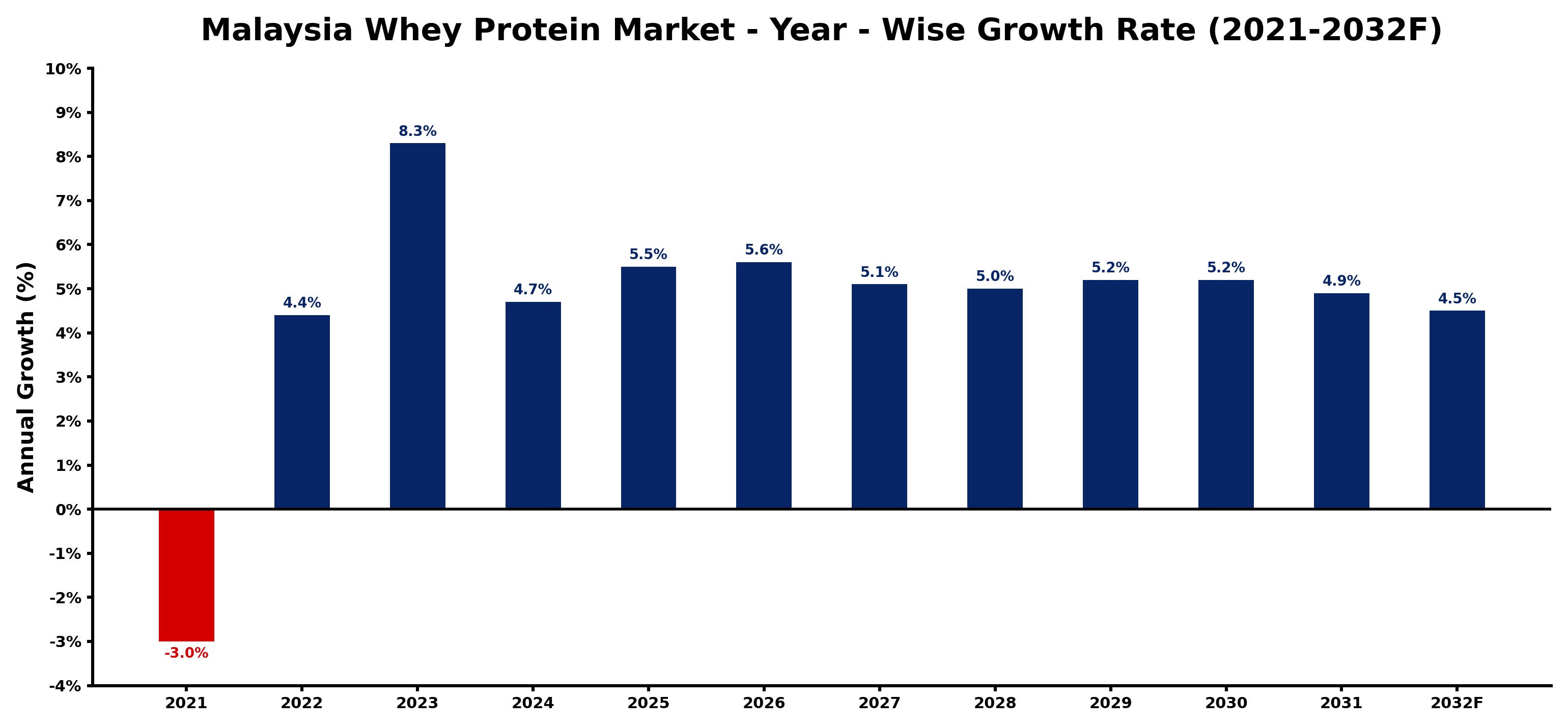
The table below presents the year‑wise growth rates along with the key drivers influencing the market
| Year | Growth Rate | Major Drivers |
| 2021 | -3.0% | Consumer interest in fitness declined |
| 2022 | 4.4% | Health awareness drove protein demand |
| 2023 | 8.3% | Fitness trends increased product variety |
| 2024 | 4.7% | E-commerce growth expanded market reach |
| 2025 | 5.5% | Plant-based protein popularity rose |
| 2026 | 5.6% | Nutritional supplements gained market traction |
| 2027 | 5.1% | Sports nutrition segment expanded rapidly |
| 2028 | 5.0% | Innovative flavors attracted new consumers |
| 2029 | 5.2% | Dietary trends encouraged product innovation |
| 2030 | 5.2% | Collaborations with fitness influencers increased |
| 2031 | 4.9% | Sustainable sourcing practices gained traction |
| 2032 | 4.5% | Consumer loyalty programs enhanced retention |
Note - Market size estimations and growth projections presented in this report are based on 6Wresearch’s advanced forecasting approach, validated with industry datasets as of June 2026.
Malaysia Whey Protein Market Synopsis
The Malaysian whey protein market has witnessed robust growth recently, propelled by increasing awareness of the health benefits associated with protein consumption. As consumers pivot towards healthier lifestyles, this momentum is expected to continue, with the market poised for further expansion driven by evolving dietary preferences.
However, the market is also navigating various complexities, particularly regarding supply chain stability and consumer education. With more emphasis placed on product quality and sourcing ethics, stakeholders must adapt to these dynamics while seizing new opportunities for growth.
Malaysia Whey Protein Market Key Takeaways
- Significant growth projected with a CAGR of 3.9% from 2026 to 2032, reflecting robust consumer interest.
- Increased demand for plant-based protein alternatives is reshaping consumer preferences and market offerings.
- The impact of fitness and wellness trends has catalyzed a rise in protein supplementation.
- Market players are focusing on product quality and consumer education to mitigate sourcing challenges.
- Opportunities for innovation in product formats and formulations are emerging, appealing to diverse consumer segments.
Evaluation of Restraints in Malaysia Whey Protein Market
The Malaysian whey protein market faces several restraints that could hinder its growth. One primary concern is the inconsistency in sourcing high-quality whey protein, particularly due to fluctuations in dairy production. This inconsistency can impact manufacturers' ability to deliver products that meet consumer expectations. Additionally, the need for clearer communication around allergens associated with whey protein poses an educational challenge for consumers, which could limit market penetration. Companies must navigate these issues proactively to ensure sustained growth and consumer trust.
Malaysia Whey Protein Market Trends
A notable trend within the Malaysia whey protein market is the increasing inclination toward clean-label products, where consumers seek transparency in ingredient sourcing and processing. This preference aligns with a broader consumer shift toward health and wellness, motivating manufacturers to reformulate and innovate. Furthermore, the integration of whey protein into various food products, from snacks to beverages, is on the rise, enhancing its appeal across diverse demographics.
Malaysia Whey Protein Market Opportunities
The market offers ample opportunities for growth, particularly in developing functional foods and supplements that cater to specific dietary needs. There is a growing trend of personalized nutrition, allowing for tailored protein solutions that meet individual lifestyle requirements. Additionally, as awareness of veganism and plant-based diets escalates, innovative blends of whey and plant proteins can attract a broader consumer base. By focusing on these emerging opportunities, businesses can capitalize on the evolving consumer landscape.
Government Initiatives in the Malaysia Whey Protein Market
Government initiatives in Malaysia have increasingly recognized the significance of the health and nutrition sector. Policies promoting local dairy production and sustainable farming practices are being implemented, aimed at enhancing the quality of raw materials available for whey protein production. Additionally, public health campaigns emphasizing balanced nutrition are likely to encourage the consumption of protein-rich products, including whey protein, thus supporting market growth.
Future Insights of the Malaysia Whey Protein Market
Looking ahead to 2026-2032, the Malaysia whey protein market is poised for significant transformation. As health trends continue to evolve, product diversification will be crucial, with manufacturers expected to innovate in flavor profiles and functional benefits. A strong focus on sustainability, coupled with consumer education around the nutritional value of whey protein, will further define the trajectory of this market. Enhanced collaboration between manufacturers, nutritionists, and retailers will also be key to addressing consumer needs and building trust.
Malaysia Whey Protein Market Latest Developments (May 2025 - June 2026)
Recent developments in the Malaysia whey protein market highlight a trend towards enhanced product formulations that cater to the growing demand for health and wellness solutions. Companies are increasingly exploring partnerships with local dairy farms to secure high-quality whey sources while addressing sustainability concerns. Additionally, there has been a surge in marketing campaigns that focus on educating consumers about the benefits of incorporating whey protein into their diets, fostering greater acceptance and consumption.
Malaysia Whey Protein Market - Key Attractiveness of the Report
- 10 Years of Market Numbers
- Historical Data Starting from 2022 to 2025
- Base Year: 2025
- Forecast Data until 2032
- Key Performance Indicators Impacting the Market
- Major Upcoming Developments and Projects
Key Highlights of the Report:
- Malaysia Whey Protein Market Outlook
- Market Size of Malaysia Whey Protein Market, 2025
- Forecast of Malaysia Whey Protein Market, 2032
- Historical Data and Forecast of Malaysia Whey Protein Revenues & Volume for the Period 2022-2032F
- Malaysia Whey Protein Market Trend Evolution
- Malaysia Whey Protein Market Drivers and Challenges
- Malaysia Whey Protein Price Trends
- Malaysia Whey Protein Porter's Five Forces
- Malaysia Whey Protein Industry Life Cycle
- Historical Data and Forecast of Malaysia Whey Protein Market Revenues & Volume By Type for the Period 2022-2032F
- Historical Data and Forecast of Malaysia Whey Protein Market Revenues & Volume By Whey Protein Isolates for the Period 2022-2032F
- Historical Data and Forecast of Malaysia Whey Protein Market Revenues & Volume By Whey Protein Concentrates for the Period 2022-2032F
- Historical Data and Forecast of Malaysia Whey Protein Market Revenues & Volume By Whey Protein Hydrolysates for the Period 2022-2032F
- Historical Data and Forecast of Malaysia Whey Protein Market Revenues & Volume By Application for the Period 2022-2032F
- Historical Data and Forecast of Malaysia Whey Protein Market Revenues & Volume By Nutritional Supplements for the Period 2022-2032F
- Historical Data and Forecast of Malaysia Whey Protein Market Revenues & Volume By Personal Care for the Period 2022-2032F
- Historical Data and Forecast of Malaysia Whey Protein Market Revenues & Volume By Food & Beverages for the Period 2022-2032F
- Historical Data and Forecast of Malaysia Whey Protein Market Revenues & Volume By Animal Feed & Pet Food for the Period 2022-2032F
- Malaysia Whey Protein Import Export Trade Statistics
- Market Opportunity Assessment By Type
- Market Opportunity Assessment By Application
- Malaysia Whey Protein Top Companies Market Share
- Malaysia Whey Protein Competitive Benchmarking By Technical and Operational Parameters
- Malaysia Whey Protein Company Profiles
- Malaysia Whey Protein Key Strategic Recommendations






































