Malaysia Wooden Furniture Market Size, Share & Growth Rate
The Malaysia Wooden Furniture Market was estimated at USD 302 Million in 2025 and is projected to reach USD 392 Million by 2032, growing at a CAGR of 3.8% from 2026 to 2032. This growth trajectory is underpinned by the rising middle-class population that increasingly values eco-friendly and durable home furnishings. Urbanization is further driving demand, as consumers seek aesthetically pleasing and functional wooden furniture solutions that enhance modern living spaces.
Malaysia Wooden Furniture Market Year-wise Growth Rate and Key Drivers
This graph highlights how the Malaysia Wooden Furniture Market has steadily grown over the years, supported by major growth factors.
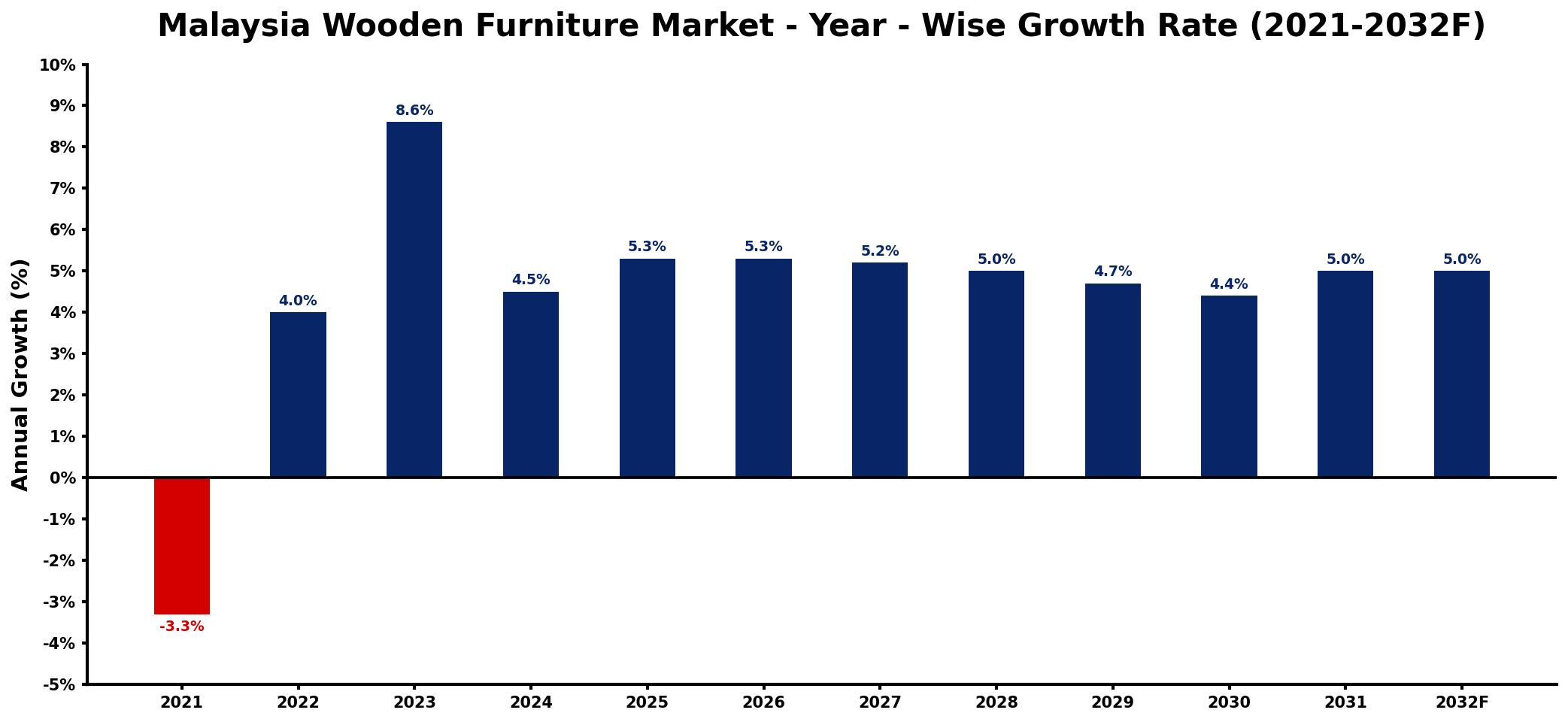
The table below presents the year‑wise growth rates along with the key drivers influencing the market
| Year | Growth Rate | Major Drivers |
| 2021 | -3.3% | decreased consumer spending on home |
| 2022 | 4.0% | increased demand for sustainable materials |
| 2023 | 8.6% | growing preference for local craftsmanship |
| 2024 | 4.5% | rising investment in design innovation |
| 2025 | 5.3% | expansion of online retail channels |
| 2026 | 5.3% | increased focus on eco-friendly products |
| 2027 | 5.2% | growing popularity of customizable options |
| 2028 | 5.0% | increased interest in artisanal goods |
| 2029 | 4.7% | rising demand for multifunctional designs |
| 2030 | 4.4% | growing emerging market penetration |
| 2031 | 5.0% | increased collaboration with interior designers |
| 2032 | 5.0% | growing trend towards minimalist aesthetics |
Note: Market size estimations and growth projections presented in this report are based on 6Wresearch's proprietary forecasting methodology, utilizing the latest available industry data, government publications, and primary research inputs.
Malaysia Wooden Furniture Market Synopsis
In recent years, the Malaysian wooden furniture market has gained momentum, fueled by a blend of traditional craftsmanship and contemporary design sensibilities. As consumer preferences shift towards sustainable products, this segment has started to embrace eco-friendly materials and processes, positioning itself for a bright future.
Looking ahead, the market is poised for expansion, particularly as recovery from the COVID-19 pandemic paves the way for renewed spending on home renovations and office setups. Key factors such as urbanization and increased awareness of sustainability will continue to shape the landscape of wooden furniture in Malaysia.
Malaysia Wooden Furniture Market Key Takeaways
- The market is experiencing a renaissance, propelled by a desire for sustainable and stylish furniture.
- Urbanization and a growing middle-class demographic are significant drivers of growth.
- Consumer preferences are shifting towards eco-friendly materials and certified wood sources.
- The COVID-19 pandemic catalyzed changes in consumer spending patterns, favoring home office and renovation-related purchases.
- The export potential of Malaysian wooden furniture enhances its competitive positioning in the global market.
Evaluation of Restraints in Malaysia Wooden Furniture Market
While the Malaysian wooden furniture market shows resilience and growth potential, it faces several constraints that could impede its progress. One of the most pressing issues is the sustainable sourcing of wood, which is crucial in meeting consumer demands for eco-friendly products. Additionally, competition from alternative materials, such as metal and plastic, poses a challenge, as these options often come at a lower price point. Global trends in design and style may also introduce complexities, as manufacturers strive to keep pace with rapidly changing consumer tastes.
Malaysia Wooden Furniture Market Trends
Several current and emerging trends are shaping the landscape of the Malaysia wooden furniture market. A significant movement towards sustainable design is observable, with manufacturers increasingly focusing on environmentally friendly production practices. The rise in remote working has led to an increased demand for ergonomic and stylish home office furniture. Additionally, customization and personalization options are becoming popular, as consumers look to create unique spaces that reflect their individual styles and preferences.
Malaysia Wooden Furniture Market Opportunities
The Malaysian wooden furniture market is ripe with opportunities for growth and investment. As more consumers seek out sustainable and durable furniture solutions, businesses that prioritize eco-friendly materials and practices will likely see enhanced market share. Furthermore, tapping into the burgeoning online retail space can provide manufacturers with broader reach and increased sales avenues. Collaborations with designers and architects to create bespoke pieces can also open doors to a wealth of new clients eager for unique offerings.
Government Initiatives in the Malaysia Wooden Furniture Market
The Malaysian government has implemented various initiatives aimed at promoting the local wooden furniture industry, including funding and support programs for manufacturers focusing on sustainability. Through policies encouraging the use of certified wood sources, the government aims to enhance the industry's overall environmental footprint. Public spending on infrastructure projects also presents opportunities for furniture makers, as increased urban development often entails a corresponding demand for new residential and commercial furnishings.
Future Insights of the Malaysia Wooden Furniture Market
As we look towards 2026-2032, the Malaysian wooden furniture market is expected to continue its upward trajectory, bolstered by a solid consumer base committed to sustainability and quality. The recovery from the pandemic is likely to fuel demand in both residential and commercial sectors, with an emphasis on multipurpose and adaptive furniture. As design trends evolve, manufacturers will need to remain agile, embracing innovation and sustainability as core principles to attract an increasingly discerning clientele.
Malaysia Wooden Furniture Market Latest Developments (2025 - 2026)
Recent developments in the Malaysian wooden furniture market indicate a growing emphasis on sustainability and the integration of technology into product offerings. Many manufacturers are investing in advanced production techniques that minimize waste and enhance product longevity. Additionally, there has been a notable uptick in partnerships between furniture makers and technology firms aimed at developing smart furniture solutions that cater to modern living needs.
Malaysia Wooden Furniture Market - Key Attractiveness of the Report
- 10 Years of Market Numbers
- Historical Data Starting from 2022 to 2025
- Base Year: 2025
- Forecast Data until 2032
- Key Performance Indicators Impacting the Market
- Major Upcoming Developments and Projects
Key Highlights of the Report:
- Malaysia Wooden Furniture Market Outlook
- Market Size of Malaysia Wooden Furniture Market, 2025
- Forecast of Malaysia Wooden Furniture Market, 2032
- Historical Data and Forecast of Malaysia Wooden Furniture Revenues & Volume for the Period 2022-2032F
- Malaysia Wooden Furniture Market Trend Evolution
- Malaysia Wooden Furniture Market Drivers and Challenges
- Malaysia Wooden Furniture Price Trends
- Malaysia Wooden Furniture Porter's Five Forces
- Malaysia Wooden Furniture Industry Life Cycle
- Historical Data and Forecast of Malaysia Wooden Furniture Market Revenues & Volume By Type for the Period 2022-2032F
- Historical Data and Forecast of Malaysia Wooden Furniture Market Revenues & Volume By Hardwood for the Period 2022-2032F
- Historical Data and Forecast of Malaysia Wooden Furniture Market Revenues & Volume By Softwood for the Period 2022-2032F
- Historical Data and Forecast of Malaysia Wooden Furniture Market Revenues & Volume By Material for the Period 2022-2032F
- Historical Data and Forecast of Malaysia Wooden Furniture Market Revenues & Volume By Plywood for the Period 2022-2032F
- Historical Data and Forecast of Malaysia Wooden Furniture Market Revenues & Volume By Laminates for the Period 2022-2032F
- Historical Data and Forecast of Malaysia Wooden Furniture Market Revenues & Volume By MDF for the Period 2022-2032F
- Historical Data and Forecast of Malaysia Wooden Furniture Market Revenues & Volume By Other Materials for the Period 2022-2032F
- Historical Data and Forecast of Malaysia Wooden Furniture Market Revenues & Volume By Product for the Period 2022-2032F
- Historical Data and Forecast of Malaysia Wooden Furniture Market Revenues & Volume By Bedroom for the Period 2022-2032F
- Historical Data and Forecast of Malaysia Wooden Furniture Market Revenues & Volume By Seating for the Period 2022-2032F
- Historical Data and Forecast of Malaysia Wooden Furniture Market Revenues & Volume By Kitchen for the Period 2022-2032F
- Historical Data and Forecast of Malaysia Wooden Furniture Market Revenues & Volume By Other Products for the Period 2022-2032F
- Historical Data and Forecast of Malaysia Wooden Furniture Market Revenues & Volume By Application for the Period 2022-2032F
- Historical Data and Forecast of Malaysia Wooden Furniture Market Revenues & Volume By Residential for the Period 2022-2032F
- Historical Data and Forecast of Malaysia Wooden Furniture Market Revenues & Volume By Commercial for the Period 2022-2032F
- Historical Data and Forecast of Malaysia Wooden Furniture Market Revenues & Volume By Distribution Channel for the Period 2022-2032F
- Historical Data and Forecast of Malaysia Wooden Furniture Market Revenues & Volume By Offline for the Period 2022-2032F
- Historical Data and Forecast of Malaysia Wooden Furniture Market Revenues & Volume By Online for the Period 2022-2032F
- Malaysia Wooden Furniture Import Export Trade Statistics
- Market Opportunity Assessment By Type
- Market Opportunity Assessment By Material
- Market Opportunity Assessment By Product
- Market Opportunity Assessment By Application
- Market Opportunity Assessment By Distribution Channel
- Malaysia Wooden Furniture Top Companies Market Share
- Malaysia Wooden Furniture Competitive Benchmarking By Technical and Operational Parameters
- Malaysia Wooden Furniture Company Profiles
- Malaysia Wooden Furniture Key Strategic Recommendations






































