Malaysia Woodworking Tools Market Summary
The malaysia woodworking tools market was estimated at USD 228 Million in 2025 and is projected to reach USD 297 Million by 2032, growing at a CAGR of 5.5% from 2026 to 2032.
Malaysia Woodworking Tools Market Year-wise Growth Rate and Key Drivers
This graph highlights how the Malaysia Woodworking Tools Market has steadily grown over the past five years, supported by major growth factors.
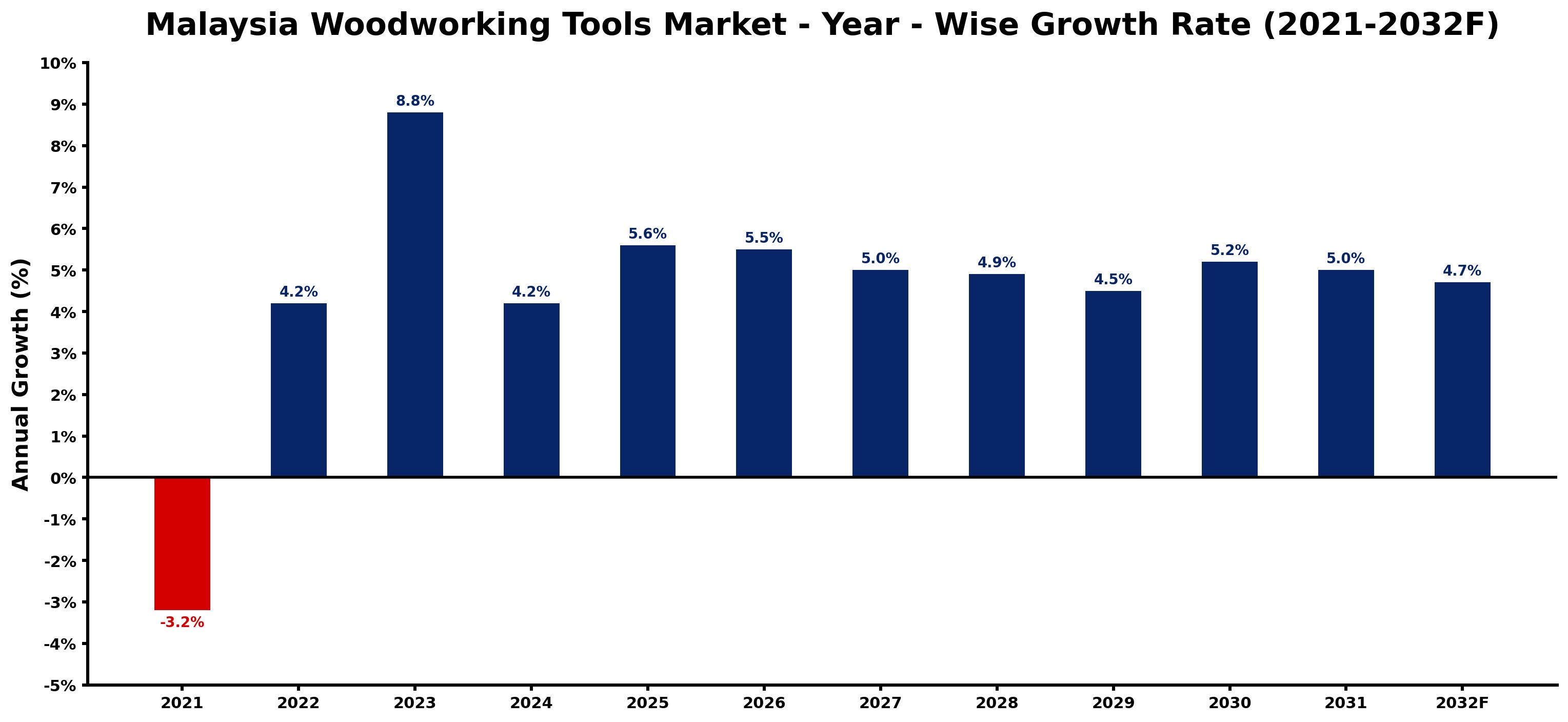
The table below presents the year wise growth rates along with the key drivers influencing the market
| Year | Growth Rate | Major Drivers |
| 2021 | -3.2% | Escalating competition from affordable imported tools diminished local manufacturers' market share and consumer interest. |
| 2022 | 4.2% | Local craftsmanship gains popularity, stimulating demand for high-quality woodworking tools. |
| 2023 | 8.8% | Rising home renovation trends encourage DIY enthusiasts to invest in tools. |
| 2024 | 4.2% | Surge in e-commerce platforms enhances access to woodworking supplies nationwide. |
| 2025 | 5.6% | Emergence of woodworking workshops promotes skill development and tool purchases. |
| 2026 | 5.5% | Collaboration between artisans and local businesses creates new market opportunities. |
| 2027 | 5.0% | Sustainability trends prompt shifts towards eco-friendly woodworking materials and tools. |
| 2028 | 4.9% | Increasing foreign investments spur technological advancements in local manufacturing. |
| 2029 | 4.5% | Interest in bespoke furniture drives demand for specialized woodworking tools. |
| 2030 | 5.2% | Educational institutions integrate woodworking into curricula, fostering future consumer base. |
| 2031 | 5.0% | Community-driven projects lead to collective tool purchases, enhancing affordability. |
| 2032 | 4.7% | Mature market dynamics shift focus towards innovation and premium tool offerings. |
Note - Market size estimations and growth projections presented in this report are based on 6Wresearch's advanced forecasting approach, validated with industry datasets as of June 2026.
Malaysia Woodworking Tools Market Synopsis
The Malaysia Woodworking Tools Market is projected to reach 5.5% and witness significant growth during the forecast period (2026-2032). This growth is largely driven by several pivotal factors that include the rising demand for wooden furniture and products. As urbanization accelerates, consumers are increasingly seeking quality wooden items, which enhances the overall market landscape. Additionally, advancements in technology, particularly in automation, are expected to expand the capabilities of woodworking tools, improving efficiency and productivity for both manufacturers and artisans alike. Furthermore, the increase in disposable income among the Malaysian population enables higher investments in luxury furniture, further fuelling market expansion.
Malaysia Woodworking Tools Market Growth Drivers
Several key growth drivers contribute to the positive outlook of the Malaysia woodworking tools market. Firstly, the escalating trend towards custom and handcrafted wooden items is influencing demand. Consumers are seeking unique solutions that mass-produced items cannot fulfill, stimulating demand for specialized woodworking tools. Secondly, an increase in home improvement projects among Malaysians, supported by DIY culture, is propelling sales in this sector. Thirdly, the proliferation of e-commerce platforms facilitates easier access to a wide range of woodworking tools, making it more convenient for consumers to purchase the necessary equipment for their projects. Another factor includes the expanding construction sector that increases demand for quality woodworking tools used in building and interior design. Lastly, environmental awareness is leading to a preference for sustainable materials, further driving the market for woodworking tools used in eco-friendly furniture production.
Malaysia Woodworking Tools Market Trends and Opportunities
The woodworking tools industry in Malaysia is experiencing noteworthy trends that are shaping its trajectory. One prominent trend is the shift towards digital tools, which integrate smart technology to improve precision and efficiency in woodworking processes. This trend opens new avenues for product innovation. Additionally, the growing interest in sustainable woodworking practices is creating opportunities for tools specifically designed for eco-conscious consumers. Moreover, the rise of community workshops and maker spaces has fostered a collaborative environment for artisans, which in turn boosts the demand for woodworking tools as more individuals engage in crafting activities. Furthermore, partnerships between tool manufacturers and educational institutions to foster skills in craftsmanship can also present new opportunities for growth. As the market evolves, companies are finding it imperative to stay ahead by adopting innovative solutions and responding to consumer preferences.
Malaysia Woodworking Tools Market Challenges and Restraints
Despite the encouraging growth prospects, the Malaysia woodworking tools market faces several challenges that could impede its advancement. One significant challenge is the fluctuation of raw material prices, which can affect production costs and subsequently, pricing strategies for woodworking tools. Additionally, competition from cheaper imports could erode market share for local manufacturers, forcing them to either cut costs or enhance product quality to maintain their market positions. Moreover, a lack of skilled labor in the woodworking industry presents a barrier to growth, as companies may struggle to find qualified personnel proficient in using advanced tools. Another challenge involves the environmental regulations that necessitate compliance with sustainable practices, which may increase operational costs. Lastly, the ongoing shift towards digitalization in various sectors calls for woodworking tool manufacturers to invest in new technologies or risk becoming obsolete.
Malaysia Woodworking Tools Market Government Investment and Initiatives
The Malaysian government has recognized the importance of supporting the woodworking tools market as part of its broader strategy to enhance the manufacturing sector. Initiatives aimed at boosting local craftsmanship and promoting the use of Malaysian timber are currently in place, encouraging sustainable practices in woodworking. Additionally, public investments in technology development are being made to enhance productivity within the sector. The government's emphasis on training and development programs for skilled labor in woodworking crafts aims to address the skills gap and ensure a steady workforce for the industry. Furthermore, various grants and incentives are available for companies investing in innovative tools and technology, stimulating growth and encouraging businesses to adopt modern practices. These initiatives reflect Malaysia's commitment to fostering a competitive and robust woodworking tools market.
Malaysia Woodworking Tools Market Latest Developments (May 2025 - June 2026)
In recent months, the Malaysia woodworking tools market has witnessed significant developments reflecting the industry's direction. One of the prominent trends includes an increasing emphasis on automation and smart technology integration within woodworking equipment. This shift is aimed at optimizing production processes and enhancing product quality. Additionally, various workshops and trade expos have been organized to connect manufacturers with consumers, showcasing the latest innovations in woodworking tools. Moreover, there has been a notable rise in collaborations between woodworking tool manufacturers and technology firms, leading to the development of cutting-edge tools that cater to the demands of modern craftsmen. The growth of online retail platforms has also expanded market reach, making high-quality tools accessible to a larger audience. These developments indicate a vibrant and evolving market, poised to capitalize on emerging trends and consumer preferences.
Malaysia Woodworking Tools Market - Key Attractiveness of the Report
- 10 Years of Market Numbers
- Historical Data Starting from 2022 to 2025
- Base Year: 2025
- Forecast Data until 2032
- Key Performance Indicators Impacting the Market
- Major Upcoming Developments and Projects
Key Highlights of the Report:
- Malaysia Woodworking Tools Market Outlook
- Market Size of Malaysia Woodworking Tools Market, 2025
- Forecast of Malaysia Woodworking Tools Market, 2032F
- Historical Data and Forecast of Malaysia Woodworking Tools Revenues & Volume for the Period 2022-2032F
- Malaysia Woodworking Tools Market Trend Evolution
- Malaysia Woodworking Tools Market Drivers and Challenges
- Malaysia Woodworking Tools Price Trends
- Malaysia Woodworking Tools Porter's Five Forces
- Malaysia Woodworking Tools Industry Life Cycle
- Historical Data and Forecast of Malaysia Woodworking Tools Market Revenues & Volume By Operations for the Period 2022-2032F
- Historical Data and Forecast of Malaysia Woodworking Tools Market Revenues & Volume By Handheld for the Period 2022-2032F
- Historical Data and Forecast of Malaysia Woodworking Tools Market Revenues & Volume By Power Tools for the Period 2022-2032F
- Historical Data and Forecast of Malaysia Woodworking Tools Market Revenues & Volume By Electric for the Period 2022-2032F
- Historical Data and Forecast of Malaysia Woodworking Tools Market Revenues & Volume By Pneumatic for the Period 2022-2032F
- Historical Data and Forecast of Malaysia Woodworking Tools Market Revenues & Volume By Product Type for the Period 2022-2032F
- Historical Data and Forecast of Malaysia Woodworking Tools Market Revenues & Volume By Bandsaw for the Period 2022-2032F
- Historical Data and Forecast of Malaysia Woodworking Tools Market Revenues & Volume By Chisels for the Period 2022-2032F
- Historical Data and Forecast of Malaysia Woodworking Tools Market Revenues & Volume By Hammers for the Period 2022-2032F
- Historical Data and Forecast of Malaysia Woodworking Tools Market Revenues & Volume By Planes for the Period 2022-2032F
- Historical Data and Forecast of Malaysia Woodworking Tools Market Revenues & Volume By Workbench for the Period 2022-2032F
- Historical Data and Forecast of Malaysia Woodworking Tools Market Revenues & Volume By Sanders for the Period 2022-2032F
- Historical Data and Forecast of Malaysia Woodworking Tools Market Revenues & Volume By Routers for the Period 2022-2032F
- Historical Data and Forecast of Malaysia Woodworking Tools Market Revenues & Volume By Others for the Period 2022-2032F
- Historical Data and Forecast of Malaysia Woodworking Tools Market Revenues & Volume By End-Users for the Period 2022-2032F
- Historical Data and Forecast of Malaysia Woodworking Tools Market Revenues & Volume By Manufacturing/Industrial for the Period 2022-2032F
- Historical Data and Forecast of Malaysia Woodworking Tools Market Revenues & Volume By Professional for the Period 2022-2032F
- Historical Data and Forecast of Malaysia Woodworking Tools Market Revenues & Volume By DIY for the Period 2022-2032F
- Historical Data and Forecast of Malaysia Woodworking Tools Market Revenues & Volume By Residential for the Period 2022-2032F
- Historical Data and Forecast of Malaysia Woodworking Tools Market Revenues & Volume By Sales Channel for the Period 2022-2032F
- Historical Data and Forecast of Malaysia Woodworking Tools Market Revenues & Volume By Offline for the Period 2022-2032F
- Historical Data and Forecast of Malaysia Woodworking Tools Market Revenues & Volume By Authorized Distributor/Dealer for the Period 2022-2032F
- Historical Data and Forecast of Malaysia Woodworking Tools Market Revenues & Volume By Mom and Pop Stores for the Period 2022-2032F
- Historical Data and Forecast of Malaysia Woodworking Tools Market Revenues & Volume By Supermarkets/Hypermarkets for the Period 2022-2032F
- Historical Data and Forecast of Malaysia Woodworking Tools Market Revenues & Volume By Online for the Period 2022-2032F
- Malaysia Woodworking Tools Import Export Trade Statistics
- Market Opportunity Assessment By Operations
- Market Opportunity Assessment By Product Type
- Market Opportunity Assessment By End-Users
- Market Opportunity Assessment By Sales Channel
- Malaysia Woodworking Tools Top Companies Market Share
- Malaysia Woodworking Tools Competitive Benchmarking By Technical and Operational Parameters
- Malaysia Woodworking Tools Company Profiles
- Malaysia Woodworking Tools Key Strategic Recommendations






































