Maldives Cooling Tower Market Growth Rate Analysis (2025 - 2031)
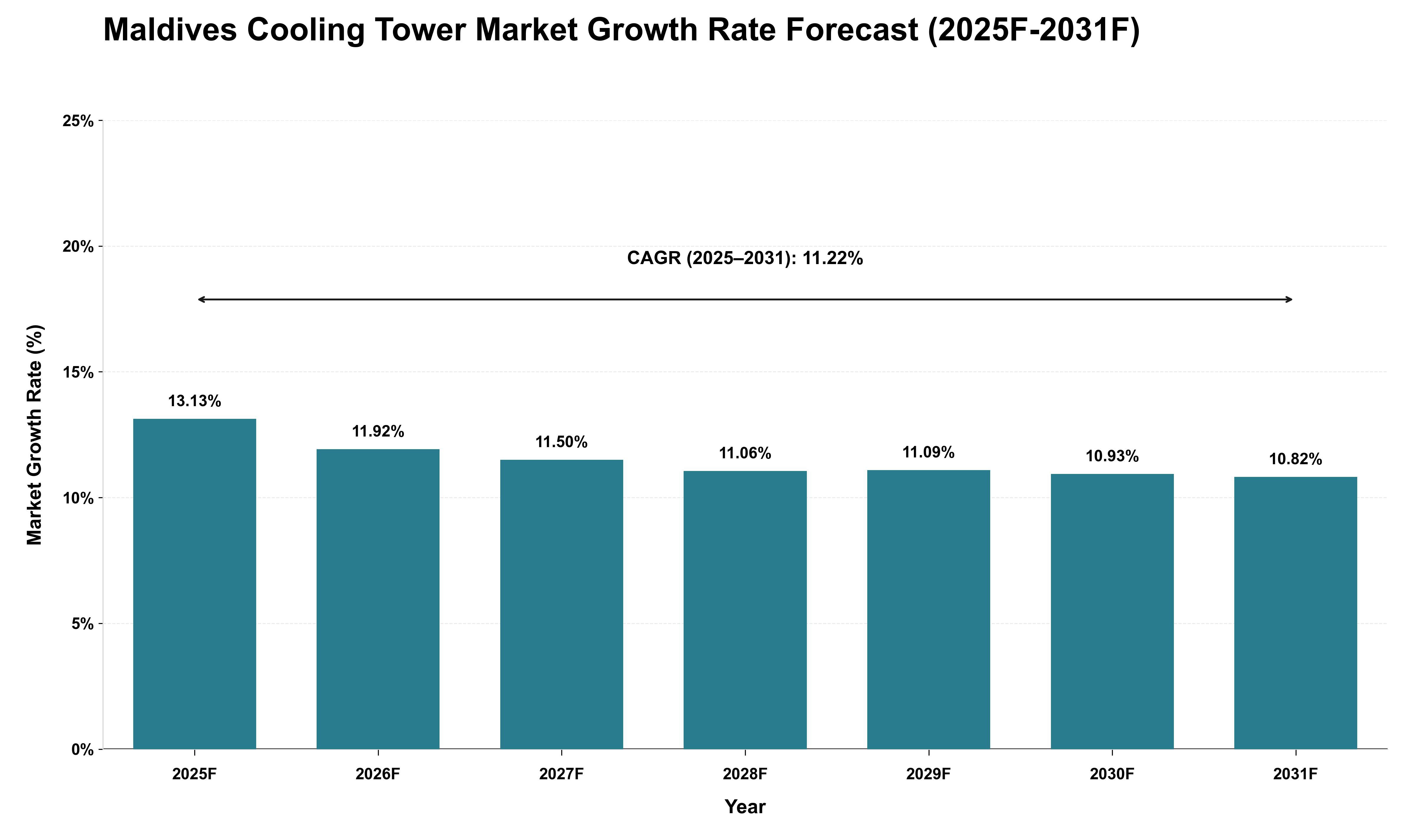
The Maldives cooling tower market is projected to experience a robust compound annual growth rate of 11.22% from 2025 to 2031, reflecting a strong demand driven by the tourism and construction sectors. The annual growth rates indicate a gradual decline, yet they remain consistently above 10%, suggesting sustained investment in infrastructure and energy efficiency initiatives. As the Maldives continues to rely heavily on imported cooling technologies, fluctuations in global supply chains and trade policies will significantly influence market dynamics. Additionally, increasing awareness of environmental sustainability will likely spur innovations in cooling solutions, enhancing competitive pressures among suppliers. The cyclical nature of tourism will also play a role; peak seasons may drive temporary spikes in demand for cooling systems, necessitating strategic capacity adjustments by manufacturers to meet these fluctuations effectively while maintaining operational efficiency throughout the forecast period.
Key Highlights of the Report:
- Maldives Cooling Tower Market Outlook
- Market Size of Maldives Cooling Tower Market, 2024
- Forecast of Maldives Cooling Tower Market, 2031
- Historical Data and Forecast of Maldives Cooling Tower Revenues & Volume for the Period 2021-2031
- Maldives Cooling Tower Market Trend Evolution
- Maldives Cooling Tower Market Drivers and Challenges
- Maldives Cooling Tower Price Trends
- Maldives Cooling Tower Porter`s Five Forces
- Maldives Cooling Tower Industry Life Cycle
- Historical Data and Forecast of Maldives Cooling Tower Market Revenues & Volume By Type for the Period 2021-2031
- Historical Data and Forecast of Maldives Cooling Tower Market Revenues & Volume By Evaporative for the Period 2021-2031
- Historical Data and Forecast of Maldives Cooling Tower Market Revenues & Volume By Dry for the Period 2021-2031
- Historical Data and Forecast of Maldives Cooling Tower Market Revenues & Volume By Hybrid for the Period 2021-2031
- Historical Data and Forecast of Maldives Cooling Tower Market Revenues & Volume By Design for the Period 2021-2031
- Historical Data and Forecast of Maldives Cooling Tower Market Revenues & Volume By Natural for the Period 2021-2031
- Historical Data and Forecast of Maldives Cooling Tower Market Revenues & Volume By Mechanical for the Period 2021-2031
- Historical Data and Forecast of Maldives Cooling Tower Market Revenues & Volume By Material for the Period 2021-2031
- Historical Data and Forecast of Maldives Cooling Tower Market Revenues & Volume By Concrete for the Period 2021-2031
- Historical Data and Forecast of Maldives Cooling Tower Market Revenues & Volume By Steel for the Period 2021-2031
- Historical Data and Forecast of Maldives Cooling Tower Market Revenues & Volume By FRP for the Period 2021-2031
- Historical Data and Forecast of Maldives Cooling Tower Market Revenues & Volume By Wood for the Period 2021-2031
- Maldives Cooling Tower Import Export Trade Statistics
- Market Opportunity Assessment By Type
- Market Opportunity Assessment By Design
- Market Opportunity Assessment By Material
- Maldives Cooling Tower Top Companies Market Share
- Maldives Cooling Tower Competitive Benchmarking By Technical and Operational Parameters
- Maldives Cooling Tower Company Profiles
- Maldives Cooling Tower Key Strategic Recommendations






































