Mexico Enterprise Data Management Market Size & Growth Rate (2026-2032)
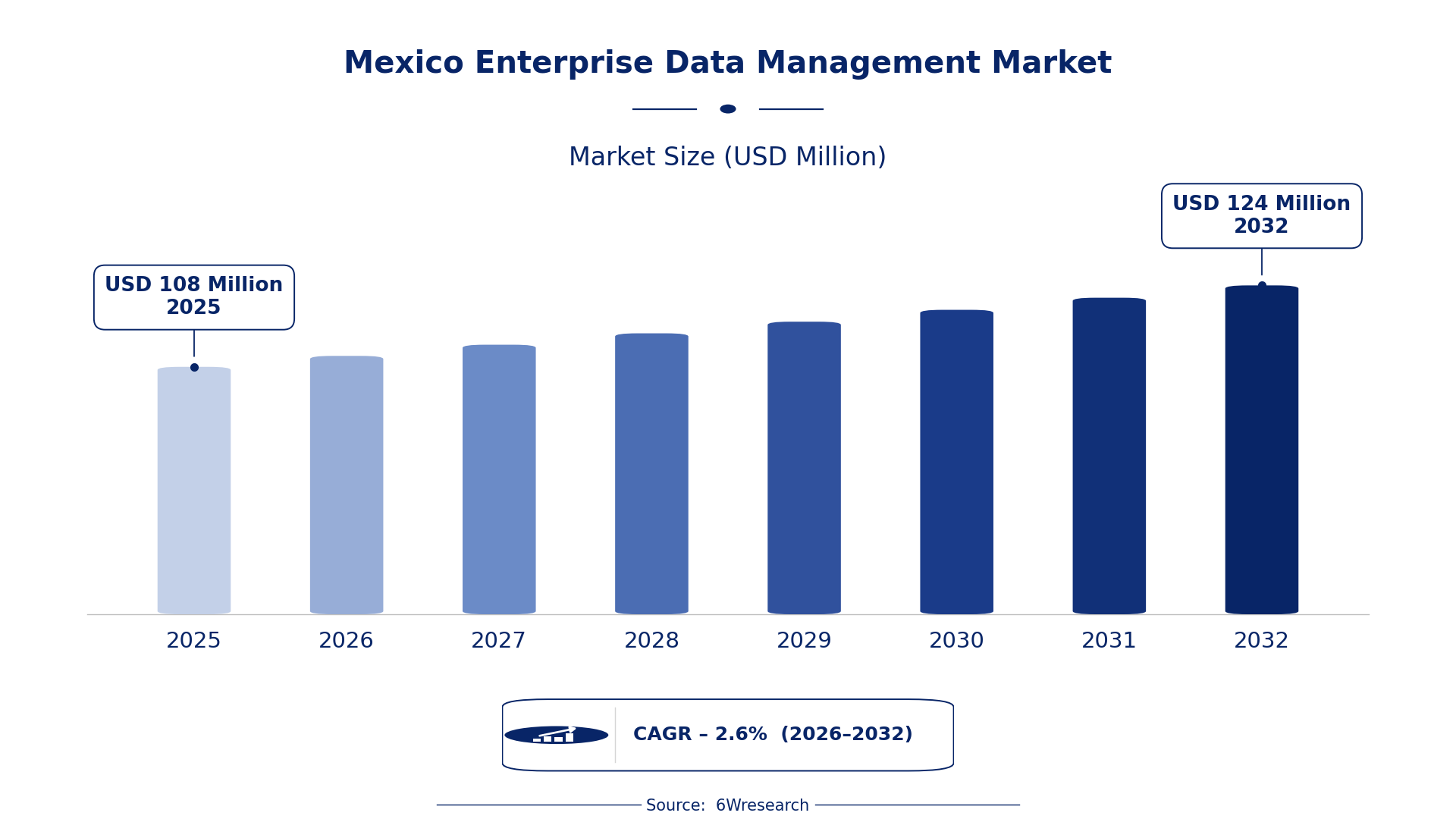
The Mexico Enterprise Data Management Market was estimated at USD 108 Million in 2025 and is projected to reach USD 124 Million by 2032, growing at a CAGR of 2.6% from 2026 to 2032.
Mexico Enterprise Data Management Market Synopsis
The most compelling force currently shaping the Mexico Enterprise Data Management Market is the relentless push for digital transformation across various sectors. Businesses are increasingly recognizing the need to harness data as a strategic asset, driving investments in comprehensive data management solutions.
As organizations strive for enhanced decision-making capabilities and compliance with evolving regulations, they are turning to advanced technologies. This shift includes the adoption of cloud-based solutions and a focus on data security, which are essential for maintaining competitive advantage in a data-driven economy.
Mexico Enterprise Data Management Market Year-wise Growth Rate and Key Drivers
This graph illustrates the annual growth rates of the Mexico Enterprise Data Management Market from 2021 to 2032, highlighting a steady upward trajectory and projected expansion over the forecast period.
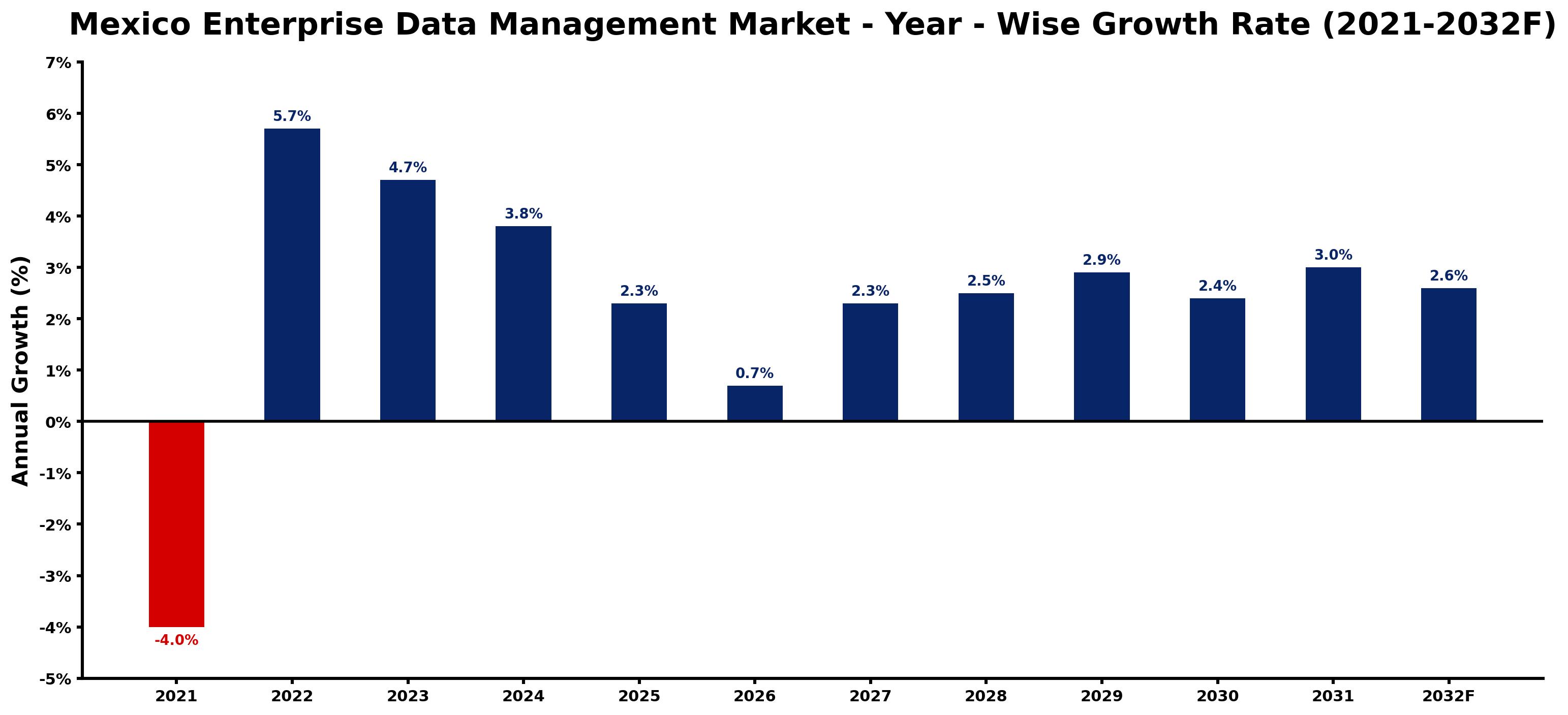
The table below presents the year‑wise growth rates along with the key drivers influencing the market
| Year | Growth Rate | Major Drivers |
| 2021 | -4.0% | Data privacy concerns under Mexico's new regulations hindered investments. |
| 2022 | 5.7% | Implementation of Mexico’s National Digital Strategy boosts data practices. |
| 2023 | 4.7% | Growing focus on cybersecurity regulations drives data security investments. |
| 2024 | 3.8% | Emerging startups fuel competitions requiring sophisticated data management. |
| 2025 | 2.3% | SMEs adopting advanced analytics platforms for decision-making. |
| 2026 | 0.7% | Increased digital services adoption among local governments enhances demand. |
| 2027 | 2.3% | Telecommunications reforms improving access to advanced data services. |
| 2028 | 2.5% | Major tech companies establishing Mexico operations expand data needs. |
| 2029 | 2.9% | Rise in e-commerce activity leads to higher data usage. |
| 2030 | 2.4% | Educational programs promoting data literacy increase skilled workforce. |
| 2031 | 3.0% | Growing interest in Big Data solutions among large enterprises. |
| 2032 | 2.6% | Demand for real-time data analytics influenced by market competitiveness. |
Note: Market size estimations and growth projections presented in this report are based on 6Wresearch's proprietary forecasting methodology, utilizing the latest available industry data, government publications, and primary research inputs.
Mexico Enterprise Data Management Market Key Takeaways
Below are some of the specific key takeaways from the market, including:
- The market is experiencing a surge in demand for cloud-based data management solutions.
- Data quality and governance practices are becoming critical for regulatory compliance.
- There is a noticeable increase in investments in advanced analytics and business intelligence tools.
- Organizations are prioritizing data security measures to mitigate cyber threats.
- The emphasis on digital transformation initiatives is driving the growth of data management solutions.
Evaluation of Restraints in Mexico Enterprise Data Management Market
Several obstacles continue to hinder the Mexico Enterprise Data Management Market. A primary concern is the pervasive lack of awareness among organizations regarding the significance of effective data management practices. This gap often translates into underinvestment in necessary tools, leading to compromised data quality and increased vulnerability to security breaches.
The rapid expansion of data volume further complicates the landscape, making it challenging for companies to extract meaningful insights. Regulatory pressures add another layer of complexity, compelling businesses to adopt comprehensive data management strategies to ensure compliance and protect sensitive information.
Mexico Enterprise Data Management Market Trends
Several key trends are emerging within the Mexico Enterprise Data Management Market. The rapid adoption of cloud-based solutions stands out, driven by the need for flexibility and cost-efficiency. Organizations are also focusing on enhancing data quality and governance to meet stringent regulatory requirements.
Another notable trend is the increasing demand for advanced analytics and business intelligence tools. These technologies enable companies to glean actionable insights from their data, enhancing overall decision-making capabilities. Additionally, the heightened focus on data security measures is a direct response to the rising threat of cyberattacks.
Mexico Enterprise Data Management Market Opportunities
The Mexico Enterprise Data Management Market is ripe with investment opportunities. As organizations embrace digital transformation, the need for sophisticated data management solutions has become paramount. Key areas for investment include data integration platforms and master data management solutions.
With the ongoing rise of big data analytics, companies are seeking tools that can efficiently manage and analyze large volumes of data. This demand provides a fertile ground for investors looking to capitalize on the growing need for effective data management technologies.
Government Initiatives in the Mexico Enterprise Data Management Market
Government policy is significantly influencing the Mexico Enterprise Data Management Market, with various initiatives aimed at promoting data protection, cybersecurity, and digital transformation. The regulatory framework established by the National Institute of Transparency, Access to Information and Personal Data Protection (INAI) is crucial for ensuring compliance and safeguarding personal data.
- A recently launched initiative by INAI focuses on enhancing data protection measures across all sectors.
- The National Cybersecurity Strategy, currently underway, aims to bolster the country’s cybersecurity infrastructure.
- A public-private partnership program planned for 2026 seeks to develop comprehensive data management solutions for small and medium enterprises.
- The National Digital Strategy, ongoing since 2024, promotes the adoption of digital technologies in public administration.
- A regulatory framework introduced in 2025 mandates stricter compliance measures for data governance in the private sector.
Future Insights of the Mexico Enterprise Data Management Market
Looking ahead to 2026-2032, the Mexico Enterprise Data Management Market is expected to grow steadily. As organizations increasingly prioritize data governance and compliance, the demand for effective data management solutions will continue to rise. The shift towards cloud-based technologies and big data analytics will further drive market growth, as companies seek to optimize their operations and enhance decision-making capabilities.
on top of that, the focus on digital transformation initiatives will likely lead to a surge in demand for advanced data management tools. Vendors offering comprehensive solutions will be well-positioned to capitalize on this trend, meeting the needs of businesses aiming to leverage their data assets strategically.
Mexico Enterprise Data Management Market Latest Developments
In the past year, the Mexico Enterprise Data Management Market has seen a wave of activity, reflecting the growing importance of data management in various sectors. Companies are increasingly investing in innovative solutions to enhance their data capabilities and ensure compliance with regulations.
- A major technology vendor launched a new cloud-based data integration platform in early 2025, aimed at simplifying data management for enterprises.
- An ongoing initiative by a leading regional operator focuses on enhancing data quality tools, expected to complete by mid-2026.
- A partnership between two key players in the market was established in Q1 2025 to develop advanced analytics solutions for SMEs.
- A planned rollout of a data governance framework is set to begin in late 2026, enhancing compliance measures across industries.
- A recent upgrade to cybersecurity protocols was implemented by a government agency to protect sensitive data in public sector organizations.
Mexico Enterprise Data Management Market - Key Attractiveness of the Report
- 10 Years of Market Numbers
- Historical Data Starting from 2022 to 2025
- Base Year: 2025
- Forecast Data until 2032
- Key Performance Indicators Impacting the Market
- Major Upcoming Developments and Projects
Key Highlights of the Report:
- Mexico Enterprise Data Management Market Outlook
- Market Size of Mexico Enterprise Data Management Market, 2025
- Forecast of Mexico Enterprise Data Management Market, 2032
- Historical Data and Forecast of Mexico Enterprise Data Management Revenues & Volume for the Period 2022-2032F
- Mexico Enterprise Data Management Market Trend Evolution
- Mexico Enterprise Data Management Market Drivers and Challenges
- Mexico Enterprise Data Management Price Trends
- Mexico Enterprise Data Management Porter's Five Forces
- Mexico Enterprise Data Management Industry Life Cycle
- Historical Data and Forecast of Mexico Enterprise Data Management Market Revenues & Volume By Component for the Period 2022-2032F
- Historical Data and Forecast of Mexico Enterprise Data Management Market Revenues & Volume By Software for the Period 2022-2032F
- Historical Data and Forecast of Mexico Enterprise Data Management Market Revenues & Volume By Services for the Period 2022-2032F
- Historical Data and Forecast of Mexico Enterprise Data Management Market Revenues & Volume By Professional Services for the Period 2022-2032F
- Historical Data and Forecast of Mexico Enterprise Data Management Market Revenues & Volume By Consulting for the Period 2022-2032F
- Historical Data and Forecast of Mexico Enterprise Data Management Market Revenues & Volume By Deployment and Integration for the Period 2022-2032F
- Historical Data and Forecast of Mexico Enterprise Data Management Market Revenues & Volume By Support and Maintenance for the Period 2022-2032F
- Historical Data and Forecast of Mexico Enterprise Data Management Market Revenues & Volume By Industry Vertical for the Period 2022-2032F
- Historical Data and Forecast of Mexico Enterprise Data Management Market Revenues & Volume By Healthcare and Life science for the Period 2022-2032F
- Historical Data and Forecast of Mexico Enterprise Data Management Market Revenues & Volume By Banking, Financial Services and Insurance (BFSI) for the Period 2022-2032F
- Historical Data and Forecast of Mexico Enterprise Data Management Market Revenues & Volume By Telecom and Information Technology (IT) for the Period 2022-2032F
- Historical Data and Forecast of Mexico Enterprise Data Management Market Revenues & Volume By Retail and Consumer goods for the Period 2022-2032F
- Historical Data and Forecast of Mexico Enterprise Data Management Market Revenues & Volume By Media and Entertainment for the Period 2022-2032F
- Historical Data and Forecast of Mexico Enterprise Data Management Market Revenues & Volume By Manufacturing for the Period 2022-2032F
- Historical Data and Forecast of Mexico Enterprise Data Management Market Revenues & Volume By Energy and Utilities for the Period 2022-2032F
- Historical Data and Forecast of Mexico Enterprise Data Management Market Revenues & Volume By Transportation and Logistics for the Period 2022-2032F
- Historical Data and Forecast of Mexico Enterprise Data Management Market Revenues & Volume By Organization Size for the Period 2022-2032F
- Historical Data and Forecast of Mexico Enterprise Data Management Market Revenues & Volume By Small and Medium-sized Enterprises for the Period 2022-2032F
- Historical Data and Forecast of Mexico Enterprise Data Management Market Revenues & Volume By Large enterprises for the Period 2022-2032F
- Historical Data and Forecast of Mexico Enterprise Data Management Market Revenues & Volume By Deployment Mode for the Period 2022-2032F
- Historical Data and Forecast of Mexico Enterprise Data Management Market Revenues & Volume By Cloud for the Period 2022-2032F
- Historical Data and Forecast of Mexico Enterprise Data Management Market Revenues & Volume By On-premises for the Period 2022-2032F
- Mexico Enterprise Data Management Import Export Trade Statistics
- Market Opportunity Assessment By Component
- Market Opportunity Assessment By Industry Vertical
- Market Opportunity Assessment By Organization Size
- Market Opportunity Assessment By Deployment Mode
- Mexico Enterprise Data Management Top Companies Market Share
- Mexico Enterprise Data Management Competitive Benchmarking By Technical and Operational Parameters
- Mexico Enterprise Data Management Company Profiles
- Mexico Enterprise Data Management Key Strategic Recommendations






































