Mexico Groceries Market Summary
The mexico groceries market was estimated at USD 130 Million in 2025 and is projected to reach USD 149 Million by 2032, growing at a CAGR of 0.9% from 2026 to 2032.
Mexico Groceries Market Year-wise Growth Rate and Key Drivers
This graph highlights how the Mexico Groceries Market has steadily grown over the past five years, supported by major growth factors.
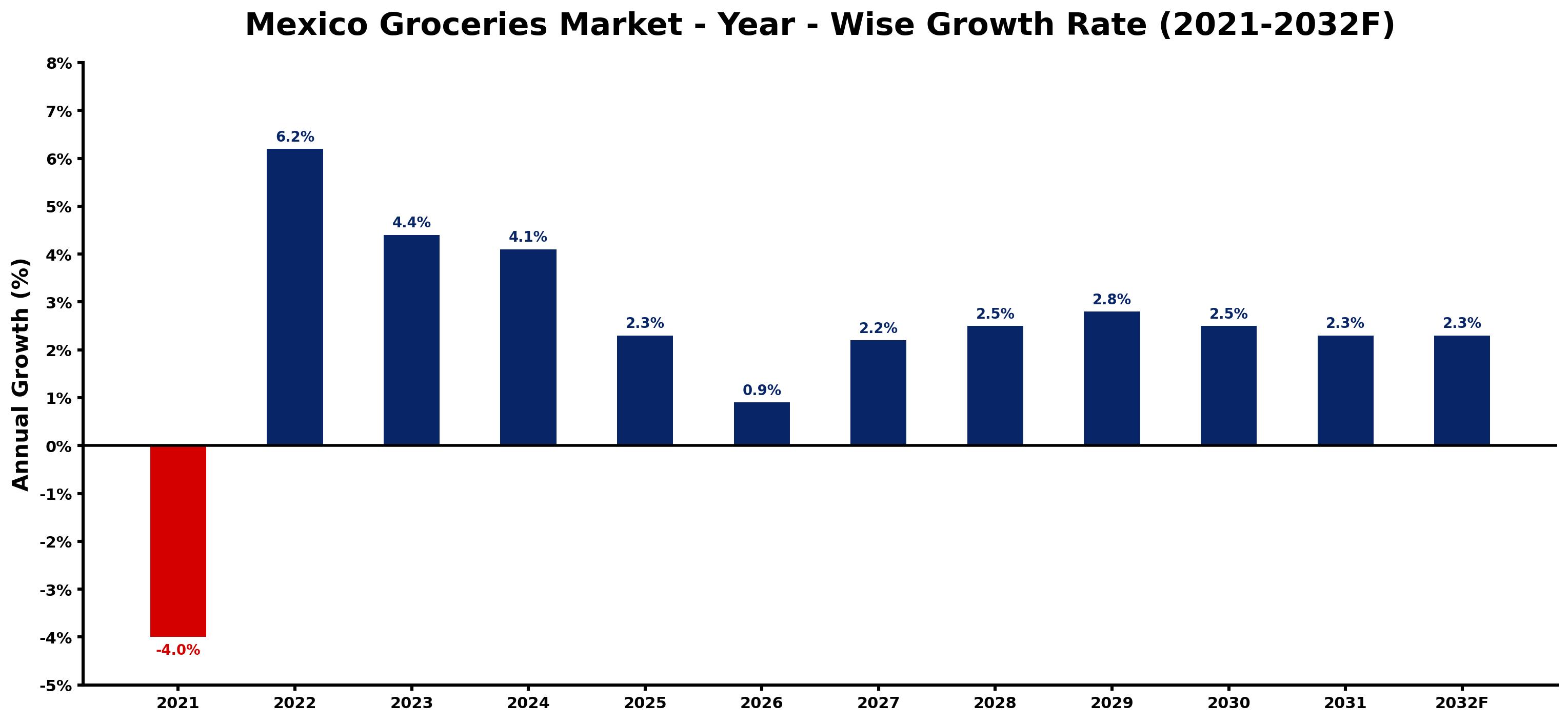
The table below presents the year wise growth rates along with the key drivers influencing the market
| Year | Growth Rate | Major Drivers |
| 2021 | -4.0% | Surging food prices led to diminished purchasing power, prompting consumers to limit grocery expenditures. |
| 2022 | 6.2% | E-commerce platforms expanded, facilitating grocery delivery services across metropolitan regions. |
| 2023 | 4.4% | Increased competition among retailers enhanced product variety and pricing strategies. |
| 2024 | 4.1% | Rising disposable incomes enabled more families to explore premium grocery options. |
| 2025 | 2.3% | Urbanization trends accelerated, leading to higher grocery consumption in cities. |
| 2026 | 0.9% | Local sourcing initiatives gained traction, connecting consumers with regional producers. |
| 2027 | 2.2% | Sustainability concerns prompted shifts towards eco-friendly packaging and products. |
| 2028 | 2.5% | Technological innovations improved supply chain efficiencies, reducing food waste significantly. |
| 2029 | 2.8% | Collaborations between grocery chains and local farms strengthened community ties. |
| 2030 | 2.5% | Health-conscious lifestyles created demand for specialized dietary products and alternatives. |
| 2031 | 2.3% | Increased travel and tourism revitalized interest in traditional Mexican foods and ingredients. |
| 2032 | 2.3% | Culinary trends promoted experimentation with international flavors in grocery offerings. |
Note - Market size estimations and growth projections presented in this report are based on 6Wresearch's advanced forecasting approach, validated with industry datasets as of June 2026.
Mexico Groceries Market Synopsis
The Mexico Groceries Market is projected to reach 0.9% and witness significant growth during the forecast period (2026-2032). This dynamic market reflects the rich culinary heritage of Mexico while adapting to the evolving preferences and lifestyles of its diverse population. The grocery offerings range from fresh local produce to international food products, representing varied tastes and cultural influences. The interplay of urbanization, globalization of food trends, and changing consumer habits shapes a market that is both vibrant and competitive.
Mexico Groceries Market Growth Drivers
The growth trajectory of the Mexico Groceries Market is driven by several key factors:
- Increasing population: The expanding population in urban areas leads to higher grocery demands, with consumers seeking convenience and variety in their food choices.
- Changing consumer preferences: Consumers are shifting towards healthier and organic food options, influencing grocery retailers to adjust their product offerings accordingly.
- Retail infrastructure expansion: The growth of modern retail formats, including supermarkets and convenience stores, enhances accessibility and product availability for consumers across various demographics.
- Rise of e-commerce: Online grocery shopping has gained traction, particularly post-pandemic, with consumers increasingly favoring the convenience of digital platforms for their grocery needs.
- Focus on health and wellness: There is a growing trend towards health-conscious eating, leading to an increased demand for organic, gluten-free, and specialty diet products.
Mexico Groceries Market Challenges and Restraints
While the Mexico Groceries Market shows promising growth, there are challenges that need to be addressed:
- Supply chain logistics: Inefficiencies in the supply chain, including transportation and distribution limitations, can lead to product shortages and affect overall customer satisfaction.
- Pricing pressures: Commodity price fluctuations and rising transportation costs can squeeze margins for retailers, making it challenging to maintain competitive pricing.
- Consumer demand variability: The grocery market must adapt to rapidly changing consumer preferences, which can vary significantly based on location and cultural factors.
- Regulatory compliance: Retailers must comply with stringent food safety regulations and quality standards, which can complicate operations and increase costs.
- Environmental sustainability: With a growing awareness of sustainability, retailers are under pressure to adopt eco-friendly practices throughout their supply chains.
Mexico Groceries Market Trends and Opportunities
The Mexico Groceries Market is witnessing several important trends that pave the way for future opportunities:
- Health-oriented products: The increasing focus on health and wellness is creating opportunities for retailers to expand their offerings of organic and natural food products.
- Local sourcing: Consumers are increasingly valuing locally sourced products, which supports local farmers and reduces environmental impact.
- Technology integration: The rise of mobile applications and digital platforms is enhancing customer engagement and enabling personalized shopping experiences.
- Sustainable packaging: There is a strong trend towards eco-friendly packaging solutions, which can help retailers reduce their environmental footprints and appeal to conscious consumers.
- Global cuisine exploration: As consumers become more adventurous, there is growing demand for international food products, creating a profitable niche for retailers willing to diversify their inventories.
Mexico Groceries Market Government Investment and Initiatives
The Mexican government plays a crucial role in shaping the groceries market through various policies and initiatives:
- Food safety regulations: Stringent food safety regulations are enforced to protect consumer health, ensuring that grocery products meet hygiene and quality standards.
- Support for local agriculture: Government initiatives encourage sustainable farming practices, fostering the growth of local producers and reducing reliance on imports.
- Investment in infrastructure: Public spending on transportation and logistics infrastructure aims to improve supply chain efficiency, benefiting grocery retailers across the nation.
- Programs to reduce food waste: The government has implemented programs aimed at minimizing food waste throughout the supply chain, including incentives for retailers adopting waste-reduction strategies.
- Consumer rights advocacy: The government promotes consumer rights by ensuring transparency in pricing and labeling, fostering a fair marketplace for grocery products.
Mexico Groceries Market Latest Developments (May 2025 - June 2026)
Recent developments in the Mexico Groceries Market highlight the evolving landscape:
- Growth of online grocery platforms has accelerated, with many retailers expanding their e-commerce capabilities to meet consumer demand for convenience.
- Innovations in supply chain logistics have been implemented, focusing on improving efficiency and reducing costs associated with transportation and warehousing.
- There is an increasing emphasis on health and wellness initiatives, prompting retailers to introduce new product lines that cater to health-conscious consumers.
- Sustainability practices have gained traction, with more retailers adopting environmentally friendly packaging and sourcing strategies.
- Partnerships between grocery retailers and local producers have been emphasized, fostering community relations and promoting locally sourced products.
Mexico Groceries Market - Key Attractiveness of the Report
- 10 Years of Market Numbers
- Historical Data Starting from 2022 to 2025
- Base Year: 2025
- Forecast Data until 2032
- Key Performance Indicators Impacting the Market
- Major Upcoming Developments and Projects
Key Highlights of the Report:
- Mexico Groceries Market Outlook
- Market Size of Mexico Groceries Market, 2025
- Forecast of Mexico Groceries Market, 2032
- Historical Data and Forecast of Mexico Groceries Revenues & Volume for the Period 2022-2032F
- Mexico Groceries Market Trend Evolution
- Mexico Groceries Market Drivers and Challenges
- Mexico Groceries Price Trends
- Mexico Groceries Porter's Five Forces
- Mexico Groceries Industry Life Cycle
- Historical Data and Forecast of Mexico Groceries Market Revenues & Volume By Product Types for the Period 2022-2032F
- Historical Data and Forecast of Mexico Groceries Market Revenues & Volume By Packaged Food for the Period 2022-2032F
- Historical Data and Forecast of Mexico Groceries Market Revenues & Volume By Unpackaged Food for the Period 2022-2032F
- Historical Data and Forecast of Mexico Groceries Market Revenues & Volume By Drinks for the Period 2022-2032F
- Historical Data and Forecast of Mexico Groceries Market Revenues & Volume By Tobacco for the Period 2022-2032F
- Historical Data and Forecast of Mexico Groceries Market Revenues & Volume By Household Products for the Period 2022-2032F
- Historical Data and Forecast of Mexico Groceries Market Revenues & Volume By Others for the Period 2022-2032F
- Historical Data and Forecast of Mexico Groceries Market Revenues & Volume By Distribution Channel for the Period 2022-2032F
- Historical Data and Forecast of Mexico Groceries Market Revenues & Volume By Supermarkets & Hypermarkets for the Period 2022-2032F
- Historical Data and Forecast of Mexico Groceries Market Revenues & Volume By Convenience Store for the Period 2022-2032F
- Historical Data and Forecast of Mexico Groceries Market Revenues & Volume By Online for the Period 2022-2032F
- Mexico Groceries Import Export Trade Statistics
- Market Opportunity Assessment By Product Types
- Market Opportunity Assessment By Distribution Channel
- Mexico Groceries Top Companies Market Share
- Mexico Groceries Competitive Benchmarking By Technical and Operational Parameters
- Mexico Groceries Company Profiles
- Mexico Groceries Key Strategic Recommendations






































