Mexico Leather Market Summary
The mexico leather market was estimated at USD 250 Million in 2025 and is projected to reach USD 291 Million by 2032, growing at a CAGR of 1.3% from 2026 to 2032.
Mexico Leather Market Year-wise Growth Rate and Key Drivers
This graph highlights how the Mexico Leather Market has steadily grown over the past five years, supported by major growth factors.
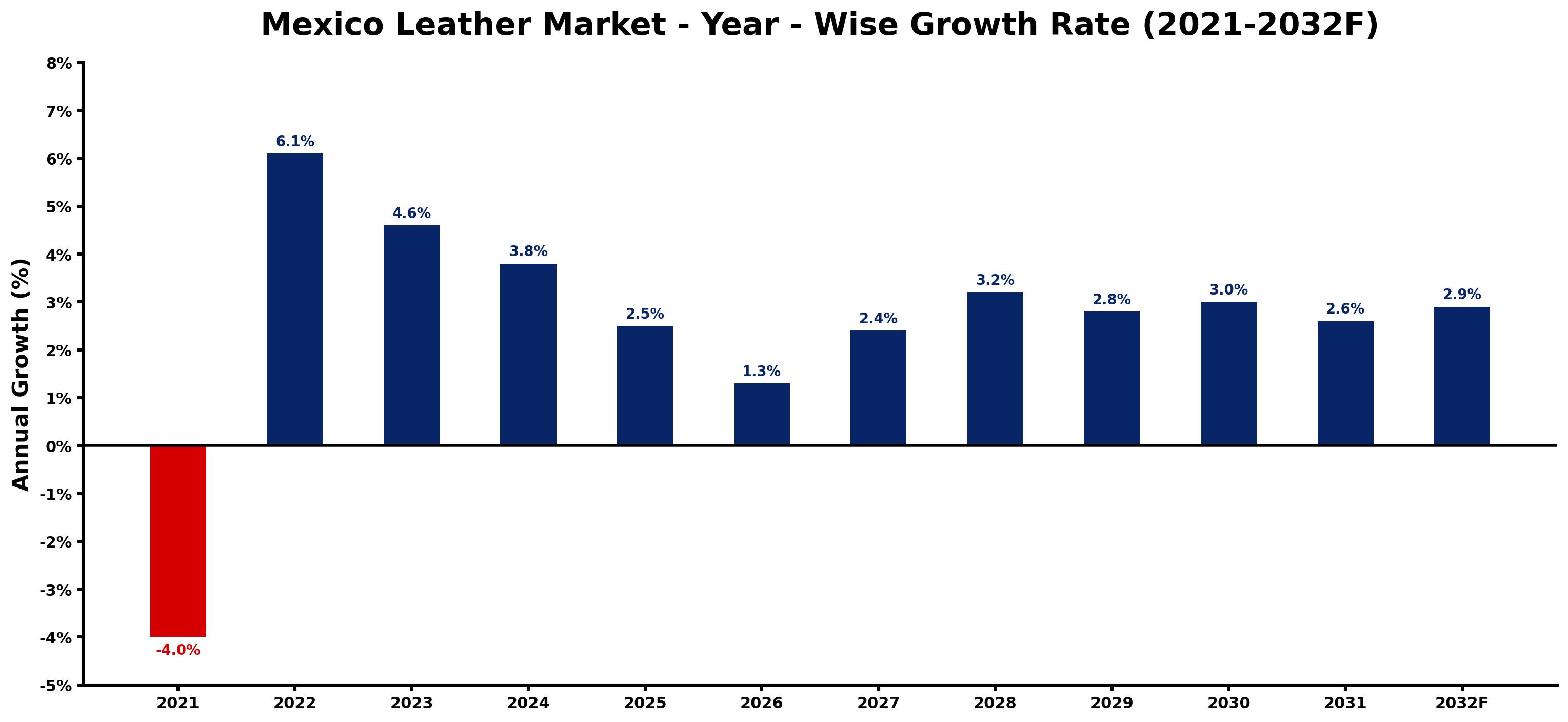
The table below presents the year wise growth rates along with the key drivers influencing the market
| Year | Growth Rate | Major Drivers |
| 2021 | -4.0% | Supply chain disruptions limited access to highquality leather, ultimately dampening product availability and sales. |
| 2022 | 6.1% | Artisan workshops capitalized on traditional craftsmanship, attracting niche consumer segments. |
| 2023 | 4.6% | Local brands embraced sustainability, appealing to environmentally conscious buyers in urban areas. |
| 2024 | 3.8% | Visitors increased to major cities, boosting demand for leather goods and souvenirs. |
| 2025 | 2.5% | International trade agreements reduced tariffs, enabling competitive pricing for imported products. |
| 2026 | 1.3% | Luxury tourism flourished, creating a robust market for high-end leather accessories. |
| 2027 | 2.4% | Consumer preferences shifted towards personalized products, driving custom leather offerings. |
| 2028 | 3.2% | Innovations in tanning processes improved quality, enhancing the reputation of Mexican leather. |
| 2029 | 2.8% | Digital marketing campaigns effectively showcased local artisans, expanding global reach. |
| 2030 | 3.0% | Millennials focused on experiences over ownership, influencing leather product design trends. |
| 2031 | 2.6% | Sustainable farming practices gained traction, promoting ethical sourcing of raw materials. |
| 2032 | 2.9% | Tech integration in retail streamlined transactions, boosting sales and customer engagement. |
Note - Market size estimations and growth projections presented in this report are based on 6Wresearch's advanced forecasting approach, validated with industry datasets as of June 2026.
Mexico Leather Market Synopsis
The Mexico Leather Market is projected to reach 1.3% and witness significant growth during the forecast period (2026-2032). The market is anticipated to grow at a compound annual growth rate (CAGR) of approximately 4.2%, driven by the rising demand from various sectors such as fashion, automotive, and furniture. Consumers are increasingly valuing the aesthetic appeal and durability of leather products, further bolstering market growth.
Mexico Leather Market Growth Drivers
The expansion of the Mexico leather market can be attributed to several pivotal factors:
- The fashion industry is witnessing a resurgence in leather goods due to shifting consumer preferences towards luxury and high-quality materials, thus increasing demand within the Mexico leather market.
- The automotive sector's focus on premium interiors has resulted in heightened requirements for leather upholstery, providing a substantial boost to the market.
- Rising disposable income among the Mexican populace is facilitating greater spending on luxury leather items, which are perceived as status symbols.
- Increasing consumer awareness regarding the longevity and timeless appeal of leather products is fostering demand across various market segments.
- Evolving lifestyle preferences favoring sustainable and durable products over fast fashion alternatives are further invigorating market growth, particularly for responsibly sourced leather.
Mexico Leather Market Trends and Opportunities
Current trends within the Mexico leather market reflect a dynamic landscape characterized by innovation and sustainability:
- There is an emerging trend towards eco-friendly leather alternatives, including vegetable-tanned leather and synthetic options that appeal to environmentally conscious consumers.
- Customization and personalization of leather products are gaining traction, as consumers seek unique items that reflect their individual style.
- The online retail channel is becoming increasingly significant, with more consumers opting to purchase leather products through e-commerce platforms, thereby broadening market access.
- Brands are focused on enhancing their product offerings with smart technology integrations, positioning leather goods as both functional and fashionable.
- The integration of traditional craftsmanship with modern design is presenting opportunities for artisanal brands, appealing to niche markets within the broader leather industry.
Mexico Leather Market Challenges and Restraints
While the Mexico leather market is on an upward trajectory, several challenges could impede its growth:
- Fluctuating raw material prices pose risks to profitability, as manufacturers may struggle to maintain price stability in their products.
- Stringent environmental regulations surrounding the tanning process can create compliance burdens for businesses, potentially leading to increased operational costs.
- Competition from synthetic leather alternatives continues to intensify, as these products often come at a lower price point and appeal to budget-conscious consumers.
- Market volatility stemming from economic fluctuations can impact consumer spending patterns, ultimately affecting demand for premium leather goods.
- The prevalence of counterfeit leather products can undermine consumer trust and brand integrity, complicating the market landscape for legitimate manufacturers.
Mexico Leather Market Government Investment and Initiatives
The Mexican government has recognized the significance of the leather industry within the national economy and has introduced several initiatives to support its development:
- The government is actively promoting sustainable leather production methods to align industry practices with global environmental standards, thereby ensuring long-term viability.
- Investment incentives and grants are being made available to businesses that innovate in production processes and introduce environmentally friendly technologies.
- Public spending on infrastructure improvements, particularly in regions known for leather production, aims to enhance supply chain efficiencies and market accessibility.
- Collaboration with educational institutions to provide skill development and vocational training for leather artisans is being prioritized to sustain craftsmanship in the industry.
- Programs aimed at boosting export capabilities for the Mexican leather sector are being implemented to enhance the competitiveness of local manufacturers on the global stage.
Mexico Leather Market Latest Developments (May 2025 - June 2026)
Recent developments in the Mexico leather market indicate positive momentum and strategic shifts within the industry:
- There has been a notable increase in collaborations between Mexican leather artisans and fashion designers, resulting in unique product lines that combine traditional techniques with contemporary aesthetics.
- The adoption of advanced manufacturing technologies is gaining traction, allowing for more efficient production processes and higher quality outputs in the leather sector.
- Consumer education campaigns about the benefits of investing in high-quality leather products are on the rise, contributing to a growing appreciation for craftsmanship.
- Innovations in sustainable leather alternatives are being explored by manufacturers, addressing consumer demand for eco-conscious products while maintaining quality standards.
- Trade fairs and exhibitions focusing on leather goods have seen increased participation, highlighting the sector's resilience and commitment to growth despite external challenges.
Mexico Leather Market - Key Attractiveness of the Report
- 10 Years of Market Numbers
- Historical Data Starting from 2022 to 2025
- Base Year: 2025
- Forecast Data until 2032
- Key Performance Indicators Impacting the Market
- Major Upcoming Developments and Projects
Key Highlights of the Report:
- Mexico Leather Market Outlook
- Market Size of Mexico Leather Market, 2025
- Forecast of Mexico Leather Market, 2032F
- Historical Data and Forecast of Mexico Leather Revenues & Volume for the Period 2022-2032F
- Mexico Leather Market Trend Evolution
- Mexico Leather Market Drivers and Challenges
- Mexico Leather Price Trends
- Mexico Leather Porter's Five Forces
- Mexico Leather Industry Life Cycle
- Historical Data and Forecast of Mexico Leather Market Revenues & Volume By Type for the Period 2022-2032F
- Historical Data and Forecast of Mexico Leather Market Revenues & Volume By Luggage for the Period 2022-2032F
- Historical Data and Forecast of Mexico Leather Market Revenues & Volume By Footwear for the Period 2022-2032F
- Historical Data and Forecast of Mexico Leather Market Revenues & Volume By Accessories for the Period 2022-2032F
- Historical Data and Forecast of Mexico Leather Market Revenues & Volume By Distribution Channel for the Period 2022-2032F
- Historical Data and Forecast of Mexico Leather Market Revenues & Volume By Online for the Period 2022-2032F
- Historical Data and Forecast of Mexico Leather Market Revenues & Volume By Offline for the Period 2022-2032F
- Mexico Leather Import Export Trade Statistics
- Market Opportunity Assessment By Type
- Market Opportunity Assessment By Distribution Channel
- Mexico Leather Top Companies Market Share
- Mexico Leather Competitive Benchmarking By Technical and Operational Parameters
- Mexico Leather Company Profiles
- Mexico Leather Key Strategic Recommendations






































