Mexico Metal Slabs Market Summary
The mexico metal slabs market was estimated at USD 135 Million in 2025 and is projected to reach USD 156 Million by 2032, growing at a CAGR of 1.4% from 2026 to 2032.
Mexico Metal Slabs Market Year-wise Growth Rate and Key Drivers
This graph highlights how the Mexico Metal Slabs Market has steadily grown over the past five years, supported by major growth factors.
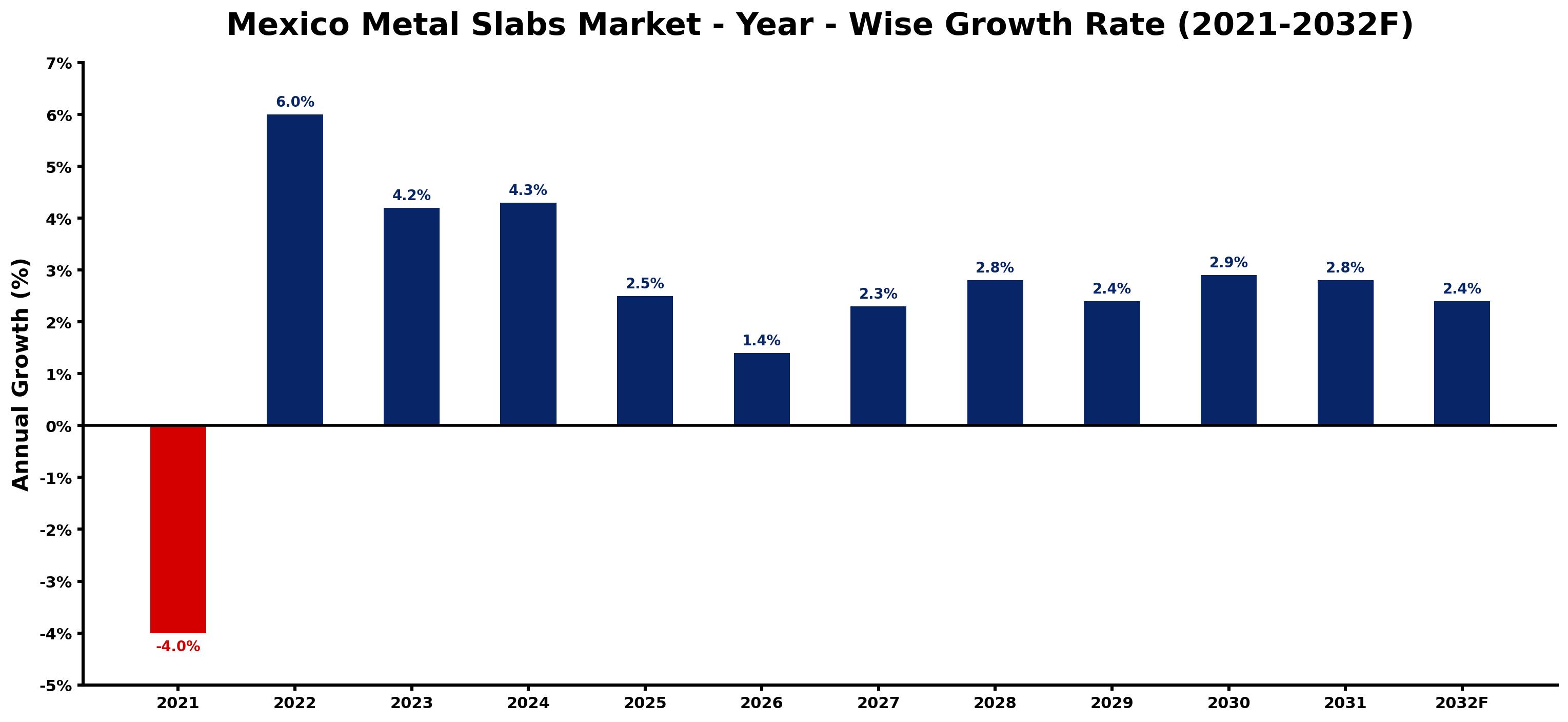
The table below presents the year wise growth rates along with the key drivers influencing the market
| Year | Growth Rate | Major Drivers |
| 2021 | -4.0% | Supply chain disruptions from the pandemic significantly delayed project timelines, leading to reduced demand for metal slabs. |
| 2022 | 6.0% | Local manufacturing initiatives gained traction, reducing reliance on imported metal slabs significantly. |
| 2023 | 4.2% | Construction projects in urban areas highlighted the essential role of metal slabs. |
| 2024 | 4.3% | Energy sector developments showcased metal slabs' importance in renewable energy infrastructure. |
| 2025 | 2.5% | Increased urbanization led to higher demand for robust building materials, especially metal slabs. |
| 2026 | 1.4% | Technological advancements in manufacturing improved the quality and efficiency of metal slab production. |
| 2027 | 2.3% | Collaboration between local firms and international players created innovative metal solutions. |
| 2028 | 2.8% | Sustainability trends influenced construction standards, pushing for eco-friendly metal slab options. |
| 2029 | 2.4% | Expansion of automotive and aerospace industries underscored metal slabs' critical applications. |
| 2030 | 2.9% | Investment in smart city projects necessitated enhanced materials like high-performance metal slabs. |
| 2031 | 2.8% | Infrastructure challenges prompted a reevaluation of traditional materials versus modern alternatives. |
| 2032 | 2.4% | Market stabilization attracted foreign direct investment, further boosting the metal slabs sector. |
Note - Market size estimations and growth projections presented in this report are based on 6Wresearch's advanced forecasting approach, validated with industry datasets as of June 2026.
Mexico Metal Slabs Market Synopsis
The Mexico Metal Slabs Market is projected to reach 1.4% and witness significant growth during the forecast period (2026-2032). This market plays a vital role in bolstering Mexico's manufacturing sector by providing essential materials that cater to a diverse range of industries, including construction, automotive, and aerospace. The growing demand for customized metal solutions positions Mexico as a competitive player in the global landscape, capable of delivering a wide array of metal slab products.
Mexico Metal Slabs Market Growth Drivers
Several factors are driving the growth of the Mexico Metal Slabs Market. One of the primary drivers is the robust performance of the manufacturing sector, which is experiencing a surge in demand for high-quality metal slabs. Key contributors to this increase include:
- Infrastructure Development: The ongoing growth in infrastructure projects, encompassing both public and private initiatives, boosts the consumption of metal slabs.
- Automotive Production: Mexico's status as a global automotive manufacturing hub drives the need for metal slabs, particularly for vehicle components.
- Urbanization: The rapid urbanization in Mexico leads to increased construction activities, further amplifying the demand for metal slabs in residential and commercial structures.
- Technological Advancements: The adoption of advanced manufacturing techniques enhances the quality and customization of metal slabs, making them more appealing to end users.
- Export Opportunities: As Mexico strengthens its trade agreements, the potential for exporting metal slabs becomes a significant factor in market expansion.
Mexico Metal Slabs Market Challenges and Restraints
Despite the positive growth prospects, the Mexico Metal Slabs Market faces several challenges that may hinder its development:
- Global Market Dynamics: Fluctuating demand from international markets can create uncertainties for local manufacturers in terms of production and pricing.
- Trade Uncertainties: Trade policies and tariffs may impact the competitiveness of Mexican metal slabs in the global market.
- Quality Control Issues: Ensuring that products meet international quality standards is crucial for manufacturers, posing a challenge for maintaining consistent quality.
- Energy Costs: Rising energy prices can affect operational costs, which may indirectly influence market pricing for metal slabs.
- Logistical Complexities: Transportation and logistics play a significant role in the supply chain, and inefficiencies can lead to delays and increased costs.
Mexico Metal Slabs Market Government Investment and Initiatives
The Mexican government actively supports the metal slabs market through various policies and incentives aimed at fostering growth and enhancing competitiveness. Key initiatives include:
- Support for Domestic Production: Government programs encourage the development of local metal slab manufacturing capabilities to reduce dependency on imports.
- Investment in Technological Advancements: Initiatives are in place to facilitate technological upgrades, ensuring that manufacturers can produce high-quality slabs efficiently.
- Workforce Development: Training programs for the workforce aim to enhance skills pertinent to the metal industry, driving productivity and innovation.
- Adherence to International Standards: The government emphasizes compliance with environmental and safety regulations, positioning Mexico as a responsible producer in global markets.
- Infrastructure Investment: Increased public spending on infrastructure projects creates a favorable environment for the metal slabs market by ensuring sustained demand.
Mexico Metal Slabs Market Latest Developments (May 2025 - June 2026)
Recent developments in the Mexico Metal Slabs Market showcase a dynamic shift aligned with the evolving demands of diverse industries. During the period from May 2025 to June 2026, the following trends have emerged:
- Technological Adoption: Manufacturers are increasingly integrating advanced production technologies, such as automation and AI, to enhance efficiency and product quality.
- Focus on Sustainability: Firms are prioritizing eco-friendly practices in metal slab production, responding to global pressures for sustainable manufacturing.
- Market Consolidation: A trend of mergers and acquisitions has been noted, with companies seeking to strengthen their market position and expand product offerings.
- Increased Exports: Opportunities for exporting metal slabs have risen, reflecting the growing demand from international markets, particularly in North America.
- Infrastructure Projects: Continued government investment in infrastructure development is expected to sustain demand for metal slabs in various construction projects.
Mexico Metal Slabs Market - Key Attractiveness of the Report
- 10 Years of Market Numbers
- Historical Data Starting from 2022 to 2025
- Base Year: 2025
- Forecast Data until 2032
- Key Performance Indicators Impacting the Market
- Major Upcoming Developments and Projects
Key Highlights of the Report:
- Mexico Metal Slabs Market Outlook
- Market Size of Mexico Metal Slabs Market, 2025
- Forecast of Mexico Metal Slabs Market, 2032
- Historical Data and Forecast of Mexico Metal Slabs Revenues & Volume for the Period 2022-2032F
- Mexico Metal Slabs Market Trend Evolution
- Mexico Metal Slabs Market Drivers and Challenges
- Mexico Metal Slabs Price Trends
- Mexico Metal Slabs Porter's Five Forces
- Mexico Metal Slabs Industry Life Cycle
- Historical Data and Forecast of Mexico Metal Slabs Market Revenues & Volume By Size Types for the Period 2022-2032F
- Historical Data and Forecast of Mexico Metal Slabs Market Revenues & Volume By Small for the Period 2022-2032F
- Historical Data and Forecast of Mexico Metal Slabs Market Revenues & Volume By Medium for the Period 2022-2032F
- Historical Data and Forecast of Mexico Metal Slabs Market Revenues & Volume By Large for the Period 2022-2032F
- Historical Data and Forecast of Mexico Metal Slabs Market Revenues & Volume By End-users for the Period 2022-2032F
- Historical Data and Forecast of Mexico Metal Slabs Market Revenues & Volume By Commercial for the Period 2022-2032F
- Historical Data and Forecast of Mexico Metal Slabs Market Revenues & Volume By Residential for the Period 2022-2032F
- Historical Data and Forecast of Mexico Metal Slabs Market Revenues & Volume By Industrial for the Period 2022-2032F
- Historical Data and Forecast of Mexico Metal Slabs Market Revenues & Volume By Product Types for the Period 2022-2032F
- Historical Data and Forecast of Mexico Metal Slabs Market Revenues & Volume By Worktops for the Period 2022-2032F
- Historical Data and Forecast of Mexico Metal Slabs Market Revenues & Volume By Window Sills for the Period 2022-2032F
- Historical Data and Forecast of Mexico Metal Slabs Market Revenues & Volume By Floor Step for the Period 2022-2032F
- Historical Data and Forecast of Mexico Metal Slabs Market Revenues & Volume By Others for the Period 2022-2032F
- Mexico Metal Slabs Import Export Trade Statistics
- Market Opportunity Assessment By Size Types
- Market Opportunity Assessment By End-users
- Market Opportunity Assessment By Product Types
- Mexico Metal Slabs Top Companies Market Share
- Mexico Metal Slabs Competitive Benchmarking By Technical and Operational Parameters
- Mexico Metal Slabs Company Profiles
- Mexico Metal Slabs Key Strategic Recommendations






































