Mexico Prom Dresses Market Summary
The mexico prom dresses market was estimated at USD 121 Million in 2025 and is projected to reach USD 141 Million by 2032, growing at a CAGR of 1.4% from 2026 to 2032.
Mexico Prom Dresses Market Year-wise Growth Rate and Key Drivers
This graph highlights how the Mexico Prom Dresses Market has steadily grown over the past five years, supported by major growth factors.
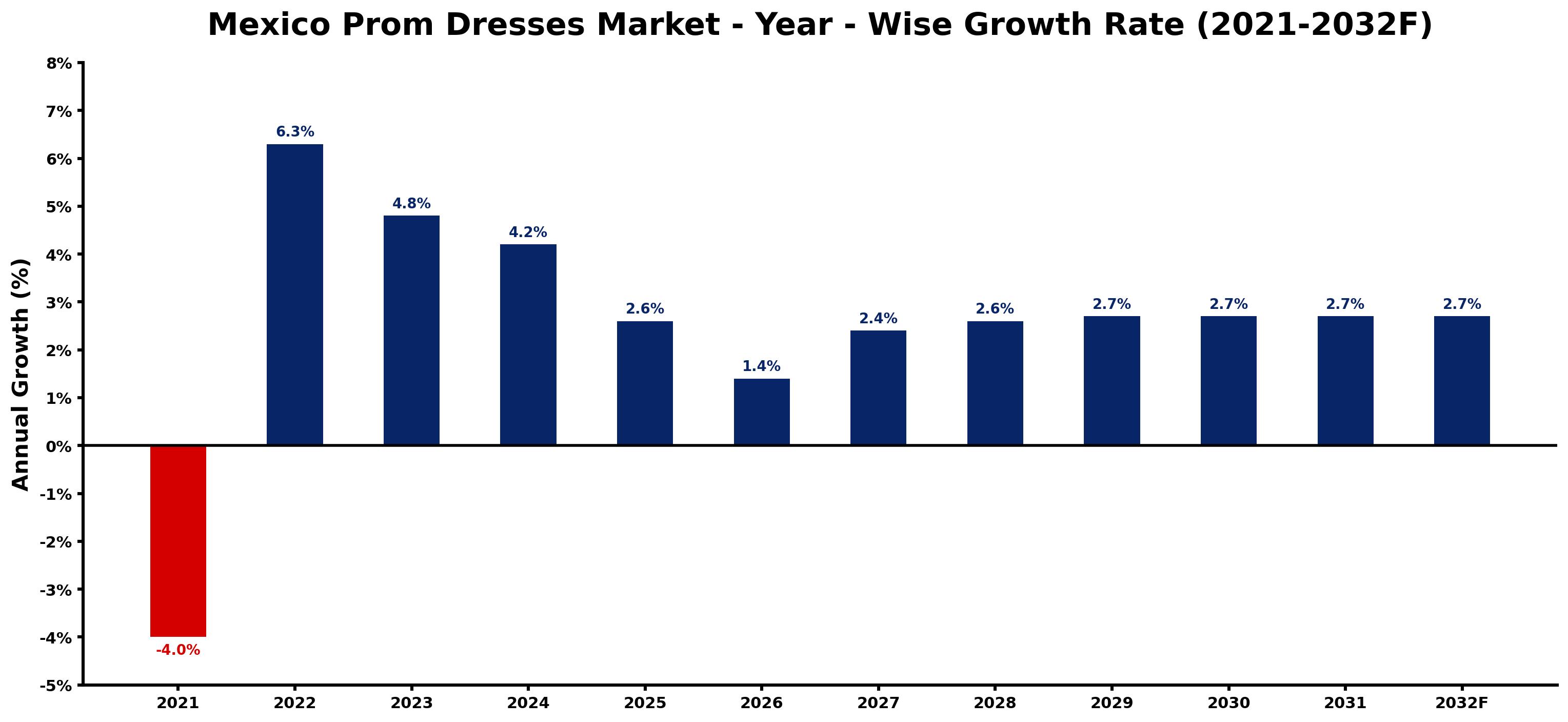
The table below presents the year wise growth rates along with the key drivers influencing the market
| Year | Growth Rate | Major Drivers |
| 2021 | -4.0% | Heightened restrictions on large gatherings due to the pandemic significantly reduced demand for prom dresses. |
| 2022 | 6.3% | Social media influencers showcase prom outfits, boosting brand visibility and engagement. |
| 2023 | 4.8% | Increased online shopping options cater to diverse preferences and size ranges. |
| 2024 | 4.2% | Collaborations between brands and local artists create culturally relevant designs. |
| 2025 | 2.6% | Promotional events in schools stimulate interest and drive early purchases of dresses. |
| 2026 | 1.4% | Sustainability becomes a key factor, with brands adopting eco-friendly materials. |
| 2027 | 2.4% | Luxury brands enter the prom dress segment, attracting affluent customers. |
| 2028 | 2.6% | Changes in school dress codes reflect broader cultural shifts towards individual expression. |
| 2029 | 2.7% | Emerging technology enables virtual try-ons, enhancing the online shopping experience. |
| 2030 | 2.7% | Increasing disposable income among families supports higher spending on special occasions. |
| 2031 | 2.7% | Growth in destination proms encourages travel and external purchases of dresses. |
| 2032 | 2.7% | Social awareness campaigns promote inclusivity, expanding options for diverse body types. |
Note - Market size estimations and growth projections presented in this report are based on 6Wresearch's advanced forecasting approach, validated with industry datasets as of June 2026.
Mexico Prom Dresses Market Synopsis
The Mexico Prom Dresses Market is projected to reach 1.4% and witness significant growth during the forecast period (2026-2032). This market is characterized by its cultural importance, especially surrounding formal events such as proms and other celebrations. The increasing demand for unique and stylish dresses showcases a trend towards personal expression and individual aesthetics, highlighting the critical role fashion plays in social gatherings across Mexico. The Mexican prom dresses market encapsulates a blend of local craftsmanship and international fashion trends, creating a diverse and vibrant marketplace.
Mexico Prom Dresses Market Growth Drivers
Several key factors drive the growth of the Mexico Prom Dresses Market. Firstly, the growing emphasis on fashion among young consumers is a major catalyst, as many seek dresses that reflect their personal taste and style. Secondly, rising disposable incomes allow families to invest more in formal attire for significant life events. Thirdly, the influence of social media and online platforms showcases diverse styles, promoting a trend for individuality in dress selection. Furthermore, the increasing number of formal events, including prom nights and other celebrations, bolsters demand. Lastly, the entry of various local and international fashion brands enhances competition and variety in the market, encouraging innovation and design diversification.
Mexico Prom Dresses Market Challenges and Restraints
The Mexico Prom Dresses Market faces several challenges that may impact growth potential. One of the primary challenges is the rapidly changing fashion trends, which require brands to adapt quickly to consumer preferences. Additionally, the market's inherent seasonality complicates inventory management, as demand peaks during specific times of the year. Furthermore, competition among brands can lead to price wars, impacting profit margins. The presence of counterfeit products could also undermine consumer trust and brand integrity in the market. Lastly, economic fluctuations can affect disposable income, posing risks to the expenditure on non-essential luxury items like prom dresses.
Mexico Prom Dresses Market Trends and Opportunities
The Mexico Prom Dresses Market is witnessing several notable trends and opportunities. A significant trend is the growing preference for sustainable and eco-friendly materials, as consumers become more conscious of environmental impact. This shift presents an opportunity for brands to innovate in fabric sourcing and design while capturing the interest of eco-aware consumers. Moreover, the rise of online shopping platforms allows for broader access to a variety of styles, making it easier for consumers to explore options beyond local offerings. Additionally, the influence of celebrity fashion and influencers on social media can drive trends, creating opportunities for brands to align marketing strategies with popular cultural movements. Collaboration with local artisans and designers can also create a niche market segment that appeals to those interested in unique and culturally rich designs.
Mexico Prom Dresses Market Government Investment and Initiatives
The Mexican government plays an active role in supporting the prom dresses market through various initiatives aimed at fostering entrepreneurship and cultural preservation. Policies are in place to promote local artisans and designers, encouraging creative expression and the incorporation of traditional craftsmanship into modern fashion. Furthermore, government initiatives aimed at streamlining import-export procedures facilitate international trade, enabling Mexican fashion brands to expand their presence in global markets. Additional public spending on fashion education and training programs aims to elevate skills within the industry, fostering a new generation of designers and entrepreneurs. The promotion of local fashion events and exhibitions helps to increase visibility for Mexican brands, reinforcing national pride in local fashion heritage.
Mexico Prom Dresses Market Latest Developments (May 2025 - June 2026)
Recent developments in the Mexico Prom Dresses Market reflect a dynamic shift towards more personalized and sustainable fashion choices. During this period, there has been an uptick in collaborations between local artisans and fashion influencers, successfully merging traditional elements with contemporary design. Additionally, the market has witnessed increased investment in e-commerce platforms, with brands enhancing digital shopping experiences to cater to a tech-savvy younger demographic. A notable trend includes the rise of rental services for formal wear, enabling cost-effective and sustainable options for prom-goers. Furthermore, initiatives promoting cultural heritage in fashion have gained momentum, showcasing traditional designs and fabrics, thereby enriching the overall aesthetic of prom dresses available in the market.
Mexico Prom Dresses Market - Key Attractiveness of the Report
- 10 Years of Market Numbers
- Historical Data Starting from 2022 to 2025
- Base Year: 2025
- Forecast Data until 2032
- Key Performance Indicators Impacting the Market
- Major Upcoming Developments and Projects
Key Highlights of the Report:
- Mexico Prom Dresses Market Outlook
- Market Size of Mexico Prom Dresses Market, 2025
- Forecast of Mexico Prom Dresses Market, 2032
- Historical Data and Forecast of Mexico Prom Dresses Revenues & Volume for the Period 2022-2032F
- Mexico Prom Dresses Market Trend Evolution
- Mexico Prom Dresses Market Drivers and Challenges
- Mexico Prom Dresses Price Trends
- Mexico Prom Dresses Porter's Five Forces
- Mexico Prom Dresses Industry Life Cycle
- Historical Data and Forecast of Mexico Prom Dresses Market Revenues & Volume By Type for the Period 2022-2032F
- Historical Data and Forecast of Mexico Prom Dresses Market Revenues & Volume By Long Dresses for the Period 2022-2032F
- Historical Data and Forecast of Mexico Prom Dresses Market Revenues & Volume By Short Dresses for the Period 2022-2032F
- Historical Data and Forecast of Mexico Prom Dresses Market Revenues & Volume By Knee-length Dresses for the Period 2022-2032F
- Historical Data and Forecast of Mexico Prom Dresses Market Revenues & Volume By Fabric for the Period 2022-2032F
- Historical Data and Forecast of Mexico Prom Dresses Market Revenues & Volume By Chiffon for the Period 2022-2032F
- Historical Data and Forecast of Mexico Prom Dresses Market Revenues & Volume By Satin for the Period 2022-2032F
- Historical Data and Forecast of Mexico Prom Dresses Market Revenues & Volume By Organza for the Period 2022-2032F
- Historical Data and Forecast of Mexico Prom Dresses Market Revenues & Volume By Others for the Period 2022-2032F
- Historical Data and Forecast of Mexico Prom Dresses Market Revenues & Volume By Distribution Channel for the Period 2022-2032F
- Historical Data and Forecast of Mexico Prom Dresses Market Revenues & Volume By Store-Based for the Period 2022-2032F
- Historical Data and Forecast of Mexico Prom Dresses Market Revenues & Volume By Non-Store-Based for the Period 2022-2032F
- Mexico Prom Dresses Import Export Trade Statistics
- Market Opportunity Assessment By Type
- Market Opportunity Assessment By Fabric
- Market Opportunity Assessment By Distribution Channel
- Mexico Prom Dresses Top Companies Market Share
- Mexico Prom Dresses Competitive Benchmarking By Technical and Operational Parameters
- Mexico Prom Dresses Company Profiles
- Mexico Prom Dresses Key Strategic Recommendations






































