Morocco Bamboo Furniture Market Year-wise Growth Rate (2021-2031F)
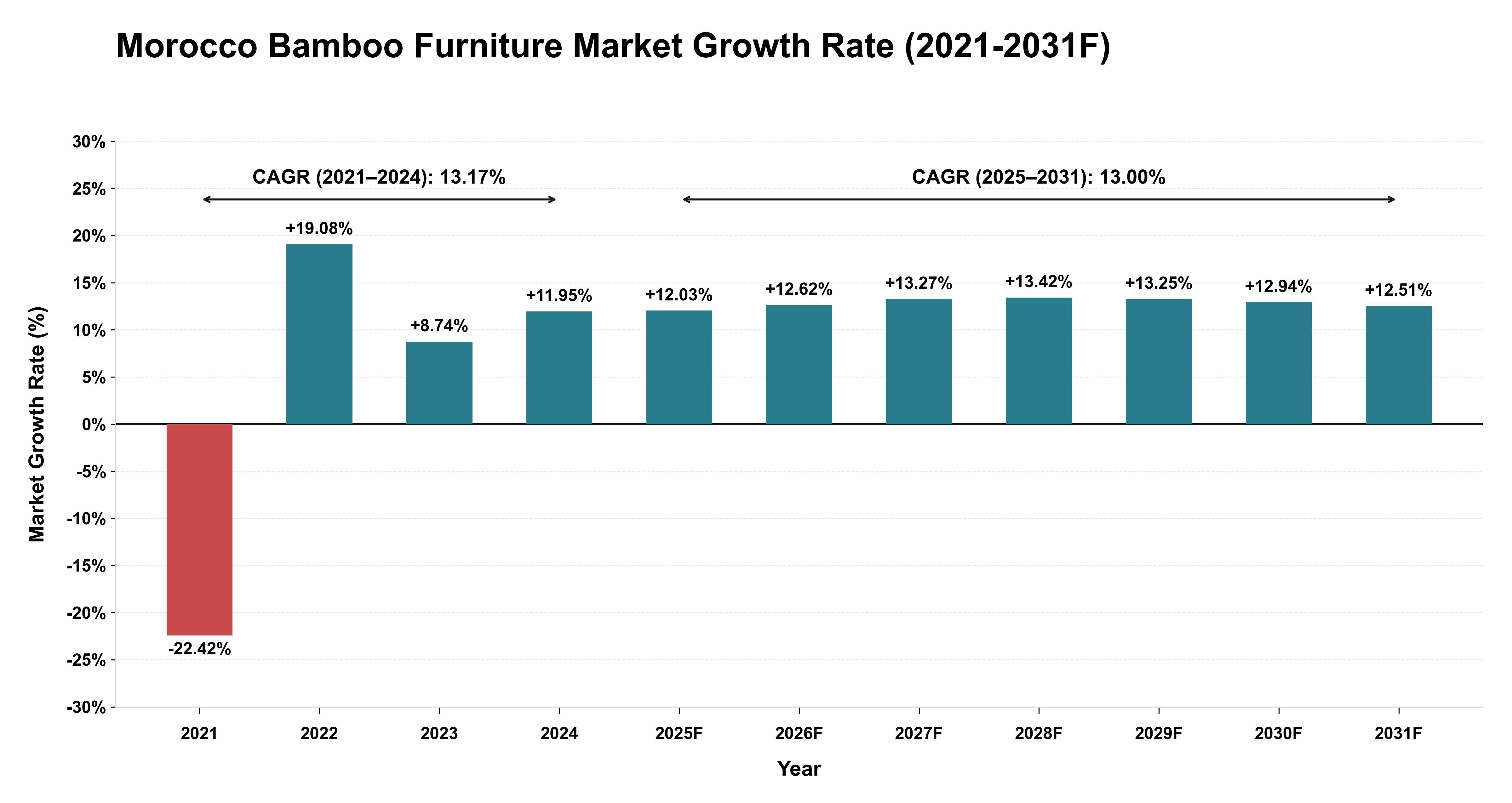
The Morocco Bamboo Furniture Market witnessed a turbulent period from 2021 to 2024, marked by a sharp decline in 2021 followed by a strong rebound in 2022, indicating resilience and adaptability within the industry despite initial setbacks. The positive growth trend continued through 2024, showcasing steady recovery and increased consumer demand for sustainable furniture options. Looking ahead to 2025-2031, the market is poised for consistent growth with annual trajectories ranging from 12.03% to 13.42%. This forecasted stability reflects growing environmental awareness, innovation in bamboo furniture design and manufacturing processes, as well as shifting consumer preferences towards eco-friendly products. The sector's ability to maintain double-digit CAGR values underscores its potential for sustained expansion and profitability in the coming years.
Morocco Bamboo Furniture Market Synopsis
The Morocco Bamboo Furniture Market is witnessing steady growth due to the increasing popularity of sustainable and eco-friendly furniture options. Consumers are increasingly seeking products that are environmentally friendly, durable, and stylish, driving the demand for bamboo furniture in the country. The market is characterized by a wide range of bamboo furniture products including chairs, tables, beds, and storage units, catering to both residential and commercial segments. Key players in the market are focusing on product innovation, design aesthetics, and competitive pricing to gain a competitive edge. Additionally, the growing awareness about the benefits of bamboo as a renewable resource and its positive impact on the environment is further fueling the demand for bamboo furniture in Morocco.
Morocco Bamboo Furniture Market Trends
The Morocco Bamboo Furniture Market is experiencing a growing trend towards sustainable and eco-friendly products, with consumers showing increased interest in environmentally responsible choices. Bamboo furniture is gaining popularity due to its durability, lightweight nature, and renewable properties. Consumers are also attracted to the stylish and modern designs that bamboo furniture offers, making it a trendy choice for interior decoration. Manufacturers are responding to this trend by expanding their bamboo furniture product lines and emphasizing the sustainable aspects of their products in marketing campaigns. With a focus on green living and sustainable practices, the Morocco Bamboo Furniture Market is poised for continued growth as eco-conscious consumers seek out environmentally friendly options for their homes.
Morocco Bamboo Furniture Market Challenges
In the Morocco Bamboo Furniture Market, some challenges include limited awareness and understanding of bamboo as a sustainable and durable material for furniture among consumers. Additionally, there may be issues related to the availability and sourcing of high-quality bamboo materials locally, leading to potential supply chain constraints. Competition from traditional furniture materials and lack of established distribution channels for bamboo furniture products could also pose challenges for market penetration. Furthermore, the need for skilled artisans and craftsmen with expertise in working with bamboo to create intricate and high-quality furniture pieces may be a hurdle in scaling up production and meeting demand. Overall, addressing these challenges through awareness campaigns, investment in sourcing capabilities, and skills development programs could help unlock the market potential for bamboo furniture in Morocco.
Morocco Bamboo Furniture Market Investment Opportunities
The Morocco Bamboo Furniture Market presents several investment opportunities due to the growing global trend towards sustainable and eco-friendly products. Bamboo is a highly renewable resource with strong and durable properties, making it an attractive material for furniture production. Investing in manufacturing facilities for bamboo furniture in Morocco can capitalize on the country`s abundant bamboo resources and skilled workforce. Additionally, there is a growing demand for eco-conscious furniture in both domestic and international markets, providing a potential for export opportunities. With the increasing emphasis on sustainability and environmental conservation, investing in the Morocco Bamboo Furniture Market offers the potential for long-term growth and profitability.
Jordan Agar Market Government Policies
The Moroccan government has implemented various policies to promote sustainability and economic growth in the bamboo furniture market. These policies include incentives for businesses to use sustainable materials like bamboo, providing financial support for bamboo cultivation and production, and promoting bamboo furniture exports through trade agreements and partnerships. Additionally, the government has established regulations to ensure quality standards and environmental sustainability in the production and sale of bamboo furniture. These policies aim to harness the potential of bamboo as a renewable resource, create employment opportunities, and position Morocco as a leader in sustainable furniture manufacturing.
Morocco Bamboo Furniture Market Future Outlook
The future outlook for the Morocco Bamboo Furniture Market appears promising as the demand for sustainable and eco-friendly furniture options continues to rise globally. Bamboo is known for its durability, versatility, and environmentally friendly properties, making it an attractive choice for consumers seeking stylish yet sustainable furniture solutions. With a growing awareness of environmental issues and a shift towards conscious consumerism, the market for bamboo furniture in Morocco is expected to expand. Additionally, the government`s initiatives to promote sustainability and eco-friendly practices are likely to further fuel the growth of the bamboo furniture market in the country. Overall, the future looks bright for the Morocco Bamboo Furniture Market, with opportunities for growth and innovation in catering to the increasing demand for environmentally friendly furniture options.
Key Highlights of the Report:
- Morocco Bamboo Furniture Market Outlook
- Market Size of Morocco Bamboo Furniture Market, 2024
- Forecast of Morocco Bamboo Furniture Market, 2031
- Historical Data and Forecast of Morocco Bamboo Furniture Revenues & Volume for the Period 2021 - 2031
- Morocco Bamboo Furniture Market Trend Evolution
- Morocco Bamboo Furniture Market Drivers and Challenges
- Morocco Bamboo Furniture Price Trends
- Morocco Bamboo Furniture Porter's Five Forces
- Morocco Bamboo Furniture Industry Life Cycle
- Historical Data and Forecast of Morocco Bamboo Furniture Market Revenues & Volume By Type for the Period 2021 - 2031
- Historical Data and Forecast of Morocco Bamboo Furniture Market Revenues & Volume By Chairs & Tables for the Period 2021 - 2031
- Historical Data and Forecast of Morocco Bamboo Furniture Market Revenues & Volume By Stools for the Period 2021 - 2031
- Historical Data and Forecast of Morocco Bamboo Furniture Market Revenues & Volume By Beds for the Period 2021 - 2031
- Historical Data and Forecast of Morocco Bamboo Furniture Market Revenues & Volume By Others for the Period 2021 - 2031
- Historical Data and Forecast of Morocco Bamboo Furniture Market Revenues & Volume By End User for the Period 2021 - 2031
- Historical Data and Forecast of Morocco Bamboo Furniture Market Revenues & Volume By Residential for the Period 2021 - 2031
- Historical Data and Forecast of Morocco Bamboo Furniture Market Revenues & Volume By Commercial for the Period 2021 - 2031
- Morocco Bamboo Furniture Import Export Trade Statistics
- Market Opportunity Assessment By Type
- Market Opportunity Assessment By End User
- Morocco Bamboo Furniture Top Companies Market Share
- Morocco Bamboo Furniture Competitive Benchmarking By Technical and Operational Parameters
- Morocco Bamboo Furniture Company Profiles
- Morocco Bamboo Furniture Key Strategic Recommendations






































