Morocco Carpets & Rugs Market Growth Rate Analysis (2025 - 2031)
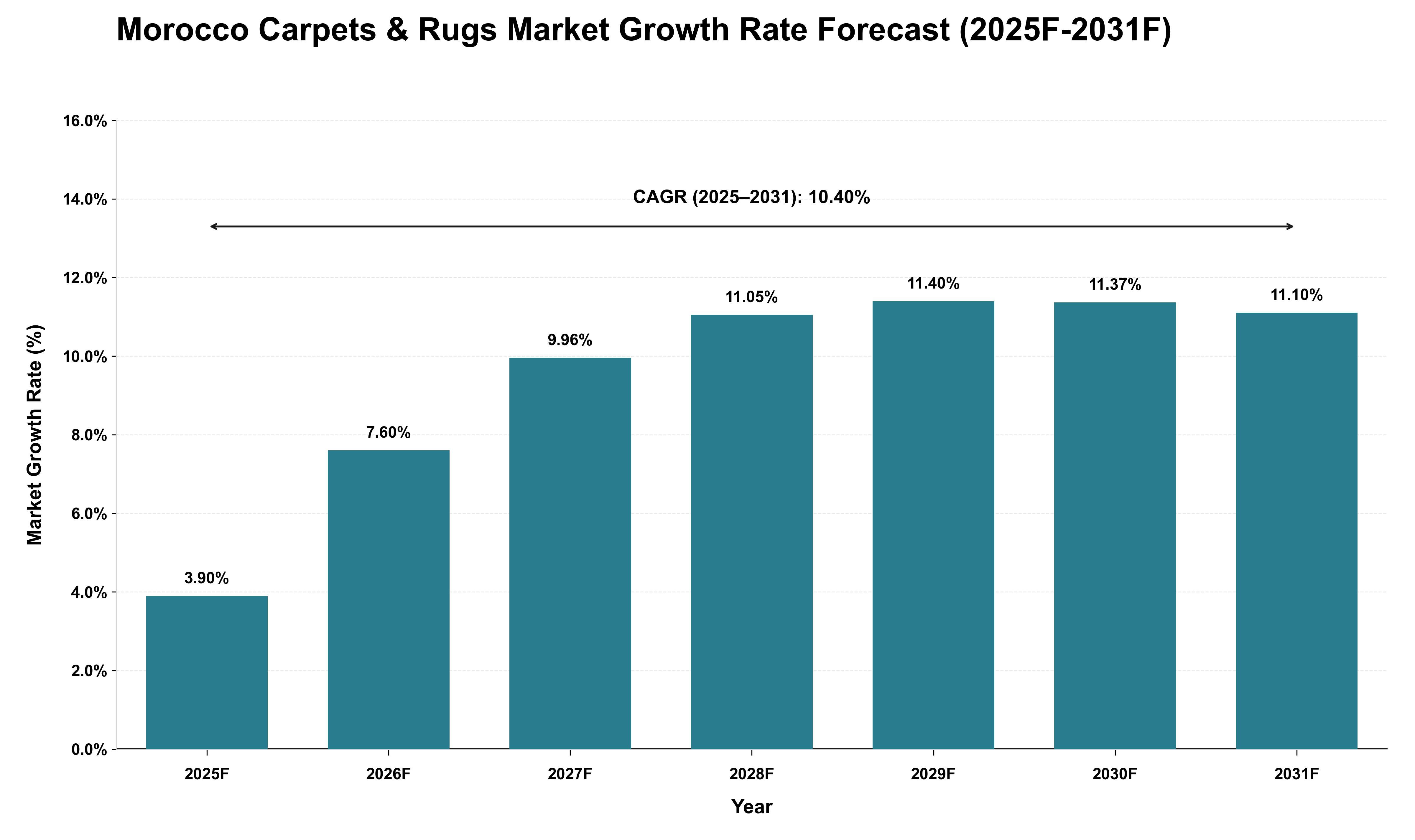
The Morocco carpets and rugs market will experience significant growth driven by evolving global consumer preferences for artisanal and sustainable products, which will enhance export demand. As the forecast CAGR of 10.40% indicates, trade flows will reflect a robust upward trajectory, particularly as annual growth rates accelerate from 3.90% in 2025 to a peak of 11.40% in 2029. This trend will be supported by increasing import dependencies in key markets seeking unique textile offerings, positioning Moroccan carpets as premium alternatives. The anticipated cyclical trends suggest that as global economies recover and consumer spending rises, the demand for high-quality home furnishings will surge, further bolstering export volumes. Additionally, Morocco's strategic initiatives to enhance production capabilities and streamline logistics will facilitate smoother trade operations, ensuring that the country remains competitive in the international marketplace throughout this period.
Key Highlights of the Report:
- Morocco Carpets & Rugs Market Outlook
- Market Size of Morocco Carpets & Rugs Market, 2024
- Forecast of Morocco Carpets & Rugs Market, 2031
- Historical Data and Forecast of Morocco Carpets & Rugs Revenues & Volume for the Period 2021 - 2031
- Morocco Carpets & Rugs Market Trend Evolution
- Morocco Carpets & Rugs Market Drivers and Challenges
- Morocco Carpets & Rugs Price Trends
- Morocco Carpets & Rugs Porter's Five Forces
- Morocco Carpets & Rugs Industry Life Cycle
- Historical Data and Forecast of Morocco Carpets & Rugs Market Revenues & Volume By Material Type for the Period 2021 - 2031
- Historical Data and Forecast of Morocco Carpets & Rugs Market Revenues & Volume By Nylon for the Period 2021 - 2031
- Historical Data and Forecast of Morocco Carpets & Rugs Market Revenues & Volume By Polyester for the Period 2021 - 2031
- Historical Data and Forecast of Morocco Carpets & Rugs Market Revenues & Volume By Polypropylene for the Period 2021 - 2031
- Historical Data and Forecast of Morocco Carpets & Rugs Market Revenues & Volume By Cotton for the Period 2021 - 2031
- Historical Data and Forecast of Morocco Carpets & Rugs Market Revenues & Volume By Wool for the Period 2021 - 2031
- Historical Data and Forecast of Morocco Carpets & Rugs Market Revenues & Volume By Silk for the Period 2021 - 2031
- Historical Data and Forecast of Morocco Carpets & Rugs Market Revenues & Volume By Others for the Period 2021 - 2031
- Historical Data and Forecast of Morocco Carpets & Rugs Market Revenues & Volume By Product Type for the Period 2021 - 2031
- Historical Data and Forecast of Morocco Carpets & Rugs Market Revenues & Volume By Woven for the Period 2021 - 2031
- Historical Data and Forecast of Morocco Carpets & Rugs Market Revenues & Volume By Tufted for the Period 2021 - 2031
- Historical Data and Forecast of Morocco Carpets & Rugs Market Revenues & Volume By Knotted for the Period 2021 - 2031
- Historical Data and Forecast of Morocco Carpets & Rugs Market Revenues & Volume By Needle-Punched for the Period 2021 - 2031
- Historical Data and Forecast of Morocco Carpets & Rugs Market Revenues & Volume By Others for the Period 2021 - 2031
- Historical Data and Forecast of Morocco Carpets & Rugs Market Revenues & Volume By End Use for the Period 2021 - 2031
- Historical Data and Forecast of Morocco Carpets & Rugs Market Revenues & Volume By Residential for the Period 2021 - 2031
- Historical Data and Forecast of Morocco Carpets & Rugs Market Revenues & Volume By Commercial for the Period 2021 - 2031
- Morocco Carpets & Rugs Import Export Trade Statistics
- Market Opportunity Assessment By Material Type
- Market Opportunity Assessment By Product Type
- Market Opportunity Assessment By End Use
- Morocco Carpets & Rugs Top Companies Market Share
- Morocco Carpets & Rugs Competitive Benchmarking By Technical and Operational Parameters
- Morocco Carpets & Rugs Company Profiles
- Morocco Carpets & Rugs Key Strategic Recommendations






































