Morocco Cattle Feed Market Size Growth Rate
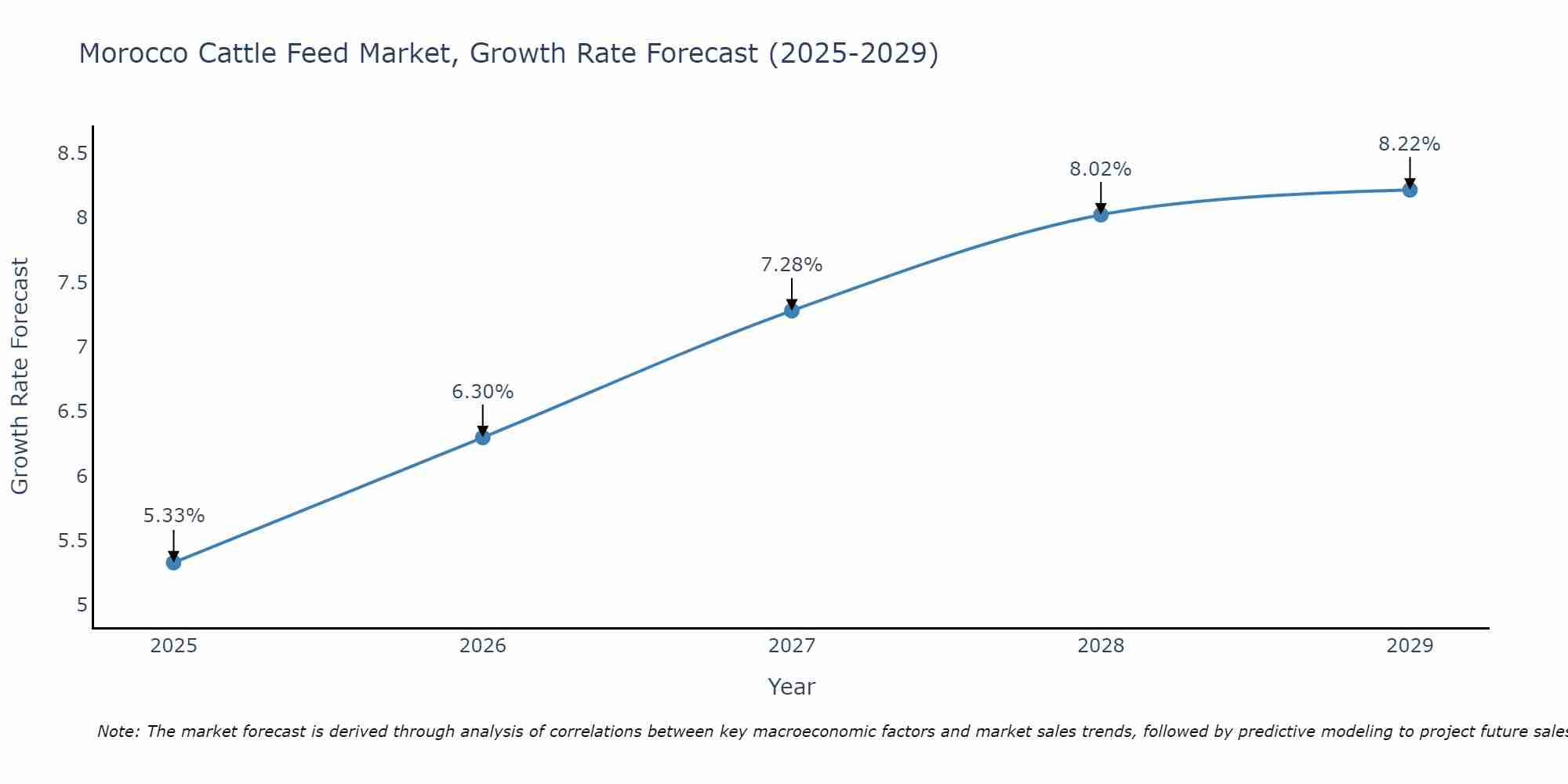
The Morocco Cattle Feed Market is likely to experience consistent growth rate gains over the period 2025 to 2029. Commencing at 5.33% in 2025, growth builds up to 8.22% by 2029.
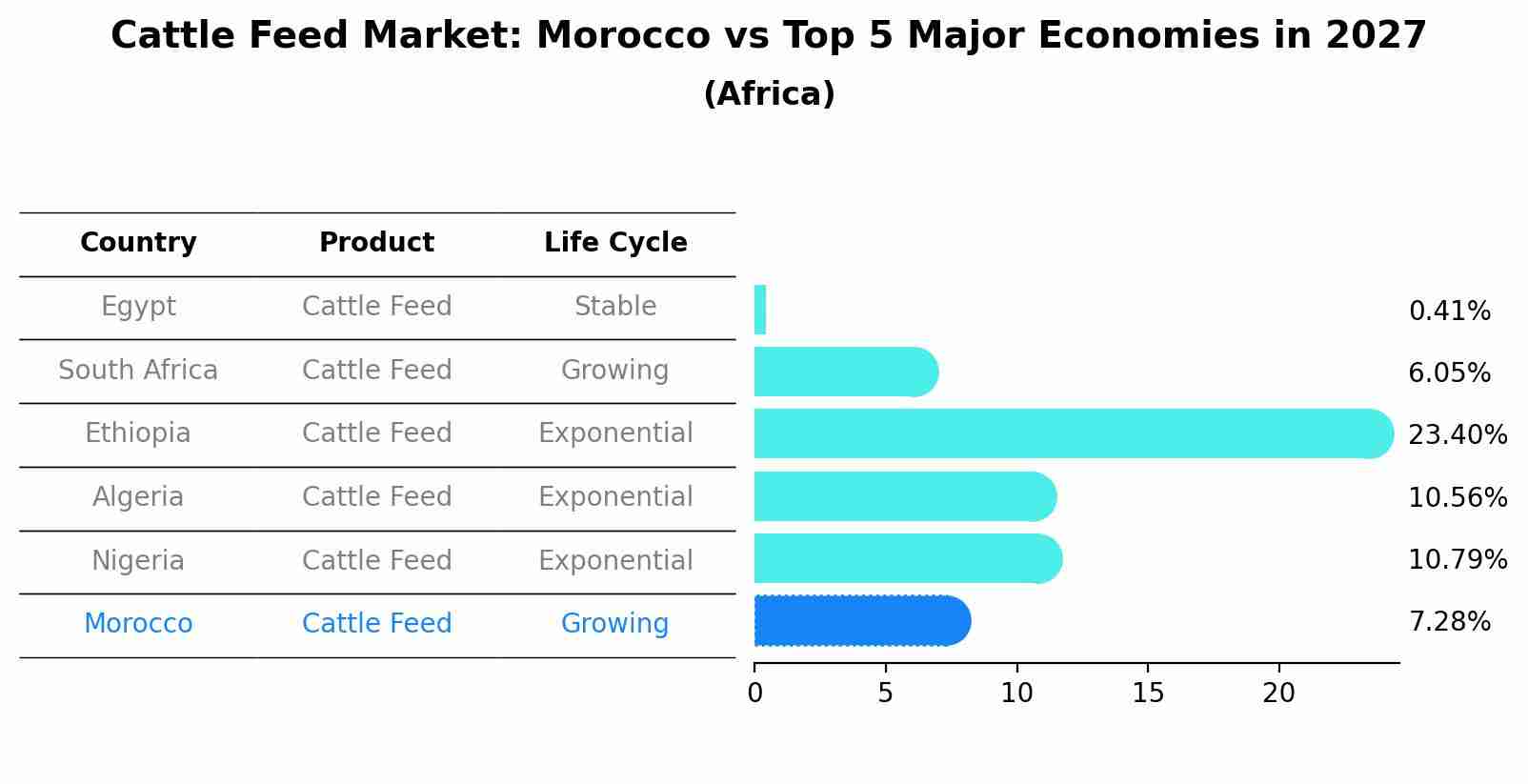
Cattle Feed Market: Morocco vs Top 5 Major Economies in 2027 (Africa)
The Cattle Feed market in Morocco is projected to grow at a growing growth rate of 7.28% by 2027, within the Africa region led by Egypt, along with other countries like South Africa, Ethiopia, Algeria and Nigeria, collectively shaping a dynamic and evolving market environment driven by innovation and increasing adoption of emerging technologies.
Morocco Cattle Feed Market Synopsis
The cattle feed market in Morocco is essential to the country`s agricultural economy, supporting livestock health and productivity. This market includes various types of feed such as compound feed, fodder, and feed additives. The growth of the market is driven by the increasing demand for meat and dairy products, improvements in livestock farming practices, and the government`s efforts to enhance food security. The adoption of nutritionally balanced and scientifically formulated feed is also contributing to better livestock yields and overall market growth.
Drivers of the market
The Morocco Cattle Feed Market is fueled by the expanding livestock industry, which requires high-quality feed to enhance animal health and productivity. Increasing meat and dairy consumption domestically and for export markets drives demand for nutritious cattle feed. Government support for agricultural development and livestock farming, along with growing awareness about animal nutrition among farmers, further boosts the market.
Challenges of the market
Challenges in the cattle feed market in Morocco include the volatility of raw material prices, particularly for key ingredients like grains and protein sources. Moreover, ensuring the nutritional adequacy of feed formulations while keeping costs competitive is a constant challenge for manufacturers. Additionally, fluctuations in livestock prices and government policies related to agriculture can impact the demand for cattle feed.
Government Policy of the market
Agricultural policies in Morocco, such as the Plan Maroc Vert, support the cattle feed market by promoting modern livestock farming practices. Subsidies and technical assistance are provided to farmers to improve feed quality and livestock productivity. Import regulations for cattle feed ingredients are also streamlined to ensure a consistent supply of high-quality feed, essential for the growth of the livestock sector.
Key Highlights of the Report:
- Morocco Cattle Feed Market Outlook
- Market Size of Morocco Cattle Feed Market, 2024
- Forecast of Morocco Cattle Feed Market, 2031
- Historical Data and Forecast of Morocco Cattle Feed Revenues & Volume for the Period 2018 - 2031
- Morocco Cattle Feed Market Trend Evolution
- Morocco Cattle Feed Market Drivers and Challenges
- Morocco Cattle Feed Price Trends
- Morocco Cattle Feed Porter's Five Forces
- Morocco Cattle Feed Industry Life Cycle
- Historical Data and Forecast of Morocco Cattle Feed Market Revenues & Volume By Source for the Period 2018 - 2031
- Historical Data and Forecast of Morocco Cattle Feed Market Revenues & Volume By Organic for the Period 2018 - 2031
- Historical Data and Forecast of Morocco Cattle Feed Market Revenues & Volume By Conventional for the Period 2018 - 2031
- Historical Data and Forecast of Morocco Cattle Feed Market Revenues & Volume By Application for the Period 2018 - 2031
- Historical Data and Forecast of Morocco Cattle Feed Market Revenues & Volume By Agriculture for the Period 2018 - 2031
- Historical Data and Forecast of Morocco Cattle Feed Market Revenues & Volume By Industrial for the Period 2018 - 2031
- Historical Data and Forecast of Morocco Cattle Feed Market Revenues & Volume By Sales Channel for the Period 2018 - 2031
- Historical Data and Forecast of Morocco Cattle Feed Market Revenues & Volume By Direct Sales for the Period 2018 - 2031
- Historical Data and Forecast of Morocco Cattle Feed Market Revenues & Volume By Indirect Sales for the Period 2018 - 2031
- Morocco Cattle Feed Import Export Trade Statistics
- Market Opportunity Assessment By Source
- Market Opportunity Assessment By Application
- Market Opportunity Assessment By Sales Channel
- Morocco Cattle Feed Top Companies Market Share
- Morocco Cattle Feed Competitive Benchmarking By Technical and Operational Parameters
- Morocco Cattle Feed Company Profiles
- Morocco Cattle Feed Key Strategic Recommendations






































