Morocco Cigarette Lighter Market Size Growth Rate
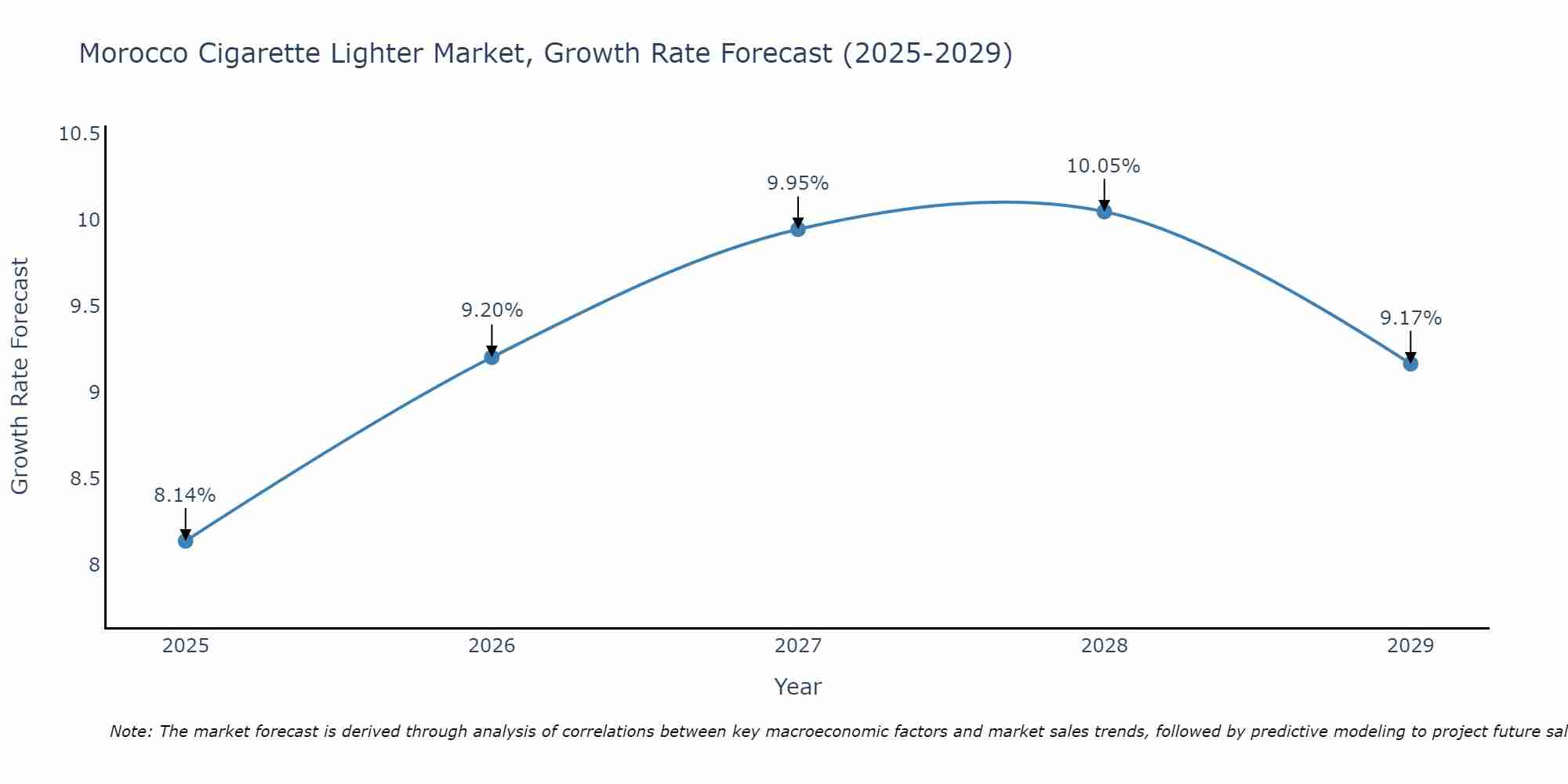
The Morocco Cigarette Lighter Market is projected to witness mixed growth rate patterns during 2025 to 2029. Starting at 8.14% in 2025, the market peaks at 10.05% in 2028, and settles at 9.17% by 2029.
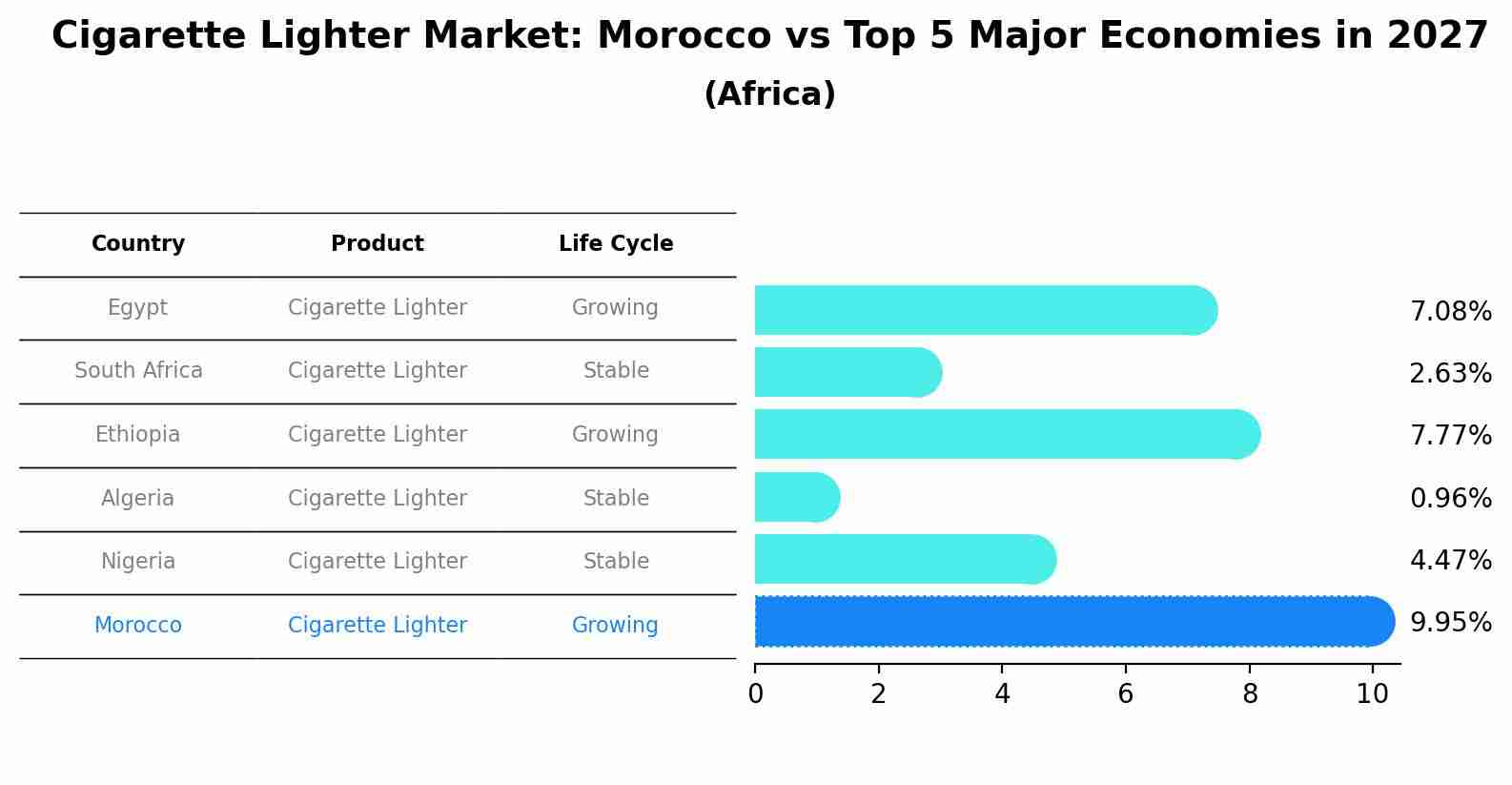
Cigarette Lighter Market: Morocco vs Top 5 Major Economies in 2027 (Africa)
The Cigarette Lighter market in Morocco is projected to grow at a growing growth rate of 9.95% by 2027, highlighting the country's increasing focus on advanced technologies within the Africa region, where Egypt holds the dominant position, followed closely by South Africa, Ethiopia, Algeria and Nigeria, shaping overall regional demand.
Morocco Cigarette Lighter Market Synopsis
Cigarette lighters are essential accessories for smokers, and the market in Morocco reflects trends in tobacco consumption and regulatory measures. With growing awareness of health risks associated with smoking, there`s a gradual shift towards alternative tobacco products and smoking cessation aids. However, the cigarette lighter market remains resilient, supported by a large base of smokers and sustained demand for convenience products.
Drivers of the market
The cigarette lighter market in Morocco is driven by factors such as the increasing prevalence of smoking, particularly among the younger demographic. Additionally, the convenience and affordability of disposable lighters contribute to their widespread use. Moreover, the growing popularity of outdoor activities and recreational events also boosts the demand for cigarette lighters in the country.
Challenges of the market
The cigarette lighter market in Morocco confronts challenges due to increasing regulations on tobacco consumption and smoking bans in public places. As governments worldwide implement stricter measures to curb smoking rates, the demand for cigarette lighters is likely to decline. Diversifying product offerings to include flameless alternatives or expanding into markets beyond tobacco consumption may be necessary for sustained growth in this sector.
Government Policy of the market
Government regulations play a significant role in shaping the cigarette lighter market in Morocco. Strict regulations on tobacco advertising and smoking in public places have led to a decline in cigarette consumption, indirectly affecting the demand for cigarette lighters. However, the government`s efforts to combat smuggling and counterfeit products have created opportunities for legitimate manufacturers and distributors in the market. Additionally, initiatives promoting fire safety awareness have contributed to the adoption of safer and more reliable cigarette lighter technologies.
Key Highlights of the Report:
- Morocco Cigarette Lighter Market Outlook
- Market Size of Morocco Cigarette Lighter Market, 2024
- Forecast of Morocco Cigarette Lighter Market, 2031
- Historical Data and Forecast of Morocco Cigarette Lighter Revenues & Volume for the Period 2021-2031
- Morocco Cigarette Lighter Market Trend Evolution
- Morocco Cigarette Lighter Market Drivers and Challenges
- Morocco Cigarette Lighter Price Trends
- Morocco Cigarette Lighter Porter's Five Forces
- Morocco Cigarette Lighter Industry Life Cycle
- Historical Data and Forecast of Morocco Cigarette Lighter Market Revenues & Volume By Type for the Period 2021-2031
- Historical Data and Forecast of Morocco Cigarette Lighter Market Revenues & Volume By Flint Cigarette Lighter for the Period 2021-2031
- Historical Data and Forecast of Morocco Cigarette Lighter Market Revenues & Volume By Electronic Cigarette Lighter for the Period 2021-2031
- Historical Data and Forecast of Morocco Cigarette Lighter Market Revenues & Volume By Others for the Period 2021-2031
- Historical Data and Forecast of Morocco Cigarette Lighter Market Revenues & Volume By Material for the Period 2021-2031
- Historical Data and Forecast of Morocco Cigarette Lighter Market Revenues & Volume By Plastic for the Period 2021-2031
- Historical Data and Forecast of Morocco Cigarette Lighter Market Revenues & Volume By Metal for the Period 2021-2031
- Historical Data and Forecast of Morocco Cigarette Lighter Market Revenues & Volume By Distribution Channels for the Period 2021-2031
- Historical Data and Forecast of Morocco Cigarette Lighter Market Revenues & Volume By Tobacco shops for the Period 2021-2031
- Historical Data and Forecast of Morocco Cigarette Lighter Market Revenues & Volume By Supermarkets and Hypermarkets for the Period 2021-2031
- Historical Data and Forecast of Morocco Cigarette Lighter Market Revenues & Volume By Convenience Stores for the Period 2021-2031
- Historical Data and Forecast of Morocco Cigarette Lighter Market Revenues & Volume By Online Stores for the Period 2021-2031
- Historical Data and Forecast of Morocco Cigarette Lighter Market Revenues & Volume By Others for the Period 2021-2031
- Morocco Cigarette Lighter Import Export Trade Statistics
- Market Opportunity Assessment By Type
- Market Opportunity Assessment By Material
- Market Opportunity Assessment By Distribution Channels
- Morocco Cigarette Lighter Top Companies Market Share
- Morocco Cigarette Lighter Competitive Benchmarking By Technical and Operational Parameters
- Morocco Cigarette Lighter Company Profiles
- Morocco Cigarette Lighter Key Strategic Recommendations






































