Morocco Dyes Market Year-wise Growth Rate (2021-2031F)
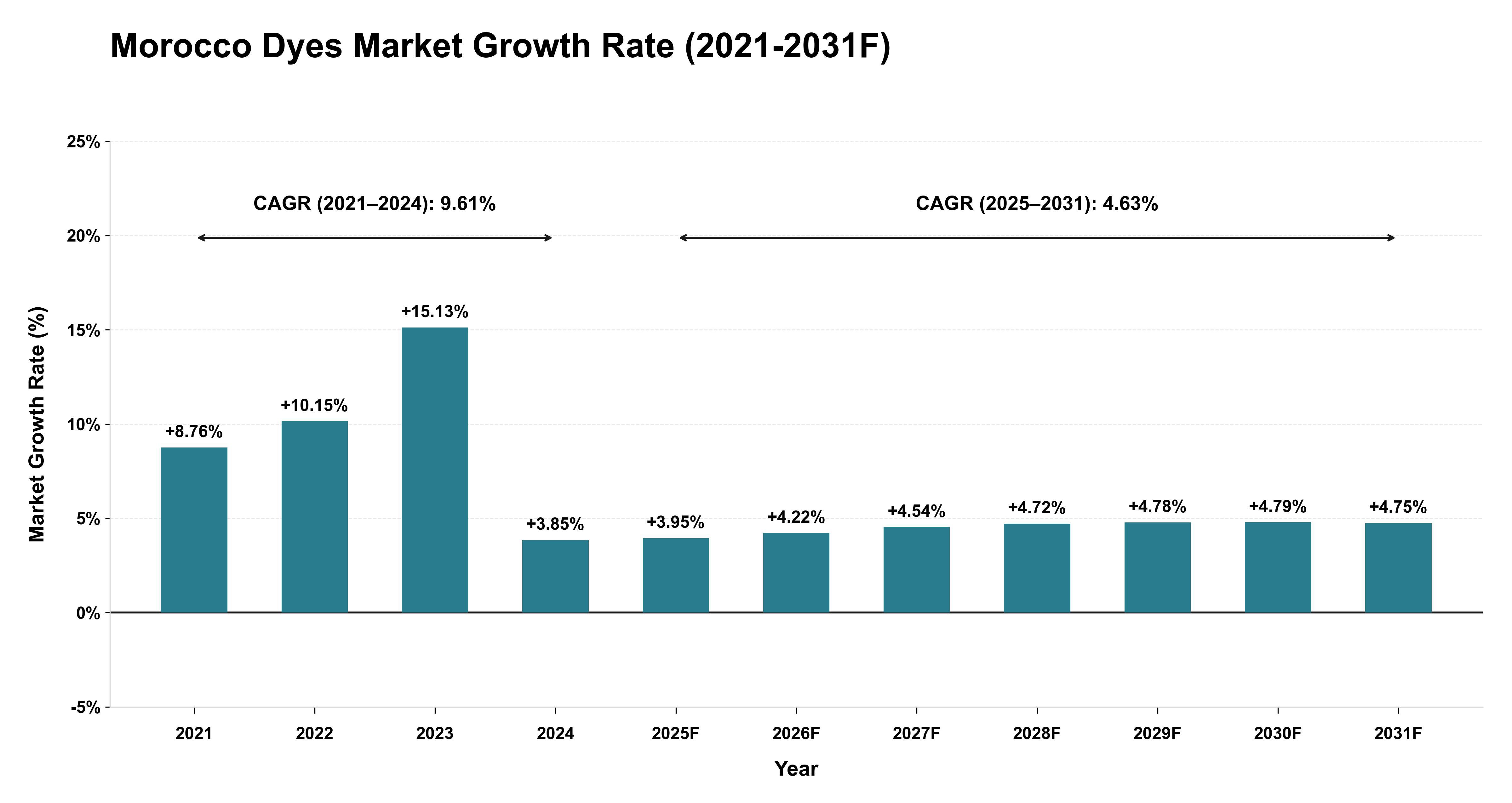
The Morocco Dyes Market experienced robust growth from 2021 to 2024, with a historical CAGR of 9.61%. This growth was primarily driven by increasing demand from textile, leather, and cosmetics industries, coupled with advancements in eco-friendly dye technologies. The market saw a significant uptick in 2023 at 15.13%, indicating a surge in industrial production and exports. However, the growth slightly decelerated in 2024 to 3.85% due to supply chain disruptions and raw material shortages. Looking ahead to 2025-2031, the market is expected to maintain a steady pace with a forecast CAGR of 4.63%. This slower but stable growth reflects market stabilization, adoption of sustainable practices, and regulatory support for environmentally friendly dyes in line with global standards, ensuring long-term resilience and competitiveness in the sector.
Key Highlights of the Report:
- Morocco Dyes Market Outlook
- Market Size of Morocco Dyes Market, 2024
- Forecast of Morocco Dyes Market, 2031
- Historical Data and Forecast of Morocco Dyes Revenues & Volume for the Period 2021- 2031
- Morocco Dyes Market Trend Evolution
- Morocco Dyes Market Drivers and Challenges
- Morocco Dyes Price Trends
- Morocco Dyes Porter's Five Forces
- Morocco Dyes Industry Life Cycle
- Historical Data and Forecast of Morocco Dyes Market Revenues & Volume By Product Type for the Period 2021- 2031
- Historical Data and Forecast of Morocco Dyes Market Revenues & Volume By Reactive Dyes for the Period 2021- 2031
- Historical Data and Forecast of Morocco Dyes Market Revenues & Volume By Disperse Dyes for the Period 2021- 2031
- Historical Data and Forecast of Morocco Dyes Market Revenues & Volume By Vat Dyes for the Period 2021- 2031
- Historical Data and Forecast of Morocco Dyes Market Revenues & Volume By Direct Dyes for the Period 2021- 2031
- Historical Data and Forecast of Morocco Dyes Market Revenues & Volume By Acid Dyes for the Period 2021- 2031
- Historical Data and Forecast of Morocco Dyes Market Revenues & Volume By Other Dyes for the Period 2021- 2031
- Historical Data and Forecast of Morocco Dyes Market Revenues & Volume By Application for the Period 2021- 2031
- Historical Data and Forecast of Morocco Dyes Market Revenues & Volume By Textile for the Period 2021- 2031
- Historical Data and Forecast of Morocco Dyes Market Revenues & Volume By Leather for the Period 2021- 2031
- Historical Data and Forecast of Morocco Dyes Market Revenues & Volume By Paper for the Period 2021- 2031
- Historical Data and Forecast of Morocco Dyes Market Revenues & Volume By Printing Inks for the Period 2021- 2031
- Historical Data and Forecast of Morocco Dyes Market Revenues & Volume By Other for the Period 2021- 2031
- Morocco Dyes Import Export Trade Statistics
- Market Opportunity Assessment By Product Type
- Market Opportunity Assessment By Application
- Morocco Dyes Top Companies Market Share
- Morocco Dyes Competitive Benchmarking By Technical and Operational Parameters
- Morocco Dyes Company Profiles
- Morocco Dyes Key Strategic Recommendations






































