Morocco Enterprise AI Market Size & Growth Rate (2026-2032)
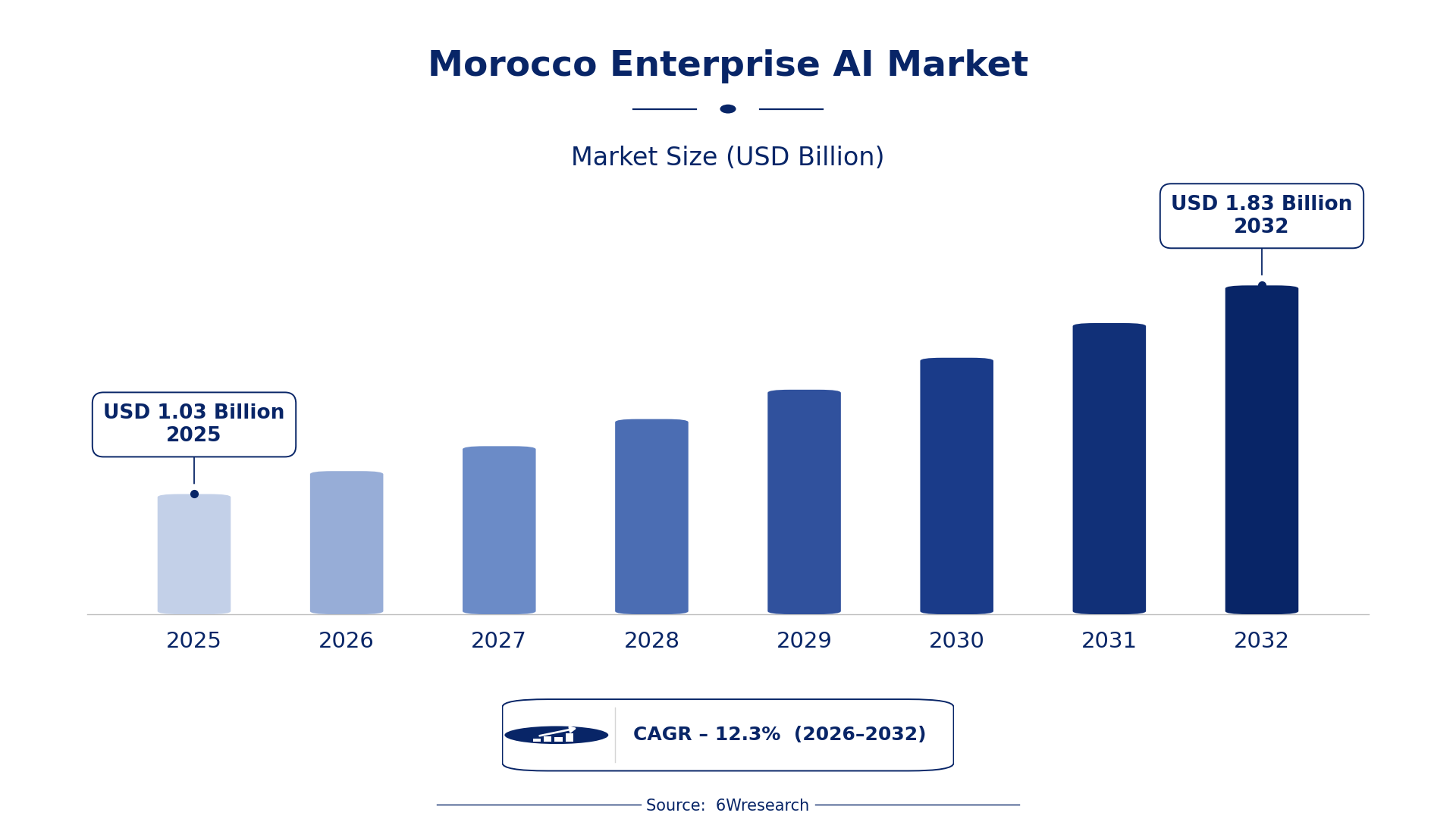
The Morocco Enterprise AI Market was estimated at USD 1028 Million in 2025 and is projected to reach USD 1831 Million by 2032, growing at a CAGR of 12.3% from 2026 to 2032.
Morocco Enterprise AI Market Synopsis
The adoption of artificial intelligence in Morocco is not just a trend; it’s becoming a necessity for businesses aiming to stay competitive. Industries such as banking and healthcare are particularly keen on integrating AI technologies to enhance operational efficiencies and customer experiences.
An increasing number of Moroccan enterprises are investing in AI-based applications, especially in areas like predictive analytics and customer service automation. This growing investment reflects a broader shift toward digital transformation, driven by both market demands and supportive government policies.
Morocco Enterprise AI Market Year-wise Growth Rate and Key Drivers
This graph illustrates the annual growth rates of the Morocco Enterprise AI Market from 2021 to 2032, highlighting a steady upward trajectory and projected expansion over the forecast period.
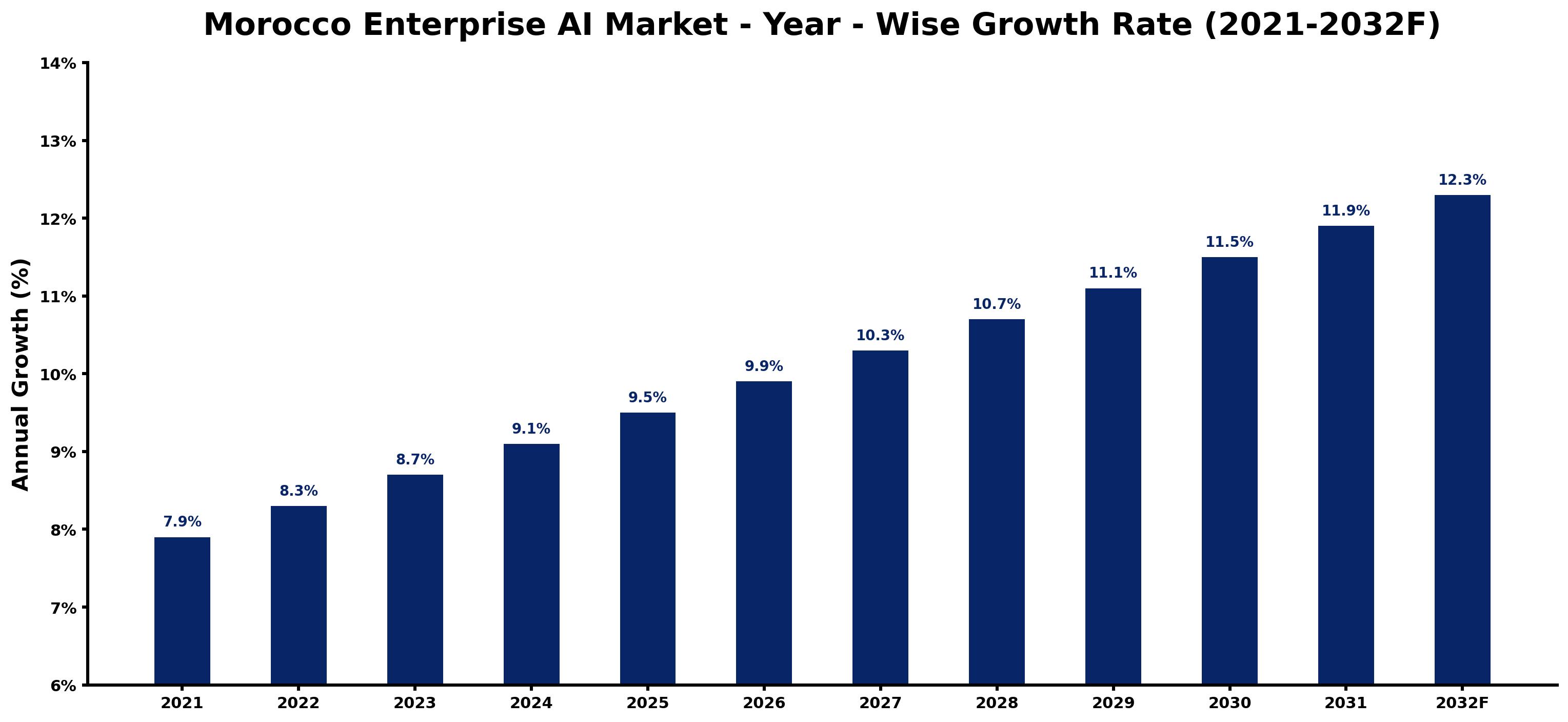
The table below presents the year‑wise growth rates along with the key drivers influencing the market
| Year | Growth Rate | Major Drivers |
| 2021 | 7.9% | Moroccan government initiative promoting digital transformation adoption. |
| 2022 | 8.3% | Launch of AI-focused incubators by local tech hubs. |
| 2023 | 8.7% | Increased funding for AI startups from Moroccan venture capital. |
| 2024 | 9.1% | Government subsidies for businesses adopting AI technologies. |
| 2025 | 9.5% | Growth in local businesses seeking data analytics solutions. |
| 2026 | 9.9% | National digital skills training programs boosting AI expertise. |
| 2027 | 10.3% | Partnerships between universities and enterprises for AI projects. |
| 2028 | 10.7% | Emergence of AI ethics guidelines by Moroccan regulatory bodies. |
| 2029 | 11.1% | Rising consumer preference for AI-driven customer service solutions. |
| 2030 | 11.5% | Increased broadband access enhancing AI solution deployment. |
| 2031 | 11.9% | Local success stories of AI impacting various sectors. |
| 2032 | 12.3% | Integration of AI in national economic development goals. |
Note: Market size estimations and growth projections presented in this report are based on 6Wresearch's proprietary forecasting methodology, utilizing the latest available industry data, government publications, and primary research inputs.
Morocco Enterprise AI Market Key Takeaways
Below are some of the specific key takeaways from the market, including:
- The Morocco Enterprise AI market is on track for significant growth, with a projected market size of USD 1831 Million by 2032.
- Key sectors driving AI adoption include banking, healthcare, and retail, with a focus on enhancing customer service and operational efficiency.
- Government initiatives are fostering a conducive environment for AI technology integration, making it easier for businesses to adopt these innovations.
- Challenges such as a shortage of skilled professionals and regulatory uncertainties remain, but they are gradually being addressed.
- The demand for AI applications like machine learning and natural language processing is expected to surge as businesses seek competitive advantages.
Evaluation of Restraints in Morocco Enterprise AI Market
Despite the promising outlook, several constraints hinder the growth of the Morocco Enterprise AI market. A lack of awareness among businesses about the full potential of AI technologies is prevalent, which can stifle investment and innovation. on top of that, the scarcity of skilled professionals is a pressing issue; companies often struggle to find the talent needed to implement and manage AI solutions effectively.
Data privacy concerns also loom large, as businesses must navigate regulatory uncertainties while ensuring customer data is handled responsibly. These hurdles necessitate strategic investments in education and training, along with collaboration between businesses and government bodies to create a more favorable environment for AI deployment.
Morocco Enterprise AI Market Trends
The current trends in the Morocco Enterprise AI market indicate a strong move toward the implementation of AI-powered solutions across various sectors. Notably, businesses are increasingly using AI for customer service automation, aiming to enhance user experiences and streamline operations.
Predictive analytics is another growing area, with companies harnessing AI to analyze consumer behavior and market trends, allowing for more informed decision-making. Personalized marketing driven by AI technologies is also gaining traction, enabling businesses to tailor their offerings to meet specific customer needs.
Morocco Enterprise AI Market Opportunities
The Morocco Enterprise AI market holds numerous opportunities for growth and investment. As more businesses recognize the benefits of AI, particularly in enhancing operational efficiency, there’s a clear demand for innovative solutions. Emerging startups in the AI space are likely to attract interest, as they bring fresh ideas and technologies to the table.
on top of that, partnerships between technology providers and local enterprises can lead to significant advancements in AI adoption. Collaborating on projects focused on machine learning and natural language processing can yield not just commercial benefits but also contribute to the development of a skilled workforce in Morocco.
Government Initiatives in the Morocco Enterprise AI Market
The Moroccan government is actively encouraging the integration of AI technologies into enterprises through various strategic initiatives. With a focus on digital transformation, public policy is increasingly aligned to support innovation and the growth of the AI sector. Establishing a favorable regulatory framework is crucial for businesses looking to adopt AI solutions, and the government’s commitment to building a robust digital ecosystem is evident.
- A recently launched National AI Strategy aims to position Morocco as a key player in the regional AI sector, promoting research and development.
- Current initiatives include tax incentives for businesses adopting AI technologies, aimed at reducing the financial barriers to entry.
- Planned educational programs are set to enhance the AI talent pool, with partnerships between educational institutions and industry leaders expected to kick off in 2026.
- An upcoming public-private partnership initiative is anticipated to expand AI infrastructure across major urban centers by 2028.
Future Insights of the Morocco Enterprise AI Market
Looking ahead to the period between 2026 and 2032, the Morocco Enterprise AI market is expected to witness substantial advancements. As industries continue to realize the potential of AI, the market will likely expand, driven by the increasing integration of these technologies into daily operations.
The government's continued support for digital transformation, coupled with rising investments in AI research and development, will play a critical role in this growth. With a heightened focus on operational efficiency and improved customer experiences, businesses will increasingly turn to AI solutions, fostering an environment ripe for innovation and progress.
Morocco Enterprise AI Market Latest Developments
In the past year, the Morocco Enterprise AI market has seen a flurry of activity, signaling a commitment to embracing AI technologies across various sectors. Companies are not just exploring AI but are actively implementing solutions that enhance efficiency and customer engagement.
- A major technology vendor recently completed a project focused on deploying machine learning algorithms in the retail sector, enhancing inventory management by early 2025.
- Another initiative underway involves the rollout of AI-driven customer service chatbots in banking, aimed at improving response times and customer satisfaction.
- A planned collaboration between local universities and tech firms aims to establish an AI research hub, with groundwork expected to begin by mid-2026.
- An expansion of AI applications in healthcare is currently in progress, with hospitals integrating predictive analytics to improve patient care outcomes.
Morocco Enterprise AI Market - Key Attractiveness of the Report
- 10 Years of Market Numbers
- Historical Data Starting from 2022 to 2025
- Base Year: 2025
- Forecast Data until 2032
- Key Performance Indicators Impacting the Market
- Major Upcoming Developments and Projects
Key Highlights of the Report:
- Morocco Enterprise AI Market Outlook
- Market Size of Morocco Enterprise AI Market, 2025
- Forecast of Morocco Enterprise AI Market, 2032
- Historical Data and Forecast of Morocco Enterprise AI Revenues & Volume for the Period 2022-2032F
- Morocco Enterprise AI Market Trend Evolution
- Morocco Enterprise AI Market Drivers and Challenges
- Morocco Enterprise AI Price Trends
- Morocco Enterprise AI Porter's Five Forces
- Morocco Enterprise AI Industry Life Cycle
- Historical Data and Forecast of Morocco Enterprise AI Market Revenues & Volume By Component for the Period 2022-2032F
- Historical Data and Forecast of Morocco Enterprise AI Market Revenues & Volume By Solution for the Period 2022-2032F
- Historical Data and Forecast of Morocco Enterprise AI Market Revenues & Volume By Services for the Period 2022-2032F
- Historical Data and Forecast of Morocco Enterprise AI Market Revenues & Volume By Technology for the Period 2022-2032F
- Historical Data and Forecast of Morocco Enterprise AI Market Revenues & Volume By Machine learning and deep learning for the Period 2022-2032F
- Historical Data and Forecast of Morocco Enterprise AI Market Revenues & Volume By Natural Language Processing (NLP) for the Period 2022-2032F
- Historical Data and Forecast of Morocco Enterprise AI Market Revenues & Volume By Application Area for the Period 2022-2032F
- Historical Data and Forecast of Morocco Enterprise AI Market Revenues & Volume By Security and risk management for the Period 2022-2032F
- Historical Data and Forecast of Morocco Enterprise AI Market Revenues & Volume By Marketing management for the Period 2022-2032F
- Historical Data and Forecast of Morocco Enterprise AI Market Revenues & Volume By Customer support and experience for the Period 2022-2032F
- Historical Data and Forecast of Morocco Enterprise AI Market Revenues & Volume By Human resource and recruitment management for the Period 2022-2032F
- Historical Data and Forecast of Morocco Enterprise AI Market Revenues & Volume By Analytics application for the Period 2022-2032F
- Historical Data and Forecast of Morocco Enterprise AI Market Revenues & Volume By Process automation for the Period 2022-2032F
- Historical Data and Forecast of Morocco Enterprise AI Market Revenues & Volume By Deployment Type for the Period 2022-2032F
- Historical Data and Forecast of Morocco Enterprise AI Market Revenues & Volume By Cloud for the Period 2022-2032F
- Historical Data and Forecast of Morocco Enterprise AI Market Revenues & Volume By On-premises for the Period 2022-2032F
- Historical Data and Forecast of Morocco Enterprise AI Market Revenues & Volume By Organization Size for the Period 2022-2032F
- Historical Data and Forecast of Morocco Enterprise AI Market Revenues & Volume By Small and Medium-sized Businesses (SMBs) for the Period 2022-2032F
- Historical Data and Forecast of Morocco Enterprise AI Market Revenues & Volume By Large enterprises for the Period 2022-2032F
- Morocco Enterprise AI Import Export Trade Statistics
- Market Opportunity Assessment By Component
- Market Opportunity Assessment By Technology
- Market Opportunity Assessment By Application Area
- Market Opportunity Assessment By Deployment Type
- Market Opportunity Assessment By Organization Size
- Morocco Enterprise AI Top Companies Market Share
- Morocco Enterprise AI Competitive Benchmarking By Technical and Operational Parameters
- Morocco Enterprise AI Company Profiles
- Morocco Enterprise AI Key Strategic Recommendations






































