Morocco Inorganic Chemicals Market Growth Rate Analysis (2025 - 2031)
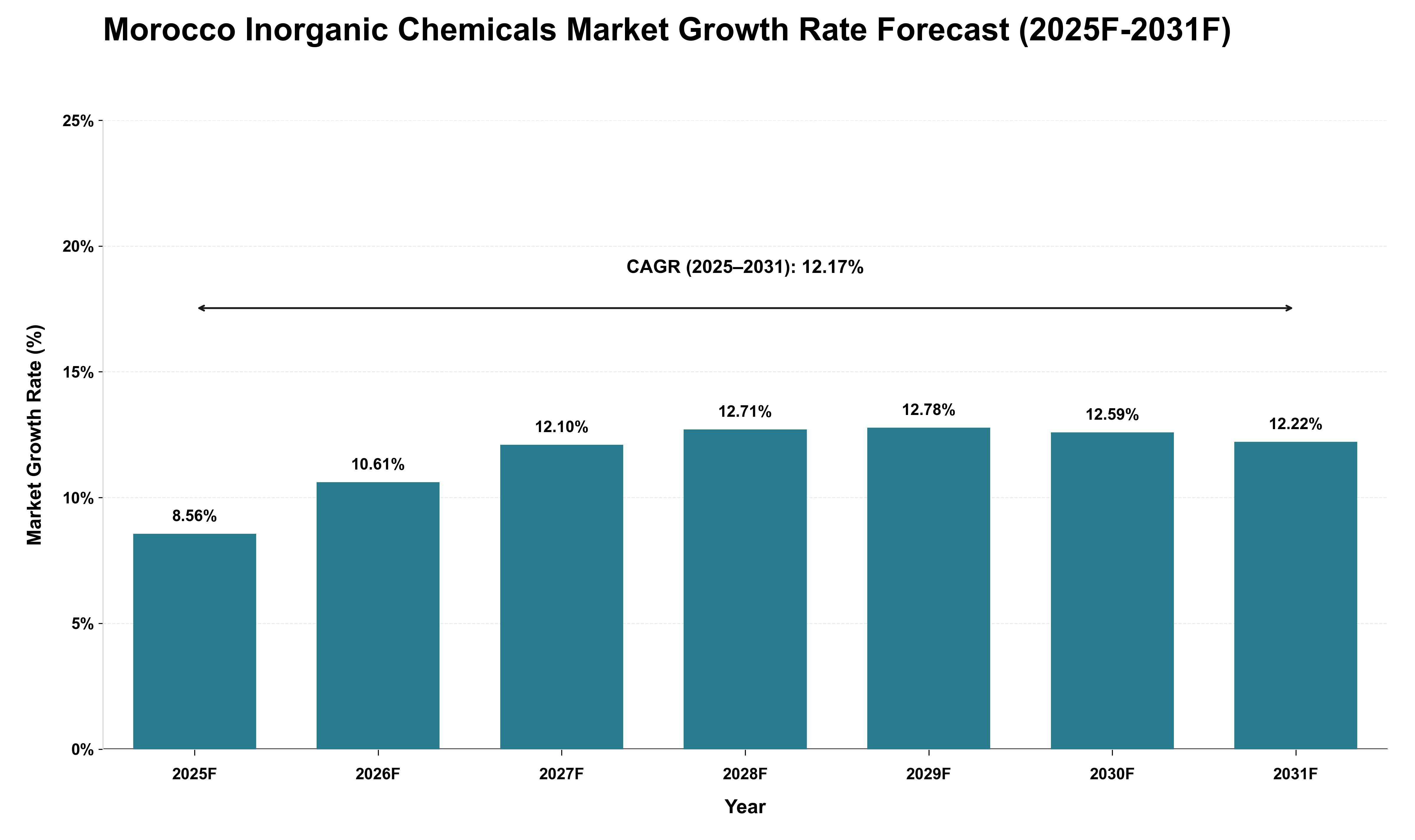
From 2025 onward, the Moroccan inorganic chemicals market is poised to experience robust growth, driven by increasing demand for raw materials and favorable pricing dynamics. The projected CAGR of 12.17% reflects a strong upward trajectory, with annual growth rates starting at 8.56% in 2025 and peaking at 12.78% in 2029. This trend will likely be supported by rising global industrial activity and heightened investments in sectors such as agriculture and construction, which are significant consumers of inorganic chemicals. Additionally, Morocco's strategic position may enhance its import capabilities for essential raw materials, mitigating potential supply chain disruptions. As global markets evolve, fluctuations in commodity prices will also play a critical role; however, the anticipated stability in key inputs should bolster production efficiency and profitability within this sector throughout the forecast period.
Key Highlights of the Report:
- Morocco Inorganic Chemicals Market Outlook
- Market Size of Morocco Inorganic Chemicals Market, 2024
- Forecast of Morocco Inorganic Chemicals Market, 2031
- Historical Data and Forecast of Morocco Inorganic Chemicals Revenues & Volume for the Period 2021 - 2031
- Morocco Inorganic Chemicals Market Trend Evolution
- Morocco Inorganic Chemicals Market Drivers and Challenges
- Morocco Inorganic Chemicals Price Trends
- Morocco Inorganic Chemicals Porter's Five Forces
- Morocco Inorganic Chemicals Industry Life Cycle
- Historical Data and Forecast of Morocco Inorganic Chemicals Market Revenues & Volume By Type for the Period 2021 - 2031
- Historical Data and Forecast of Morocco Inorganic Chemicals Market Revenues & Volume By Ammonia for the Period 2021 - 2031
- Historical Data and Forecast of Morocco Inorganic Chemicals Market Revenues & Volume By Chlor alkali for the Period 2021 - 2031
- Historical Data and Forecast of Morocco Inorganic Chemicals Market Revenues & Volume By Ammonium nitrate for the Period 2021 - 2031
- Historical Data and Forecast of Morocco Inorganic Chemicals Market Revenues & Volume By Ammonium sulfate for the Period 2021 - 2031
- Historical Data and Forecast of Morocco Inorganic Chemicals Market Revenues & Volume By Inorganic acid for the Period 2021 - 2031
- Historical Data and Forecast of Morocco Inorganic Chemicals Market Revenues & Volume By Sodium hydroxide for the Period 2021 - 2031
- Historical Data and Forecast of Morocco Inorganic Chemicals Market Revenues & Volume By Hydrogen peroxide for the Period 2021 - 2031
- Historical Data and Forecast of Morocco Ammonia Inorganic Chemicals Market Revenues & Volume By Oxygen for the Period 2021 - 2031
- Morocco Inorganic Chemicals Import Export Trade Statistics
- Market Opportunity Assessment By Type
- Morocco Inorganic Chemicals Top Companies Market Share
- Morocco Inorganic Chemicals Competitive Benchmarking By Technical and Operational Parameters
- Morocco Inorganic Chemicals Company Profiles
- Morocco Inorganic Chemicals Key Strategic Recommendations






































