Morocco Lighting Market Growth Rate Analysis (2025 - 2031)
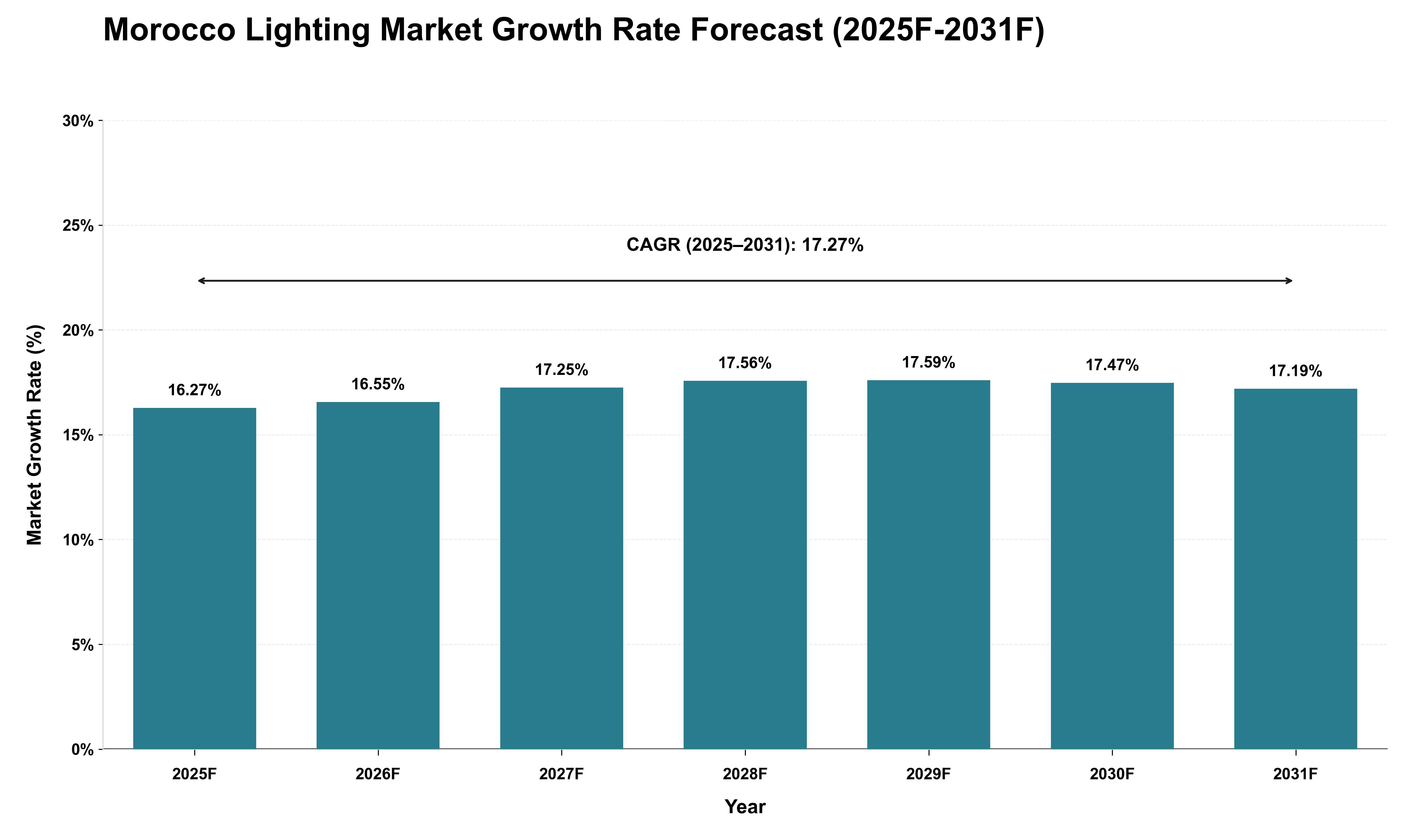
The Morocco lighting market is projected to experience a robust compound annual growth rate of 17.27% from 2025 to 2031, reflecting a dynamic competitive landscape driven by increasing urbanization and energy efficiency initiatives. The annual growth rates indicate a consistent upward trajectory, peaking at 17.59% in 2029, suggesting that demand will be bolstered by both residential and commercial sectors seeking sustainable lighting solutions. As global supply chains adapt, Morocco's import dependencies on advanced lighting technologies will likely influence pricing strategies and market entry for foreign competitors. Additionally, cyclical trends in construction and infrastructure development will further stimulate demand for innovative lighting products. This combination of factors will create an environment ripe for investment and innovation, positioning the Moroccan lighting market as a key player in the broader regional context of energy-efficient solutions.
Key Highlights of the Report:
- Morocco Lighting Market Outlook
- Market Size of Morocco Lighting Market, 2024
- Forecast of Morocco Lighting Market, 2031
- Historical Data and Forecast of Morocco Lighting Revenues & Volume for the Period 2021- 2031
- Morocco Lighting Market Trend Evolution
- Morocco Lighting Market Drivers and Challenges
- Morocco Lighting Price Trends
- Morocco Lighting Porter's Five Forces
- Morocco Lighting Industry Life Cycle
- Historical Data and Forecast of Morocco Lighting Market Revenues & Volume By Type for the Period 2021- 2031
- Historical Data and Forecast of Morocco Lighting Market Revenues & Volume By LED for the Period 2021- 2031
- Historical Data and Forecast of Morocco Lighting Market Revenues & Volume By Halogen for the Period 2021- 2031
- Historical Data and Forecast of Morocco Lighting Market Revenues & Volume By Others for the Period 2021- 2031
- Historical Data and Forecast of Morocco Lighting Market Revenues & Volume By Application for the Period 2021- 2031
- Historical Data and Forecast of Morocco Lighting Market Revenues & Volume By Indoor for the Period 2021- 2031
- Historical Data and Forecast of Morocco Lighting Market Revenues & Volume By Outdoor for the Period 2021- 2031
- Historical Data and Forecast of Morocco Lighting Market Revenues & Volume By End User for the Period 2021- 2031
- Historical Data and Forecast of Morocco Lighting Market Revenues & Volume By Residential for the Period 2021- 2031
- Historical Data and Forecast of Morocco Lighting Market Revenues & Volume By Commercial for the Period 2021- 2031
- Historical Data and Forecast of Morocco Lighting Market Revenues & Volume By Industrial for the Period 2021- 2031
- Historical Data and Forecast of Morocco Lighting Market Revenues & Volume By Others for the Period 2021- 2031
- Morocco Lighting Import Export Trade Statistics
- Market Opportunity Assessment By Type
- Market Opportunity Assessment By Application
- Market Opportunity Assessment By End User
- Morocco Lighting Top Companies Market Share
- Morocco Lighting Competitive Benchmarking By Technical and Operational Parameters
- Morocco Lighting Company Profiles
- Morocco Lighting Key Strategic Recommendations






































