Morocco Natural Fragrance Market Size, Share & Growth Rate
The Morocco Natural Fragrance Market was estimated at USD 252 Million in 2025 and is projected to reach USD 337 Million by 2032, growing at a CAGR of 4.2% from 2026 to 2032. This growth trajectory is underpinned by the rising consumer demand for natural and organic products, alongside a renewed interest in traditional Moroccan perfumery. As health-conscious individuals continue to favor eco-friendly options, the market is positioned for substantial advancement.
Morocco Natural Fragrance Market Year-wise Growth Rate and Key Drivers
This graph highlights how the Morocco Natural Fragrance Market has steadily grown over the years, supported by major growth factors.
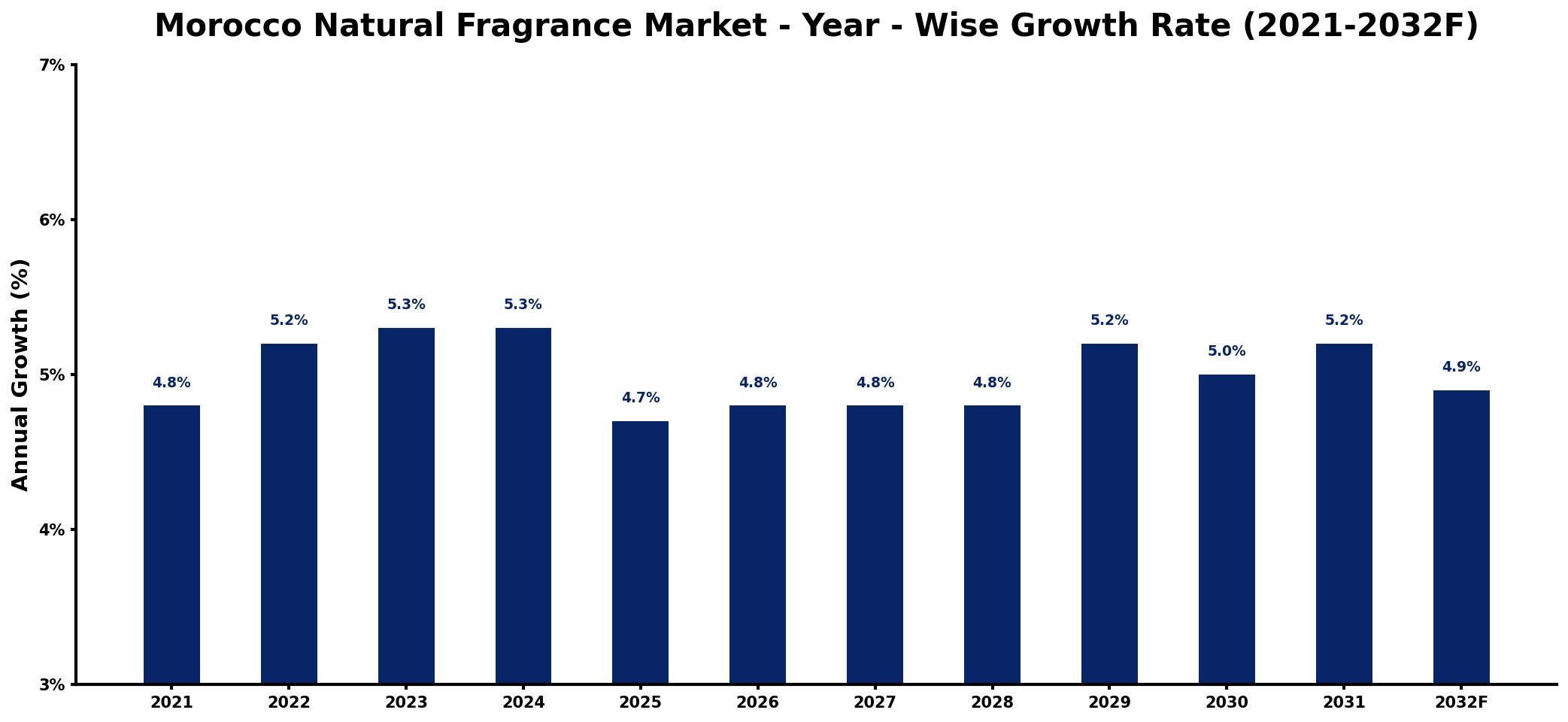
The table below presents the year‑wise growth rates along with the key drivers influencing the market
| Year | Growth Rate | Major Drivers |
| 2021 | 4.8% | Increased consumer health awareness |
| 2022 | 5.2% | Growing interest in sustainability |
| 2023 | 5.3% | Rise in online shopping trends |
| 2024 | 5.3% | Expansion of local production facilities |
| 2025 | 4.7% | Increase in tourism activities |
| 2026 | 4.8% | Emergence of new retail channels |
| 2027 | 4.8% | Higher disposable income levels |
| 2028 | 4.8% | Strengthening of export markets |
| 2029 | 5.2% | Innovations in product formulations |
| 2030 | 5.0% | Growing popularity of artisanal brands |
| 2031 | 5.2% | Enhanced marketing strategies adopted |
| 2032 | 4.9% | Diversification of consumer preferences |
Note: Market size estimations and growth projections presented in this report are based on 6Wresearch's proprietary forecasting methodology, utilizing the latest available industry data, government publications, and primary research inputs.
Morocco Natural Fragrance Market Synopsis
A significant driver of the Morocco Natural Fragrance Market is the rich cultural heritage associated with local perfumery traditions, which utilize an array of indigenous botanicals and essential oils. Consumers are increasingly drawn to these natural fragrances not only for their pleasant scents but also for their perceived health benefits and lower environmental impact.
Moreover, the trend of aromatherapy has gained traction in recent years, with many people recognizing the therapeutic benefits of natural scents. This has further fueled demand for essential oils and natural scented products, contributing to the overall market's positive outlook.
Morocco Natural Fragrance Market Key Takeaways
- The market is driven by increasing consumer preference for natural over synthetic fragrances.
- Morocco's rich heritage in traditional perfumery enhances its appeal in the natural fragrance sector.
- Government initiatives support sustainable agriculture, boosting local production of aromatic plants.
- Growing awareness of the health benefits associated with natural fragrances is expanding market reach.
- High production costs associated with natural raw materials present ongoing challenges.
Evaluation of Restraints in Morocco Natural Fragrance Market
Despite the promising growth, the Morocco Natural Fragrance Market faces significant challenges. The high cost of sourcing natural raw materials can lead to elevated production costs, which, in turn, may impact pricing strategies and consumer accessibility. Additionally, there remains a gap in consumer awareness regarding the benefits and unique qualities of natural fragrances compared to synthetic alternatives, hindering more widespread acceptance. Furthermore, the competitive pricing of synthetic fragrances presents an ongoing challenge, as consumers often opt for cheaper alternatives.
Morocco Natural Fragrance Market Trends
Current trends in the Morocco Natural Fragrance Market include an increased emphasis on artisanal products, where craftsmanship and authenticity are highlighted. The infusion of traditional Moroccan techniques into modern fragrance creation appeals to consumers seeking unique, high-quality experiences. Additionally, online sales platforms are gaining prominence, allowing producers to reach wider audiences. The merging of natural fragrances with wellness trends—such as stress relief and mindfulness—is further shaping consumer preferences and driving demand.
Morocco Natural Fragrance Market Opportunities
The market presents several avenues for growth and investment. There is potential for expanding product lines that blend traditional fragrances with contemporary sensibilities, appealing to both local and international markets. Moreover, tapping into the growing global demand for organic and eco-friendly products could enhance export opportunities. Investments in research and development aimed at improving the extraction and distillation processes for essential oils may also yield higher quality products at competitive prices.
Government Initiatives in the Morocco Natural Fragrance Market
The Moroccan government actively promotes the natural fragrance sector through various initiatives aimed at sustainable agriculture. Policies include providing subsidies for farmers cultivating aromatic plants and essential oil crops. Additionally, investments in distillation and processing facilities are being made, along with stringent quality control regulations to ensure the purity of natural fragrances. Trade agreements and participation in international trade fairs bolster the visibility and export potential of Morocco's natural fragrance products.
Future Insights of the Morocco Natural Fragrance Market
Looking ahead, the Morocco Natural Fragrance Market is poised for continued expansion through 2032 and beyond. As consumer preferences increasingly lean towards sustainability and natural products, brands that innovate while respecting traditional practices will likely thrive. Additionally, fostering awareness around the therapeutic benefits of natural fragrances will be crucial in attracting a broader audience. Enhanced government support and the development of a robust supply chain for natural ingredients will further catalyze market growth.
Morocco Natural Fragrance Market Latest Developments (2025 - 2026)
In recent months, the Moroccan natural fragrance industry has seen a flurry of activity focused on sustainability initiatives and expanding market reach. Producers are increasingly collaborating with international partners to enhance their product lines and introduce innovative packaging solutions that appeal to eco-conscious consumers. Additionally, various marketing campaigns highlighting the cultural significance of Moroccan fragrances are being launched, aiming to elevate the nations profile in the global market.
Morocco Natural Fragrance Market - Key Attractiveness of the Report
- 10 Years of Market Numbers
- Historical Data Starting from 2022 to 2025
- Base Year: 2025
- Forecast Data until 2032
- Key Performance Indicators Impacting the Market
- Major Upcoming Developments and Projects
Key Highlights of the Report:
- Morocco Natural Fragrance Market Outlook
- Market Size of Morocco Natural Fragrance Market, 2025
- Forecast of Morocco Natural Fragrance Market, 2032
- Historical Data and Forecast of Morocco Natural Fragrance Revenues & Volume for the Period 2022-2032F
- Morocco Natural Fragrance Market Trend Evolution
- Morocco Natural Fragrance Market Drivers and Challenges
- Morocco Natural Fragrance Price Trends
- Morocco Natural Fragrance Porter's Five Forces
- Morocco Natural Fragrance Industry Life Cycle
- Historical Data and Forecast of Morocco Natural Fragrance Market Revenues & Volume By Ingredient for the Period 2022-2032F
- Historical Data and Forecast of Morocco Natural Fragrance Market Revenues & Volume By Essential Oils for the Period 2022-2032F
- Historical Data and Forecast of Morocco Natural Fragrance Market Revenues & Volume By Natural Extracts for the Period 2022-2032F
- Historical Data and Forecast of Morocco Natural Fragrance Market Revenues & Volume By Type for the Period 2022-2032F
- Historical Data and Forecast of Morocco Natural Fragrance Market Revenues & Volume By Top note for the Period 2022-2032F
- Historical Data and Forecast of Morocco Natural Fragrance Market Revenues & Volume By Middle Note for the Period 2022-2032F
- Historical Data and Forecast of Morocco Natural Fragrance Market Revenues & Volume By Base Note for the Period 2022-2032F
- Historical Data and Forecast of Morocco Natural Fragrance Market Revenues & Volume By Application for the Period 2022-2032F
- Historical Data and Forecast of Morocco Natural Fragrance Market Revenues & Volume By Fine Fragrances for the Period 2022-2032F
- Historical Data and Forecast of Morocco Natural Fragrance Market Revenues & Volume By Personal Care & Cosmetics for the Period 2022-2032F
- Historical Data and Forecast of Morocco Natural Fragrance Market Revenues & Volume By Household Care for the Period 2022-2032F
- Morocco Natural Fragrance Import Export Trade Statistics
- Market Opportunity Assessment By Ingredient
- Market Opportunity Assessment By Type
- Market Opportunity Assessment By Application
- Morocco Natural Fragrance Top Companies Market Share
- Morocco Natural Fragrance Competitive Benchmarking By Technical and Operational Parameters
- Morocco Natural Fragrance Company Profiles
- Morocco Natural Fragrance Key Strategic Recommendations






































