Morocco Spaghetti Market Size Growth Rate
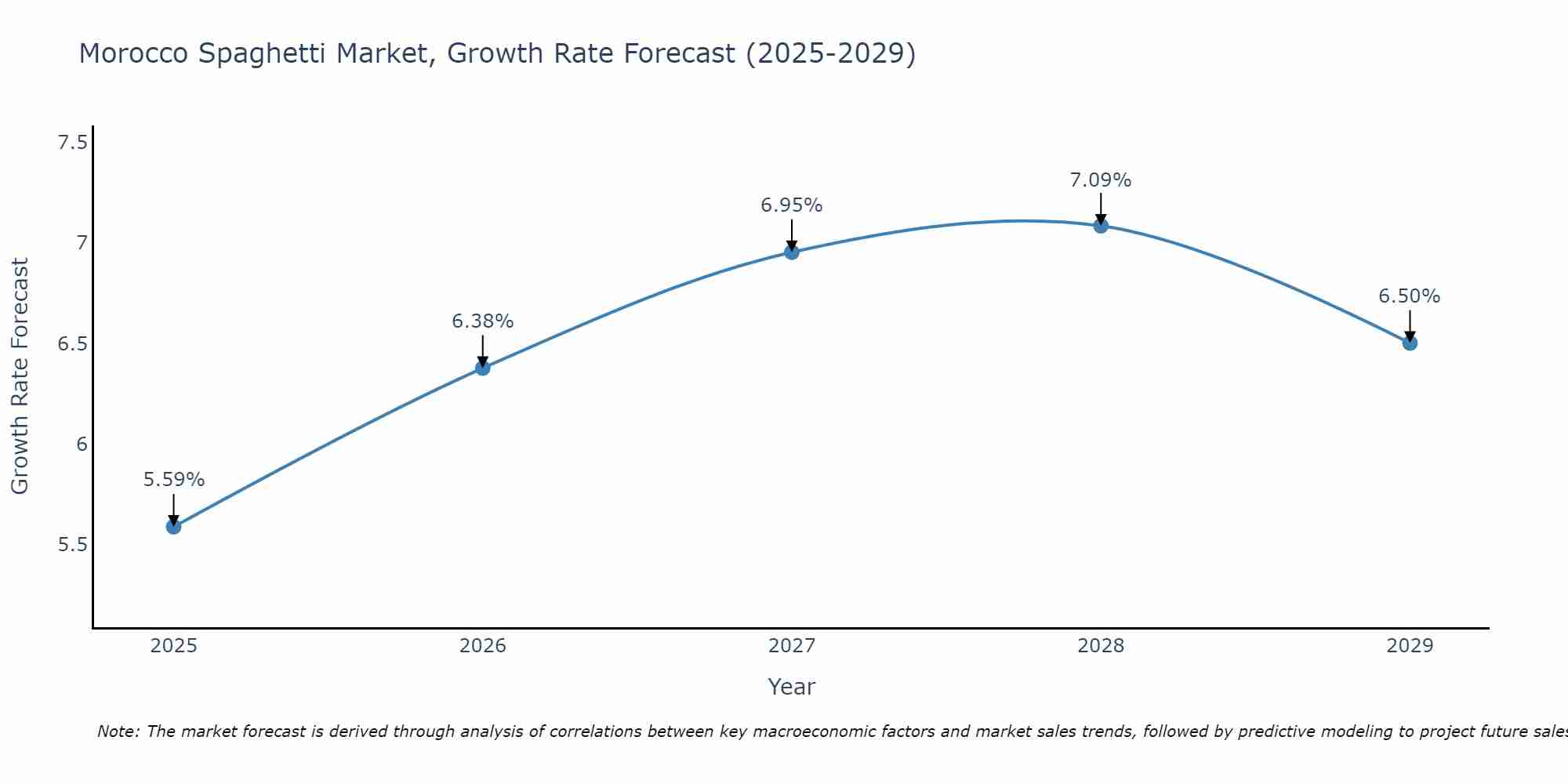
The Morocco Spaghetti Market is projected to witness mixed growth rate patterns during 2025 to 2029. The growth rate begins at 5.59% in 2025, climbs to a high of 7.09% in 2028, and moderates to 6.50% by 2029.
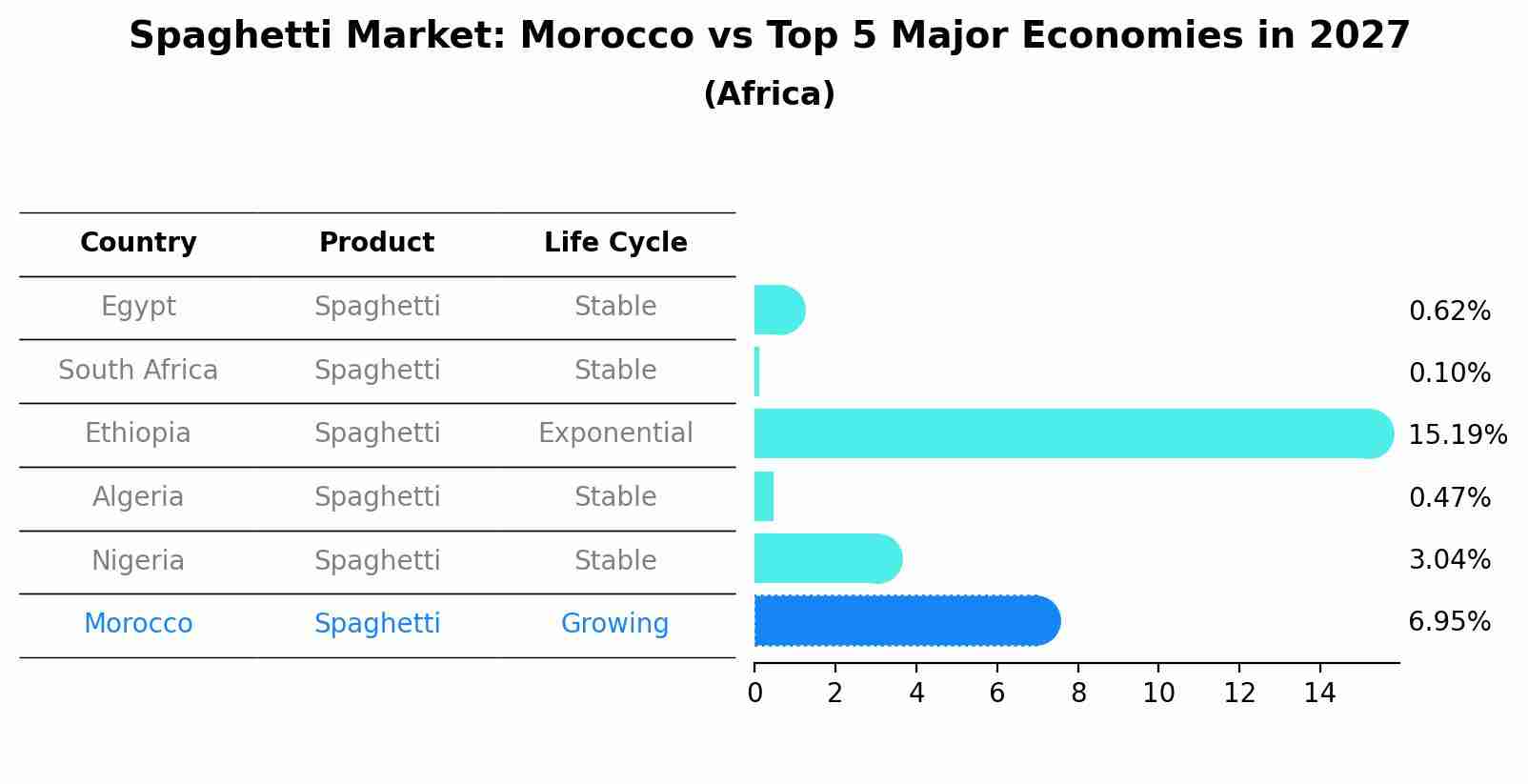
Spaghetti Market: Morocco vs Top 5 Major Economies in 2027 (Africa)
The Spaghetti market in Morocco is projected to grow at a growing growth rate of 6.95% by 2027, within the Africa region led by Egypt, along with other countries like South Africa, Ethiopia, Algeria and Nigeria, collectively shaping a dynamic and evolving market environment driven by innovation and increasing adoption of emerging technologies.
Morocco Spaghetti Market Overview
The Morocco spaghetti market is experiencing steady growth driven by factors such as changing consumer preferences, increasing disposable income, and a growing trend towards convenience foods. Spaghetti is a popular choice among Moroccan consumers due to its versatility, ease of preparation, and affordable pricing. Local and international brands compete in the market, offering a variety of spaghetti products in different shapes and sizes to cater to diverse consumer preferences. The market is also witnessing innovation with the introduction of healthier options such as whole wheat and gluten-free spaghetti to meet the demand for healthier food choices. Retail channels such as supermarkets, hypermarkets, and online platforms play a crucial role in the distribution of spaghetti products across Morocco, ensuring accessibility and availability to a wide range of consumers.
Morocco Spaghetti Market Trends
The Morocco Spaghetti Market is experiencing several key trends. Firstly, there is a growing demand for healthier and organic options, leading to an increase in the production and availability of whole wheat and gluten-free spaghetti varieties. Additionally, convenience and ready-to-eat products are gaining traction among busy consumers, driving the sales of pre-cooked and quick-cooking spaghetti products. Furthermore, there is a rising interest in exotic and gourmet spaghetti flavors and ingredients, such as truffle-infused or squid ink spaghetti, appealing to consumers looking for unique dining experiences. Overall, the market is witnessing a shift towards more diverse and innovative spaghetti products to cater to changing consumer preferences and lifestyles.
Morocco Spaghetti Market Challenges
In the Morocco Spaghetti Market, some of the key challenges include competition from other pasta varieties like couscous which is more traditionally consumed in Morocco, fluctuating prices of wheat which is a key ingredient in making spaghetti, and the impact of imported pasta brands on the local market. Additionally, consumer preferences and dietary habits in Morocco may also pose a challenge as the market may not be as receptive to spaghetti compared to other pasta types. Furthermore, distribution and logistics issues can also hinder market growth, especially in reaching rural areas. Overall, successfully navigating these challenges will require strategic marketing efforts, product differentiation, and understanding the unique dynamics of the Moroccan market.
Morocco Spaghetti Market Investment Opportunities
The Morocco spaghetti market presents promising investment opportunities due to a growing consumer preference for convenience foods and Western-style diets. With an increasing urban population and rising disposable incomes, the demand for packaged pasta products like spaghetti is on the rise. Additionally, the foodservice industry in Morocco is expanding, providing further avenues for market penetration. Investing in the Morocco spaghetti market could involve opportunities in manufacturing, distribution, branding, and innovation to cater to evolving consumer tastes and preferences. Collaborating with local suppliers and retailers, implementing effective marketing strategies, and ensuring product quality and affordability are key factors for success in this market. Overall, the Morocco spaghetti market offers potential for growth and profitability for investors looking to capitalize on the changing food consumption patterns in the country.
Morocco Spaghetti Market Government Policy
Government policies related to the Morocco Spaghetti Market include import tariffs and regulations aimed at protecting domestic production and ensuring food safety standards. The government imposes tariffs on imported spaghetti to promote local production and support domestic farmers. Additionally, regulations on food labeling and quality standards are enforced to ensure that the spaghetti sold in the market meets specific health and safety requirements. The government may also provide subsidies or incentives to local spaghetti producers to boost production and competitiveness in the market. Overall, government policies in Morocco`s spaghetti market are geared towards safeguarding domestic industries, ensuring consumer protection, and promoting economic growth within the sector.
Morocco Spaghetti Market Future Outlook
The future outlook for the Morocco Spaghetti Market appears promising, fueled by factors such as increasing urbanization, changing consumer lifestyles, and a growing preference for convenience foods. As the middle-class population continues to expand, there is a rising demand for convenient and quick meal options, driving the consumption of spaghetti as a versatile and easy-to-prepare dish. Additionally, the influence of Western cuisine and the popularity of Italian food in Morocco are contributing to the steady growth of the spaghetti market. With a focus on product innovation, marketing strategies targeting younger demographics, and an expanding retail sector, the Morocco Spaghetti Market is expected to witness sustained growth in the coming years, presenting opportunities for both domestic producers and international brands to capitalize on the evolving consumer preferences.
Key Highlights of the Report:
- Morocco Spaghetti Market Outlook
- Market Size of Morocco Spaghetti Market, 2021
- Forecast of Morocco Spaghetti Market, 2031
- Historical Data and Forecast of Morocco Spaghetti Revenues & Volume for the Period 2018 - 2031
- Morocco Spaghetti Market Trend Evolution
- Morocco Spaghetti Market Drivers and Challenges
- Morocco Spaghetti Price Trends
- Morocco Spaghetti Porter's Five Forces
- Morocco Spaghetti Industry Life Cycle
- Historical Data and Forecast of Morocco Spaghetti Market Revenues & Volume By Product for the Period 2018 - 2031
- Historical Data and Forecast of Morocco Spaghetti Market Revenues & Volume By Fresh for the Period 2018 - 2031
- Historical Data and Forecast of Morocco Spaghetti Market Revenues & Volume By Dried for the Period 2018 - 2031
- Historical Data and Forecast of Morocco Spaghetti Market Revenues & Volume By End Use for the Period 2018 - 2031
- Historical Data and Forecast of Morocco Spaghetti Market Revenues & Volume By Mass Market Retail for the Period 2018 - 2031
- Historical Data and Forecast of Morocco Spaghetti Market Revenues & Volume By Horeca for the Period 2018 - 2031
- Historical Data and Forecast of Morocco Spaghetti Market Revenues & Volume By Distribution Channel for the Period 2018 - 2031
- Historical Data and Forecast of Morocco Spaghetti Market Revenues & Volume By Supermarket and Hypermarket for the Period 2018 - 2031
- Historical Data and Forecast of Morocco Spaghetti Market Revenues & Volume By Convenience Store for the Period 2018 - 2031
- Historical Data and Forecast of Morocco Spaghetti Market Revenues & Volume By Online for the Period 2018 - 2031
- Historical Data and Forecast of Morocco Spaghetti Market Revenues & Volume By Others for the Period 2018 - 2031
- Morocco Spaghetti Import Export Trade Statistics
- Market Opportunity Assessment By Product
- Market Opportunity Assessment By End Use
- Market Opportunity Assessment By Distribution Channel
- Morocco Spaghetti Top Companies Market Share
- Morocco Spaghetti Competitive Benchmarking By Technical and Operational Parameters
- Morocco Spaghetti Company Profiles
- Morocco Spaghetti Key Strategic Recommendations






































