Morocco Sunglasses Market Growth Rate Analysis (2025 - 2031)
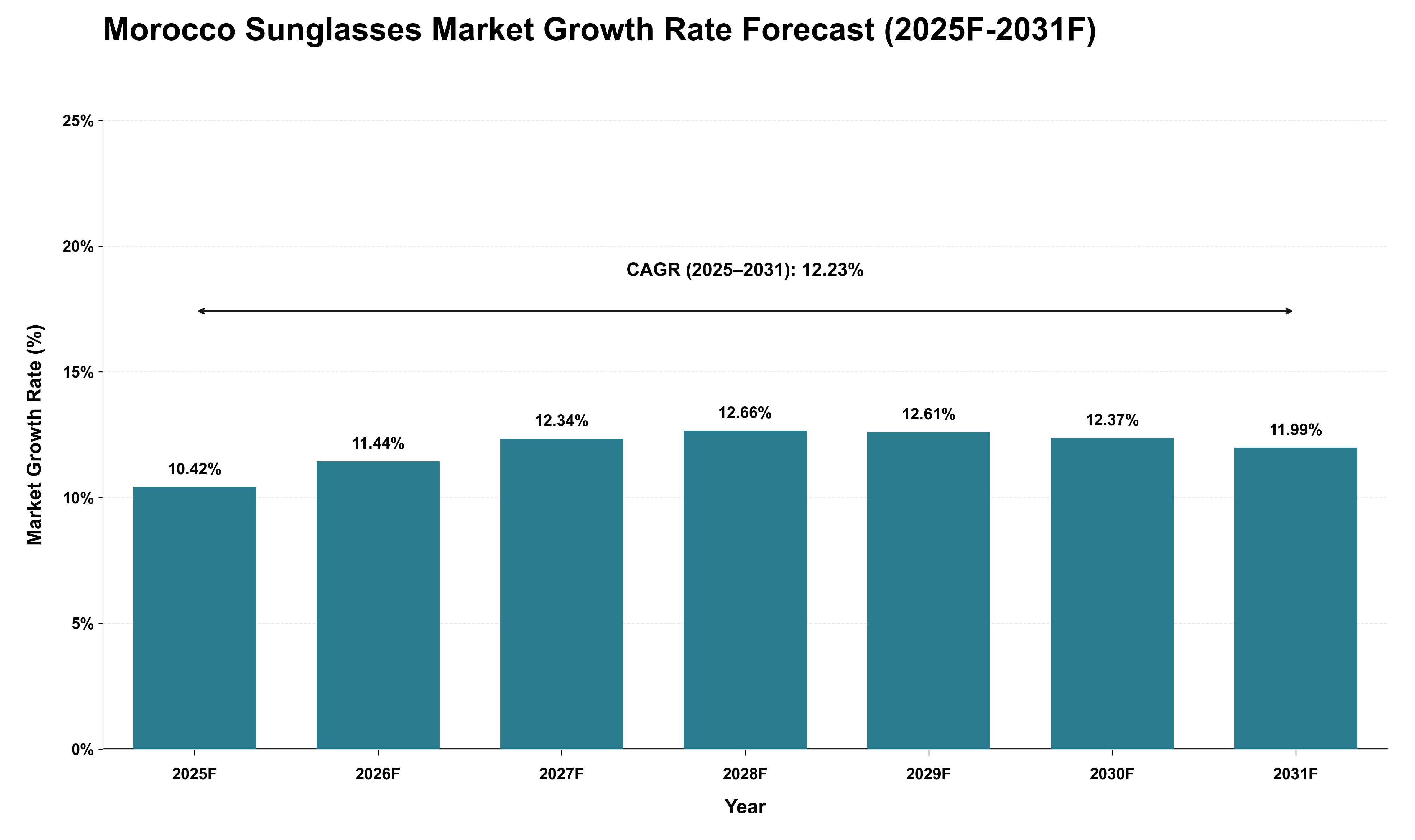
The Moroccan sunglasses market will experience robust growth driven by increasing consumer awareness of UV protection and fashion trends, alongside rising disposable incomes. The forecasted CAGR of 12.23% from 2025 to 2031 reflects a competitive landscape where both domestic and international brands will likely intensify their presence, leveraging e-commerce platforms to reach a broader audience. As import dependencies remain significant, fluctuations in global supply chains could impact pricing strategies and availability, particularly for premium segments. The annual growth rates indicate a gradual acceleration in demand, peaking in 2028 at 12.66%, suggesting that marketing efforts and product diversification will play crucial roles in capturing market share during this period. Additionally, cyclical trends related to seasonal demand for eyewear will further influence sales patterns, with potential spikes during summer months as outdoor activities increase.
Key Highlights of the Report:
- Morocco Sunglasses Market Outlook
- Market Size of Morocco Sunglasses Market, 2024
- Forecast of Morocco Sunglasses Market, 2031
- Historical Data and Forecast of Morocco Sunglasses Revenues & Volume for the Period 2021 - 2031
- Morocco Sunglasses Market Trend Evolution
- Morocco Sunglasses Market Drivers and Challenges
- Morocco Sunglasses Price Trends
- Morocco Sunglasses Porter's Five Forces
- Morocco Sunglasses Industry Life Cycle
- Historical Data and Forecast of Morocco Sunglasses Market Revenues & Volume By Product Type for the Period 2021 - 2031
- Historical Data and Forecast of Morocco Sunglasses Market Revenues & Volume By Polarized for the Period 2021 - 2031
- Historical Data and Forecast of Morocco Sunglasses Market Revenues & Volume By Non-polarized for the Period 2021 - 2031
- Historical Data and Forecast of Morocco Sunglasses Market Revenues & Volume By End-Users for the Period 2021 - 2031
- Historical Data and Forecast of Morocco Sunglasses Market Revenues & Volume By Women for the Period 2021 - 2031
- Historical Data and Forecast of Morocco Sunglasses Market Revenues & Volume By Men for the Period 2021 - 2031
- Historical Data and Forecast of Morocco Sunglasses Market Revenues & Volume By Unisex for the Period 2021 - 2031
- Historical Data and Forecast of Morocco Sunglasses Market Revenues & Volume By Distribution Channel for the Period 2021 - 2031
- Historical Data and Forecast of Morocco Sunglasses Market Revenues & Volume By Online for the Period 2021 - 2031
- Historical Data and Forecast of Morocco Sunglasses Market Revenues & Volume By Offline for the Period 2021 - 2031
- Morocco Sunglasses Import Export Trade Statistics
- Market Opportunity Assessment By Product Type
- Market Opportunity Assessment By End-Users
- Market Opportunity Assessment By Distribution Channel
- Morocco Sunglasses Top Companies Market Share
- Morocco Sunglasses Competitive Benchmarking By Technical and Operational Parameters
- Morocco Sunglasses Company Profiles
- Morocco Sunglasses Key Strategic Recommendations






































