Morocco Virtual Private Cloud Market Size & Growth Rate (2026-2032)
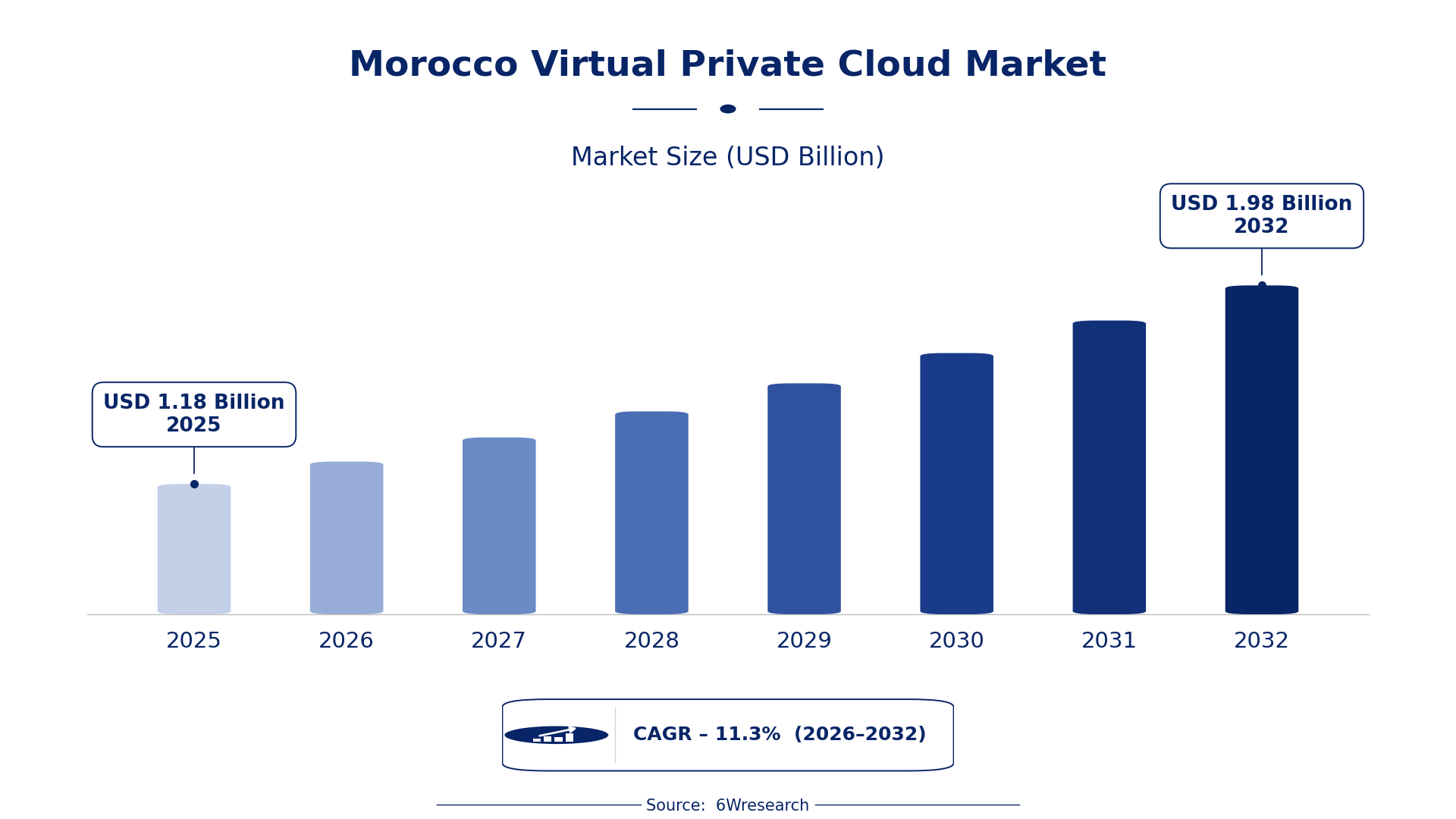
The Morocco Virtual Private Cloud Market was estimated at USD 1176 Million in 2025 and is projected to reach USD 1983 Million by 2032, growing at a CAGR of 11.3% from 2026 to 2032.
Morocco Virtual Private Cloud Market Synopsis
The demand for Virtual Private Cloud (VPC) solutions in Morocco is notably rising as organizations prioritize secure data management and scalable infrastructure. This shift is particularly evident in sectors such as finance and healthcare, where regulatory compliance and data protection are paramount.
As more businesses embrace digital transformation, the appeal of VPCs lies in their ability to combine the benefits of private cloud security with the flexibility of public cloud services. This combination is driving substantial interest from enterprises aiming to optimize their IT environments.
Morocco Virtual Private Cloud Market Year-wise Growth Rate and Key Drivers
This graph illustrates the annual growth rates of the Morocco Virtual Private Cloud Market from 2021 to 2032, highlighting a steady upward trajectory and projected expansion over the forecast period.
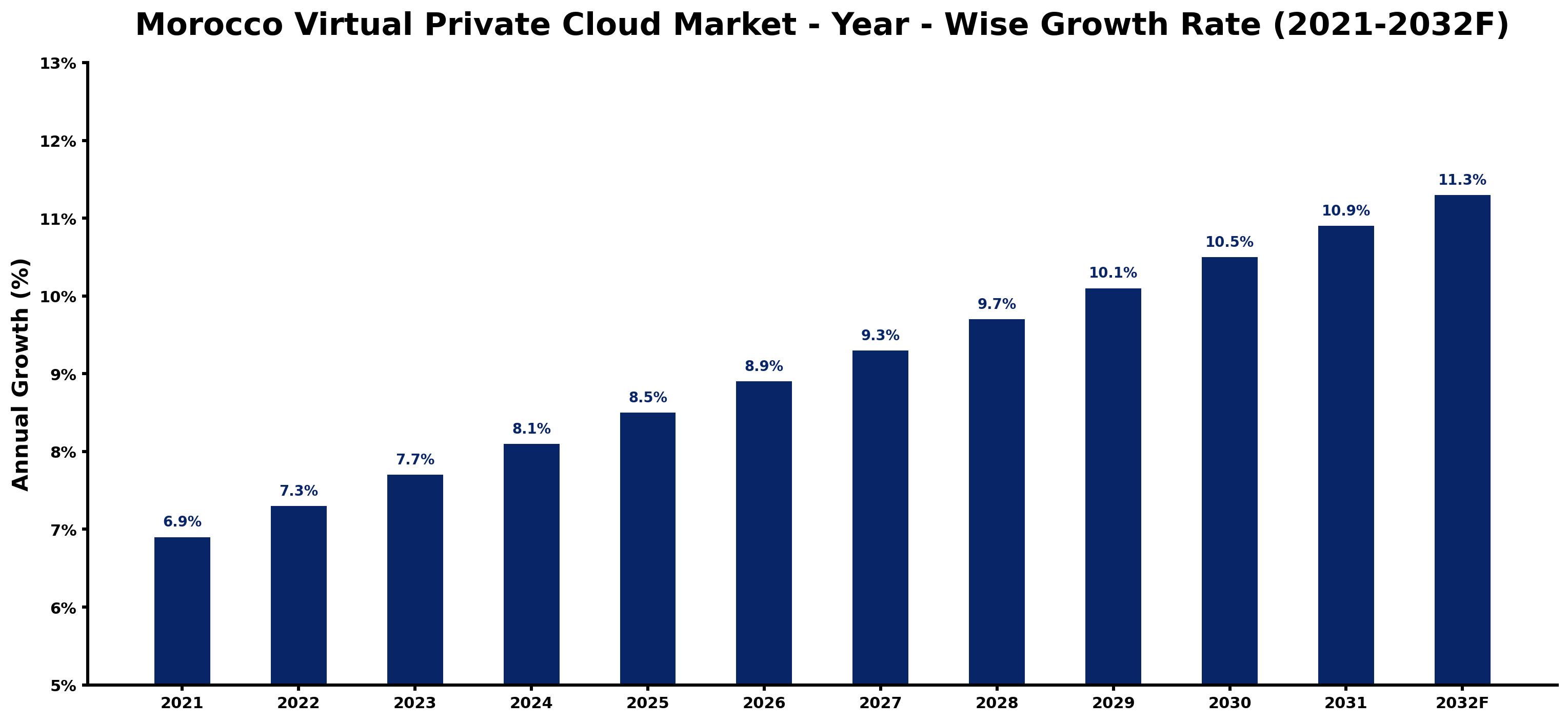
The table below presents the year‑wise growth rates along with the key drivers influencing the market
| Year | Growth Rate | Major Drivers |
| 2021 | 6.9% | Adoption of 5G enhancing cloud service accessibility. |
| 2022 | 7.3% | Government initiatives boosting digital transformation strategies. |
| 2023 | 7.7% | Rise in e-commerce driving cloud infrastructure investments. |
| 2024 | 8.1% | Increased online education necessitating scalable virtual environments. |
| 2025 | 8.5% | Growing cybersecurity threats prompting cloud security adoption. |
| 2026 | 8.9% | Local tech startups pushing demand for virtual infrastructure. |
| 2027 | 9.3% | Telecommunications upgrades facilitating wider cloud service access. |
| 2028 | 9.7% | Innovation grants supporting cloud-based technology developments. |
| 2029 | 10.1% | Shift towards hybrid work models increasing cloud reliance. |
| 2030 | 10.5% | Emergence of smart solutions in urban planning initiatives. |
| 2031 | 10.9% | Partnerships with global tech firms enhancing local service offerings. |
| 2032 | 11.3% | Increasing IoT deployments driving demand for agile cloud solutions. |
Note: Market size estimations and growth projections presented in this report are based on 6Wresearch's proprietary forecasting methodology, utilizing the latest available industry data, government publications, and primary research inputs.
Morocco Virtual Private Cloud Market Key Takeaways
Below are some of the specific key takeaways from the market, including:
- Increasing adoption of cloud solutions across various industries is reshaping IT infrastructure.
- The need for compliance with data protection regulations is boosting demand for VPC services.
- Businesses are focusing on optimizing costs while ensuring security and scalability in their cloud strategies.
- Technological advancements in cloud computing are fostering innovation in VPC offerings.
- Digital transformation initiatives are significantly influencing market dynamics.
Evaluation of Restraints in Morocco Virtual Private Cloud Market
Several factors pose challenges to the growth of the Virtual Private Cloud market in Morocco. Ensuring data security remains a top concern, as businesses grapple with the complexities of cloud environments. Interoperability issues often arise when integrating new VPC solutions with existing IT systems, creating hurdles for organizations. Compliance with local and international regulations can also be a daunting task, deterring some businesses from fully committing to cloud adoption.
Morocco Virtual Private Cloud Market Trends
The rise of remote work has accelerated the demand for flexible cloud solutions, leading many organizations to explore VPC options. on top of that, the integration of artificial intelligence and machine learning within cloud services is becoming increasingly common, enhancing data analysis and operational efficiency. Sustainability is also emerging as a key focus, with businesses seeking energy-efficient cloud solutions that align with their corporate responsibility goals.
Morocco Virtual Private Cloud Market Opportunities
Investment opportunities in the Virtual Private Cloud sector are plentiful. Emerging startups and established firms alike are exploring partnerships to enhance their service offerings. The ongoing digitalization of government services presents another avenue for growth, as public sector institutions seek to modernize their IT frameworks. Additionally, as businesses expand their online presence, the need for secure, compliant, and scalable cloud solutions will only intensify.
Government Initiatives in the Morocco Virtual Private Cloud Market
Government policies in Morocco are increasingly supportive of the Virtual Private Cloud market, focusing on promoting secure cloud computing solutions. These initiatives aim to bolster the digital economy by fostering innovation and ensuring compliance with international standards.
- A national digital infrastructure upgrade program is currently underway, aimed at enhancing cloud service accessibility across the country.
- Recently completed financial incentives for businesses adopting VPC solutions have encouraged local enterprises to transition to cloud-based infrastructures.
- A regulatory framework introduced in 2025 mandates strict compliance with data privacy standards, further strengthening the VPC market.
- Training programs launched by the government are focused on increasing awareness and knowledge of cloud applications among stakeholders.
- Plans for a public-private partnership initiative expected to begin by 2026 aim to develop innovative cloud technologies.
Future Insights of the Morocco Virtual Private Cloud Market
From 2026 to 2032, the Morocco Virtual Private Cloud market is expected to experience significant growth. As organizations continue to prioritize data security and flexibility, VPC adoption will likely surge. The combination of supportive government policies, increasing digital transformation efforts, and the demand for compliance will further propel market expansion. Additionally, advancements in cloud technology will pave the way for innovative solutions tailored to specific industry needs.
Morocco Virtual Private Cloud Market Latest Developments
Recent activity in the Morocco Virtual Private Cloud market reflects a dynamic environment, with several developments showcasing the growing interest in cloud solutions. Companies are actively seeking innovative ways to enhance their service offerings, and collaboration is becoming increasingly important.
- A major technology vendor launched a new VPC service aimed at small and medium-sized enterprises in early 2025, providing tailored solutions to meet their unique needs.
- An ongoing initiative focuses on integrating advanced security measures into existing cloud services, ensuring businesses can protect sensitive data effectively.
- Plans for a comprehensive upgrade of cloud infrastructure are expected to roll out in mid-2026, enhancing connectivity and service reliability.
- A recent partnership between local firms aims to develop VPC solutions that cater specifically to the needs of the financial sector.
- Upcoming training workshops scheduled for late 2025 will focus on equipping IT professionals with the skills needed for effective cloud management.
Morocco Virtual Private Cloud Market - Key Attractiveness of the Report
- 10 Years of Market Numbers
- Historical Data Starting from 2022 to 2025
- Base Year: 2025
- Forecast Data until 2032
- Key Performance Indicators Impacting the Market
- Major Upcoming Developments and Projects
Key Highlights of the Report:
- Morocco Virtual Private Cloud Market Outlook
- Market Size of Morocco Virtual Private Cloud Market, 2025
- Forecast of Morocco Virtual Private Cloud Market, 2032
- Historical Data and Forecast of Morocco Virtual Private Cloud Revenues & Volume for the Period 2022-2032F
- Morocco Virtual Private Cloud Market Trend Evolution
- Morocco Virtual Private Cloud Market Drivers and Challenges
- Morocco Virtual Private Cloud Price Trends
- Morocco Virtual Private Cloud Porter's Five Forces
- Morocco Virtual Private Cloud Industry Life Cycle
- Historical Data and Forecast of Morocco Virtual Private Cloud Market Revenues & Volume By Component for the Period 2022-2032F
- Historical Data and Forecast of Morocco Virtual Private Cloud Market Revenues & Volume By Software for the Period 2022-2032F
- Historical Data and Forecast of Morocco Virtual Private Cloud Market Revenues & Volume By Services for the Period 2022-2032F
- Historical Data and Forecast of Morocco Virtual Private Cloud Market Revenues & Volume By Vertical for the Period 2022-2032F
- Historical Data and Forecast of Morocco Virtual Private Cloud Market Revenues & Volume By Banking, Financial Services, and Insurance for the Period 2022-2032F
- Historical Data and Forecast of Morocco Virtual Private Cloud Market Revenues & Volume By IT and Telecom for the Period 2022-2032F
- Historical Data and Forecast of Morocco Virtual Private Cloud Market Revenues & Volume By Government and Defense for the Period 2022-2032F
- Historical Data and Forecast of Morocco Virtual Private Cloud Market Revenues & Volume By Healthcare for the Period 2022-2032F
- Historical Data and Forecast of Morocco Virtual Private Cloud Market Revenues & Volume By Media and Entertainment for the Period 2022-2032F
- Historical Data and Forecast of Morocco Virtual Private Cloud Market Revenues & Volume By Retail for the Period 2022-2032F
- Historical Data and Forecast of Morocco Virtual Private Cloud Market Revenues & Volume By Manufacturing for the Period 2022-2032F
- Historical Data and Forecast of Morocco Virtual Private Cloud Market Revenues & Volume By Others for the Period 2022-2032F
- Historical Data and Forecast of Morocco Virtual Private Cloud Market Revenues & Volume By Service for the Period 2022-2032F
- Historical Data and Forecast of Morocco Virtual Private Cloud Market Revenues & Volume By Training for the Period 2022-2032F
- Historical Data and Forecast of Morocco Virtual Private Cloud Market Revenues & Volume By Consulting for the Period 2022-2032F
- Historical Data and Forecast of Morocco Virtual Private Cloud Market Revenues & Volume By Integration for the Period 2022-2032F
- Historical Data and Forecast of Morocco Virtual Private Cloud Market Revenues & Volume By Deployment for the Period 2022-2032F
- Historical Data and Forecast of Morocco Virtual Private Cloud Market Revenues & Volume By Support for the Period 2022-2032F
- Historical Data and Forecast of Morocco Virtual Private Cloud Market Revenues & Volume By Maintenance for the Period 2022-2032F
- Historical Data and Forecast of Morocco Virtual Private Cloud Market Revenues & Volume By Managed Services for the Period 2022-2032F
- Historical Data and Forecast of Morocco Virtual Private Cloud Market Revenues & Volume By Organization Size for the Period 2022-2032F
- Historical Data and Forecast of Morocco Virtual Private Cloud Market Revenues & Volume By Small and Medium-Sized Enterprises for the Period 2022-2032F
- Historical Data and Forecast of Morocco Virtual Private Cloud Market Revenues & Volume By Large Enterprises for the Period 2022-2032F
- Morocco Virtual Private Cloud Import Export Trade Statistics
- Market Opportunity Assessment By Component
- Market Opportunity Assessment By Vertical
- Market Opportunity Assessment By Service
- Market Opportunity Assessment By Organization Size
- Morocco Virtual Private Cloud Top Companies Market Share
- Morocco Virtual Private Cloud Competitive Benchmarking By Technical and Operational Parameters
- Morocco Virtual Private Cloud Company Profiles
- Morocco Virtual Private Cloud Key Strategic Recommendations






































