Morocco Workwear Market Growth Rate Analysis (2025 - 2031)
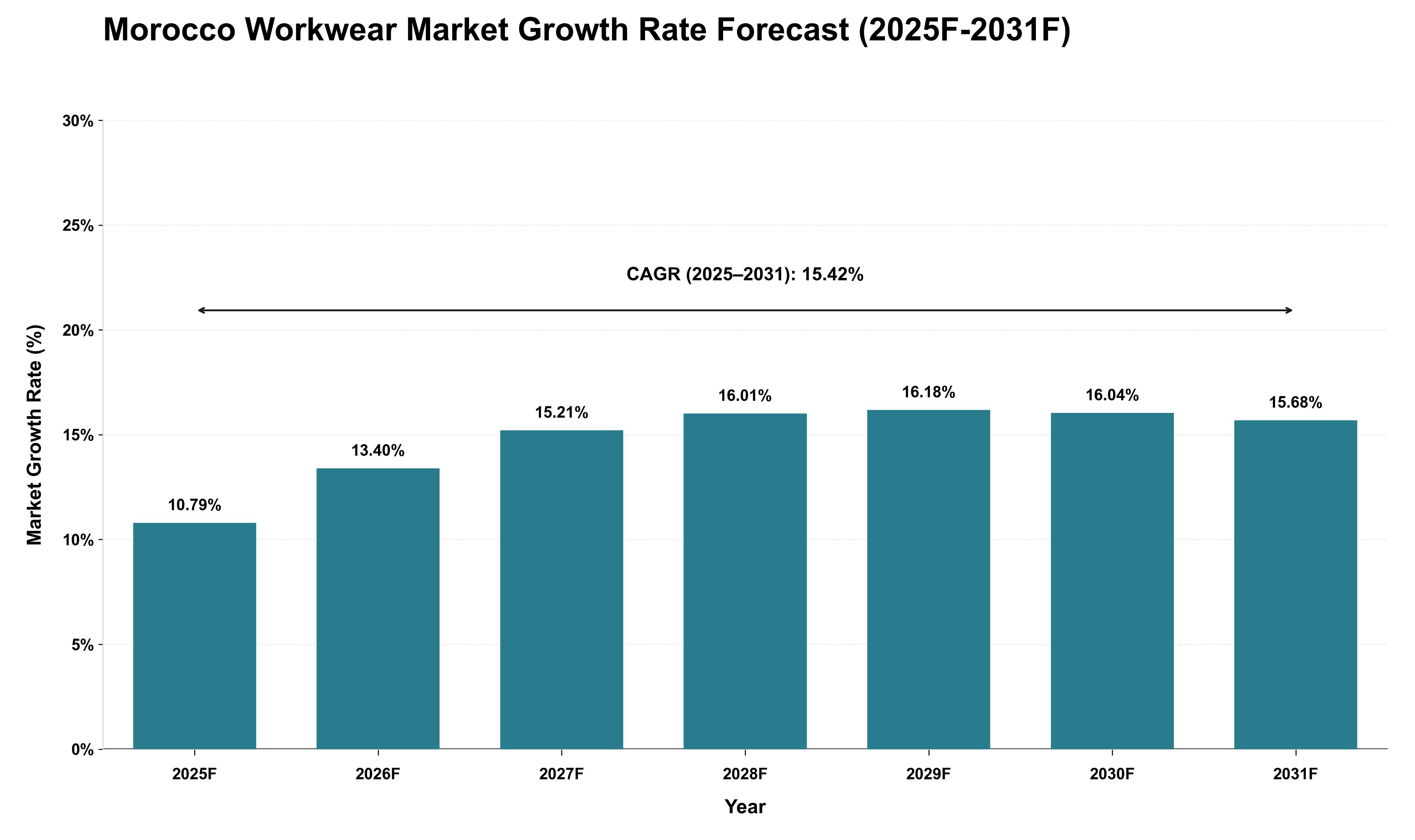
The Morocco workwear market is projected to experience a robust compound annual growth rate of 15.42% from 2025 to 2031, driven by increasing demand for protective clothing across various sectors, including construction and manufacturing. The anticipated annual growth rates indicate a steady acceleration in market expansion, peaking at 16.18% in 2029. This trend will be influenced by the availability and pricing of raw materials such as cotton and synthetic fibers, which are critical for workwear production. As global supply chains adapt to fluctuating commodity prices and potential import dependencies, manufacturers will need to navigate these dynamics carefully to maintain profitability. Additionally, cyclical trends in industrial activity will likely bolster demand for workwear, particularly as economic recovery efforts gain momentum post-pandemic. Overall, the interplay between raw material costs and sectoral growth will shape the trajectory of this market during the forecast period.
Key Highlights of the Report:
- Morocco Workwear Market Outlook
- Market Size of Morocco Workwear Market, 2024
- Forecast of Morocco Workwear Market, 2031
- Historical Data and Forecast of Morocco Workwear Revenues & Volume for the Period 2021- 2031
- Morocco Workwear Market Trend Evolution
- Morocco Workwear Market Drivers and Challenges
- Morocco Workwear Price Trends
- Morocco Workwear Porter's Five Forces
- Morocco Workwear Industry Life Cycle
- Historical Data and Forecast of Morocco Workwear Market Revenues & Volume By Product for the Period 2021- 2031
- Historical Data and Forecast of Morocco Workwear Market Revenues & Volume By Work Apparel (General Apparel and Protective Apparel) for the Period 2021- 2031
- Historical Data and Forecast of Morocco Workwear Market Revenues & Volume By Work Footwear (General Footwear and Protective Footwear) for the Period 2021- 2031
- Historical Data and Forecast of Morocco Workwear Market Revenues & Volume By Demography for the Period 2021- 2031
- Historical Data and Forecast of Morocco Workwear Market Revenues & Volume By Men for the Period 2021- 2031
- Historical Data and Forecast of Morocco Workwear Market Revenues & Volume By Women for the Period 2021- 2031
- Historical Data and Forecast of Morocco Workwear Market Revenues & Volume By Application for the Period 2021- 2031
- Historical Data and Forecast of Morocco Workwear Market Revenues & Volume By Construction for the Period 2021- 2031
- Historical Data and Forecast of Morocco Workwear Market Revenues & Volume By Chemical for the Period 2021- 2031
- Historical Data and Forecast of Morocco Workwear Market Revenues & Volume By Power for the Period 2021- 2031
- Historical Data and Forecast of Morocco Workwear Market Revenues & Volume By Food and Beverage for the Period 2021- 2031
- Historical Data and Forecast of Morocco Workwear Market Revenues & Volume By Biological/Healthcare for the Period 2021- 2031
- Historical Data and Forecast of Morocco Workwear Market Revenues & Volume By Others for the Period 2021- 2031
- Morocco Workwear Import Export Trade Statistics
- Market Opportunity Assessment By Product
- Market Opportunity Assessment By Demography
- Market Opportunity Assessment By Application
- Morocco Workwear Top Companies Market Share
- Morocco Workwear Competitive Benchmarking By Technical and Operational Parameters
- Morocco Workwear Company Profiles
- Morocco Workwear Key Strategic Recommendations






































