Mozambique Cinnamon Market Growth Rate Analysis (2021 - 2031)
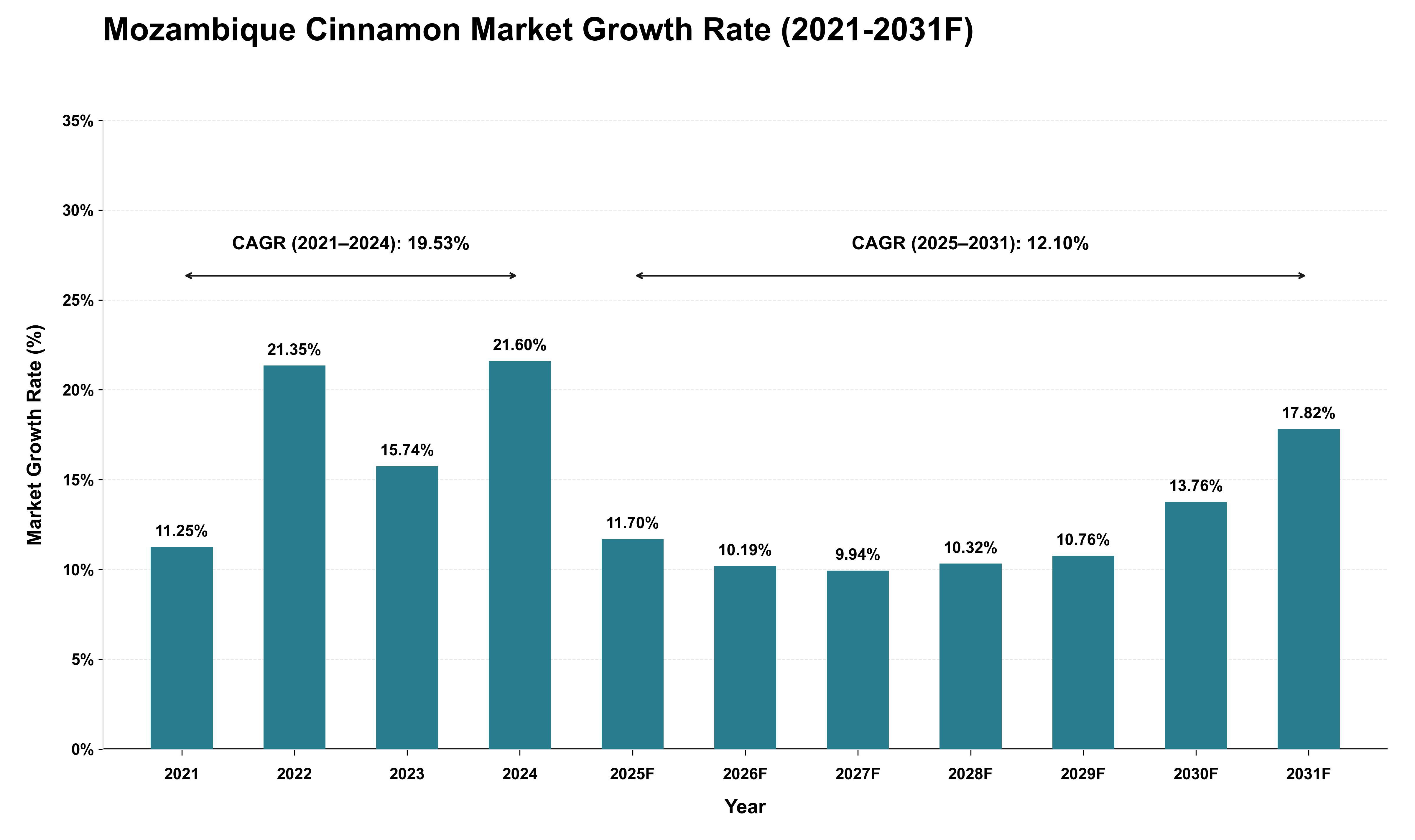
The Mozambique cinnamon market experienced a robust historical CAGR of 19.53% from 2021 to 2024, driven by heightened global demand and supply chain disruptions that characterized the post-pandemic recovery phase. The significant annual growth rates, particularly in 2022 and 2024, can be attributed to increased input costs and logistical challenges stemming from global shipping crises, which elevated prices and limited availability of raw materials. As the market transitions into the forecast period (2025-2031), a projected CAGR of 12.10% reflects a normalization in growth as supply chains stabilize and input costs begin to moderate. However, ongoing fluctuations in commodity prices and shifts in import reliance will continue to influence market dynamics. The anticipated gradual decline in growth rates suggests an adjustment phase where Mozambique's cinnamon sector aligns with broader economic cycles while still benefiting from sustained international interest in natural spices.
Key Highlights of the Report:
- Mozambique Cinnamon Market Outlook
- Market Size of Mozambique Cinnamon Market, 2024
- Forecast of Mozambique Cinnamon Market, 2031
- Historical Data and Forecast of Mozambique Cinnamon Revenues & Volume for the Period 2021-2031
- Mozambique Cinnamon Market Trend Evolution
- Mozambique Cinnamon Market Drivers and Challenges
- Mozambique Cinnamon Price Trends
- Mozambique Cinnamon Porter`s Five Forces
- Mozambique Cinnamon Industry Life Cycle
- Historical Data and Forecast of Mozambique Cinnamon Market Revenues & Volume By Product for the Period 2021-2031
- Historical Data and Forecast of Mozambique Cinnamon Market Revenues & Volume By Ceylon for the Period 2021-2031
- Historical Data and Forecast of Mozambique Cinnamon Market Revenues & Volume By Cassia for the Period 2021-2031
- Historical Data and Forecast of Mozambique Cinnamon Market Revenues & Volume By Saigon for the Period 2021-2031
- Historical Data and Forecast of Mozambique Cinnamon Market Revenues & Volume By Korintje for the Period 2021-2031
- Historical Data and Forecast of Mozambique Cinnamon Market Revenues & Volume By Application for the Period 2021-2031
- Historical Data and Forecast of Mozambique Cinnamon Market Revenues & Volume By Residential for the Period 2021-2031
- Historical Data and Forecast of Mozambique Cinnamon Market Revenues & Volume By Commercial for the Period 2021-2031
- Mozambique Cinnamon Import Export Trade Statistics
- Market Opportunity Assessment By Product
- Market Opportunity Assessment By Application
- Mozambique Cinnamon Top Companies Market Share
- Mozambique Cinnamon Competitive Benchmarking By Technical and Operational Parameters
- Mozambique Cinnamon Company Profiles
- Mozambique Cinnamon Key Strategic Recommendations






































