Mozambique Cocoa Beans Market Growth Rate Analysis (2025 - 2031)
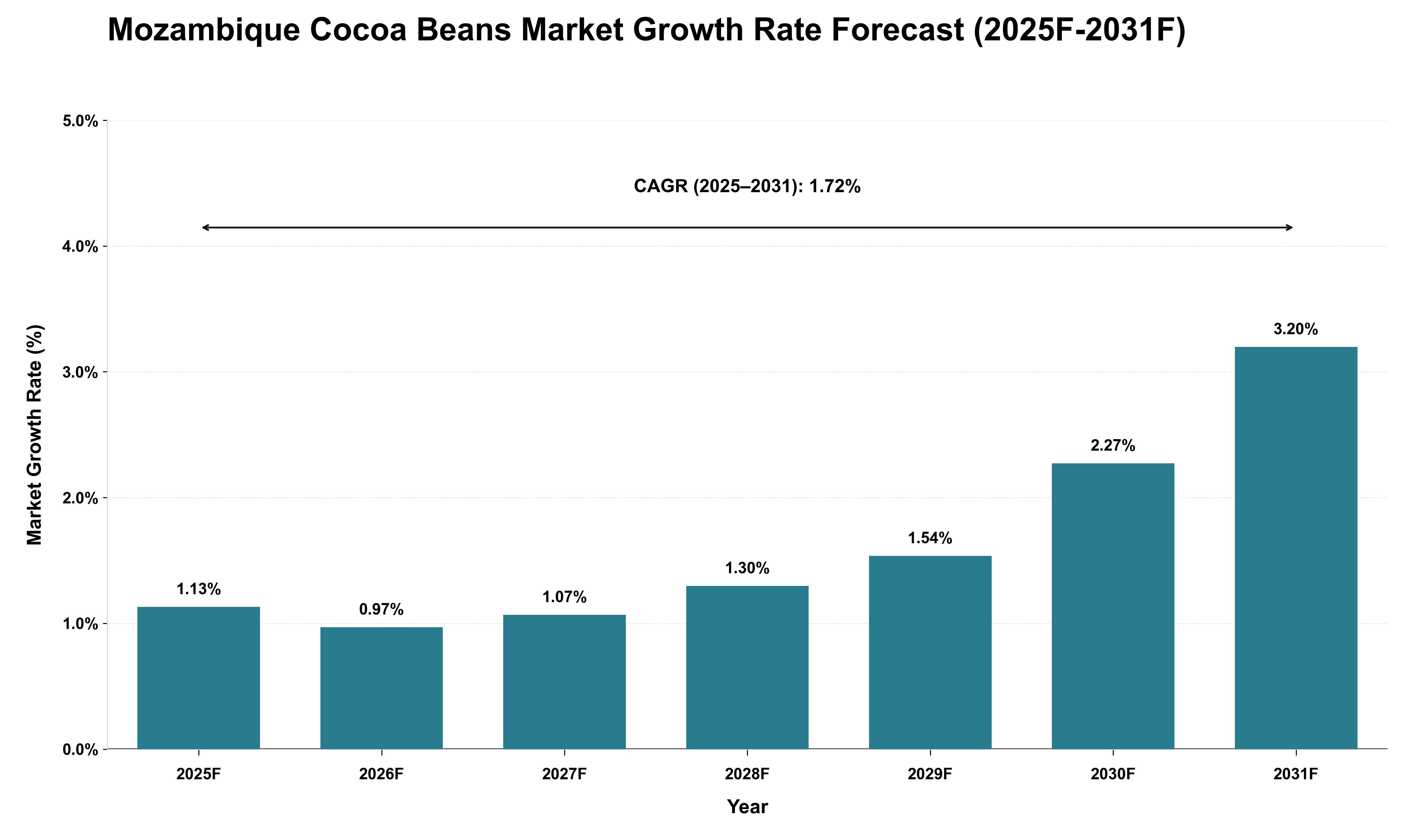
The Mozambique cocoa beans market is projected to experience a compound annual growth rate of 1.72% from 2025 to 2031, reflecting a gradual increase in demand driven by global consumption trends and evolving dietary preferences. The annual growth rates indicate a slow but steady upward trajectory, with notable acceleration anticipated towards the end of the forecast period, particularly in 2031 when growth reaches 3.20%. This trend can be attributed to several macroeconomic factors, including the increasing global demand for chocolate products and the potential for enhanced agricultural practices that could improve yield efficiency. However, raw material availability will remain critical; fluctuations in climate conditions and import dependencies for certain inputs may impact production stability. As Mozambique navigates these challenges, pricing dynamics will likely reflect both local agricultural output and international market pressures, influencing overall profitability within this sector.
Key Highlights of the Report:
- Mozambique Cocoa Beans Market Outlook
- Market Size of Mozambique Cocoa Beans Market, 2024
- Forecast of Mozambique Cocoa Beans Market, 2031
- Historical Data and Forecast of Mozambique Cocoa Beans Revenues & Volume for the Period 2021-2031
- Mozambique Cocoa Beans Market Trend Evolution
- Mozambique Cocoa Beans Market Drivers and Challenges
- Mozambique Cocoa Beans Price Trends
- Mozambique Cocoa Beans Porter`s Five Forces
- Mozambique Cocoa Beans Industry Life Cycle
- Historical Data and Forecast of Mozambique Cocoa Beans Market Revenues & Volume By Product Type for the Period 2021-2031
- Historical Data and Forecast of Mozambique Cocoa Beans Market Revenues & Volume By Butter for the Period 2021-2031
- Historical Data and Forecast of Mozambique Cocoa Beans Market Revenues & Volume By Powder for the Period 2021-2031
- Historical Data and Forecast of Mozambique Cocoa Beans Market Revenues & Volume By Liquor for the Period 2021-2031
- Historical Data and Forecast of Mozambique Cocoa Beans Market Revenues & Volume By Application for the Period 2021-2031
- Historical Data and Forecast of Mozambique Cocoa Beans Market Revenues & Volume By Confectionery for the Period 2021-2031
- Historical Data and Forecast of Mozambique Cocoa Beans Market Revenues & Volume By Functional Food & Beverage for the Period 2021-2031
- Historical Data and Forecast of Mozambique Cocoa Beans Market Revenues & Volume By Pharmaceuticals for the Period 2021-2031
- Historical Data and Forecast of Mozambique Cocoa Beans Market Revenues & Volume By Cosmetics for the Period 2021-2031
- Historical Data and Forecast of Mozambique Cocoa Beans Market Revenues & Volume By Distribution Channel for the Period 2021-2031
- Historical Data and Forecast of Mozambique Cocoa Beans Market Revenues & Volume By Online for the Period 2021-2031
- Historical Data and Forecast of Mozambique Cocoa Beans Market Revenues & Volume By Offline for the Period 2021-2031
- Mozambique Cocoa Beans Import Export Trade Statistics
- Market Opportunity Assessment By Product Type
- Market Opportunity Assessment By Application
- Market Opportunity Assessment By Distribution Channel
- Mozambique Cocoa Beans Top Companies Market Share
- Mozambique Cocoa Beans Competitive Benchmarking By Technical and Operational Parameters
- Mozambique Cocoa Beans Company Profiles
- Mozambique Cocoa Beans Key Strategic Recommendations






































