Mozambique Oyster Market Growth Rate Analysis (2021 - 2031)
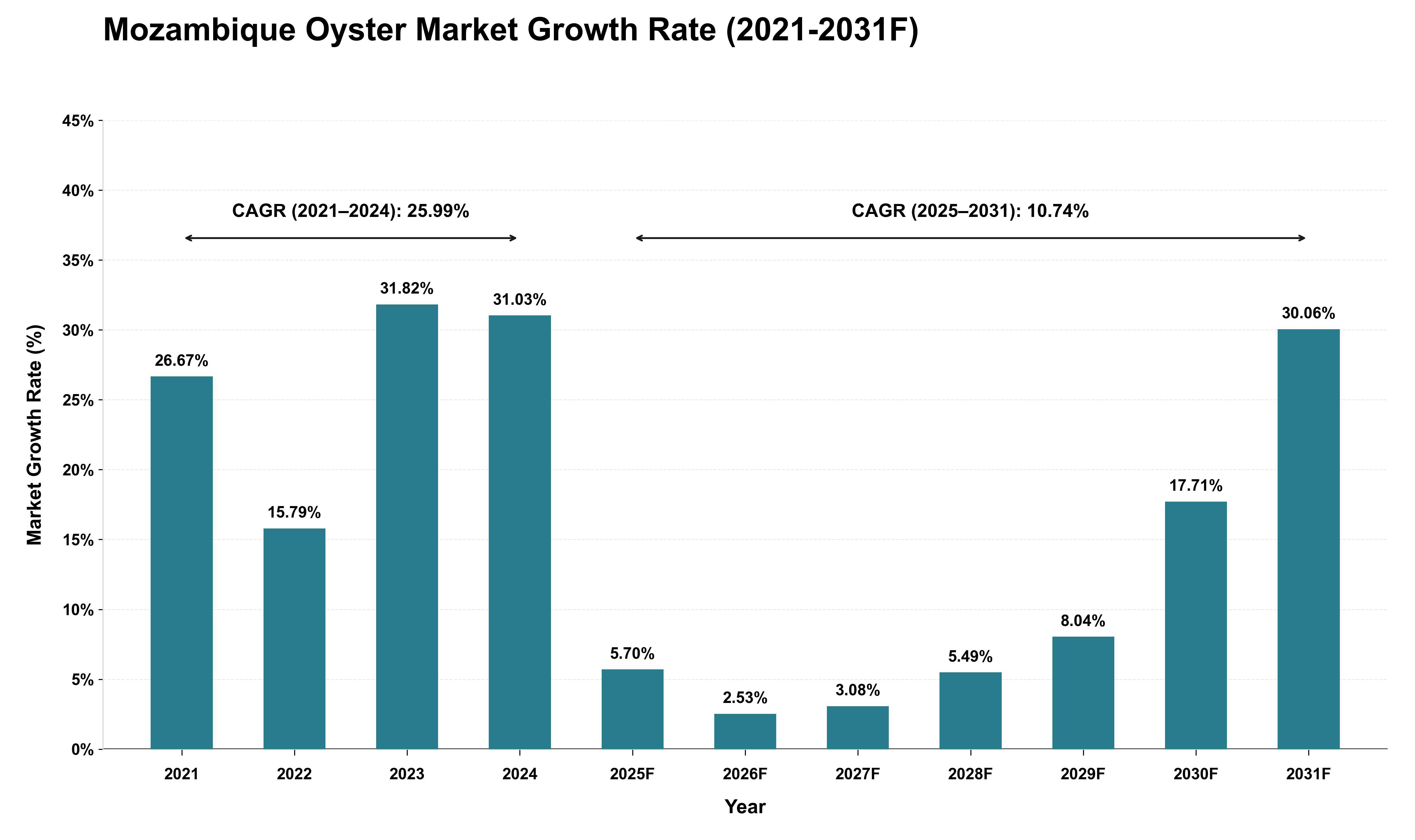
The Mozambique oyster market experienced a robust historical CAGR of 25.99% from 2021 to 2024, driven by a combination of post-pandemic recovery in global seafood demand and increased international trade dynamics. The significant growth rates in 2021 (26.67%) and 2023 (31.82%) can be attributed to heightened consumer interest in premium seafood products and supply chain adjustments following the global shipping container crises, which temporarily disrupted availability but ultimately led to increased prices and margins for exporters. As the market transitions into the forecast period (2025-2031), a projected CAGR of 10.74% reflects a shift towards stabilization as competition intensifies and capacity expansions become more pronounced among key players. The anticipated fluctuations in annual growth rates, particularly the notable rebound in 2030 (17.71%) and 2031 (30.06%), suggest that while initial growth may slow, emerging markets will likely drive renewed interest and investment in Mozambique's oyster production capabilities, aligning with broader trends in global seafood consumption patterns.
Key Highlights of the Report:
- Mozambique Oyster Market Outlook
- Market Size of Mozambique Oyster Market, 2024
- Forecast of Mozambique Oyster Market, 2031
- Historical Data and Forecast of Mozambique Oyster Revenues & Volume for the Period 2021-2031
- Mozambique Oyster Market Trend Evolution
- Mozambique Oyster Market Drivers and Challenges
- Mozambique Oyster Price Trends
- Mozambique Oyster Porter`s Five Forces
- Mozambique Oyster Industry Life Cycle
- Historical Data and Forecast of Mozambique Oyster Market Revenues & Volume By Oyster Type for the Period 2021-2031
- Historical Data and Forecast of Mozambique Oyster Market Revenues & Volume By Cupped Oyster for the Period 2021-2031
- Historical Data and Forecast of Mozambique Oyster Market Revenues & Volume By Pacific Cupped Oyster for the Period 2021-2031
- Historical Data and Forecast of Mozambique Oyster Market Revenues & Volume By American Cupped Oyster for the Period 2021-2031
- Historical Data and Forecast of Mozambique Oyster Market Revenues & Volume By Penguin Wing Oyster for the Period 2021-2031
- Historical Data and Forecast of Mozambique Oyster Market Revenues & Volume By Others for the Period 2021-2031
- Historical Data and Forecast of Mozambique Oyster Market Revenues & Volume By End User for the Period 2021-2031
- Historical Data and Forecast of Mozambique Oyster Market Revenues & Volume By Foodservice for the Period 2021-2031
- Historical Data and Forecast of Mozambique Oyster Market Revenues & Volume By Retail for the Period 2021-2031
- Historical Data and Forecast of Mozambique Oyster Market Revenues & Volume By Packaging Form for the Period 2021-2031
- Historical Data and Forecast of Mozambique Oyster Market Revenues & Volume By Fresh for the Period 2021-2031
- Historical Data and Forecast of Mozambique Oyster Market Revenues & Volume By Frozen for the Period 2021-2031
- Historical Data and Forecast of Mozambique Oyster Market Revenues & Volume By Canned for the Period 2021-2031
- Historical Data and Forecast of Mozambique Oyster Market Revenues & Volume By Others for the Period 2021-2031
- Mozambique Oyster Import Export Trade Statistics
- Market Opportunity Assessment By Oyster Type
- Market Opportunity Assessment By End User
- Market Opportunity Assessment By Packaging Form
- Mozambique Oyster Top Companies Market Share
- Mozambique Oyster Competitive Benchmarking By Technical and Operational Parameters
- Mozambique Oyster Company Profiles
- Mozambique Oyster Key Strategic Recommendations






































