Mozambique Particle Board Market Growth Rate Analysis (2021 - 2031)
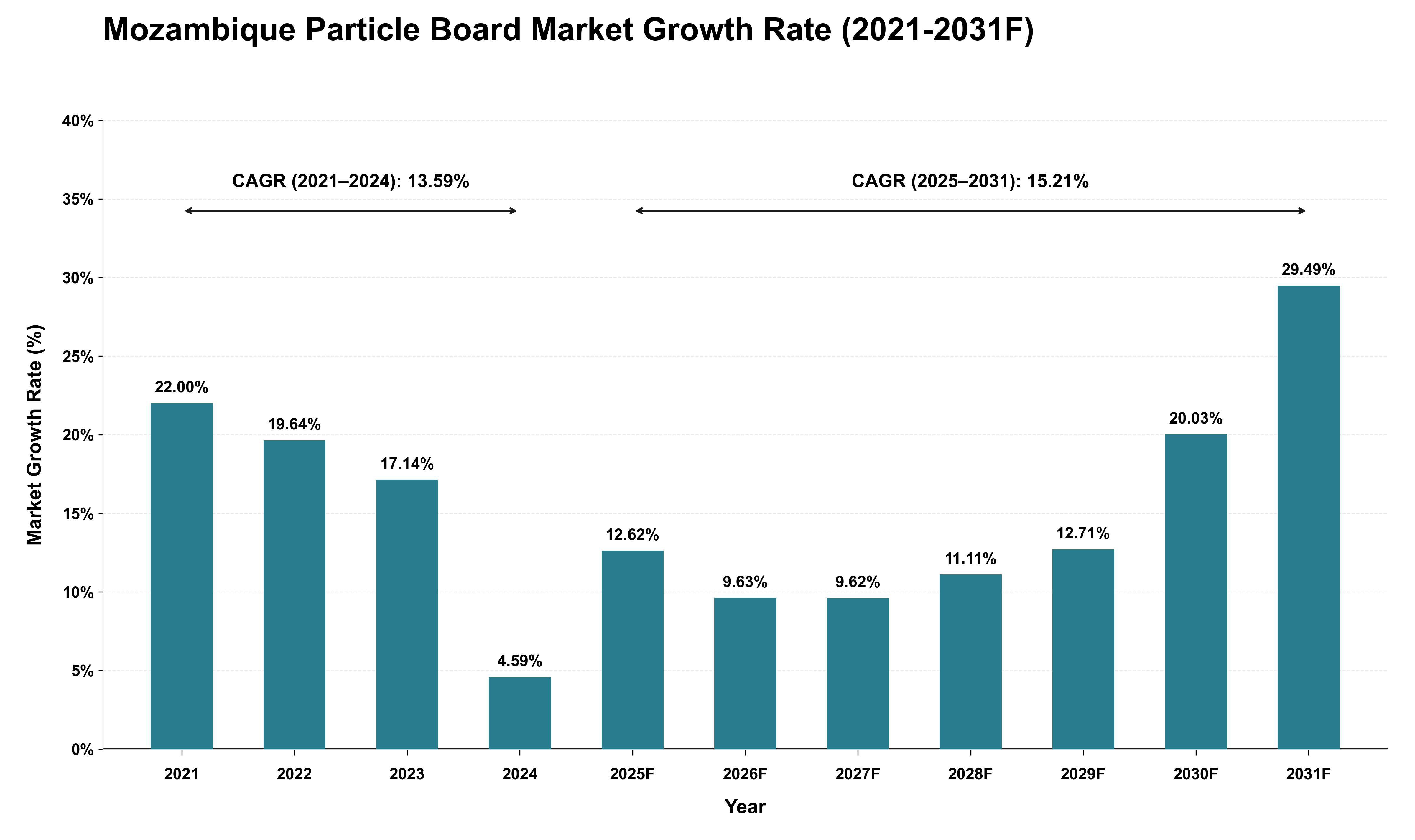
The Mozambique particle board market experienced a robust historical CAGR of 13.59% from 2021 to 2024, driven by a combination of regulatory and trade policy factors that facilitated increased import reliance and domestic production capabilities. The initial surge in growth rates, peaking at 22% in 2021, can be attributed to post-pandemic recovery dynamics and heightened demand for affordable construction materials amid global supply chain disruptions. However, growth decelerated to 4.59% in 2024 as regulatory adjustments and potential trade barriers began to impact import volumes. Looking ahead, the forecasted CAGR of 15.21% from 2025 to 2031 suggests a resurgence in demand, likely fueled by ongoing infrastructure development initiatives and favorable trade agreements that enhance market access for particle board products. This anticipated growth trajectory reflects an evolving landscape where Mozambique's strategic positioning within regional trade networks could significantly bolster its manufacturing sector's competitiveness.
Key Highlights of the Report:
- Mozambique Particle Board Market Outlook
- Market Size of Mozambique Particle Board Market, 2024
- Forecast of Mozambique Particle Board Market, 2031
- Historical Data and Forecast of Mozambique Particle Board Revenues & Volume for the Period 2021-2031
- Mozambique Particle Board Market Trend Evolution
- Mozambique Particle Board Market Drivers and Challenges
- Mozambique Particle Board Price Trends
- Mozambique Particle Board Porter`s Five Forces
- Mozambique Particle Board Industry Life Cycle
- Historical Data and Forecast of Mozambique Particle Board Market Revenues & Volume By Type for the Period 2021-2031
- Historical Data and Forecast of Mozambique Particle Board Market Revenues & Volume By Standard Chipboard for the Period 2021-2031
- Historical Data and Forecast of Mozambique Particle Board Market Revenues & Volume By Melamine Veneered Chipboard for the Period 2021-2031
- Historical Data and Forecast of Mozambique Particle Board Market Revenues & Volume By Flooring Grade Chipboard for the Period 2021-2031
- Historical Data and Forecast of Mozambique Particle Board Market Revenues & Volume By Wood Veneered Chipboard for the Period 2021-2031
- Historical Data and Forecast of Mozambique Particle Board Market Revenues & Volume By Plastic Veneered Chipboard for the Period 2021-2031
- Historical Data and Forecast of Mozambique Particle Board Market Revenues & Volume By Other for the Period 2021-2031
- Historical Data and Forecast of Mozambique Particle Board Market Revenues & Volume By Application for the Period 2021-2031
- Historical Data and Forecast of Mozambique Particle Board Market Revenues & Volume By Construction for the Period 2021-2031
- Historical Data and Forecast of Mozambique Particle Board Market Revenues & Volume By Furniture for the Period 2021-2031
- Historical Data and Forecast of Mozambique Particle Board Market Revenues & Volume By Infrastructure for the Period 2021-2031
- Historical Data and Forecast of Mozambique Particle Board Market Revenues & Volume By Other for the Period 2021-2031
- Mozambique Particle Board Import Export Trade Statistics
- Market Opportunity Assessment By Type
- Market Opportunity Assessment By Application
- Mozambique Particle Board Top Companies Market Share
- Mozambique Particle Board Competitive Benchmarking By Technical and Operational Parameters
- Mozambique Particle Board Company Profiles
- Mozambique Particle Board Key Strategic Recommendations






































