Mozambique Precious Metal Market Growth Rate Analysis (2025 - 2031)
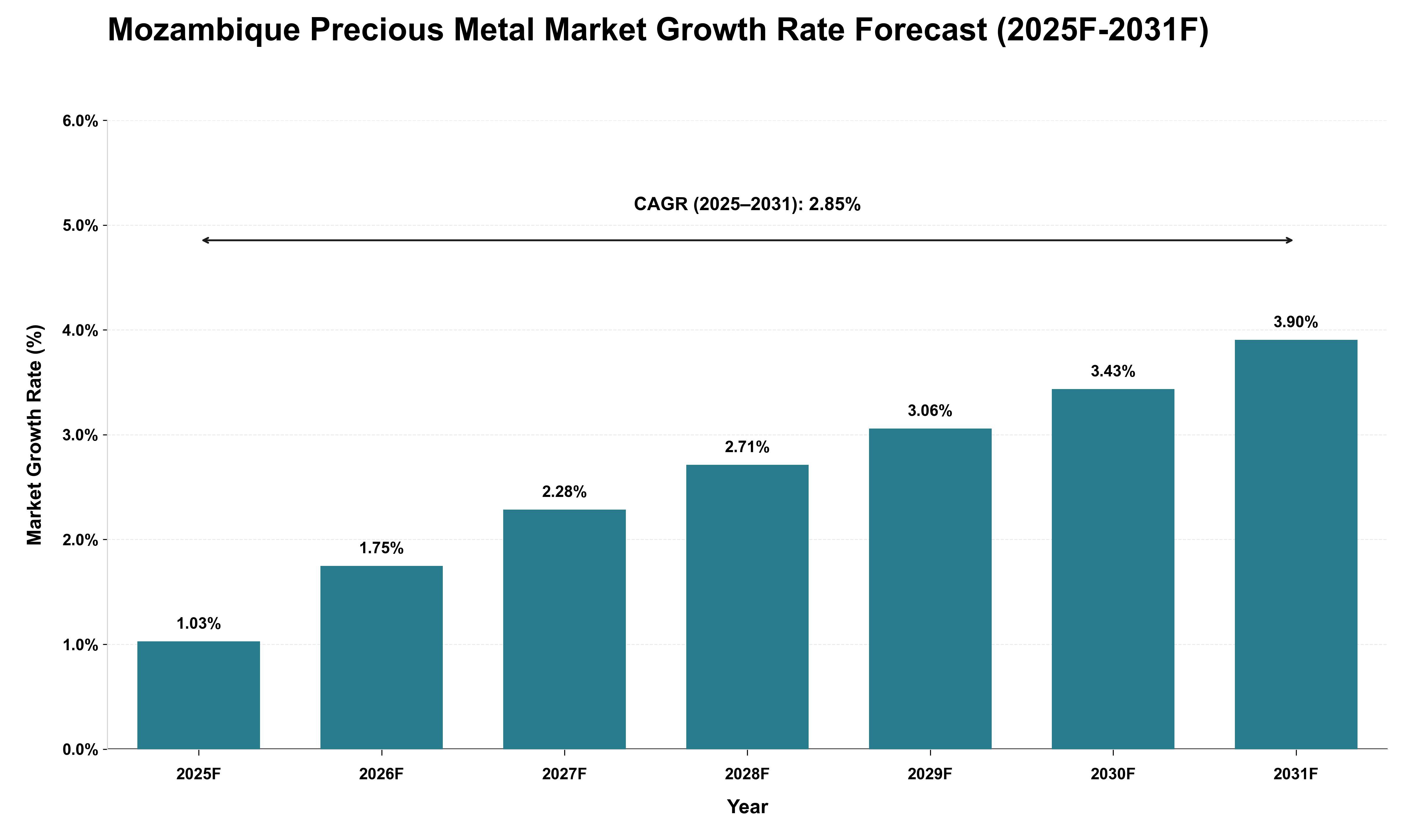
The Mozambique precious metal market will experience a compound annual growth rate (CAGR) of 2.85% from 2025 to 2031, driven primarily by evolving supply chain dynamics and fluctuating input costs. As global demand for precious metals continues to rise, Mozambique's reliance on imports for essential mining equipment and technology will shape its production capabilities. The forecasted growth trajectory indicates an acceleration in annual growth rates, peaking at 3.90% in 2031, reflecting anticipated improvements in operational efficiencies and potential cost reductions as supply chains stabilize post-pandemic disruptions. Additionally, the gradual increase in local processing capacity may mitigate some import dependencies, enhancing value addition within the country. However, external factors such as commodity price volatility and geopolitical tensions could introduce variability into these projections, necessitating close monitoring of global market conditions throughout this period.
Key Highlights of the Report:
- Mozambique Precious Metal Market Outlook
- Market Size of Mozambique Precious Metal Market, 2024
- Forecast of Mozambique Precious Metal Market, 2031
- Historical Data and Forecast of Mozambique Precious Metal Revenues & Volume for the Period 2021-2031
- Mozambique Precious Metal Market Trend Evolution
- Mozambique Precious Metal Market Drivers and Challenges
- Mozambique Precious Metal Price Trends
- Mozambique Precious Metal Porter`s Five Forces
- Mozambique Precious Metal Industry Life Cycle
- Historical Data and Forecast of Mozambique Precious Metal Market Revenues & Volume By Product for the Period 2021-2031
- Historical Data and Forecast of Mozambique Precious Metal Market Revenues & Volume By Gold for the Period 2021-2031
- Historical Data and Forecast of Mozambique Precious Metal Market Revenues & Volume By Silver for the Period 2021-2031
- Historical Data and Forecast of Mozambique Precious Metal Market Revenues & Volume By Platinum Group Metals (PGM) for the Period 2021-2031
- Historical Data and Forecast of Mozambique Precious Metal Market Revenues & Volume By Applications for the Period 2021-2031
- Historical Data and Forecast of Mozambique Precious Metal Market Revenues & Volume By Jewelry for the Period 2021-2031
- Historical Data and Forecast of Mozambique Precious Metal Market Revenues & Volume By Industrial for the Period 2021-2031
- Historical Data and Forecast of Mozambique Precious Metal Market Revenues & Volume By Investment for the Period 2021-2031
- Mozambique Precious Metal Import Export Trade Statistics
- Market Opportunity Assessment By Product
- Market Opportunity Assessment By Applications
- Mozambique Precious Metal Top Companies Market Share
- Mozambique Precious Metal Competitive Benchmarking By Technical and Operational Parameters
- Mozambique Precious Metal Company Profiles
- Mozambique Precious Metal Key Strategic Recommendations






































