Myanmar Micro Finance Market Size & Growth Rate Outlook along with Top Exporting Countries:
According to 6Wresearch, the Myanmar Micro Finance Market was valued at USD 1,072.0 billion in 2024, growing at an annual rate of 12.9%. The market is projected to reach USD 1,253.2 billion by 2031, expanding at a CAGR of 2.3% during the forecast period (2025–2031).
Here are some key exporting countries to Myanmar Micro Finance Market:
- Japan – Through international cooperation agencies, Japan offers major financial and technical support to Myanmar’s microfinance sector.
- South Korea – South Korea has been significantly providing microfinance technology transfer and development funding to Myanmar-based MFIs.
- Singapore – Singaporean financial institutions invest in Myanmar’s microfinance operations through regional development programs.
Topics Covered in the Myanmar Micro Finance Market Report
The Myanmar Micro Finance Market Report thoroughly covers the market by product type, institution type, and end-user. Myanmar Micro Finance Market Outlook report provides an unbiased and detailed analysis of the ongoing Myanmar Micro Finance Market trends, opportunities/high growth areas, and market drivers. This would help stakeholders devise and align their market strategies according to the current and future market dynamics.
Myanmar Micro Finance Market Synopsis
The Myanmar microfinance sector continues to demonstrate resilience in the face of prolonged political instability and subdued economic conditions. While the 2021 military coup dampened overall economic activity, the market has been sustained by steady agricultural demand, high levels of women’s participation, and rapid adoption of digital financial services. Mobile wallets now exceeding accounts facilitated an increase in digital payments in 2022, with platforms such as Wave Money and KBZ Pay reinforcing the country’s digital finance infrastructure.
Women remain at the core of financial inclusion, representing microfinance clients in 2023. Yet structural challenges persist by 2024, an estimated MSMEs continued to face capital and technology shortfalls, constraining competitiveness. To address these gaps, the government authorized private and state-owned banks to participate in the MSME Development Fund, complementing broader initiatives aimed at strengthening women’s entrepreneurship and expanding access to finance.
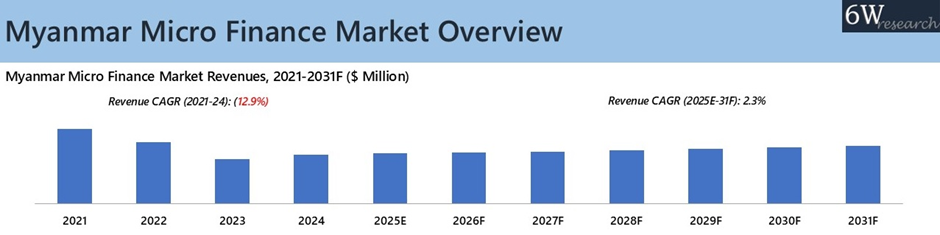
According to 6Wresearch, Myanmar Micro Finance Market revenues are projected to expand at a CAGR of 2.3% between 2025 and 2031, driven by rising credit demand from SMEs and agriculture, as well as persistent needs for small loans and working capital. Key enablers include the upcoming launch of Myanmar Pay (MMQR) in 2025, the MSME Development Fund, and expanded fintech licensing, which together are laying the foundation for a more integrated financial ecosystem. Bank lending to MSMEs, real estate, and trading sectors grew year-on-year, highlighting strong financing requirements and underscoring the role of microfinance institutions in bridging persistent credit gaps.
At the policy level, national strategies such as the Payment Strategy (2020–2025), the Digital Economy Roadmap 2030, and donor-backed programs like the Agriculture and Food Systems Development Activity (AFDA) are modernizing payment infrastructure, enhancing digital literacy, and supporting agricultural productivity, all of which reinforce demand for inclusive financial services.
Market Segmentation By Product Type
Savings are expected to witness the fastest growth, supported by financial inclusion initiatives, improving income levels, and growing confidence in formal institutions. Additionally, the ongoing expansion of digital payments and increasing awareness of financial management among low-income groups are set to further drive savings mobilization through microfinance providers.
Market Segmentation By Institution Type
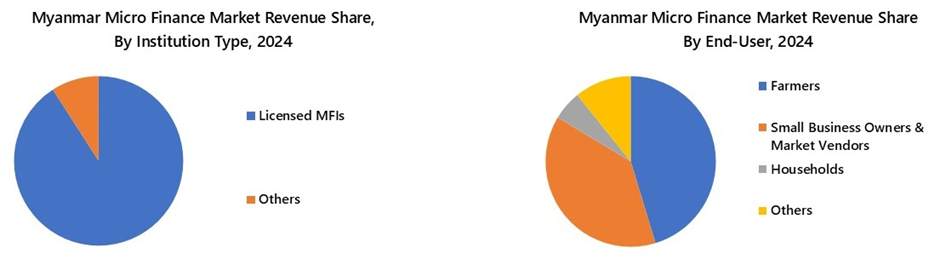
Savings & Credit Cooperatives (SCCs), NGOs, and government-backed institutions are anticipated to witness the highest growth due to their extensive rural outreach, strong community trust, and social development focus. Rising demand for affordable credit, government support programs, and NGO-led initiatives targeting underserved populations would drive expansion in the coming years.
Market Segmentation By End-User
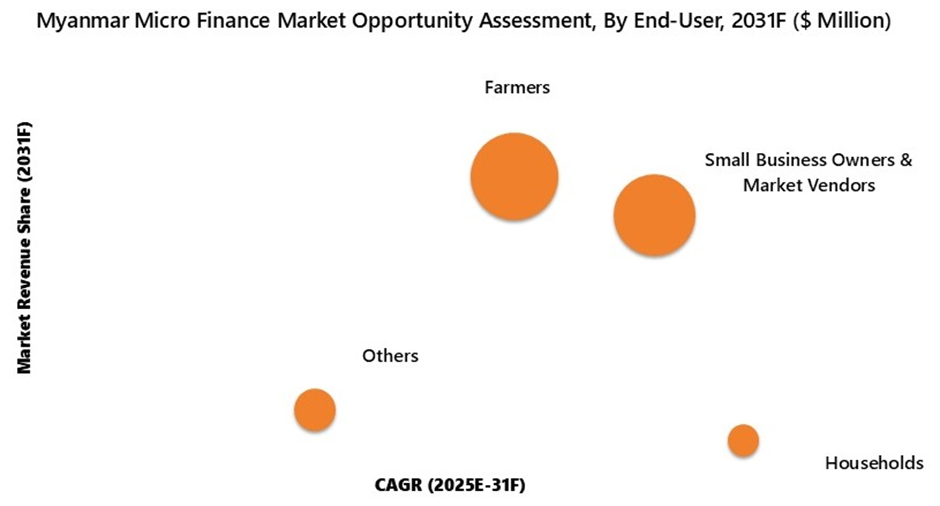
Households are anticipated to witness the highest growth as rising financial inclusion, growing digital payment adoption, and high demand for small-ticket loans drive access to credit. With a large unbanked population relying on microfinance for daily needs, working capital, and resilience against income shocks, household financing demand would expand significantly.
Key Attractiveness of the Report
- 10 Years Market Numbers.
- Historical Data: Starting from 2021 to 2024
- Base Year: 2024
- Forecast Data until 2031
- Key Performance Indicators Impacting the Market.
- Major Upcoming Developments and Projects.
Key Highlights of the Report:
- Myanmar Micro Finance Market Overview
- Myanmar Micro Finance Market Outlook
- Myanmar Micro Finance Market Forecast
- Myanmar Micro Finance Market Porter’s Five forces Analysis
- Myanmar Micro Finance Market Industry Life Cycle Analysis
- Historical Data and Forecast of Myanmar Micro Finance Market Revenues, for the Period 2021-2031F
- Myanmar Micro Finance Market Drivers and Restraints
- Historical Data and Forecast of Myanmar Micro Finance Market Revenues, By Product Type, for the Period 2021-2031F
- Historical Data and Forecast of Myanmar Micro Finance Market Revenues, By Institution Type, for the Period 2021-2031F
- Historical Data and Forecast of Myanmar Micro Finance Market Revenues, By End-User, for the Period 2021-2031F
- Key Performance Indicators
- Market Opportunity Assessment
- Competitive Benchmarking
- Company Profiles
- Key Strategic Recommendations
Market Scope and Segmentation
The report provides a detailed analysis of the following market segments:
By Product Type
- Loans (Credit Portfolio)
- Savings (Deposits)
By Institution Type
- Licensed MFIs
- Others (Savings & Credit Cooperatives (SCCs), NGOs, Govt, etc.)
By End-User
- Farmers (Agriculture (crop farming) and Livestock & Fisheries)
- Small Business Owners & Market Vendors (Trading (shops, market vendors, traders) and Manufacturing (cottage industries, handicrafts, workshops))
- Households (Including Education (school fees, tuition, household-related borrowing))
- Others (Urban Salaried Borrowers, Service Micro-Businesses, etc.)






































