Myanmar Microlearning Market Size & Growth Rate (2026-2032)
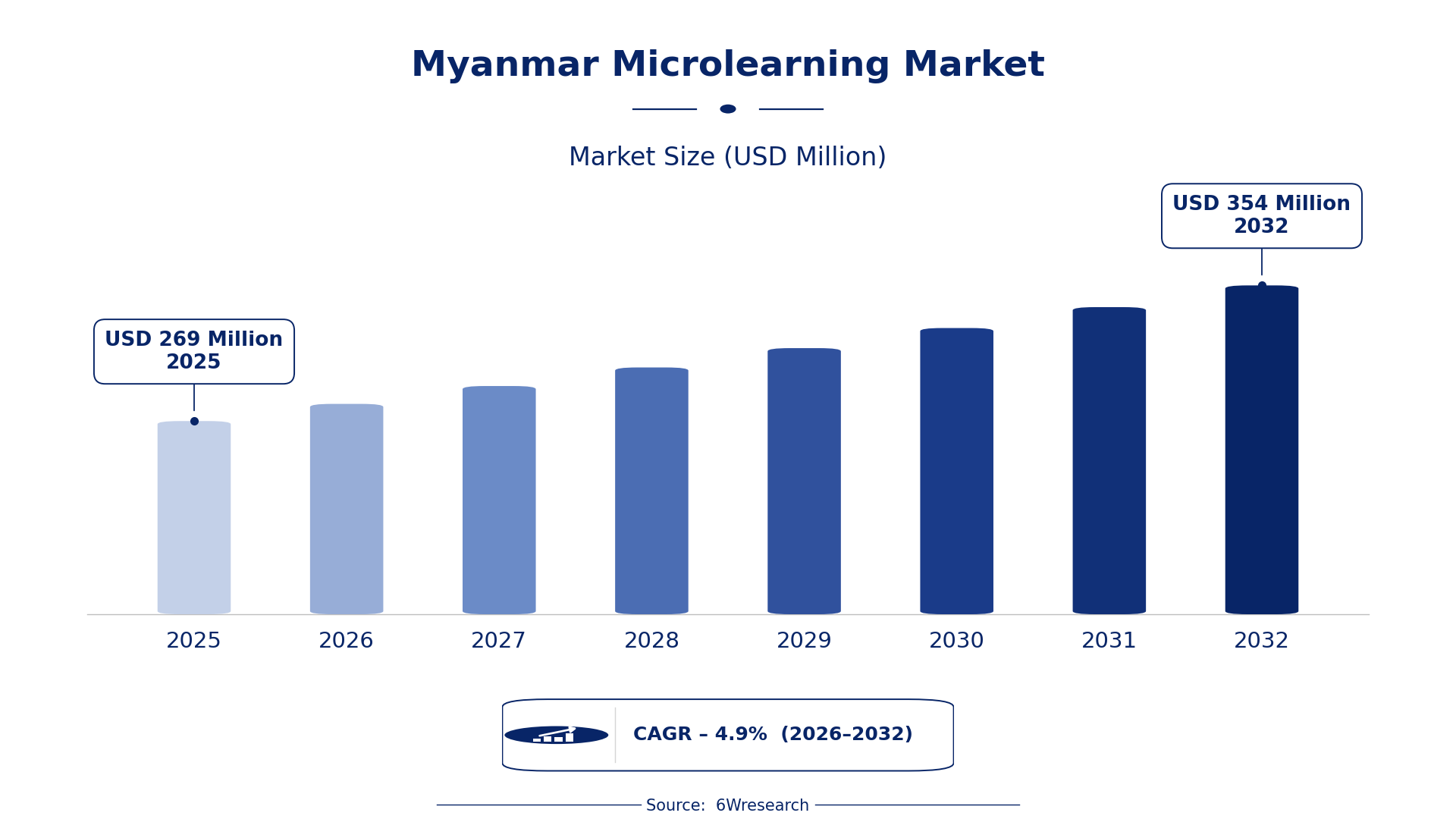
The Myanmar Microlearning Market was estimated at USD 269 Million in 2025 and is projected to reach USD 354 Million by 2032, growing at a CAGR of 4.9% from 2026 to 2032.
Myanmar Microlearning Market Synopsis
A major force shaping the Myanmar Microlearning Market is the increasing demand for flexible and effective educational solutions. As organizations and educational institutions recognize the need for tailored learning experiences, microlearning is emerging as a favored approach. This shift is particularly pronounced in corporate training and professional development, where quick, targeted content can yield immediate benefits.
The growth trajectory of this market is fueled by technological advancements and a changing educational paradigm. Short, focused learning modules align perfectly with the needs of modern learners, making it an appealing option for continuous skill development and knowledge retention. However, challenges such as digital infrastructure limitations and high implementation costs pose significant hurdles to widespread adoption.
Myanmar Microlearning Market Year-wise Growth Rate and Key Drivers
This graph illustrates the annual growth rates of the Myanmar Microlearning Market from 2021 to 2032, highlighting a steady upward trajectory and projected expansion over the forecast period.
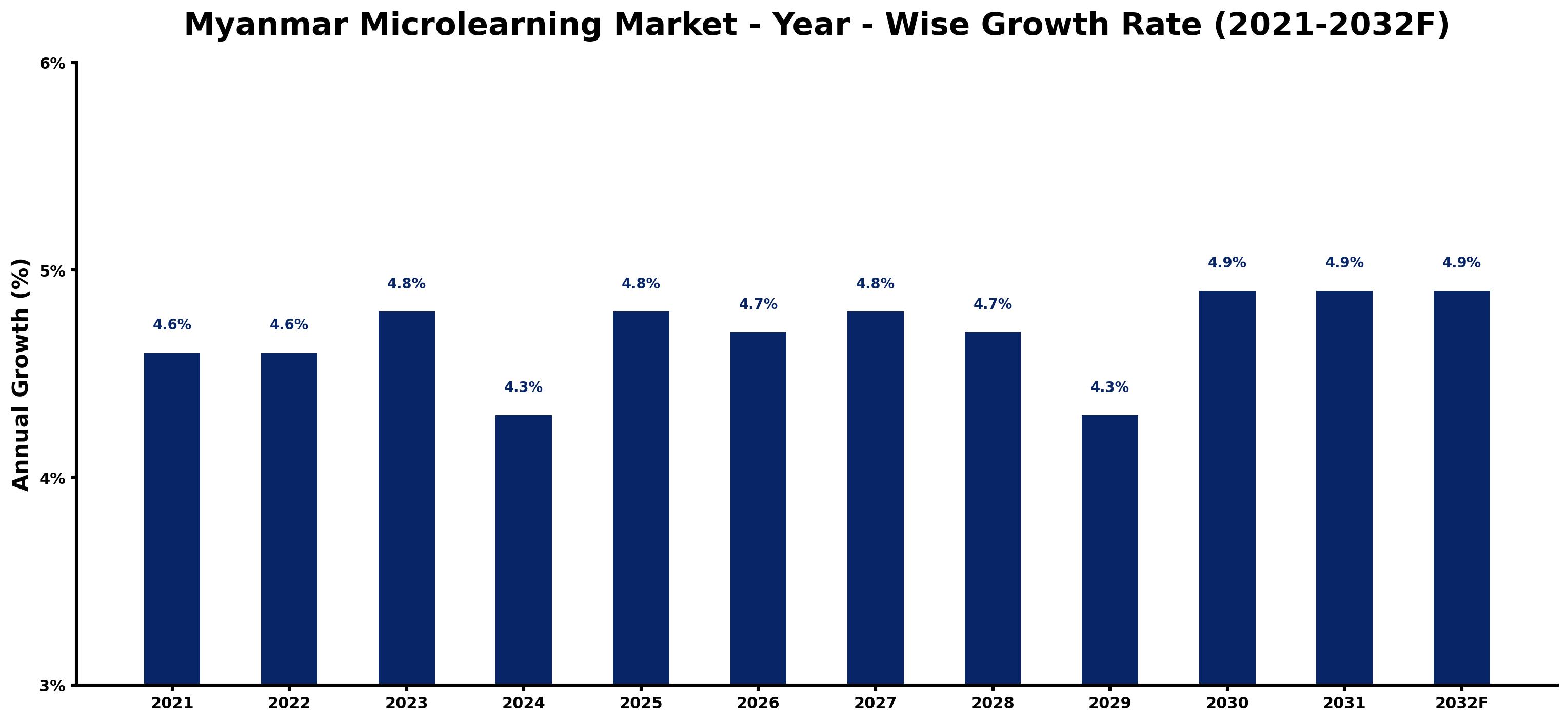
The table below presents the year‑wise growth rates along with the key drivers influencing the market
| Year | Growth Rate | Major Drivers |
| 2021 | 4.6% | E-learning adoption bolstered by COVID-19 pandemic response. |
| 2022 | 4.6% | Mobile network expansion facilitates access to microlearning resources. |
| 2023 | 4.8% | Local startups developing innovative microlearning platforms evolve. |
| 2024 | 4.3% | Government partnerships with NGOs enhance educational outreach efforts. |
| 2025 | 4.8% | Increased investment in tech-driven education solutions reported. |
| 2026 | 4.7% | Rural internet connectivity programs support remote learning initiatives. |
| 2027 | 4.8% | rising interest in upskilling amid competitive job market. |
| 2028 | 4.7% | Emergence of local content creators fuels educational diversity. |
| 2029 | 4.3% | Corporate investment in employee training drives microlearning usage. |
| 2030 | 4.9% | Integration of microlearning in formal education curricula expands. |
| 2031 | 4.9% | Community-based learning initiatives leverage mobile technologies effectively. |
| 2032 | 4.9% | Competitive workforce demands prompt microlearning adoption in companies. |
Note: Market size estimations and growth projections presented in this report are based on 6Wresearch's proprietary forecasting methodology, utilizing the latest available industry data, government publications, and primary research inputs.
Myanmar Microlearning Market Key Takeaways
Below are some of the specific key takeaways from the market, including:
- The market is expected to grow from USD 269 Million in 2025 to USD 354 Million by 2032.
- Microlearning is gaining traction in both the corporate and educational sectors due to its flexibility.
- Challenges such as inadequate infrastructure and high costs hinder widespread adoption.
- Government policies increasingly support microlearning as a tool for skills development.
- Emerging trends indicate a rising integration of technology in educational methodologies.
Evaluation of Restraints in Myanmar Microlearning Market
The Myanmar Microlearning Market faces several restraints that stifle its growth potential. Chief among these is the inadequate digital infrastructure, which limits access to online platforms and resources essential for effective microlearning. The scarcity of high-speed internet, particularly in rural areas, presents a significant barrier to the delivery of quality educational content. on top of that, the costs associated with developing advanced microlearning platforms can be prohibitive for many educational institutions, restricting their ability to innovate.
There is also a shortage of professionals skilled in creating engaging microlearning content, which hampers the quality and effectiveness of available programs. Additionally, a lack of awareness regarding the advantages of microlearning—such as flexibility, efficiency, and enhanced learner engagement—affects adoption rates. Economic uncertainties and fluctuations in demand for educational services further complicate the environment, making it difficult for stakeholders to commit to microlearning initiatives.
Myanmar Microlearning Market Trends
A notable trend in the Myanmar Microlearning Market is the increasing incorporation of mobile learning applications. As smartphone penetration rises, learners are more inclined to utilize mobile platforms for quick access to educational content. This trend not only caters to the needs of busy professionals but also aligns with the preferences of younger learners who favor digital solutions.
Additionally, the emphasis on personalized learning experiences is becoming more pronounced. Organizations are seeking tailored microlearning modules that address specific skills gaps, enhancing the relevance and impact of training programs. This customization is supported by advancements in data analytics, enabling institutions to track learner progress and adapt content accordingly.
Myanmar Microlearning Market Opportunities
Significant growth opportunities exist within the Myanmar Microlearning Market, particularly in the corporate sector. Companies looking to improve employee engagement and retention can benefit from implementing microlearning strategies tailored to their workforce's unique needs. on top of that, educational institutions have the potential to enhance their offerings by integrating microlearning into their curricula, thus addressing the diverse learning preferences of students.
Collaborative initiatives between educational institutions and industries can pave the way for innovative microlearning solutions that meet market demands. The ongoing digital transformation in Myanmar also creates a fertile environment for investing in new technologies and platforms that facilitate effective microlearning experiences.
Government Initiatives in the Myanmar Microlearning Market
Government policies are increasingly aimed at fostering a conducive environment for microlearning in Myanmar. The public sector recognizes the importance of enhancing skills development and continuous education through modern educational methodologies. Regulatory frameworks are being established to ensure the quality and effectiveness of microlearning programs, encouraging partnerships between educational institutions and industries.
- A national digital infrastructure upgrade programme launched in 2023 is focused on improving internet access across urban and rural areas.
- Current initiatives include ongoing workshops aimed at training educators on the effective implementation of microlearning methodologies.
- A regulatory framework introduced in 2025 mandates quality standards for digital learning platforms.
- Plans are underway for a public-private initiative expected to enhance collaboration between schools and corporate sectors by 2026.
- A recently completed pilot project in selected universities has demonstrated the effectiveness of microlearning in improving student engagement.
Future Insights of the Myanmar Microlearning Market
Looking ahead to 2026-2032, the Myanmar Microlearning Market is set for steady growth as the educational landscape continues to evolve. Increased access to digital resources will likely drive demand, making microlearning a staple in both corporate and educational settings. As awareness of its benefits spreads, organizations will progressively adopt microlearning strategies to enhance their training programs.
Emerging technologies, such as artificial intelligence and machine learning, are expected to further shape the future of microlearning. These innovations will enable personalized learning experiences, catering to individual learner needs. As these trends unfold, the market will likely witness a shift toward more dynamic and interactive learning environments.
Myanmar Microlearning Market Latest Developments
In the past year, the Myanmar Microlearning Market has seen a surge in activity as organizations and educational institutions increasingly recognize the value of targeted learning solutions. Many enterprises have begun to implement microlearning initiatives to address skill gaps and enhance employee training effectiveness. Meanwhile, educational institutions are exploring partnerships to integrate microlearning into their curricula.
- A major technology vendor launched a new microlearning platform in Q1 2025, offering customizable modules for corporate training.
- An initiative that began in early 2025 aims to train educators on creating engaging microlearning content and is currently underway.
- A partnership between a leading university and a local tech startup was established in late 2024 to develop innovative microlearning solutions.
- A rollout of interactive microlearning modules is expected to begin in mid-2026 across several corporate training programs.
- A pilot program launched in late 2024 successfully demonstrated the impact of microlearning on student performance in vocational training.
Myanmar Microlearning Market - Key Attractiveness of the Report
- 10 Years of Market Numbers
- Historical Data Starting from 2022 to 2025
- Base Year: 2025
- Forecast Data until 2032
- Key Performance Indicators Impacting the Market
- Major Upcoming Developments and Projects
Key Highlights of the Report:
- Myanmar Microlearning Market Outlook
- Market Size of Myanmar Microlearning Market, 2025
- Forecast of Myanmar Microlearning Market, 2032
- Historical Data and Forecast of Myanmar Microlearning Revenues & Volume for the Period 2022-2032F
- Myanmar Microlearning Market Trend Evolution
- Myanmar Microlearning Market Drivers and Challenges
- Myanmar Microlearning Price Trends
- Myanmar Microlearning Porter's Five Forces
- Myanmar Microlearning Industry Life Cycle
- Historical Data and Forecast of Myanmar Microlearning Market Revenues & Volume By Component for the Period 2022-2032F
- Historical Data and Forecast of Myanmar Microlearning Market Revenues & Volume By Solution for the Period 2022-2032F
- Historical Data and Forecast of Myanmar Microlearning Market Revenues & Volume By Services for the Period 2022-2032F
- Historical Data and Forecast of Myanmar Microlearning Market Revenues & Volume By Industry for the Period 2022-2032F
- Historical Data and Forecast of Myanmar Microlearning Market Revenues & Volume By Retail for the Period 2022-2032F
- Historical Data and Forecast of Myanmar Microlearning Market Revenues & Volume By Manufacturing for the Period 2022-2032F
- Historical Data and Forecast of Myanmar Microlearning Market Revenues & Volume By Logistics for the Period 2022-2032F
- Historical Data and Forecast of Myanmar Microlearning Market Revenues & Volume By BFSI for the Period 2022-2032F
- Historical Data and Forecast of Myanmar Microlearning Market Revenues & Volume By Telecom for the Period 2022-2032F
- Historical Data and Forecast of Myanmar Microlearning Market Revenues & Volume By IT for the Period 2022-2032F
- Historical Data and Forecast of Myanmar Microlearning Market Revenues & Volume By Healthcare for the Period 2022-2032F
- Historical Data and Forecast of Myanmar Microlearning Market Revenues & Volume By Life Sciences for the Period 2022-2032F
- Historical Data and Forecast of Myanmar Microlearning Market Revenues & Volume By Deployment Type for the Period 2022-2032F
- Historical Data and Forecast of Myanmar Microlearning Market Revenues & Volume By On-Premises for the Period 2022-2032F
- Historical Data and Forecast of Myanmar Microlearning Market Revenues & Volume By Cloud for the Period 2022-2032F
- Historical Data and Forecast of Myanmar Microlearning Market Revenues & Volume By Organization Size for the Period 2022-2032F
- Historical Data and Forecast of Myanmar Microlearning Market Revenues & Volume By SMEs for the Period 2022-2032F
- Historical Data and Forecast of Myanmar Microlearning Market Revenues & Volume By Large Enterprises for the Period 2022-2032F
- Myanmar Microlearning Import Export Trade Statistics
- Market Opportunity Assessment By Component
- Market Opportunity Assessment By Industry
- Market Opportunity Assessment By Deployment Type
- Market Opportunity Assessment By Organization Size
- Myanmar Microlearning Top Companies Market Share
- Myanmar Microlearning Competitive Benchmarking By Technical and Operational Parameters
- Myanmar Microlearning Company Profiles
- Myanmar Microlearning Key Strategic Recommendations






































